
Results
-
£40.00
Dreams and Dances (Flugel solo) - Harper, P
Dreams and Dances was composed for Black Dyke flugel star Zoe Hancock in 2012. This is a substantial seven minute solo for one of the most characteristic of the brass band's instruments.It begins slowly and dreamily, with a flugel line encompassing both lyrical and florid styles, before moving via a short cadenza to a set of dances in a quick 6/8 time. The solo part would be a challenge for any player, but the accompaniment parts should be manageable by all.
In Stock: Estimated dispatch 1-3 working days
-
 £29.95
Soliloquy II (Euphonium Solo with Brass Band - Score and Parts)
A few years ago, I wrote a Soliloquy based on a Salvation Army song by George Marshall called Soliloquy (In the Stillness), since published in the General Series. This solo follows up the form of that previous work, though it is quite different in emotional content, and was a commission during Covid lockdown from Euphonium player Micah Dominic Parsons.The main inspiration is the tune Cross of Jesus by John Stainer as well as a motif from some older Euphonium Studies from the Royal Military School of Music, Kneller Hall, that Micah had discovered. The tune is used in a chorale form and, after an introduction, the very first section is a reversal of the chorale that appears in the second half of the work. The Euphonium exclamations are all derived from the main tune and the study motif. The work begins in quite a dark reflective manner, representing those aspects of the song, without being too specific. The second half reflects the more positive characteristics and finds a triumphal nature in its conclusion. The soloist lines throughout have a very declamatory style and can have a freedom in performance.There is one new element in the coda, where the triplet motif (bars 87-89) is a direct quotation from Romans 8 - A brass celebration by Ray Steadman-Allen. RSA was a good friend, mentor and encourager to me. The glorious climax of Romans 8 is his presentation of the same tune (Cross of Jesus) used in this work. And so the piece ends with a final and personal reference to RSA!- Howard Evans
Estimated dispatch 7-14 working days
-
 £44.95
Deus Solus (Brass Band - Score and Parts)
Deus Solus (meaning God Alone) was composed for the Melbourne Staff Band's 130th anniversary at the request of Bandmaster Ken Waterworth. It is based on three Christian tunes - the 18th century hymn O God, our help in ages past (S.A.S.B. 47), and the more contemporary songs God and God alone (Phill McHugh) and Chris Bowater's Faithful God (S.A.S.B. 360). The work begins quietly and with a sense of the unknown, with references to O God, our help in ages past, alluding to the formation and early days of the band.
Estimated dispatch 7-14 working days
-
 £44.95
Powerhouse (Brass Band - Score and Parts)
Spirit divine, come as of old. So begins the song by Brindley Boon (S.A.S.B. 311), and that phrase becomes the message of this piece, and an important motif in the music. It appears at the very beginning of the work and recurs at important points during the piece. The theme of the need for spiritual power is further underlined by the use of the hymns Show your power (S.A.S.B. 365), Wonder-working power (S.A.S.B. 451) and the very old chorus Send a new touch of power on my soul, Lord (S.A.S.B. 785).The composer first heard Boon's song Spirit Divine when it was sung by Parkhead Songsters in the Sunday morning meeting at his home Corps of Greenock Citadel. They were visiting for the weekend from Glasgow, and were conducted by Songster Leader Walter Chalmers, himself a beautiful lyric tenor soloist. They sang it in a moving fashion, unaccompanied, and such was the impact that, at the conclusion, many people went to the mercy seat. It made a huge impression on the young composer. It was the first time that Downie discovered the enormous power of music in worship. It also serves as a reminder to us all that young people of a tender age are very capable of grasping deeply significant events happening around them. This music was written for the 2020 UK Territorial Youth Band course.
Estimated dispatch 7-14 working days
-
 £29.95
Lead, Kindly Light (Brass Band - Score and Parts)
This beautiful hymn is one of trust and faith, building in confidence 'till the night is gone.' This arrangement follows that line of confidence. The melody begins unaccompanied, which is to say 'alone', and the eventual accompanying voices enter sombrely. Instead of a traditional final cadence, the 'leading of the light' continues, using the first four notes of the hymn as a motif that leads to a second, more positive statement of the melody, underscored by a walking motion. The positivity grows and lasts through a final grand statement of the hymn. A short meditative coda follows, and the arrangement ends with a solo note of reflection.
Estimated dispatch 7-14 working days
-
 £42.95
The Platinum Jubilee March (Brass Band - Score and Parts)
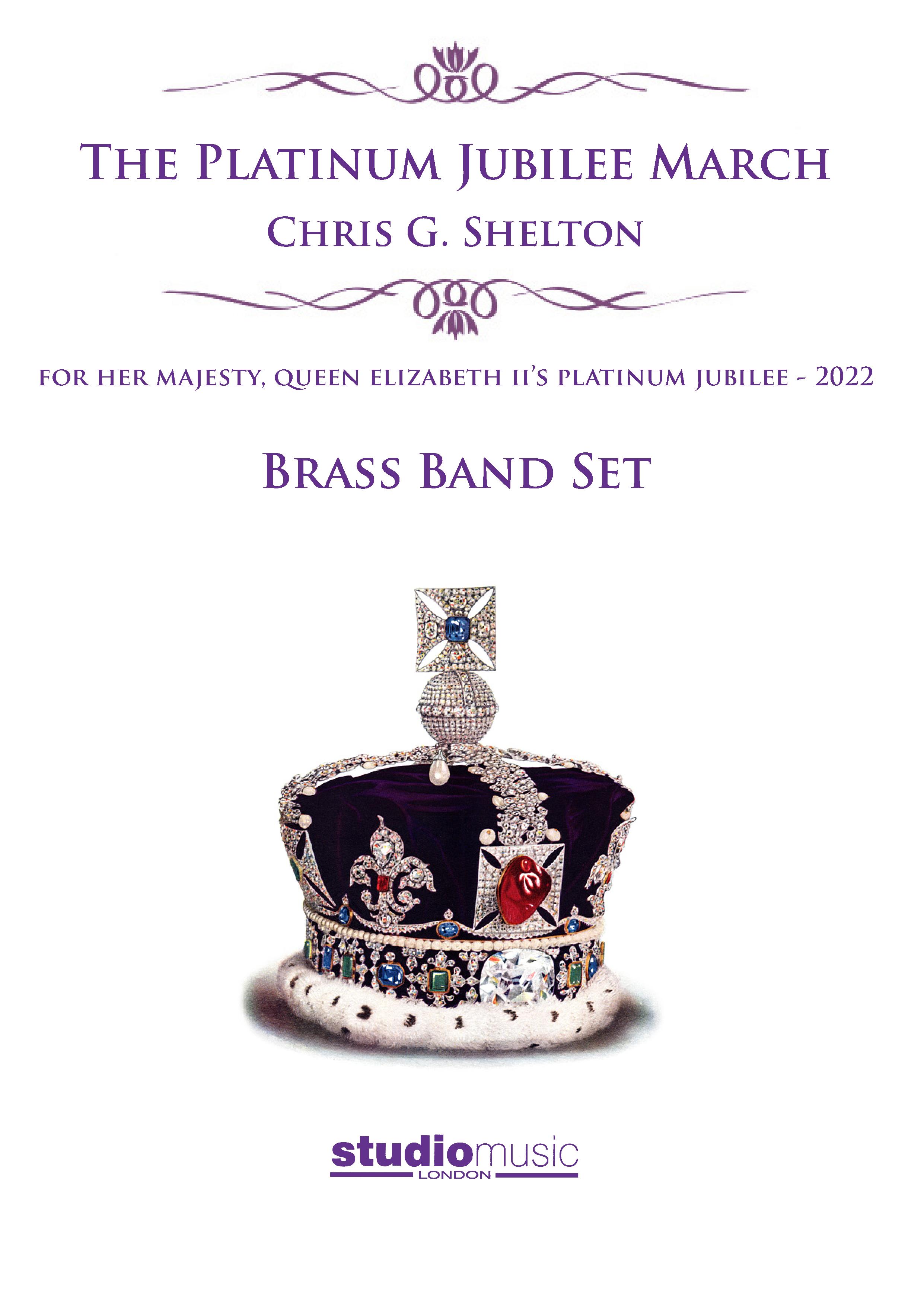
The Platinum Jubilee March was written to celebrate Her Majesty, Queen Elizabeth II's seventy-year reign as monarch of the United Kingdom. Its premiere was televised live around the world as part of the Queen's Birthday Parade which marked the start of the national Platinum Jubilee celebrations.The Queen's Birthday Parade 2022 saw the First Battalion of the Irish Guards trooping their colour. To reflect this, the march begins in a celebratory style and features a melody based around the opening motif of Let Erin Remember - the regimental slow march of the Irish Guards. In traditional style, the march develops excitement both harmonically and melodically, creating a strong sense of drive before reaching a stately trio. This section has a very regal and noble feel, lending subtle harmonic nods to two of the most quintessentially British composers, Gustav Holst, and Sir William Walton. The march culminates in a bold grandioso, featuring semi-quaver lines that are underpinned by a driving trombone countermelody. A forthright restatement of the introductory fanfare brings the march to a very definite and resolved ending.
Estimated dispatch 7-14 working days
-
 £90.00
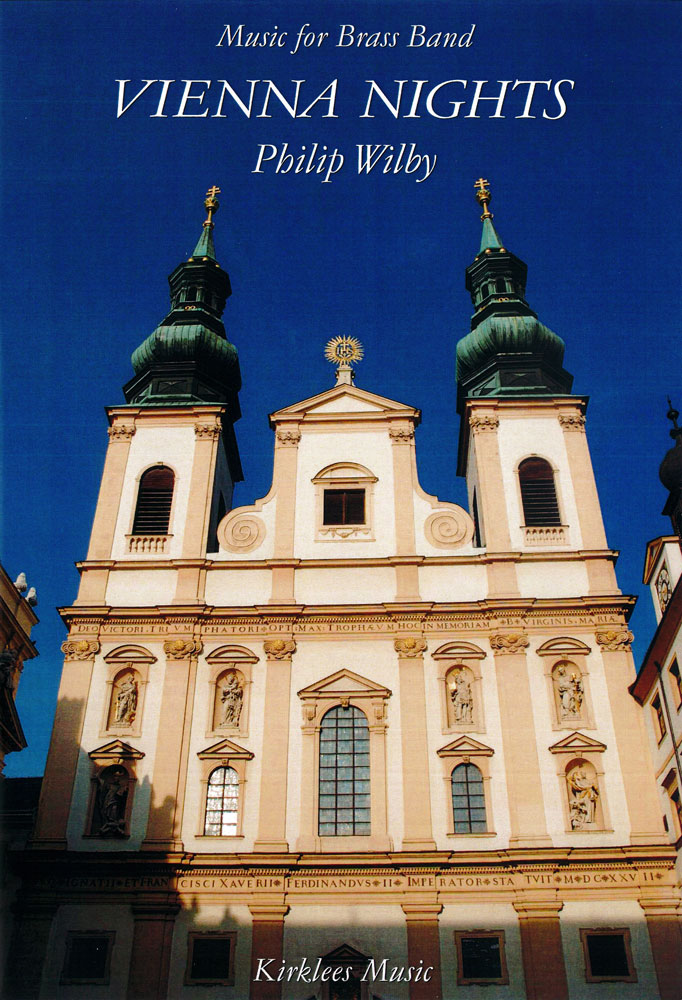
Vienna Nights (Brass Band - Score and Parts)
The City of Vienna stands at one of the historic crossroads of the world, linking east and west and embracing artistic influences from all sides. In the 250th anniversary year of Mozart's birth, this fantasy on Mozart's celebrated Piano Sonata in A (K331), has been composed true to the form and content of the original, but also to the underlying substance of the conception.One of Mozart's distinguishing features, and one that links him to later music by Beethoven, Schubert, Mahler and Schoenberg, is the breadth of his musical vision. His music links intellectual rigour with ecstatic utterance and darker preoccupations. It is, perhaps, this shadow-laden side of his musical nature which gives his work a profundity often absent in the work of his contemporaries. Admirers of his Requiem Mass or the Statue music in Don Giovanni will recognise that it is this extra sense of reality which makes Mozart so relevant to the modern age, and where he may link hands with the other great Viennese thinkers such as Berg, Webern and Adorno.The composer follows the three movement plan of the Sonata closely. The original begins with a Theme and Variations which is freely quoted. His Minuet is mirrored in the Recitative and Notturno, where each section of the band lays down a metaphoric rose to his memory. Famously, the sonata ends in populistic style with a Turkish Rondo. Ever since the Hapsburg-Ottoman Wars, which came to an end in the seventeenth century, Viennese composers have included Turkish elements in their music, not least in the use of certain percussion instruments. Vienna Nights is thusly a homage.It celebrates the world's greatest composer, but also the city which fostered his work. Here, in your imagination, you might easily conjure up a caf table near the Opera House, where Mozart, Mahler and Sigmund Freud, observed by us all from a discreet distance, may meet as old friends.
Estimated dispatch 7-14 working days
-
£12.00
Vienna Nights (Brass Band - Study Score)
The City of Vienna stands at one of the historic crossroads of the world, linking east and west and embracing artistic influences from all sides. In the 250th anniversary year of Mozart's birth, this fantasy on Mozart's celebrated Piano Sonata in A (K331), has been composed true to the form and content of the original, but also to the underlying substance of the conception.One of Mozart's distinguishing features, and one that links him to later music by Beethoven, Schubert, Mahler and Schoenberg, is the breadth of his musical vision. His music links intellectual rigour with ecstatic utterance and darker preoccupations. It is, perhaps, this shadow-laden side of his musical nature which gives his work a profundity often absent in the work of his contemporaries. Admirers of his Requiem Mass or the Statue music in Don Giovanni will recognise that it is this extra sense of reality which makes Mozart so relevant to the modern age, and where he may link hands with the other great Viennese thinkers such as Berg, Webern and Adorno.The composer follows the three movement plan of the Sonata closely. The original begins with a Theme and Variations which is freely quoted. His Minuet is mirrored in the Recitative and Notturno, where each section of the band lays down a metaphoric rose to his memory. Famously, the sonata ends in populistic style with a Turkish Rondo. Ever since the Hapsburg-Ottoman Wars, which came to an end in the seventeenth century, Viennese composers have included Turkish elements in their music, not least in the use of certain percussion instruments. Vienna Nights is thusly a homage.It celebrates the world's greatest composer, but also the city which fostered his work. Here, in your imagination, you might easily conjure up a caf table near the Opera House, where Mozart, Mahler and Sigmund Freud, observed by us all from a discreet distance, may meet as old friends.
Estimated dispatch 7-14 working days
-
 £127.95
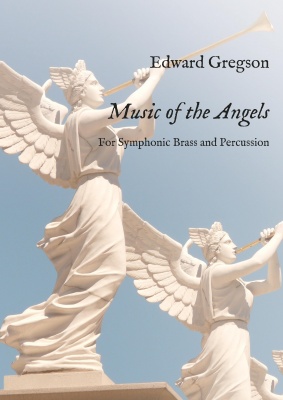
Music of the Angels (Symphonic Brass Ensemble - Score and Parts)
In 1998 Gregson was commissioned by conductor Martyn Brabbins to write a short concert opener with choir to mark his debut as Music Director of the Huddersfield Choral Society. Entitled ...and the seven trumpets... this ten minute flourish is founded on a verse from Chapter 8 of the Revelation To John (The Apocalypse), the last book in the Bible: 'and I saw the seven Angels which stood before God: and to them were given seven trumpets'. The performance employed the full power of the Huddersfield Town Hall organ and the brass section of the BBC Philharmonic, including seven trumpets and four horns placed strategically around hall.The following year, when Gregson received a commission from the Cheshire-based Foden's Brass Band (conducted at that time by Nicholas Childs) for a work to mark its centenary in 2000, he turned to the first portion of ...and the seven trumpets... as the basis for an ambitious celebratory work entitled The Trumpets of the Angels. "The opportunity to create an extended work which would break out of the brass band mould was an important milestone for me," the composer says. In 2015 he was asked by Nicholas Childs to create a new performing edition without organ for the Black Dyke Band. This received its first performance in April 2016 at the European Brass Band Festival in Lille. In 2018, Gregson revisited the music for a third time, returning the opening fanfares to orchestral brass and transforming substantial portions of the 'Black Dyke' version to create Music of the Angels, a dramatic canvas for symphonic brass and percussion.An array of bells and gongs offer an unmistakable key to the source of Gregson's inspiration. Inscribed In tribute to Olivier Messiaen, the work's principal material and its sound world, but crucially not the underlying musical processes, are influenced by Messiaen's masterpiece for wind and percussion, Et exspecto ressurectionem mortuorum (1964). Music of the Angels begins with braying of horns suggestive of the start of an ancient ritual. Six 'angel' trumpeters, set behind the ensemble, answer in sequence, with the evocative sound of tam-tams creating the Messiaen-like aura. Once the horns have reached the performing space, four of the trumpeters deliver highly contrasting fanfare cadenzas. At the climax of this episode, the individual fanfares are presented together, as if, perhaps, to reflect the Biblical writer's apocalyptic visions of hail, fire, seas of blood and the cataclysmic destruction of man and beast.This powerful vision of death and destruction gives way to a prayerful lament, re-imagining a sung Kyrie Eleison from the 'Black Dyke' edition, with flugel horn and euphonium obligati. The hushed atmosphere is broken by tenor and side drums, and trumpets five and six, which gallop away like the Horsemen of the Apocalypse. In the biblical account their steeds had 'heads like lions with fire and smoke and sulphur issuing from their mouths'.As the reverberation of a dramatic climax dies we hear the entry of the seventh trumpet, from 'on high', blazing forth with a version of the main that extends across the entire compass of the instrument - almost three octaves. Supported by a 'holy trinity' of gongs, an 'epic' final cadenza introduces new material which is further developed in a frenetic final section. This is announced by two sets of timpani, to the left and right. Braying brass (euphoniums and horns) once more adds an air of foreboding. As the music builds towards a magisterial conclusion, the Messiaen-inspired tritones of the principal motif are smoothed out into perfect 5ths and combined with the earlier material in a full-voiced chorale, over which the seventh trumpet blazes in triumph.- Programme note by Paul HindmarshScored for1 Trumpet in E flat (Trumpet 5)6 Trumpets in B flat (Trumpet 4 doubling Flugel Horn)4 Horns in F3 Tenor Trombones1 Bass TromboneEuphonium2 Tubas2 Timpani (Percussion 3 doubles Timpani 2)Percussion (3 players): 3 Tam-tams, 3 Suspended Cymbals, Bass Drum, Tenor Drum, Snare Drum, Tubular Bells.Duration: 16.00
Estimated dispatch 7-14 working days
-
 £19.99
Little Hymn (Brass Band - Score and Parts)
Little Hymn was composed by award-winning composer Simon Dobson (b.1981) to provide an alternative to the traditional hymn tune settings that provide one of the foundations of the brass band repertoire. This simple, haunting melody begins on a brass quartet without cornets. The full band joins for the second part, which rises to a richly textured climax before receding to a quiet, reflective close. Duration: 3.00
Estimated dispatch 7-14 working days
 View Music