
Results
-
 £45.00
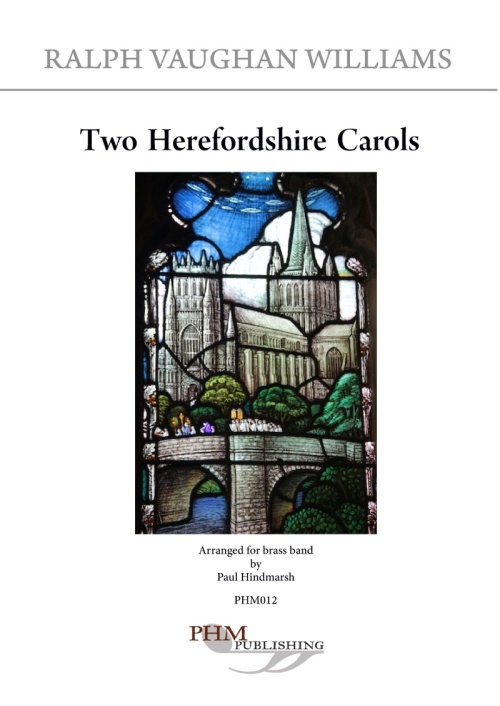
Two Herefordshire Carols (Brass Band - Score and Parts)
The two traditional tunes that comprise this straightforward setting were sung to Ralph Vaughan Williams (1872-1958) by Mrs. Esther Smith of Dilwyn, near Hereford, during one of the great composer's folk song collecting tours of England in the early years of the twentieth century. They were included in Twelve Traditional Carols from Herefordshire, edited by E.M. Leather and Vaughan Williams. The words to which Mrs. Smith sung the first tune were probably drawn from eighteenth century evangelical sources. The editors replaced these with six of the 16 verses of a traditional seventeenth century carol text, Joseph and Mary.The second melody, which appears as the centre piece of this arrangement, was sung to a carol that tells of a farmer who ploughed on Christmas Day. It is in fact a translation of a German traditional carol Gelobet seist du Jesu Christ that was published in Goodly Psalmes and Spiritualle Songes (1546) translated by Miles Coverdale. Vaughan Williams used the title Coverdale's Carol.The brass band settings follow the settings made by Vaughan Williams in 1920 for the Oxford Book of Carols. Since his simple harmonic approach is similar in both settings, three verses of his haunting version of Coverdale's Carol have been folded inside four verses of the slightly more animated treatment of Joseph and Mary. The harmonisations of Vaughan Williams have been given some brass band colour, with some verses taken by soloists from the ensemble. The accompaniment figuration that embellishes the second verse of Joseph and Mary has been used to open and close this arrangement and to bind the verses together.- Paul HindmarshDuration: 5.00
Estimated dispatch 7-14 working days
-
£34.95
COVENANTERS, The (Brass Band Set) - Kenneth Downie
In 1638, many members of the Presbyterian Church of Scotland signed a document called the National Covenant. By doing so, they were declaring that they acknowledged only Jesus Christ as the spiritual head of their church, and not any king or queen. This had become necessary because the Stuart kings believed in the Divine Right of Monarchs and saw themselves as head of the church. In the previous year, Charles I had forcibly introduced the Book of Common Prayer, invoking the wrath of the common people who faced the threat of torture, transportation or execution if they did not use the new liturgy and worship at their local church. The net result of this was that many met illegally in the countryside or in barns and large houses. These meetings became known as 'conventides' and many took place in the south-west of the country. Anyone caught attending was at risk of execution by the muskets of the dragoons who were employed in the area for that specific purpose. This music was written to honour the bravery and loyalty of these Christians to their faith, in the face of extreme danger, in the hope that it will inspire us also to be faithful. There are overtones of military threat, secrecy and solidarity. An old pentatonic tune is used, which the composer heard as a boy being sung to the words The Lord's My Shepherd.
Estimated dispatch 7-14 working days
-
 £24.95
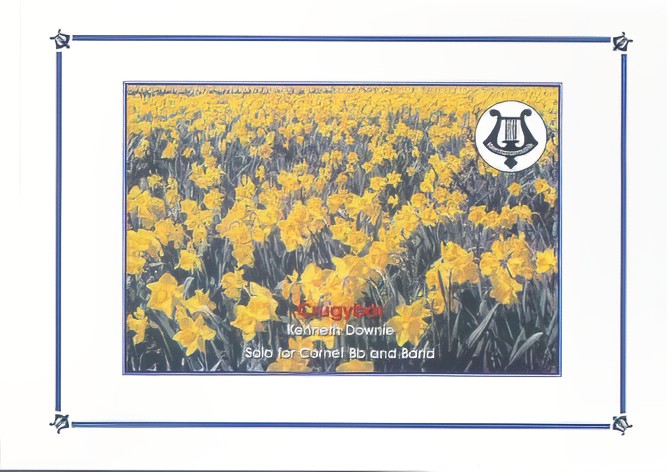
Crugybar - Cornet Solo (Brass Band - Score and Parts) - Downie, Kenneth
The traditional Welsh tune of Crugybar is most commonly associated with words by Howell Elvet Lewis which appear in the Baptist Hymn Book of 1962; 'The light of the morning is breaking, the shadows are passing away'. The Salvation Army Song Book of 1986 lists two further hymns that can be sung to the tune; 'I stand all bewildered with wonder and gaze on the ocean of love' ( W F Crafts) and 'When Jesus from Calvary called me, unfolding its meaning to me' (Will J Brand). This arrangement was made for Martyn Bryant, the long-serving principal cornetist of Bristol Easton Band of The Salvation Army.
Estimated dispatch 7-14 working days
-
£12.50
Crugybar - Cornet Solo (Brass Band - Score Only) - Downie, Kenneth
The traditional Welsh tune of Crugybar is most commonly associated with words by Howell Elvet Lewis which appear in the Baptist Hymn Book of 1962; 'The light of the morning is breaking, the shadows are passing away'. The Salvation Army Song Book of 1986 lists two further hymns that can be sung to the tune; 'I stand all bewildered with wonder and gaze on the ocean of love' ( W F Crafts) and 'When Jesus from Calvary called me, unfolding its meaning to me' (Will J Brand). This arrangement was made for Martyn Bryant, the long-serving principal cornetist of Bristol Easton Band of The Salvation Army.
Estimated dispatch 7-14 working days
-
 £18.99
GRACES OF LOVE (Le Gratie d'Amore) (Brass Band Extra Score) - Waespi, Oliver
2015 National Championships Finals Testpiece - Third Section - Extra Score only. The Graces of Love (Le Gratie d'Amore) is the title of a book published in 1602 by Cesare Negri, the famous dance master of the Milan court in the Renaissance. It contains numerous dance tunes and precise descriptions of courtly dances. It also includes the tune Il bianco fior (The White Flower) on which the first movement of the present piece is based. A vigorous dance in three-four, it leads to an acceleration and a sudden shift to an even meter towards the end. The second movement, calm and contemplative in character, features the tune Vaghe bellezze ... (Veiled Beauty ...). Widely spaced melodic parts surround two solos during which the tune is varied and developed. Finally, the third movement contains a saltarello with a hypnotic rhythm, ending the work with flair and gusto. Duration: 11:30
Estimated dispatch 7-14 working days
-
£118.99
GRACES OF LOVE (Le Gratie d'Amore) (Brass Band Set) - Waespi, Oliver
2015 National Championships Finals Testpiece - Third Section. The Graces of Love (Le Gratie d'Amore) is the title of a book published in 1602 by Cesare Negri, the famous dance master of the Milan court in the Renaissance. It contains numerous dance tunes and precise descriptions of courtly dances. It also includes the tune Il bianco fior (The White Flower) on which the first movement of the present piece is based. A vigorous dance in three-four, it leads to an acceleration and a sudden shift to an even meter towards the end. The second movement, calm and contemplative in character, features the tune Vaghe bellezze ... (Veiled Beauty ...). Widely spaced melodic parts surround two solos during which the tune is varied and developed. Finally, the third movement contains a saltarello with a hypnotic rhythm, ending the work with flair and gusto. Duration: 11:30
Estimated dispatch 7-14 working days
-
 £24.95
SNARING OF THE SUN, The (Brass Band Extra Score) - Roberts, Stephen
2015 National Championships Finals Testpiece - Second Section - Extra Score. The Graces of Love (Le Gratie d'Amore) is the title of a book published in 1602 by Cesare Negri, the famous dance master of the Milan court in the Renaissance. It contains numerous dance tunes and precise descriptions of courtly dances. It also includes the tune Il bianco fior (The White Flower) on which the first movement of the present piece is based. A vigorous dance in three-four, it leads to an acceleration and a sudden shift to an even meter towards the end. The second movement, calm and contemplative in character, features the tune Vaghe bellezze ... (Veiled Beauty ...). Widely spaced melodic parts surround two solos during which the tune is varied and developed. Finally, the third movement contains a saltarello with a hypnotic rhythm, ending the work with flair and gusto. Duration: 11:30
Estimated dispatch 7-14 working days
-
£99.95
SNARING OF THE SUN, The (Brass Band Set) - Roberts, Stephen
2015 National Championships Finals Testpiece - Second Section. The Graces of Love (Le Gratie d'Amore) is the title of a book published in 1602 by Cesare Negri, the famous dance master of the Milan court in the Renaissance. It contains numerous dance tunes and precise descriptions of courtly dances. It also includes the tune Il bianco fior (The White Flower) on which the first movement of the present piece is based. A vigorous dance in three-four, it leads to an acceleration and a sudden shift to an even meter towards the end. The second movement, calm and contemplative in character, features the tune Vaghe bellezze ... (Veiled Beauty ...). Widely spaced melodic parts surround two solos during which the tune is varied and developed. Finally, the third movement contains a saltarello with a hypnotic rhythm, ending the work with flair and gusto. Duration: 11:30
Estimated dispatch 7-14 working days
-
 £24.95
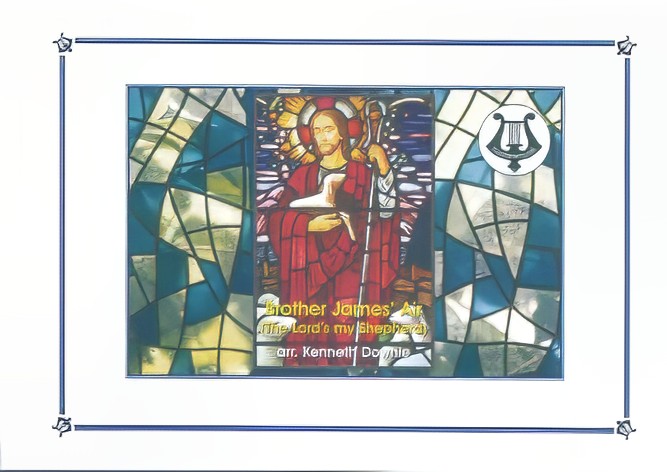
Brother James' Air (Brass Band - Score and Parts) - Bain, James - Downie, Kenneth
The 'brother James' who wrote this beautiful tune was James Leith Macbeth Bain. He was born in Scotland in 1840 and died in Liverpool in 1925. Besides being a musician, he was a poet, mystic and had a great interest in healing. He published a book called 'The brotherhood of healing' in 1906 and spent the latter years of his life working with the underprivileged in Liverpool. He wrote this simple but charming tune to accompany the familiar paraphrase of Psalm 23 which comes from the Scottish Psalter of 1650; 'The Lord's my shepherd, I'll not want'.
Estimated dispatch 7-14 working days
-
£12.50
Brother James' Air (Brass Band - Score Only) - Bain, James - Downie, Kenneth
The 'brother James' who wrote this beautiful tune was James Leith Macbeth Bain. He was born in Scotland in 1840 and died in Liverpool in 1925. Besides being a musician, he was a poet, mystic and had a great interest in healing. He published a book called 'The brotherhood of healing' in 1906 and spent the latter years of his life working with the underprivileged in Liverpool. He wrote this simple but charming tune to accompany the familiar paraphrase of Psalm 23 which comes from the Scottish Psalter of 1650; 'The Lord's my shepherd, I'll not want'.
Estimated dispatch 7-14 working days
 View Music