
Results
-
 £74.95
Aspects of Adiemus (Brass Band - Score and Parts)
Aspects of Adiemus is a collection from one of the world's most popular composers, Karl Jenkins. Adiemus, literally translated, means 'we will draw near' and represents a musical language which can be heard on five award winning albums from the composer.Since Adiemus has risen in popularity around the world, it has become a growing entity meaning many different things to many different people. Vocally, the spread of influence grows wider all the time, taking in Arabic and African sounds as well as "Celtic" and ecclesiastical ones. The percussion too has expanded using Indian, Middle Eastern, Japanese, Chinese and even Australian instrumentation.The evolving nature of Adiemus has meant that it has been difficult to categorise. New age, classical crossover, world music, even pop. Karl sees this as a good sign: "To me, Adiemus transcends labels. The fact that it reaches people of different backgrounds, faiths and cultures gives it a universal appeal which is special. The compositions can be spiritual, religious, meditative - it's open to 'move' people in any away they choose to experience."Ironically, the Adiemus project 'got off the ground' initially due to a television commercial for an airline. Karl Jenkins explains, "I'd been toying with a new idea, completely separate to my work in advertising, but at this time, Jenkins Ratledge were commissioned to come up with the music for an airline commercial. We presented the client with a demonstration tape of one of my completed compositions and they loved it."That composition became known as Adiemus. The music for the airline commercial was aired and immediately drew interest from the public. Karl: "It's ironic that a piece of music not originally intended for a TV commercial should end up on a TV commercial, and that this music became the springboard for the success of the Adiemus project."Expertly arranged by Peter Graham, Aspects of Adiemus features the eponymous 'Adiemus', an uplifting and instantly recognisable opener. 'Chorale - Za Ma Ba' and 'Chorale - Vocalise' are songs of sanctuary, the latter featuring a chamber group from within the band. The vibrant 'Song of the Spirit' is a cornet feature, and the finale, 'Song of the Plains' combines intense rhythmic energy with tribal harmonies. Duration is variable depending on movement selection and optional cuts.Duration: 20.00
Estimated dispatch 7-14 working days
-
 £49.95
Bestowal of a Century - Christopher Bond
Bestowal of a Century (2014) was commissioned by Lowenna Taylor, and funded through her Harry Mortimer Trust award which she was presented with at the 2013 British Open Championship following the completion of her studies at the Royal Welsh College of Music in Cardiff. The 15-minute work received its world premiere at the Cornwall Youth Brass Band Christmas concert in 2014 with solosit, Lowenna, working alongside the band under the baton of Les Neish. The 'Bestowal' refers to the presentation of the Royal Trophy by the then Prince of Wales to the famous West of England Bandsman's Festival in Bugle in 1913. Over the years it has been won by some of the greatest names in brass banding, including Black Dyke and Munn & Feltons - although more recently it has become a wonderful open festival that includes sections for local bands as well as visitors from all over the banding globe. 2014 marked the one-hundredth anniversary of the presentation of the trophy, which is the only brass band trophy to have the official seal of royal patronage. The work, in three distinct sections, opens in a mysterious way, building progressively with interjections from the horn. The composer notes its as though one can imagine different part of the trophy being put together, piece by piece, until the trophy is complete and a climax is reached. Following this, a playful theme is presented which is developed throughout the first section and interacting between soloist and band. The second movement, in complete contrast, is a lyrical melody; heart-wrenching throughout, and sits well both as part of the concerto and also as a stand-alone solo item. The third movement is light-hearted and virtuosic, demonstrating the technical capabilities of the instrument with fast and virtuosic playing, and a cadenza towards the end of the work.
Estimated dispatch 10-14 working days
-
 £35.00
strange geometry
Descriptionstrange geometrywas commissioned by Morgan Griffiths and the Hammonds Saltaire Band for their performance at the Brass in Concert Championships of 2015.As a bit of a space/sci-fi geek, as well as a musician, two events during the summer of 2015 had a particular effect on me. The first was the tragic early death in a plane crash of the famous film composer James Horner. Horner's music, particularly in films like 'Star Trek II: The Wrath of Khan', 'Avatar', 'Apollo 13' and even his debut in Roger Corman's 1980 budget film 'Battle Beyond the Stars', defined for a generation the sound of sci-fi at the cinema. Along with John Williams he created the vocabulary for those who wish to express other-worldly wonder in music and his inventive talent will be much missed in an industry where originality has become something of a dirty word in recent years.The second event was the epic flyby of Pluto by the NASA New Horizons spacecraft. There are many reasons to find this mission inspiring - for example, the scientists and engineers behind it created a craft that has travelled at 37,000 mph for nine years and three billion miles to arrive within seventy-two seconds of the predicted time for the flyby. That they achieved this with such accuracy is an outstanding tribute to humanity's ingenuity and insatiable curiosity. However, the most exciting aspect of the mission was the clear, high resolution pictures of this unthinkably remote and inhospitable world beamed back to mission control. The best previous image of Pluto was an indistinct fuzzy blob - suddenly we could see mountains made of ice, glaciers of methane and carbon monoxide and nitrogen fog - features previously unimagined on a world thought to be a slightly dull ball of cold rock. The BBC's venerable astronomy programme 'The Sky at Night' waxed lyrical about these newly discovered features, referring to "the surprising discoveries of mountains and strange geometry on the surface of this cold distant world".I like to think that Horner would have been as inspired as I have been by this real-life science story, and this piece uses some of the vocabulary of the sci-fi movie soundtrack in a tribute to the memory of a great musician and to the inspirational geeks at NASA who have boldly taken us where no-one has gone before.Note: This work comes with a B4 portrait score. Listen to a preview and follow the music below!
Estimated dispatch 7-14 working days
-
 £30.00
Eriskay Love Lilt (with brass band) - Trad
Eriskay Love Lilt is a traditional Gaelic melody from the Western Isles of Scotland, sensitively arranged here by Andrew Duncan as a cornet solo with brass band accompaniment.This arrangement was written in 2001 for Phillip McCann and was first played by him with the Hepworth Band at the 2002 Leek Music Festival in Derbyshire, England. It has also since been recorded by Eleanor Ferguson with the Whitburn Band on Reflections of Freedom.Andrew Duncan comments: The Isle of Eriskay (Eirisgeigh) lies forty miles off the North West coast of Scotland in the North Atlantic. It is a small island, only two kilometres square and lies between the larger islands of South Uist and Barra. Eriskay is one of the islands which form the archipelago known as the Western Isles or Na h-Eileanan an Air. The Eriskay Love Lilt is a hauntingly beautiful tune which is typical of the greater number of traditional Gaelic melodies in that it is largely based on the Aeolian mode, the black notes on the piano.Also available with piano accompanimentor as a solo with brass ensemble (10-piece).
In Stock: Estimated dispatch 3-5 working days
-
 £38.95
Unity Series Band Journal - Numbers 534 - 537, October 2024
534: Boldly Going (Wycliffe Kortin)This arrangement is derived from a Kenyan Swahili gospel melody Simama Imara, which means 'to stand firm'. The song is an encouragement to Christians to stay strong in the Lord, even in times of difficulty. The piece has a lively rock feel which requires precision in articulation and a sense of drive throughout.535: Fill me anew (Mark Feltwell)The melody Fill me anew (T.B. 611) has always been a favourite of the composer and this composition was used at the Worchester Corps in their Pentecost services. It is a simple melody with a simple purpose and associated prayer that is the focus of the piece, 536: There's something about that name (William Gaither arr. Kingsley Layton)The chorus (S.A.S.B. 80) from which this piece takes its title was composed by Bill and Gloria Gaither. They wrote it in 1970, having watched their grandparents near the end of their lives and pass away. At the same time, they were, as a couple, embracing parenthood. It resonated with them how the young loved to say the name of Jesus as well as those that were nearing the end of their lives. The chorus reflects the peace and comfort which comes to us when we call on that name during both the good and challenging times in life. The Gaithers are a performing and songwriting couple who have become well-known within the Southern Gospel music genre.537: Selection - Singing Praises! (Noel Jones)A motif, based on the phrase 'Praise him!, Praise him!, Ever in joyful song', appears throughout the selection. Songs also featured include I love to sing of the Saviour (S.A.S.B. 845) and Singing glory, glory, Glory be to God on high (S.A.S.B. 840)
Estimated dispatch 7-14 working days
-
 £9.99
£9.99Christmas Collection - Large Print A4
Christmas Collection is a newly revised carol book with original, additional and rearranged carols from New Christmas Praise as well as 10 extended pieces. Parts are now also available in large print A4 size!Titles:A child this day is bornA Christmas lullabyA great and mighty wonderAll I want for Christmas is youAll my heart this night rejoicesAngels, from the realms of Glory (Come and worship)Angels, from the realms of Glory (Iris)Angels we have heard on highA starry nightAs with gladness men of oldAuld lang syneA virgin most pureAway in a manger (The manger scene)Away in a manger (Traditional)A winter's taleBethlehemBrightest and best (Spean)Brightest and best (Traditional)Calypso CarolCarol for the NativityCarol of the bellsCarol of the drumChild of MaryChristians Awake!Christ is born (Il est n)Christ was born on Christmas DayCome and join the celebrationCome, children, come quicklyCoventry CarolDeck the hallDing dong! merrily on highDo you hear what I hear?Frosty the snowmanGabriel's MessageGaudeteGlory in the highestGlory in the highest HeavenGod of God, the uncreatedGod rest you merry, gentlemenGood Christian men, rejoiceGood King WenceslasGo, tell it on the mountain!Happy Christmas (War is over)Hark the glad sound!Hark! the herald angels singHave yourself a merry little ChristmasHere we come a-wassailingHow far is it to Bethlehem?Huron CarolInfant HolyIn the bleak midwinter (Cranham)In the bleak midwinter (Darke)I saw mommy kissing Santa ClausI saw three ships come sailing inIt came upon a midnight clear (Traditional)It came upon a midnight clear (Willis)It's beginning to look a lot like ChristmasIt's the most wonderful time of the yearI wish it could be Christmas everydayI wonder as I wanderJesus, good above all otherJingle BellsJingle bell rockJoy to the world!Last ChristmasLet it snow!Little baby JesusLittle children, wake and listenLittle DonkeyLittle Jesus, sweetly sleepLo! he comes with clouds descendingLong, long agoLove came down at ChristmasMary's boy childMary's ChildMasters in this hallMerry Christmas everyoneMistletoe and wineNoelO Christmas treeO come, all ye faithfulO come, ImmanuelO Heaven-sent KingO holy night!O little town of Bethlehem (Christmas Carol)O little town of Bethlehem (Forest Green)O little town of Bethlehem (St Louis)Once in royal David's cityPast three o'clockPatapanPersonent HodiePraise ye the LordRing the bellsRise up, shepherd!Rockin' around the Christmas treeRudolph, the red-nosed reindeerSans day carolSanta Claus is comin' to townSaviour's DaySee, amid the winter's snowSilent Night!Sleigh RideSoftly the night is sleepingSo here it is, merry ChristmasStars are shiningStill, still, stillStop the cavalrySussex CarolSweet chiming bellsSweet chiming Christmas bellsThe candle songThe cherry tree carolThe Christmas songThe first NowellThe holly and the ivyThe infant KingThe light has comeThe shepherds' farewellThe stable doorThe star in the eastThe twelve days of ChristmasThe virgin Mary had a baby boyThey all were looking for a kingThou didst leave thy throneThree kings' marchUnto us a boy is bornWalking in the airWe gather round the manger-bedWe three kings of Orient areWe wish you a merry ChristmasWhat child is this?When a child is bornWhen Santa got stuck up the chimneyWhence is that goodly fragrance flowing?When wise men came seekingWhile shepherds watched (Cranbrook)While shepherds watched (Handel)While shepherds watched (Winchester Old)White ChristmasWho is he?Winter WonderlandWorldwide Christmas messageZither CarolA starry nightChristmas JoyChristmas PraiseCoventry CarolInfant HolyMid-winterRudolph, the red-nosed reindeerThe everlasting lightTo celebrate his birthYuletide Rag
Estimated dispatch 7-14 working days
-
£7.99
Christmas Collection - March Card Size
Christmas Collection is a newly revised carol book with original, additional and rearranged carols from New Christmas Praise as well as 10 extended pieces. Parts are now also available in large print A4 size!Titles:A child this day is bornA Christmas lullabyA great and mighty wonderAll I want for Christmas is youAll my heart this night rejoicesAngels, from the realms of Glory (Come and worship)Angels, from the realms of Glory (Iris)Angels we have heard on highA starry nightAs with gladness men of oldAuld lang syneA virgin most pureAway in a manger (The manger scene)Away in a manger (Traditional)A winter's taleBethlehemBrightest and best (Spean)Brightest and best (Traditional)Calypso CarolCarol for the NativityCarol of the bellsCarol of the drumChild of MaryChristians Awake!Christ is born (Il est n)Christ was born on Christmas DayCome and join the celebrationCome, children, come quicklyCoventry CarolDeck the hallDing dong! merrily on highDo you hear what I hear?Frosty the snowmanGabriel's MessageGaudeteGlory in the highestGlory in the highest HeavenGod of God, the uncreatedGod rest you merry, gentlemenGood Christian men, rejoiceGood King WenceslasGo, tell it on the mountain!Happy Christmas (War is over)Hark the glad sound!Hark! the herald angels singHave yourself a merry little ChristmasHere we come a-wassailingHow far is it to Bethlehem?Huron CarolInfant HolyIn the bleak midwinter (Cranham)In the bleak midwinter (Darke)I saw mommy kissing Santa ClausI saw three ships come sailing inIt came upon a midnight clear (Traditional)It came upon a midnight clear (Willis)It's beginning to look a lot like ChristmasIt's the most wonderful time of the yearI wish it could be Christmas everydayI wonder as I wanderJesus, good above all otherJingle BellsJingle bell rockJoy to the world!Last ChristmasLet it snow!Little baby JesusLittle children, wake and listenLittle DonkeyLittle Jesus, sweetly sleepLo! he comes with clouds descendingLong, long agoLove came down at ChristmasMary's boy childMary's ChildMasters in this hallMerry Christmas everyoneMistletoe and wineNoelO Christmas treeO come, all ye faithfulO come, ImmanuelO Heaven-sent KingO holy night!O little town of Bethlehem (Christmas Carol)O little town of Bethlehem (Forest Green)O little town of Bethlehem (St Louis)Once in royal David's cityPast three o'clockPatapanPersonent HodiePraise ye the LordRing the bellsRise up, shepherd!Rockin' around the Christmas treeRudolph, the red-nosed reindeerSans day carolSanta Claus is comin' to townSaviour's DaySee, amid the winter's snowSilent Night!Sleigh RideSoftly the night is sleepingSo here it is, merry ChristmasStars are shiningStill, still, stillStop the cavalrySussex CarolSweet chiming bellsSweet chiming Christmas bellsThe candle songThe cherry tree carolThe Christmas songThe first NowellThe holly and the ivyThe infant KingThe light has comeThe shepherds' farewellThe stable doorThe star in the eastThe twelve days of ChristmasThe virgin Mary had a baby boyThey all were looking for a kingThou didst leave thy throneThree kings' marchUnto us a boy is bornWalking in the airWe gather round the manger-bedWe three kings of Orient areWe wish you a merry ChristmasWhat child is this?When a child is bornWhen Santa got stuck up the chimneyWhence is that goodly fragrance flowing?When wise men came seekingWhile shepherds watched (Cranbrook)While shepherds watched (Handel)While shepherds watched (Winchester Old)White ChristmasWho is he?Winter WonderlandWorldwide Christmas messageZither CarolA starry nightChristmas JoyChristmas PraiseCoventry CarolInfant HolyMid-winterRudolph, the red-nosed reindeerThe everlasting lightTo celebrate his birthYuletide Rag
Estimated dispatch 7-14 working days
-
 £49.95
Bestowal of a Century (Tenor Horn Solo)
Tenor Horn Solo with Brass BandBestowal of a Century (2014) was commissioned by Lowenna Taylor, and funded through her Harry Mortimer Trust award which she was presented with at the 2013 British Open Championship following the completion of her studies at the Royal Welsh College of Music in Cardiff. The 15-minute work received its world premiere at the Cornwall Youth Brass Band Christmas concert in 2014 with solosit, Lowenna, working alongside the band under the baton of Les Neish.The Bestowal refers to the presentation of the Royal Trophy by the then Prince of Wales to the famous West of England Bandsman's Festival in Bugle in 1913. Over the years it has been won by some of the greatest names in brass banding, including Black Dyke and Munn & Feltons - although more recently it has become a wonderful open festival that includes sections for local bands as well as visitors from all over the banding globe. 2014 marked the one-hundredth anniversary of the presentation of the trophy, which is the only brass band trophy to have the official seal of royal patronage.The work, in three distinct sections, opens in a mysterious way, building progressively with interjections from the horn. The composer notes its as though one can imagine different part of the trophy being put together, piece by piece, until the trophy is complete and a climax is reached. Following this, a playful theme is presented which is developed throughout the first section and interacting between soloist and band.The second movement, in complete contrast, is a lyrical melody; heart-wrenching throughout, and sits well both as part of the concerto and also as a stand-alone solo item. The third movement is light-hearted and virtuosic, demonstrating the technical capabilities of the instrument with fast and virtuosic playing, and a cadenza towards the end of the work.
Estimated dispatch 7-14 working days
-
 £189.95
'The New Christmas Collection' - Full Set March Card Size
The new Christmas Collection carol books contain all the traditional Christmas Carols, with some new 'pop' music arrangements included to add more variety to your carolling this year.
* Note, these are not compatible with the New Christmas Praise books.
Full list of works in The Christmas Collection:-
• A child this day is born
Estimated dispatch 7-14 working days
• A Christmas lullaby
• A great and mighty wonder
• All I want for Christmas is you
• All my heart this night rejoices
• Angels, from the realms of Glory (Come and worship)
• Angels, from the realms of Glory (Iris)
• Angels we have heard on high
• A starry night
• As with gladness men of old
• Auld lang syne
• A virgin most pure
• Away in a manger (The manger scene)
• Away in a manger (Traditional)
• A winter’s tale
• Bethlehem
• Brightest and best (Spean)
• Brightest and best (Traditional)
• Calypso Carol
• Carol for the Nativity
• Carol of the bells
• Carol of the drum
• Child of Mary
• Christians Awake!
• Christ is born (Il est né)
• Christ was born on Christmas Day
• Come and join the celebration
• Come, children, come quickly
• Coventry Carol
• Deck the hall
• Ding dong! merrily on high
• Do you hear what I hear?
• Frosty the snowman
• Gabriel’s Message
• Gaudete
• Glory in the highest
• Glory in the highest Heaven
• God of God, the uncreated
• God rest you merry, gentlemen
• Good Christian men, rejoice
• Good King Wenceslas
• Go, tell it on the mountain!
• Happy Christmas (War is over)
• Hark the glad sound!
• Hark! the herald angels sing
• Have yourself a merry little Christmas
• Here we come a-wassailing
• How far is it to Bethlehem?
• Huron Carol
• Infant Holy
• In the bleak midwinter (Cranham)
• In the bleak midwinter (Darke)
• I saw mommy kissing Santa Claus
• I saw three ships come sailing in
• It came upon a midnight clear (Traditional)
• It came upon a midnight clear (Willis)
• It’s beginning to look a lot like Christmas
• It’s the most wonderful time of the year
• I wish it could be Christmas everyday
• I wonder as I wander
• Jesus, good above all other
• Jingle Bells
• Jingle bell rock
• Joy to the world!
• Last Christmas
• Let it snow!
• Little baby Jesus
• Little children, wake and listen
• Little Donkey
• Little Jesus, sweetly sleep
• Lo! he comes with clouds descending
• Long, long ago
• Love came down at Christmas
• Mary’s boy child
• Mary’s Child
• Masters in this hall
• Merry Christmas everyone
• Mistletoe and wine
• Noel
• O Christmas tree
• O come, all ye faithful
• O come, Immanuel
• O Heaven-sent King
• O holy night!
• O little town of Bethlehem (Christmas Carol)
• O little town of Bethlehem (Forest Green)
• O little town of Bethlehem (St Louis)
• Once in royal David’s city
• Past three o’clock
• Patapan
• Personent Hodie
• Praise ye the Lord
• Ring the bells
• Rise up, shepherd!
• Rockin’ around the Christmas tree
• Rudolph, the red-nosed reindeer
• Sans day carol
• Santa Claus is comin’ to town
• Saviour’s Day
• See, amid the winter’s snow
• Silent Night!
• Sleigh Ride
• Softly the night is sleeping
• So here it is, merry Christmas
• Stars are shining
• Still, still, still
• Stop the cavalry
• Sussex Carol
• Sweet chiming bells
• Sweet chiming Christmas bells
• The candle song
• The cherry tree carol
• The Christmas song
• The first Nowell
• The holly and the ivy
• The infant King
• The light has come
• The shepherds’ farewell
• The stable door
• The star in the east
• The twelve days of Christmas
• The virgin Mary had a baby boy
• They all were looking for a king
• Thou didst leave thy throne
• Three kings’ march
• Unto us a boy is born
• Walking in the air
• We gather round the manger-bed
• We three kings of Orient are
• We wish you a merry Christmas
• What child is this?
• When a child is born
• When Santa got stuck up the chimney
• Whence is that goodly fragrance flowing?
• When wise men came seeking
• While shepherds watched (Cranbrook)
• While shepherds watched (Handel)
• While shepherds watched (Winchester Old)
• White Christmas
• Who is he?
• Winter Wonderland
• Worldwide Christmas message
• Zither Carol
• A starry night
• Christmas Joy
• Christmas Praise
• Coventry Carol
• Infant Holy
• Mid-winter
• Rudolph, the red-nosed reindeer
• The everlasting light
• To celebrate his birth
• Yuletide Rag
-
 £0.99
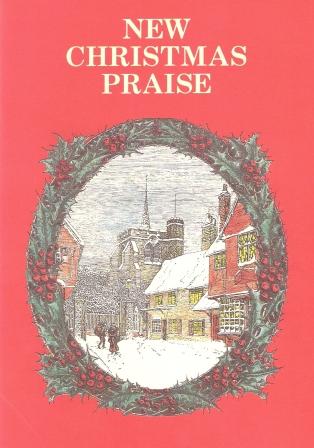
£0.99New Christmas Praise Song Book 1 - 95
These books are now an archive publication and, although are still available, have been superseded by Christmas Collection (available in marchcard size: https://www.sps-shop.com/cc-marchcard or A4 size https://www.sps-shop.com/cc-largeprint). Christmas Collection includes 46 new carols and songs as well as 10 extended carols (originally seen in the Sounds of Christmas books).Ideal for congregational singing.CONTENTS 1. A child this day is born 2. A Christmas Lullaby 3. A great and mighty wonder 4. A starry night 5. A virgin most pure 6. All my heart this night rejoices 7. Angels from the realms of Glory (Come and worship) 8. Angels from the realms of Glory (Iris) 9. Angels, sing again? 10.Angels we have heard on high 11.As with gladness men of old 12. Away in a manger 13. Away in a manger (The manger scene) 14. Bethlehem 15. Brightest and best 16. Brightest and best (Spean) 17. Child of Mary 18.. Calypso Carol 19. Carol for the Nativity 20. Carol of the bells 21.Carol of the drum 22. Christ was born on Christmas Day 23. Christians Awake 24. Come, children, come quickly 25. Coventry carol 26. Do you hear what I hear 27. Ding dong! merrily on high 28. Gabriels message 29. Glory in the highest 30. Go, tell it on the mountain 31. God of God, the uncreated 32. God rest you merry, gentlemen 33. Good Christian men, rejoice 34. Good King Wenceslas 35. Hark the glad sound! 36. Hark! the herald angels sing 37. How far is it to Bethlehem 38. I saw three ships come sailing in 39. I wonder as I wander 40. Il est n 41. Immanuel Appears 42. In the bleak mid-winter 43. Infant Holy 44. It came upon the midnight clear (Traditional) 45. It came upon the midnight clear (Willis) 46. Jesus, good above all other 47. Joy to the world 48. Little baby Jesus 49. Little Jesus, sweetly sleep. 50. Little donkey 51. Long, long ago 52. Marys boy child 53. Masters in this hall 54. Noel 55. o come, all ye faithful 56. o come, Immanuel 57. O come with me to Bethlehem 58. O little town of Bethlehem (Christmas Carol) 59. O little town of Bethlehem (Forest Green) 60. O little town of Bethlehem (St Louis) 61. O Heaven-sent King 62. O holy night 63. Once, in royal Davids city 64. Past three oclock 65. Personent hodie 66. Praise ye the Lord 67. Rise up, shepherd! 68. Sans day carol 69. See, amid the winters snow 70. Silent night! 71. Sleep, holy Babe 72. Softly the night is sleeping 74. Stars are shining 73. Sussex carol 76. Sweet chiming bells 75. Sweet chiming Christmas bells 77. The angels sang the story 78. The first Nowell 79. The holy Boy 80. The holly and the ivy 81. The infant King 82. The shepherds farewell 83. The virgin Mary had a baby boy 84. The stable door 85. They all were looking for a king 86. Three kings march 87. Unto us a boy is born 88. Wayfaring 89. We gather round the manger-bed 90. We three kings of Orient are 91. What child is this 92. When wise men came seeking 93. While shepherds watched 94. Who is he 95. Zither carol
Estimated dispatch 7-14 working days