
Results
-
 £14.95
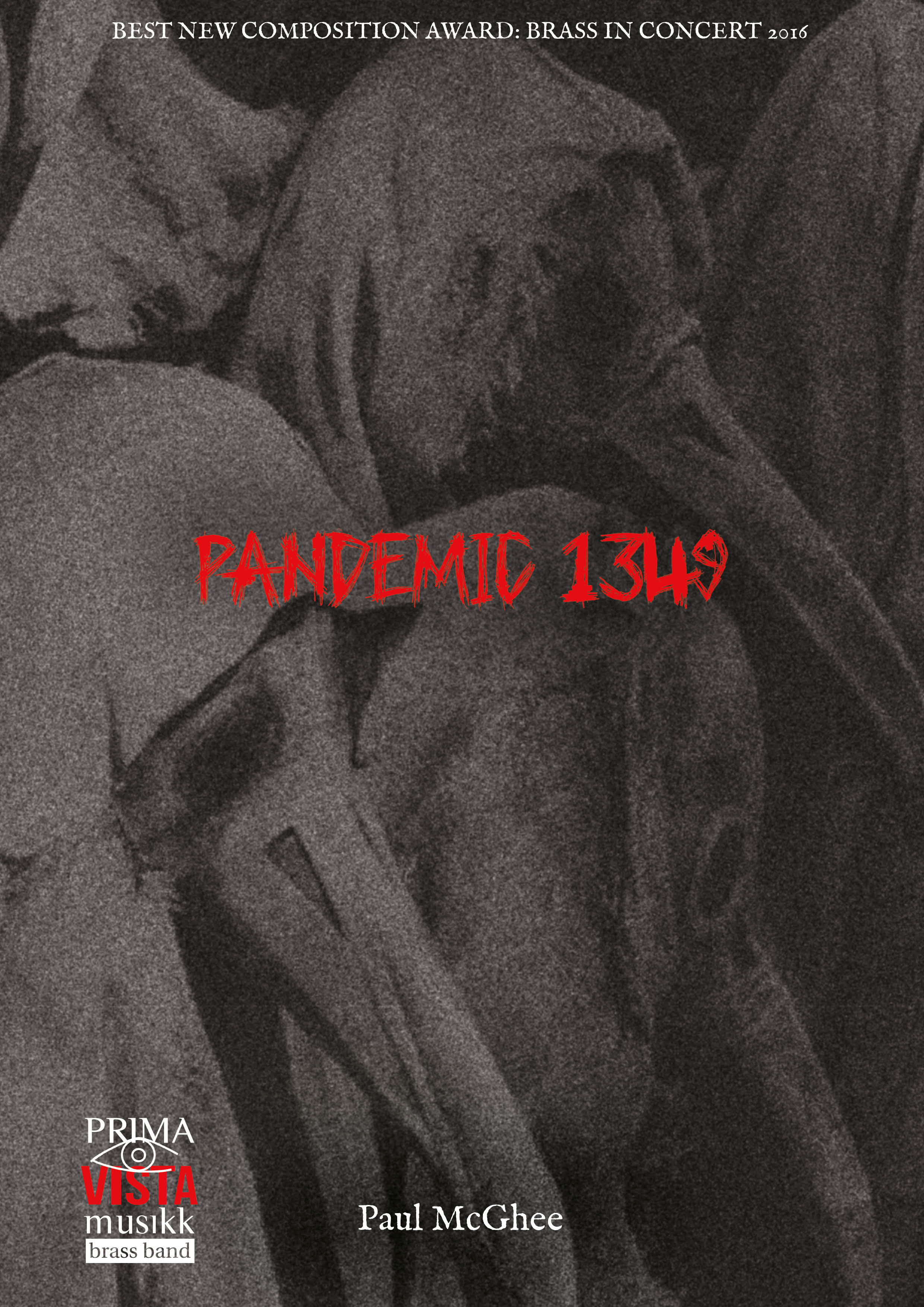
Pandemic 1342 (Score Only)
'Pandemic 1349' was written during September and October 2016 and received its premiere on Sunday 20 th November at the 40 th Brass in Concert Championships at the Sage, Gateshead where it received the best new composition/arrangement award.'Pandemic 1349' is a concert work that aims to capture the atmosphere of fear and terror as the plague spreads throughout the city. The cries and screams get louder and reach a chaotic climax, before a calmer and reflective passage takes over - although the chaos and fear never totally leaves as the melodic material is played against the backdrop of what has gone before.London lost almost half of its population during the Black Death, making this one of the single most devastating events in the city's dark history. The outbreak not only shaped the number of inhabitants in London but also changed their mind-sets with many turning to religion - even the English language was to be forever altered.
Estimated dispatch 7-14 working days
-
 £34.95
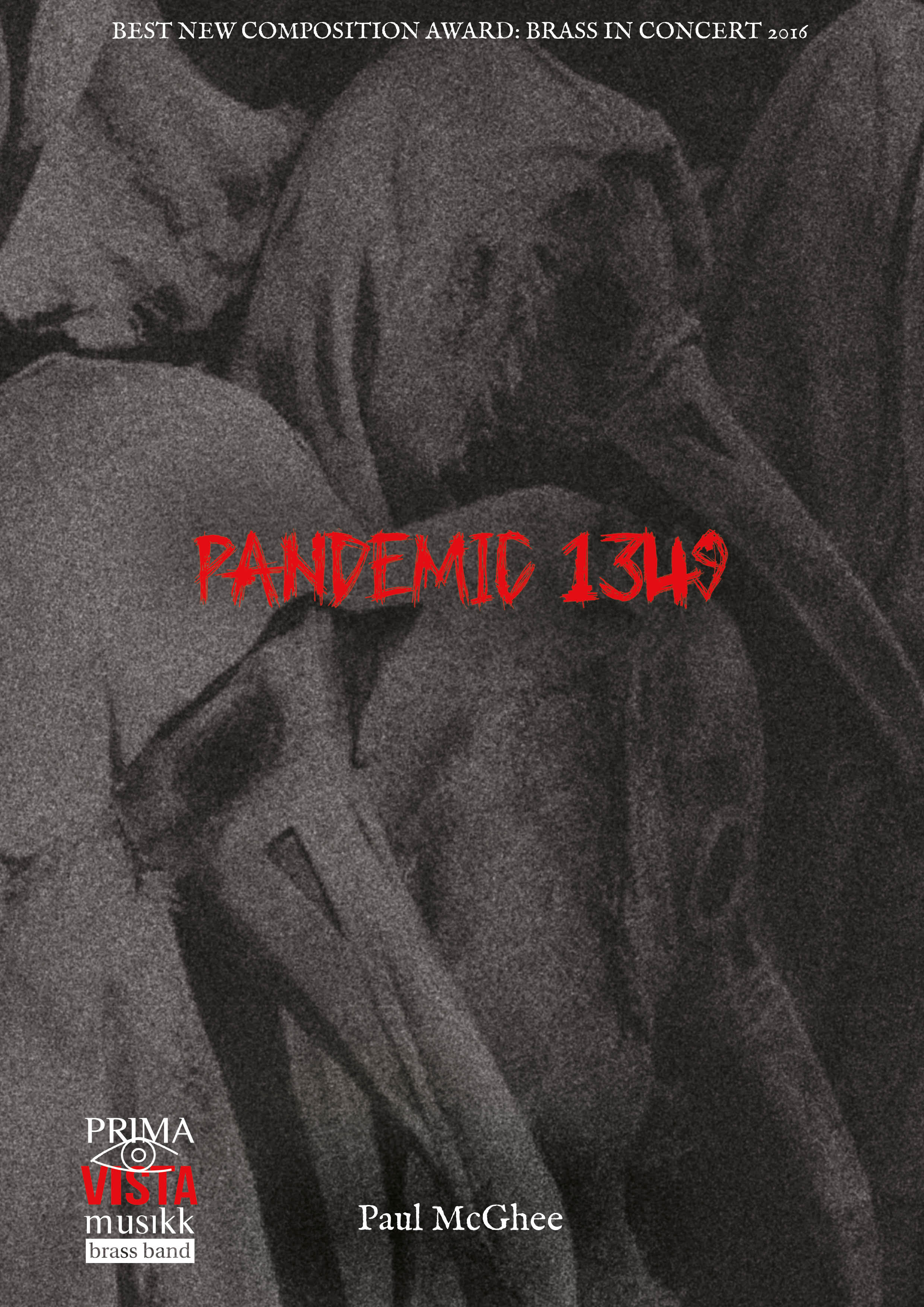
Pandemic 1349 (Brass Band - Score and Parts)
'Pandemic 1349' was written during September and October 2016 and received its premiere on Sunday 20 th November at the 40 th Brass in Concert Championships at the Sage, Gateshead where it received the best new composition/arrangement award.'Pandemic 1349' is a concert work that aims to capture the atmosphere of fear and terror as the plague spreads throughout the city. The cries and screams get louder and reach a chaotic climax, before a calmer and reflective passage takes over - although the chaos and fear never totally leaves as the melodic material is played against the backdrop of what has gone before.London lost almost half of its population during the Black Death, making this one of the single most devastating events in the city's dark history. The outbreak not only shaped the number of inhabitants in London but also changed their mind-sets with many turning to religion - even the English language was to be forever altered.
Estimated dispatch 7-14 working days
-
 £19.95
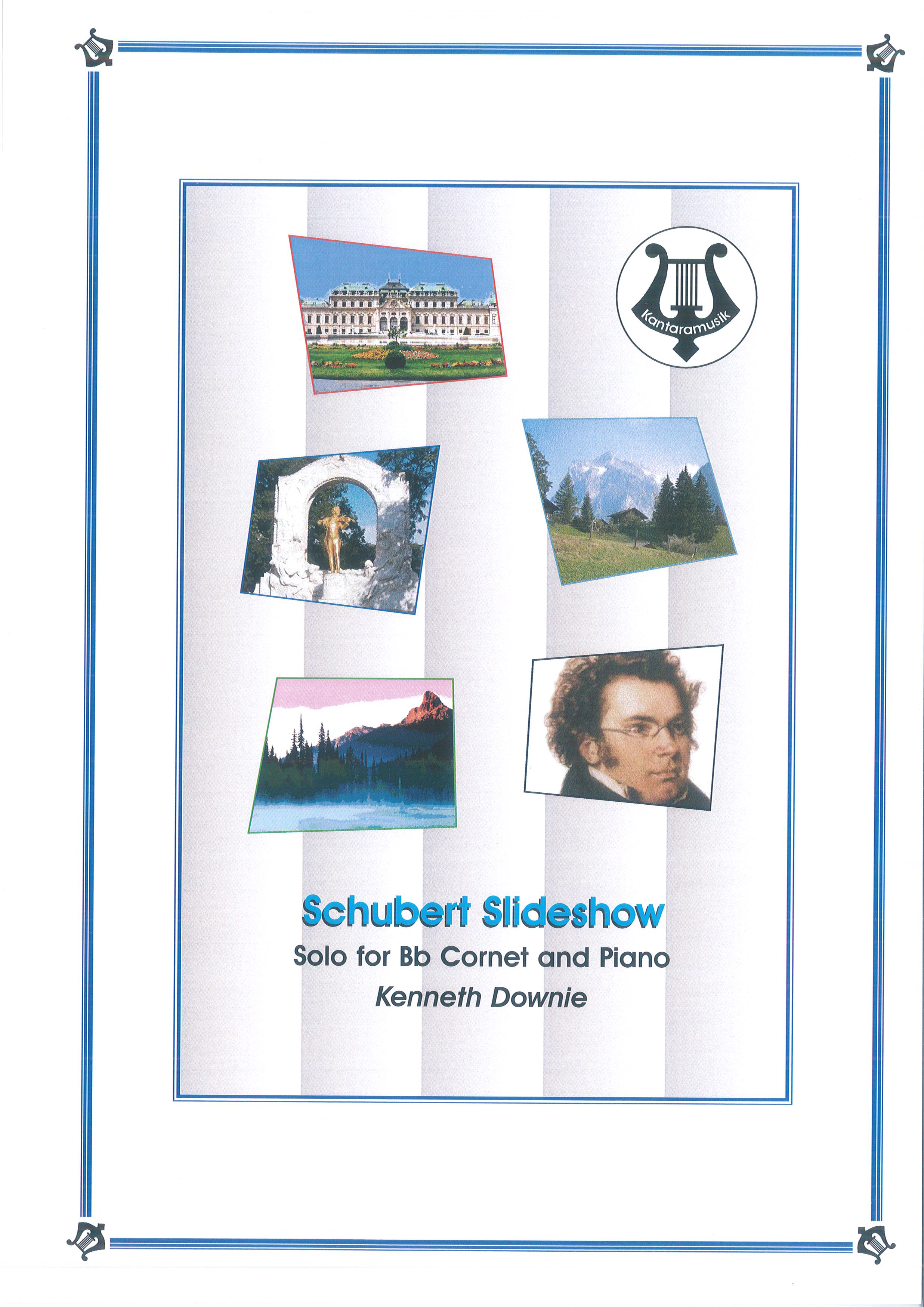
Schubert Slideshow (Cornet and Piano)
Heidenroslein' is a poem by Goethe, published in 1799, which was notably set to music by Schubert in 1815. It is this music which inspired this variation solo. It is called 'Slideshow' as each variation might be considered as a different view or aspect of the theme. Cornet players have the opportunity to demonstrate both the lyrical and the more bravura qualities of their playing.
Estimated dispatch 7-14 working days
-
 £29.95
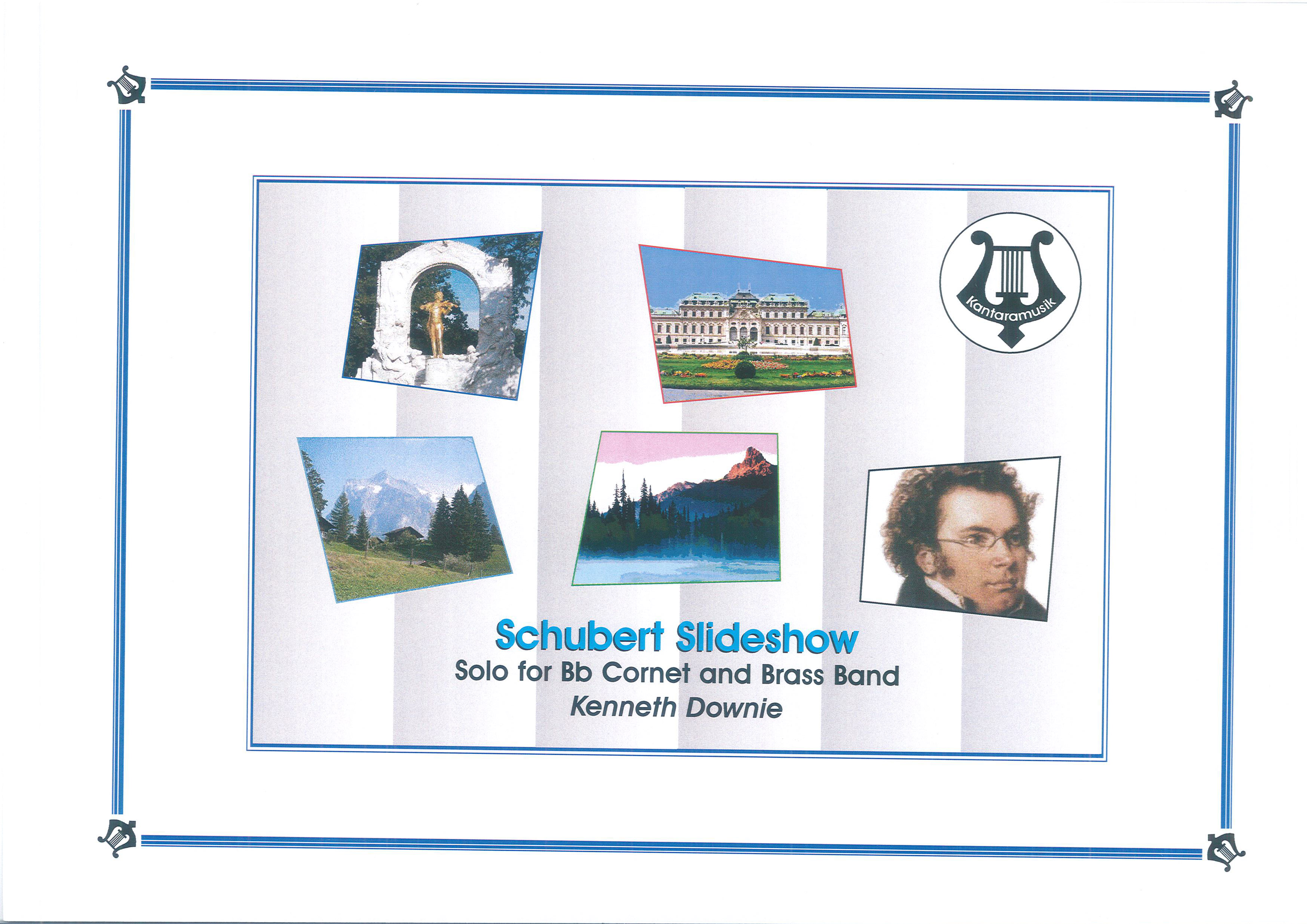
Schubert Slideshow - Cornet Solo (Brass Band - Score and Parts)
Heidenroslein' is a poem by Goethe, published in 1799, which was notably set to music by Schubert in 1815. It is this music which inspired this variation solo. It is called 'Slideshow' as each variation might be considered as a different view or aspect of the theme. Cornet players have the opportunity to demonstrate both the lyrical and the more bravura qualities of their playing.
Estimated dispatch 7-14 working days
-
 £94.95
Rhapsody on a Theme by Purcell (Brass Band - Score and Parts)
Contest VersionIn his relatively short lifetime, Henry Purcell (1659 -1695) achieved stellar musical success and was known and admired internationally by his contemporaries. He is justifiably considered one of England's greatest composers.I thought long and hard before using this magnificent theme as the basis for a band piece because I think that Benjamin Britten has said just about everything possible regarding it in his The Young Person's Guide to the Orchestra. Bearing this in mind, I tentatively set about working on this composition. Once started though, the job became fun because the theme still yielded possibilities - even after Britten!The piece is basically a set of linked variations, much like Rachmaninov's great Rhapsody on theme by Paginini. The music starts slowly and makes much use of crisply dotted rhythms - a Purcellian characteristic. The theme is heard twice before the music changes into a jaunty duple time variation based on the opening motif of Purcell's theme. After this, the mood changes to a waltz-like variation in which clear references to the original theme can be heard. The slow movement follows, and is based on rising and descending scalic figures. This variation is an 'A-B-A' movement with two similar passages framing a more vigorous middle section which features antiphonal fanfare-like figures. Without any preamble, the last variation launches itself - a rumbustious dance which has a distinctive feel to it.The theme eventually reappears as a counter-melody to this dance music before a final triumphant treatment of the melody featuring a somewhat athletic bass line. The music accelerates at the Coda and disappears in a 'puff of smoke'.- Kevin Norbury
Estimated dispatch 7-14 working days
-
£39.95
Rhapsody on a Theme by Purcell (Brass Band - Score only)
Contest VersionIn his relatively short lifetime, Henry Purcell (1659 -1695) achieved stellar musical success and was known and admired internationally by his contemporaries. He is justifiably considered one of England's greatest composers.I thought long and hard before using this magnificent theme as the basis for a band piece because I think that Benjamin Britten has said just about everything possible regarding it in his The Young Person's Guide to the Orchestra. Bearing this in mind, I tentatively set about working on this composition. Once started though, the job became fun because the theme still yielded possibilities - even after Britten!The piece is basically a set of linked variations, much like Rachmaninov's great Rhapsody on theme by Paginini. The music starts slowly and makes much use of crisply dotted rhythms - a Purcellian characteristic. The theme is heard twice before the music changes into a jaunty duple time variation based on the opening motif of Purcell's theme. After this, the mood changes to a waltz-like variation in which clear references to the original theme can be heard. The slow movement follows, and is based on rising and descending scalic figures. This variation is an 'A-B-A' movement with two similar passages framing a more vigorous middle section which features antiphonal fanfare-like figures. Without any preamble, the last variation launches itself - a rumbustious dance which has a distinctive feel to it.The theme eventually reappears as a counter-melody to this dance music before a final triumphant treatment of the melody featuring a somewhat athletic bass line. The music accelerates at the Coda and disappears in a 'puff of smoke'.- Kevin Norbury
Estimated dispatch 7-14 working days
-
Postman Pat - Bryan Daly - Len Jenkins
The original music for the phenomenally successful Postman Pat series was composed by Bryan Daly (who sadly died in January 2012) and included not only the well-known theme tune "Postman Pat & His Black and White Cat", but also the tuba solo "Walking in Greendale", both of which are now available, arranged for brass, from Wobbleco Music. The theme tune was originally sung by Ken Barrie and was released as a single in the UK where it reached number 44 in the charts in July 1982. The Postman Pat TV series and the later Postman Pat SDS TV series continue to delight and entertain children not least because of the instantly recognizable theme tune. What is less well known is that Bryan was also one of the most sought-after session-musician guitar players of the 1960's and 1970's, a first-call studio musician for the likes of Burt Bacharach, and his performances grace numerous classic hit recordings that have remained radio staples to this day. This "twin-pack" contains 2 arrangements: one of which follows faithfully the original theme and is generally A4 in size, and another which is a march/fete edition and is slightly easier to play. They are printed back-to-back and by folding the parts in half, the march/fete edition becomes lyre-ready.
-
 £33.62
A Century of Art (Brass Band) Robbert Vos
A Century of Art was composed for Brass Band Kunst naar Kracht from the town of De Goorn (The Netherlands) for its 100th anniversary in 2022. A version for Fanfare Orchestra was commissioned by the Fanfare Project Orchestra in 2023. The title of the work refers to Brass Band Kunst naar Kracht's 100-year existence and the array of art that has been created in that time. A Century of is a flashy and virtuosic opening work where melodic lines are combined with other surprising compositional elements. You can hear, among some references to some famous brass band test pieces, a quote from Lohengrin by Richard Strauss. A transcription of Lohengrin was used at the 1922 British Open in England, one of the most famous brass band competitions in the world, the same year as Brass Band Kunst naar Kracht was founded. To view a performance by Fanfare 'Project Orkest' of the work please visit www.youtube.com/watch?v=D6zuoaxf_kg (please note this is the Fanfare Band version, although it is essentially the same). Duration: 4.00 minutes Difficulty Level: 2nd Section + PDF download includes parts and score. Sheet music available from www.brassband.co.uk Instrumentation: Soprano Cornet Eb Solo Cornet Bb Repiano Cornet Bb 2nd Cornet Bb 3rd Cornet Bb Flugel Horn Bb Solo Horn Eb 1st Horn Eb 2nd Horn Eb 1st Baritone Bb 2nd Baritone Bb 1st Trombone Bb 2nd Trombone Bb Bass Trombone Euphonium Bb Bass Eb Bass BbTimpani Percussion 1-4
In Stock: Estimated dispatch 1-3 working days
-
 £33.62
The Piano Preludes (Brass Band) George Gershwin arr. Rob Bushnell
First performed by the composer at the Roosevelt Hotel in New York in 1926, The Piano Preludes (or Three Preludes) are a collection of short pieces by George Gershwin, show casing early-20th-century American classical music, as influenced by jazz. Gershwin originally planned to compose 24 preludes, wrote seven, performed only six publically and was further reduced to three when first published. The work was dedicated to friend and musical advisor Bill Daly. The first prelude begins with a five-note blues motif. It features syncopated rhythms based on the Brazilian baiao and minor-seventh chords throughout. The second prelude, which Gershwin said was "a sort of blues lullaby" consists of two sections: the first a "lazy" melody upon a steady beat of crotchets; the second the bass takes the melody, continuing with the steady beats. The third prelude was called "Spanish" by Gershwin, and features a question-and-answer type melody, starting in a minor tonality and ending in major one. This arrangement is for the British-style brass band, with alternative parts for horns in F and bass-clef lower brass. To view a follow-the-score video please visit www.youtube.com/watch?v=XqIQ0j1SWlc PDF download includes score and parts. Sheet music available from: UK - www.brassband.co.uk USA - www.solidbrassmusic.com Difficulty Level: 1st Section + Instrumentation: Soprano Cornet Eb Solo Cornet Bb Repiano Cornet Bb 2nd Cornet Bb 3rd Cornet Bb Flugel Horn Bb Solo Horn Eb 1st Horn Eb 2nd Horn Eb 1st Baritone Bb 2nd Baritone Bb 1st Trombone Bb 2nd Trombone Bb Bass Trombone Euphonium Bb Bass Eb Bass Bb Timpani Drum Kit Mallet Percussion
In Stock: Estimated dispatch 1-3 working days
-
 £89.95
Orion (Brass Band - Score and Parts)
Orion was named after the giant huntsman in Greek mythology and is a prominent constellation located on the celestial equator and visible throughout the world. It is one of the most conspicuous and recognisable constellations in the night sky. This piece and its inspiration were composed as a tone poem creating a musical picture of this amazing phenomenon.The opening introduces the constellation. Starting mysteriously with the percussion and basses this section develops a series of rhythmic and harmonic interludes from the upper brass. As this introduction develops, the melodic line lead by the Solo Cornet and Euphonium builds as the accompanying instruments increase in their rhythmic complexity. This section climaxes with a short fanfare motif which will be a prominent theme throughout this piece.The fast rhythmic section that follows serves as a technical test for the players. The thematic device introduced by the Solo Cornets is passed around various soloists and sections within the ensemble. This part of the tone poem gives the opportunity for the ensemble to highlight their technical prowess. The fanfare motif returns to conclude this section and takes the piece into the slow middle movement.Motifs heard earlier are mixed with new ideas in this slow section which give an opportunity for a variety of soloists to demonstrate their musical prowess. After the various solo passages and cadenzas, the mood shifts dramatically to a more ominous section that builds in texture and dynamic. Concluding with our returning fanfare motif the piece then builds in momentum towards our finale section.This finale is a technical showcase which will further test the playing ability and stamina of soloists, small groups and the full ensemble. Using prominent musical themes heard throughout this piece the music builds to a glorious conclusion fitting with wonderful constellation.
Estimated dispatch 7-14 working days