
Results
-
 £68.90
For Fans Only - Piet Daalhuizen - W. Kalischnig
Piet Daalhuisen (Hilversum, 1939) was already known in the world of wind bands because of his medleys 'With a smile to the classics' and 'Pop for the People' (both in splendid wind band arrangements by Marcel Peeters). Here is a new medley For Fans Only, consisting of a series of stirring tunes, arranged for wind band by Walter Kalischnig, a Slovenian musician who settled in The Netherlands back in 1953 and wrote several fine compositions and wind band arrangements.
Estimated dispatch 5-14 working days
-
 £116.40
The Phoenix - Paul Hertel
This nice composition, commissioned by the Swiss Army Brass Band was arranged for symphonic band at Johann Mosenbichler's request. The legendary bird called 'Phoenix' rises from its ashes as a symbol of optimism and vitality. From a choral with Southeastern European characteristics develops an impressive middle part resulting in a stretto with a compelling finale. Because of its splendid brilliant sounds, this composition is appreciated by musicians of all ages.
Estimated dispatch 5-14 working days
-
 £64.40
Up, Up and Away - Jimmy Webb - Henk Ummels
A massive hit from the 60's from Jimmy Webb (McArthur Park etc.). The original and most famous version was from The 5th Dimension. This is positive and happy music, with a smile, from the "Sunshine" pop genre. The piece has been arranged with great respect for the original by Henk Ummels.
Estimated dispatch 5-14 working days
-
 £73.60
Drie Opwekkingsliederen - Henk Ummels
Revival songs are sung more frequently these days in Christian churches in the Netherlands. The cheerful nature of these songs come into their own with use of a good catchy melody, everyday language, and often accompanied by a band with wind players, instead of an organ. In this collection: Together In the Name of Jesus, Thank You For This New Morning, and Praise Him. Arranged for a flexible setting, these are also well suited to a full orchestra.
Estimated dispatch 5-14 working days
-
 £154.60
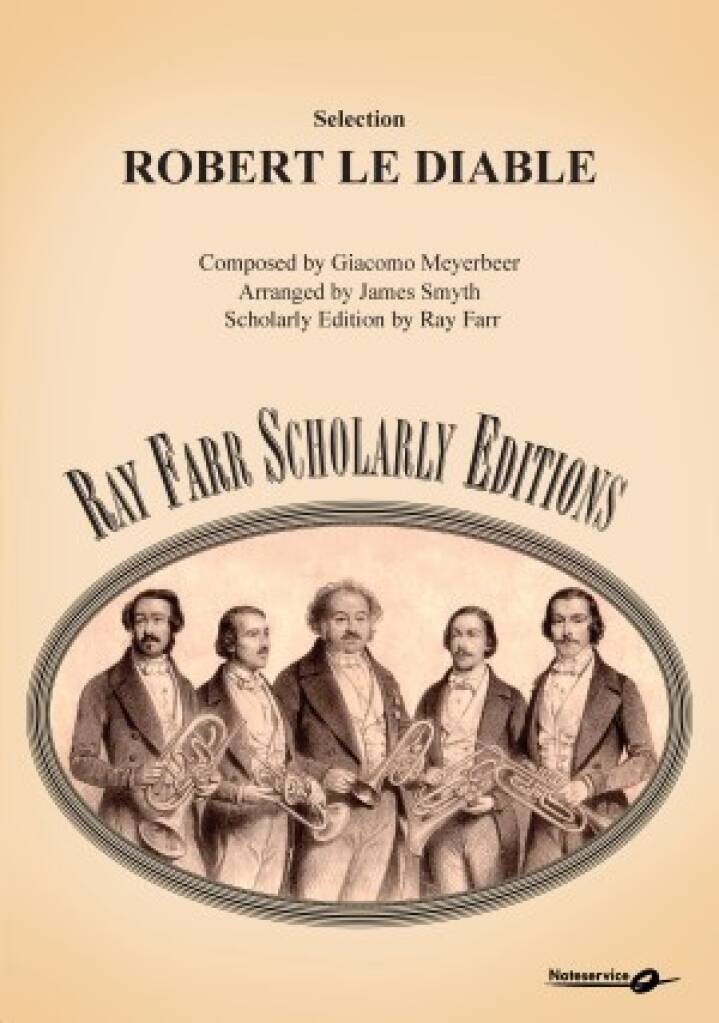
Selection Robert Le Diable - Giacomo Meyerbeer - Ray Farr
This Selection from Giacomo Meyerbeers opera Robert le Diable was arranged by James Smyth. Enderby Jackson commissioned the arrangement which was used as the test piece for the third National Brass Band Contest held at the Crystal Palace, London in 1862.The purpose of this scholarly edition is to produce a performing version, clearing ambiguities and errors, that can be enjoyed by today's performers and listeners, bearing in mind the original function and context. At the same time the edition is an analytical, musicological study of one of the rare treasures of the brass band repertory.
Estimated dispatch 5-14 working days
-
 £105.20
Det vakreste som fins - Teigen Teigen - Haakon Esplo
The most beautiful thing is one of Jahn Teigens most popular pop ballads. It was written in 1988 together with Rolf Lovland and Ove Borochstein and went straight to the top of the Norwegian hitlists. Even 20 years after its release, in 2008, it reached the hitlists after Teigen performed it during the Eurovision Song Contest. The song is often played on Norwegian radio and was the 70th most played in the period 1993-2013 on the radio channel P4. Now it's finally arranged for band in the popular Young Band series with adaptation of key that fit young musicians. It will definitely be a popular number in your next concert.
Estimated dispatch 5-14 working days
-
 £115.60
Robin Hood Suite No. 2 - Roar Minde Fagerli
Robin Hood suite 2 is five movements collected from a play written for a summer course arranged by The Norwegian Band Federation. The Composer is inspired by the story of Robin Hood; He who steals from the rich and gives to the poor.The composer describes different charters and places from the story in his music. In the first movement you will meet the merciless Sheriff of Nottingham. The second movement describes the caring Friar Tuck. In the third movement Robin Hood and Lady Marion sneaks around in the Castle. In the fourth movement Prince John's guards hunts Robin. In the fifth movement Robin Hood and his friends celebrate their victory!
Estimated dispatch 5-14 working days
-
 £83.10
Elegi - Idar Torskangerpoll
This piece originates as a piano piece written by the composer as he was convalescing after an illness and operation.In the music there is an outlet for emotions of uncertainty and doubt, but also of hope for the future. The piece was later arranged for wind and brass band, and premiered at a music summer camp in 2021.This piece has a melancholy character and suits bands looking for a piece to work on sound, phrasing, dynamics and expression.
Estimated dispatch 5-14 working days
-
 £115.60
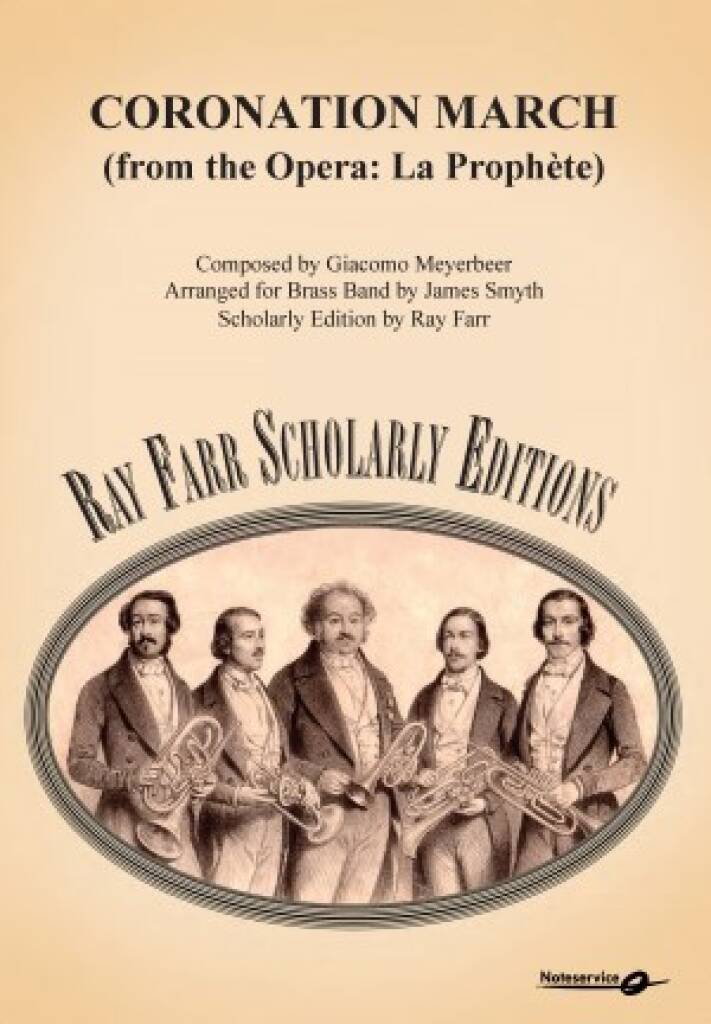
Coronation March - Giacomo Meyerbeer - Ray Farr
This Coronation March is from the opera Le Prophete (The Prophet) by Giacomo Meyerbeer and was arranged for brass band by James Smyth. The march was performed during a series of brass band events which took place at the Crystal Palace, London 1860 - 1863. Enderby Jackson was the organiser of these historically important occasions and also conducted the massed band concerts.The purpose of this scholarly edition is to produce a performing version, clearing ambiguities and errors, that can be enjoyed by today's performers and listeners, bearing in mind the original function and context. At the same time the edition is an analytical, musicological study of one of the rare treasures of the brass band repertory.
Estimated dispatch 5-14 working days
-
 £102.60
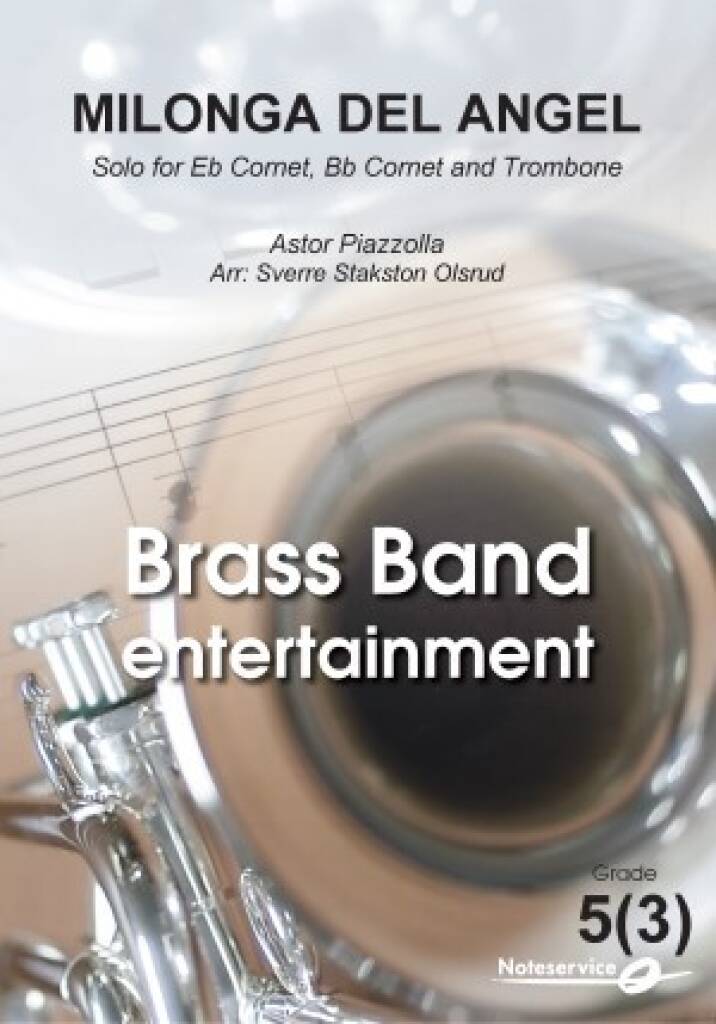
Milonga del Angel - Astor Piazzolla - Sverre Stakston Olsrud
This arrangement was made after hearing Astor Piazzolla's 1986 recording of his own work written in 1965.The original instrumentation of bandoneon, violin and string bass is here arranged for three wind soloists with Concert Band.The Eb Cornet is the main soloist (filling the bandoneon role), while the trombone and Solo Bb Cornet shares the violin part as a kind of flirting undertone to the Eb Cornet.It's not possible to make a 100% correct notation of the solo parts, so it's recommended to listen to the record album "Zero Hour" from 1986 to get the best impression of the work.Enjoy "Milonga Del Angel" and imagine a small, dark cafe in Buenos Aires!
Estimated dispatch 5-14 working days
 View Music