
Results
-
£60.00
Samba de Haps - Taylor, M - Harper, P
This up tempo Latin-jazz inspired number featured on Stan Kenton's album Kenton '76.Philip Harper has arranged this virtuosic showpiece for brass band, which requires skill, dexterity and precision from all instruments. It includes a feature for flugel horn and fully integrated percussion, including two mallet parts.As performed by Cory Band, at Brass in Concert, this will blow your audiences away!Duration: 3 mins 30 secsDifficulty: ChampionshipUsed by kind permission of World of Brass - full performances available at wobplay.com
In Stock: Estimated dispatch 1-3 working days
-
£36.00
Samba de Haps (Score) - Taylor, M - Harper, P
This up tempo Latin-jazz inspired number featured on Stan Kenton's album Kenton '76.Philip Harper has arranged this virtuosic showpiece for brass band, which requires skill, dexterity and precision from all instruments. It includes a feature for flugel horn and fully integrated percussion, including two mallet parts.As performed by Cory Band, at Brass in Concert, this will blow your audiences away!Duration: 3 mins 30 secsDifficulty: ChampionshipUsed by kind permission of World of Brass - full performances available at wobplay.com
In Stock: Estimated dispatch 1-3 working days
-
£40.00
Who Wants to Live Forever - May, B - Harper, P
From Queen's 1986 album A Kind of Magic this haunting and beautiful song was used on the soundtrack to the film Highlander. This arrangement features moving solos for euphonium and cornet and much delicate playing, but the big climax is heart-breaking and will leave a lump in the throat.3rd section +
In Stock: Estimated dispatch 1-3 working days
-
 £29.50
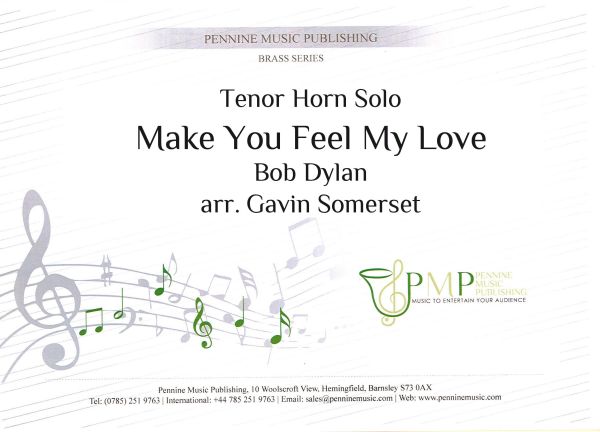
Make You Feel My Love (Tenor Horn Solo with Brass Band - Score and Parts)
With a melody that sits beautifully for the tenor horn, this song was written by Bob Dylan and first released by the singer, Billy Joel. In 2008, Adele released this version on her debut album which gained phenomenal success worldwide and featured appearances on the X-Factor and Britains Got Talent, as well as featuring countless times in films and across TV networks. This arrangement of the gorgeous melody allows the soloist the freedom to express themselves with careful scoring beneath in this delicate work. A stunning solo that belongs in every horn players repertoire.
Estimated dispatch 7-14 working days
-
 £54.20
Candlelight Carol (Brass Band - Score and Parts)
Candlelight Carol is a Christmas carol with music and lyrics by the English choral composer and conductor John Rutter. The carol was written in 1984, and was first recorded by Rutter's own group, the Cambridge Singers, on their 1987 album Christmas Night. It is now available for your brass band.
Estimated dispatch 7-14 working days
-
 £69.99
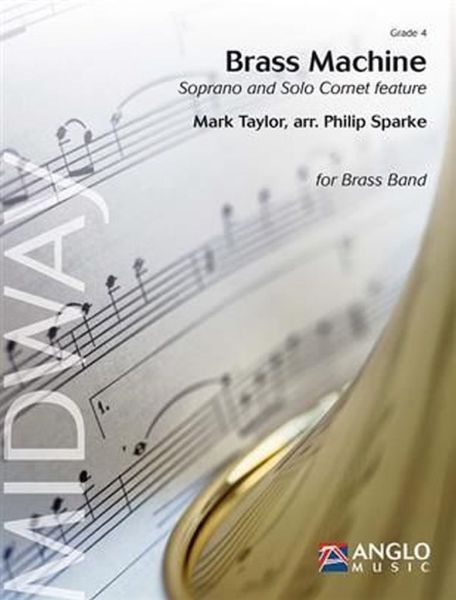
Brass Machine (Soprano and Solo Cornet feature with Brass Band - Score and Parts)
Mark Taylor wrote the trumpet feature Scream Machine for a vinyl album by the Army Blues Jazz Ensemble in 1985. It was later published in a slightly simpler version called Brass Machine. This brass band arrangement by Philip Sparke has been arranged di
Estimated dispatch 7-14 working days
-
 £6.99
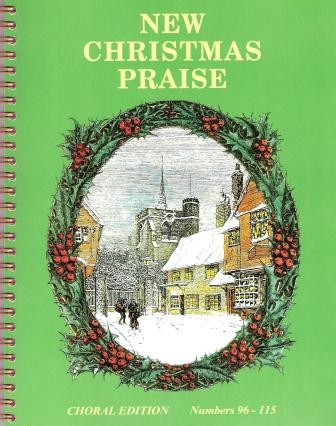
£6.99New Christmas Praise 96 - 115 Choral Edition
A full vocal music/accompaniment edition,this supplementary album contains 20 Christmas songs which will enhance the choral repertoire.Contents :96. Deck the hall 97. Frosty the snowman 98. Have yourself a merry little Christmas 99. Here we come a-wassailing 100.Jingle Bells 101.I saw Mommy kissing Santa Claus 102.O Christmas tree 103.Patapan 104.Rudolph, the red-nosed reindeer 105.Santa Claus is comin to town 106.Sleigh ride 107.The Boars Head carol 108.The twelve days of Christmas 109.The Christmas Song 110.We wish you a merry Christmas 111.When Santa got stuck up the chimney 112.Winter Wonderland 113.When a child is born 114.Worldwide Christmas message 115.Auld Lang Syne
Estimated dispatch 7-14 working days
-
 £95.00
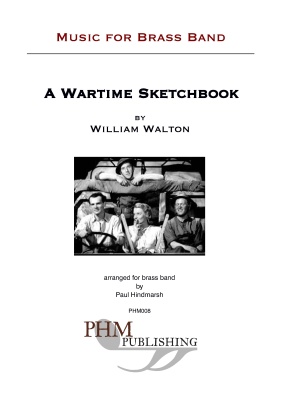
A Wartime Sketchbook (Brass Band - Score and Parts)
Early in 1941 William Walton, 39, received his call-up papers. He was by then one of the most eminent of British composers and was exempted from military service on condition that he provided music for films deemed to be of 'national importance'. Scoring Lawrence Olivier's Shakespeare epic Henry V in 1943 was the most substantial of these wartime projects. His role in patriotic films from 1941 and 42 like The Foreman went to France, Next of Kin, Went the day Well and The First of the Few was to provide appropriate title music and some underscoring at key moments. Walton extracted the most substantial portions of the latter as the popular Spitfire Prelude and Fugue for orchestra. The remaining music remained unpublished until 1990, when Christopher Palmer assembled the highlights into A Wartime Sketchbook. I was intrigued to hear these examples of Walton's wartime music and having discovered that they would fit naturally and idiomatically onto the brass band, I arranged six of the numbers into a suite for Besses o' th' Barn Band, which I was conducting at the time.In 1995 the brass band suite was recorded by the famous Black Dyke Mills Band as part of an all Walton album which I produced for the ASV label (ASV CD WHL 2093). This award- winning CD also included Walton's First Shoot, in the edition by Elgar Howarth, my transcription of movements from Music for Children and two substantial brass versions by Edward Watson of the suite from Henry V (with narrator) and the March and Siegfried Music from The Battle of Britain music.Prologue: This is the stirring title music from Went the day Well, a screen play by Graham Greene about a German airborne invasion of an English village. The main theme leads toBicycle Chase: Characteristic musical high-jinks for J.B.Priestley's The Foreman went to France.Refugees: From the same film, this is a poignant accompaniment to the long march of refugees. As Ernest Irving, the film's musical director, put it, "this really makes your feet sore and your knees sag."Young Siegfrieds: This lively movement comes from the music that Walton composed for The Battle of Britain in 1968, with the assistance of Malcolm Arnold, but which the film's producer rejected. It portrays first the Berliners, cheerfully ignoring the black-out and then, in the trio, the Young Siegfrieds of the Luftwaffe, courtesy of a parody of Siegfried's horn call from Wagner's opera.Romance: A soldier and a Dutch refugee snatch a few tender moments together in Next of Kin.Epilogue: At the end of The Foreman went to France, the French look forward with hope and optimism to eventual liberation.- Paul HindmarshDuration: 14.00
Estimated dispatch 7-14 working days
-
£40.00
A Wartime Sketchbook (Brass Band - Score only)
Early in 1941 William Walton, 39, received his call-up papers. He was by then one of the most eminent of British composers and was exempted from military service on condition that he provided music for films deemed to be of 'national importance'. Scoring Lawrence Olivier's Shakespeare epic Henry V in 1943 was the most substantial of these wartime projects. His role in patriotic films from 1941 and 42 like The Foreman went to France, Next of Kin, Went the day Well and The First of the Few was to provide appropriate title music and some underscoring at key moments. Walton extracted the most substantial portions of the latter as the popular Spitfire Prelude and Fugue for orchestra. The remaining music remained unpublished until 1990, when Christopher Palmer assembled the highlights into A Wartime Sketchbook. I was intrigued to hear these examples of Walton's wartime music and having discovered that they would fit naturally and idiomatically onto the brass band, I arranged six of the numbers into a suite for Besses o' th' Barn Band, which I was conducting at the time.In 1995 the brass band suite was recorded by the famous Black Dyke Mills Band as part of an all Walton album which I produced for the ASV label (ASV CD WHL 2093). This award- winning CD also included Walton's First Shoot, in the edition by Elgar Howarth, my transcription of movements from Music for Children and two substantial brass versions by Edward Watson of the suite from Henry V (with narrator) and the March and Siegfried Music from The Battle of Britain music.Prologue: This is the stirring title music from Went the day Well, a screen play by Graham Greene about a German airborne invasion of an English village. The main theme leads toBicycle Chase: Characteristic musical high-jinks for J.B.Priestley's The Foreman went to France.Refugees: From the same film, this is a poignant accompaniment to the long march of refugees. As Ernest Irving, the film's musical director, put it, "this really makes your feet sore and your knees sag."Young Siegfrieds: This lively movement comes from the music that Walton composed for The Battle of Britain in 1968, with the assistance of Malcolm Arnold, but which the film's producer rejected. It portrays first the Berliners, cheerfully ignoring the black-out and then, in the trio, the Young Siegfrieds of the Luftwaffe, courtesy of a parody of Siegfried's horn call from Wagner's opera.Romance: A soldier and a Dutch refugee snatch a few tender moments together in Next of Kin.Epilogue: At the end of The Foreman went to France, the French look forward with hope and optimism to eventual liberation.- Paul HindmarshDuration: 14.00
Estimated dispatch 7-14 working days
-
 £44.95
Joy Through the Ages (Brass Band - Score and Parts)
This work was written for the 125th anniversary of Boscombe Band, celebrated in November 2011, and is the title track of the band' album released in the same year. The music is celebratory in nature and is dedicated to all those who have served in the band during its 125 year history. The theme of the work is a song by Charles Hutchison Gabriel which was the favourite of the band's librarian, Gerald Whittingham, who was 'promoted to Glory' after a long battle with a brain tumour. The title comes from the last verse, 'When with the ransomed in Glory, his face I at last shall see, 'twill be my joy through the ages, to sing of his love for me'.
Estimated dispatch 7-14 working days
 View Music