
Results
-
 £54.00
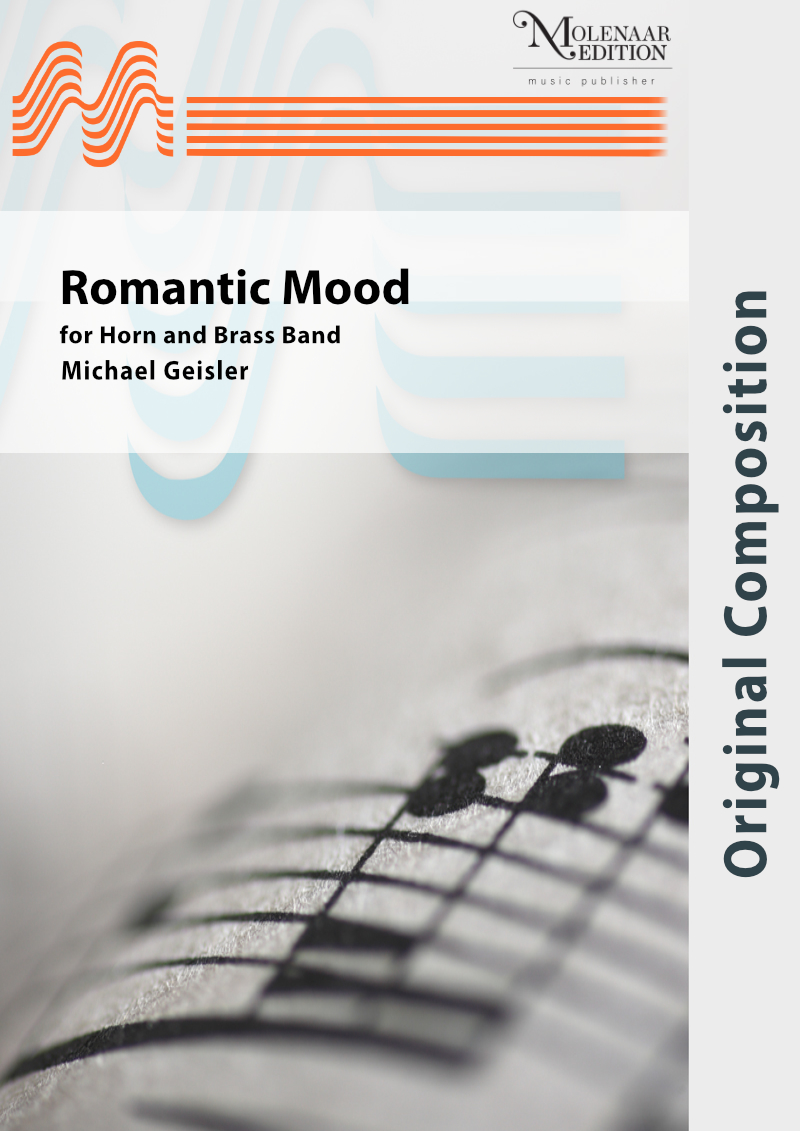
Romantic Mood - Michael Geisler
The piece Romantic Mood is a ballad for solo horn. After an orchestral introduction, the soloist plays a beautiful and dreamy theme. The second theme follows accompanied by the woodwinds, which is then followed by full orchestra, interspersed with lines from the solo horn. This piece will fully develop any soloist.
Estimated dispatch 10-14 working days
-
£39.00
Smak av honning - Lars Lillo-Stenberg og Per Lillo-Stenberg - Idar Torskangerpoll
"Smak av honning" ("Taste of Honey") is one of the greatest hits by Norweian pop band DeLillos. It was first included on the EP "Smak av honning" in 1995 and also on the "Sent og tidlig" album-release later that year.Lars Lillo-Stenberg wrote the music shortly after receiving the lyrics from his father, Per Lillo-Stenberg.
Estimated dispatch 7-14 working days
-
 £22.50
Lucht Siuil - 'Walking People' (cornet solo) - Richard Rock
During the famine, as Irish people emigrated to Europe, Australia and America, moving on from place to place, searching for somewhere to settle, the main mode of transportation was by foot, after arriving by ship. This is a solemn tune using wandering tonality to suggest the scene at the time.
Titles No Longer Available
-
 £84.95
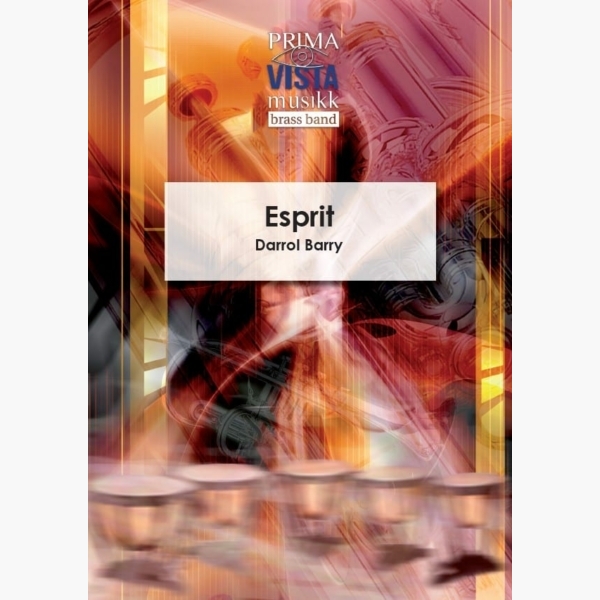
Esprit - Darrol Barry
Esprit is a rhapsodic adventure for brass band and percussion. During its twelve minutes, features all soloists and sections of the band. After a vibrant opening the main melodic work is in the lower band accompanied by swirling cornets. The...
Estimated dispatch 5-7 working days
-
£29.95
TO REGIONS FAIR (Brass Band Set) - Norman Bearcroft
Clive Bright, in his score note when To Regions Fair was originally published in 1958, predicted that the march would 'have a good run'. In retrospect, this turned out to be something of an understatement as this march (and many other Bearcroft marches) remains vibrantly active fifty years after its original publication. The title is derived from the song 'Meet in bliss' which is featured in the trio section.
Estimated dispatch 7-14 working days
-
£44.95
CHRIST-HYMN (Brass Band Set) - Robert Redhead
Christ-Hymn is an expression of response to the ancient Christian hymn quoted by Paul in his letter to the Philippian church (Philippians 2:5-11). After an opening which creates a tone of sadness and quiet suffering, the following music is a joyous expression of the truth that 'He is exalted', 'His name is above all names' and 'Every tongue will confess that Jesus Christ is Lord'.
Estimated dispatch 7-14 working days
-
 £30.00
Black Bottom Stomp - Jelly Roll Morton
Ferdinand Joseph LaMothe, professionally known as Jelly Roll Morton, was an American ragtime and early jazz pianist, bandleader and composer who started his career in New Orleans, Louisiana. Widely recognised as a pivotal figure in early jazz, Morton is perhaps most notable as jazz's first arranger, proving that a genre rooted in improvisation could retain its essential spirit and characteristics when notated. His composition "Jelly Roll Blues" was the first published jazz composition in 1915. Morton is also notable for writing such standards as "King Porter Stomp", "Wolverine Blues", "Black Bottom Stomp", and "I Thought I Heard Buddy Bolden Say". Notorious for his arrogance and self-promotion, Morton claimed to have invented jazz outright in 1902, much to the derision of fellow musicians and the critics. At the age of fourteen, Morton began working as a piano player in a brothel (or, as it was referred to back then, a sporting house). In that atmosphere, he often sang smutty lyrics and took the nickname "Jelly Roll". While working there, he was living with his religious, church-going great-grandmother; who he convinced that he worked as a night watchman in a barrel factory. After Morton's grandmother found out that he was playing jazz in a local brothel, she kicked him out of her house and told him that "devil music" would surely bring about his downfall. Born in downtown New Orleans, Louisiana, his exact birth date differs depending to whichever source you want to believe; his half-sisters claimed he was born in September 1885, but his World War 1 draft card showed September 1884 and his California death certificate listed his birth as September 1889. He died in 1941 in Los Angeles.
-
Bring Me Sunshine - Arthur Kent & Sylvia Dee - Len Jenkins
In Britain, the song is synonymous with the legendary comedy duo Morecambe & Wise, after it was adopted as their signature tune in 1969. The jolly tune will be instantly recognised by most UK listeners and is suitable for most events, but particularly summer fetes and concerts where the audience will probably end up singing or tapping their feet to the familiar melody.
-
Pie Jesu - Faure - Len Jenkins
Gabriel Faure is acknowledged as among the very best of French composers, and his best-known work must be his Requiem, composed between 1877 and 1890. Nevertheless it did not achieve popularity until after 1945. The Requiem includes 'Pie Jesu' as an independent movement, and it is that movement which is arranged here to feature the particular tonal qualities of the soprano cornet. The solo instrument is accompanied by contrasting groups of instruments from within the Band.
-
 £44.95
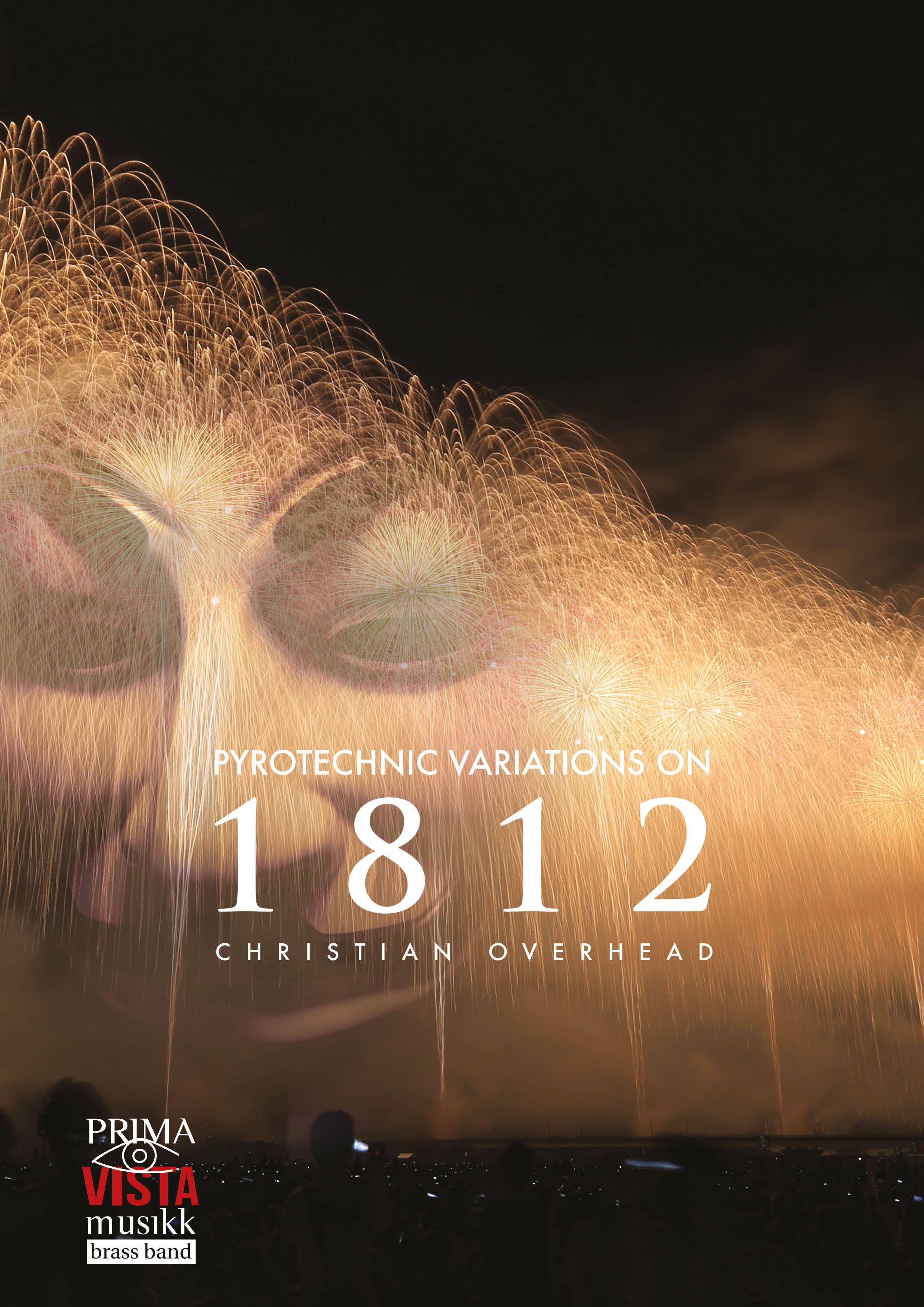
Pyrotechnic Variations on 1812 (Brass Band - Score and Parts)
Pyrotechnic Variations on 1812 was composed for Brass Band Schoonhoven, and used as part of their programme for Brass in Concert in November 2016.'Pyrotechnic Variations' is a modern day twist on Tchaikovsky's famous '1812' Overture. A heraldic opening introduces some familiar themes, before leading into a frantic virtuosic passage (especially for euphonium!), where quotes can be heard all through the band. This subsides into the central 'slow' section (via the unusual route of a bass and drum kit feature). After a whisper quiet reintroduction of the main theme, we build to the 'canon' finale - ending in a glorious celebratory style!
Estimated dispatch 7-14 working days
 View Music