Results
-
£55.00The Millionaire Waltz
ABOUT THIS PIECE: Bring the theatrical brilliance of Queen to your brass band with this dazzling arrangement of The Millionaire Waltz. Written by Freddie Mercury and featured on the band's 1976 album A Day at the Races, this whimsical and dynamic piece showcases Mercury's love for classical and operatic influences, blending waltz rhythms with rock elements in a truly unique style. Renowned for its intricate structure and playful shifts in mood and tempo, The Millionaire Waltz is a standout example of Queen's innovative approach to songwriting. This arrangement captures the piece's exuberance and charm, offering a delightful addition to your brass band's repertoire. "The Millionaire Waltz is quite outlandish, really. It's the kind of track I like to put on every album. Something way outside Queen's format." Freddie Mercury; Circus magazine, 31 January 1977 ENSEMBLE: Standard British Brass Band WHEN YOU BUY THIS PRODUCT, YOU GET: High-quality printed score and parts LEVEL: 3 - 4 LISTEN: DURATION: 5-minutes EXAMPLE SCORE: Click here LEVEL GUIDE: Level 1- Accessible to all Level 2 - c. UK third section and higher Level 3 - c. UK second section and higher Level 4 - c. UK first section and higher Level 5 - c. UK championship section level
Estimated dispatch 5-7 working days
-
£33.92Finale - Suite No.3 (Brass Band) Tchaikovsky arr. Ruben Schmidt
This arrangement by Ruben Schmidt is the exciting polonaise finale from the last movement of Tchaikovsky's thrilling Suite No.3 in G Major for Orchestra. This was first performed in Saint Petersburg on January 12th, 1885, at the fifth symphony concert of the Russian Musical Society, conducted by Hans von Bulow. The suite also was Tchaikovsky's first American success when it was performed by the New York Symphony Society at Carnegie Hall on May 7,1891. First intended as its own symphony, it became the most played and most successful of Tchaikovsky's four suites. The finale of the last movement is an invigorating polonaise dance to finish the suite. Tchaikovsky often enjoyed conducting this final movement as an independent work himself. To view a rolling score video of the work please visit www.youtube.com/watch?v=M-Ht80Lnk-c Duration: 4.00 minutes Difficulty Level: 1st Section + PDF download includes parts and score. Sheet music available here. Instrumentation: Soprano Cornet Eb Solo Cornet Bb Repiano Cornet Bb 2nd Cornet Bb 3rd Cornet Bb Flugel Horn Bb Solo Horn Eb 1st Horn Eb 2nd Horn Eb 1st Baritone Bb 2nd Baritone Bb 1st Trombone Bb 2nd Trombone Bb Bass Trombone Euphonium Bb Bass Eb Bass BbTimpani Percussion (Tambourine, Suspended Cymbal & Bass Drum)
In Stock: Estimated dispatch 1-3 working days
-
£26.50
Set 4 Hymns - Wadsworth, G
Includes a full band set (no score)No. 1 StocksbridgeNo. 2 WolsinghamNo. 3 YeadonNo. 4 Cawthorne
In Stock: Estimated dispatch 1-3 working days
-
£26.50
Set of 4 Hymns - Various
Includes a full band set (no score)Hymn 1: Eternal Home by J. A. GreenwoodHymn 2: Heavenly King by J. A. GreenwoodHymn 3: Gladsome Sounds by J. A. GreenwoodHymn 4: Gentle Jesus by W. Rimmer
In Stock: Estimated dispatch 1-3 working days
-
£159.99Omaggio (Euphonium Concerto No.4) (Euphonium Solo with Brass Band - Score and Parts) - Sparke, Philip
Omaggio was commissioned by Steven Mead in celebration of his 60th birthday and in memory of his father, Rex. He gave the premiere of the brass band version in Rome in March 2022, accompanied by the Italian Brass Band conducted by Filippo Cangiamilla. The concert band premiere took place on 6th July that year as part of the 2022 Spanish International Tuba Euphonium Conference, accompanied by the Banda municipal de msica de Malaga.The concerto is set in 3 continuous movements, which are united by a recurring syncopated interval of a fifth. The first movement, Fantasia, opens with this motive accompanying an extended monologue for the soloist. This is followed by a lengthy bridge passage by the band, which is eventually joined by the soloist, who guides the music back to the opening soliloquy, leading to an energetic central section. This develops until the opening material again returns to introduce the second movement, Ballad, which revolves around an expressive melody for the soloist, interspersed by accompanied cadenzas. The third movement, The King Triumphant, pays homage to Steven's late father, Rex, and its title alludes both to Rex's name (Rex being Latin for king) as well as his love of Eric Ball's Salvationist masterpiece, The Kingdom Triumphant. The finale is an energetic tour-de-force featuring an acrobatic 6/8 melody, which is interrupted twice by the magnificent hymn tune, Helmsley, which Ball uses so effectively in The Kingdom Triumphant. A galloping coda brings the work to a close.
Estimated dispatch 7-14 working days
-
£53.99Air from Suite No.3 (Brass Band - Score and Parts) - Bach, Johann Sebastian - Bernaerts, Frank
Duration: 4.00
Estimated dispatch 7-14 working days
-
£65.00Smoke Sketches - Daniel Hall
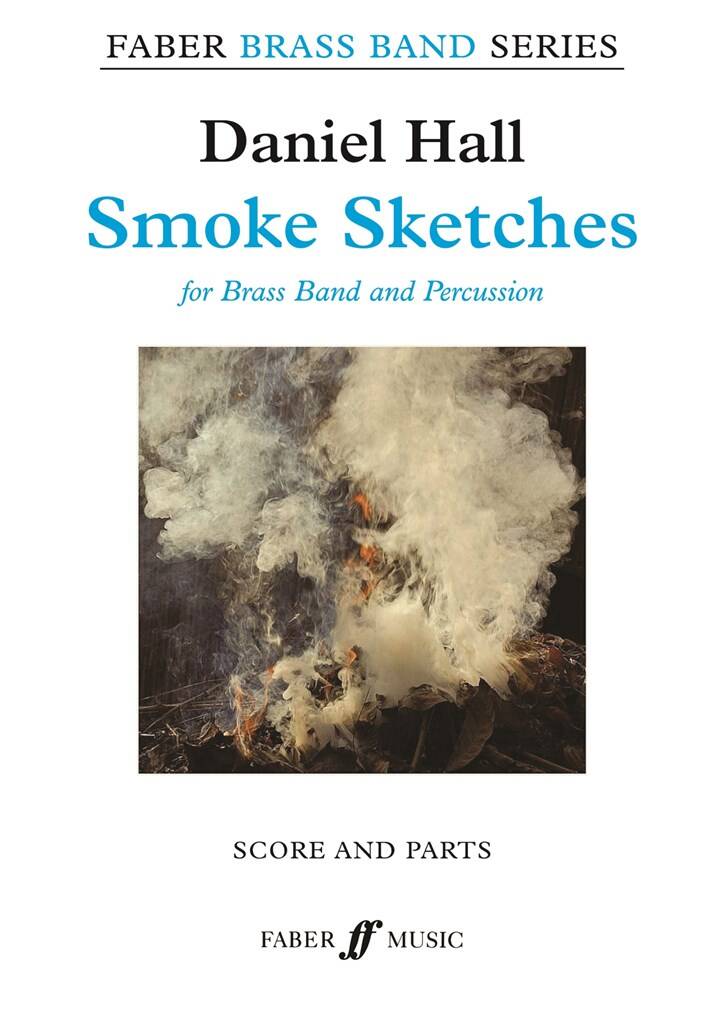
Smoke Sketches is Daniel Hall's first original work to be published in the Faber Music Brass Band Series. Daniel is one of the most gifted of the rising generation of composers writing for brass bands. Smoke Sketches was composed at the invitation of Brass Bands England for the Intermediate Section of the 2017 National Youth Brass Band Championships of Great Britain. This colourful, jazzy suite draws inspiration from the ancient art of gazing into smoke from fire to find stories through the act of divination. Into the Blaze suggests someone briskly fire-walking, barefoot, with unexpected sparks fizzling from the ground. A Lonesome Ember capturesthe fleeting life of a small ember, beginning insignificantly and gradually evolving into a larger being before disappearing into ash, while Spark of Light bristles with life and energy. Band Grade 3/4, duration 8 minutes.
Estimated dispatch 5-14 working days
-
£19.95Bandkraft 1
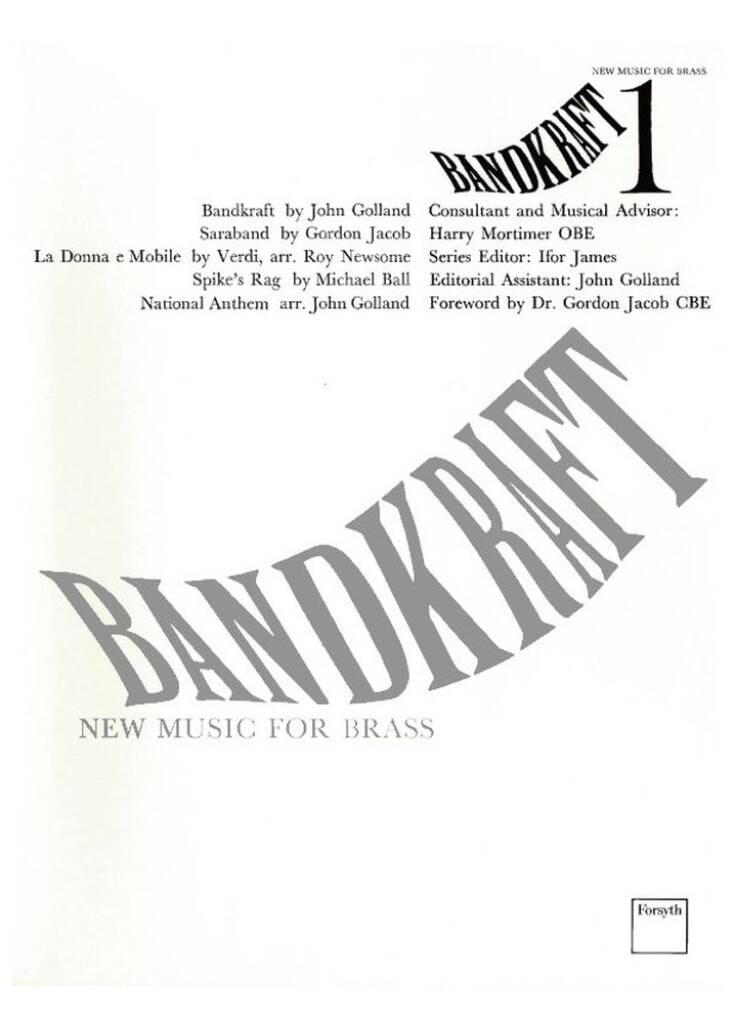
The first of three superb sets of new music and arrangements for brass ensemble, edited by John Golland.1. Bandkraft - John Golland: A substantial piece with an exciting syncopated rhythm introduced in the opening bars and referred to throughout in a fanfare-like manner, to which a hint of dissonance adds extra thrill to the sound.2. Saraband - Gordon Jacob: A stately Elizabethan dance of great beauty, utilising modal harmony in Jacob's characteristic style. Constant speed, full note values and careful playing will achieve a beautiful, delicate effect.3. La Donna E Mobile - Verdi, arr. Roy Newsome: An amusing arrangement of this popular favourite by a conductor and adjudicator of international acclaim. Easy and enjoyable to play and to listen to.4. Spike's Rag - Michael Ball: A skilfully written piece in the true tradition of Scott Joplin, with the ragtime rhythm the backdrop to an unfolding conversation between the sections of the band. Really persuasive entertainment.5. National Anthem - arr. John Golland: A simple first verse setting the scene for the colourful and majestic second, utilising chromatic harmonies and an optional tenor counter melody for added splendour.
Estimated dispatch 5-14 working days
-
£65.00Second Suite in F - Brass Band Sheet Music Full Score & Parts - LM602 - Gustav Holst
COMPOSER: Gustav HolstTRANSCRIBED : Daniel S. AugustineA brand transcription from Holst's manuscript score for brass band.A very authentic version from the original for Military Band.Can be used as a testpiece in your next own choice contestSuitable for Section 3 bands upwardsSecond Suite in FOp. 28, No. 2 (1922)1. MarchThe "March" of the Second Suite begins with a simple five note motif between the low and high instruments of the band. The first folk tune is heard in the form of a traditional British brass band march using the morris-dance tune "Glorishears". After a brief climax, the second strain begins with a euphonium solo playing the second folk tune in the suite "Swansea Town". The theme is repeated by the full band before the trio. For the trio, Holst modulates to the unconventional subdominant minor of Bb minor and changes the time signature to 6/8, thereby changing the meter. Usually one would modulate to subdominant major in traditional march form. While Sousa, reputably the "king of marches", would sometimes change time signatures for the trio (most notably in "El Capitan"), it was not commonplace. The third theme, called "Claudy Banks",[2] is heard in a low woodwind soli, as is standard march orchestration. Then the first two tunes are repeated da capo.2. Song without Words "I'll Love My Love"Holst places the fourth folk song, "I'll Love My Love" in stark contrast to the first movement. The movement begins with a chord and moves into a solo over a flowing accompaniment. The solo is then repeated, forming an arc of intensity. The climax of the piece is a fermata, followed by a cornet pick-up into the final measures of the piece.3. Song of the BlacksmithAgain, Holst contrasts the slow second movement to the rather upbeat third movement which features the folk song "A Blacksmith Courted Me". There are many time signature changes (4/4 to 3/4) making the movement increasingly difficult because the accompaniment has a pick up on the up-beats of each measure. The band joins in on the melody around the body of the piece and are accompanied with the sound of a blacksmith forging metal with an anvil called for in the score. The final major chord has a glorious, heavenly sound, which opens way to the final movement.This chord works so effectively perhaps because it is unexpected.4. Fantasia on the "Dargason"This movement is not based on any folk songs, but rather has two tunes from Playford's Dancing Master of 1651. The finale of the suite opens with a solo based on the folk tune "Dargason", a 16th-century English dance tune included in the first edition of The Dancing Master. The fantasia continues through several variations encompassing the full capabilities of the band. The final folk tune, "Greensleeves", is cleverly woven into the fantasia by the use of hemiolas, with Dargason being in 6/8 and Greensleeves being in 3/4. At the climax of the movement, the two competing themes are placed in competing sections.As the movement dies down, a duet forms a call back to the beginning of the suite with the competition of low and high registers.The name 'dargason' may perhaps come from an Irish legend that tells of a monster resembling a large bear (although much of the description of the creature has been lost over time), the Dargason tormented the Irish countryside. During the Irish uprising of the late 18th century, the dargason is supposed to have attacked a British camp killing many soldiers. This tale aside, 'dargason' is more likely derived from an Old English word for dwarf or fairy, and the tune has been considered English (or Welsh) since at least the 16th century. It is also known as 'Sedony' (or Sedany) or 'Welsh Sedony'.
In Stock: Estimated dispatch 3-5 working days
-
£132.00
Myte - Torstein Aagaard-Nilsen
Commissioned by Radoy Brass for their 20 years anniversary.This version was first performed by Manger Skulemusikklag in 2005.The Work is devided into Five Scenes:1. Sverdet (The Sword) 3:452. Advarsel - fra en vis mann (Warning - from a Wise Man) 2:303. Dragen (The Dragon) 3:004. Advarsel II - fra syngende fugler (Warning II - from singing birds) 1:355. Gull - forbannelsen (Gold - The Curse) 2:50Total durata 13:30This work is based on five scenes from the tale about "Sigurd Favnesbane" (Sigurd the dragonslayer). Moods and atmospheres in the piece represent my way of retelling the old myth.1. The SwordThe dwarf blacksmith Regin is hammering and sharpening the edges of the magical sword Gram. After three attempts the sword is finally sharp enough to kill a dragon. 2. Warning - from a Wise manRichard Wagners opera Sigfried is based on the same story. In the opera the hero get warned by a wise man. He tells the secret of how to survive an attack of the dragon by hiding in a hole in the pathway and then kill the dragon with the sword as the dragon passes on its way to the river to drink water.3. DragonThe Dragon (Favne) guards a fantastic treasure, but he is also the brother of the blacksmith Regin. Favne get killed and his blood flows slowly while he laments (trombone/bass trombone).4. Warning II - from singing birdsWhile frying the heart, Sigurd burns his thumb and put it into his mouth to cool it down. Then he swallow a drop of fresh magic dragon blood which transfers the ability to understand the birdlanguage. The birds sing warnings to Sigurd telling him that Regin will betray him and later kill him. Sigurd then kills Regin instead.5. Gold - the CurseSigurd takes the gold treasure and escapes on the horseback of Grane. But his robbery of the gold lead him into trouble: The gold is banned and a curse will hit everyone whotakes it...Myth is a programmatic work where the story is quite clearly illustrated throughout the piece:In the first movement you can hear the blacksmith working with hammer on ambolt while the heat is intense from the glows. The dwarf has got his own theme i lower brass (bar 4-5). The hero Sigurd has his own identifying chord (2 bars before F). The chord is also a symbol of the sword.In the second movement the warning from the wise man is expressed in the lyric bass line.The airblow in instruments illustrate the dragon Favne on his way out of his cave, and later the blood flows slowly. The dragon takes his last deep breath after a painful duet in trombones. The birds sing their motifs (lightly, but not cheerful though), until Sigurd cuts the head off Regin and it hits the ground.The last movement describes the atmosphere andstate of mind as the curse infects the obsessed thief.
Estimated dispatch 7-14 working days