
Results
-
 £150.00
Brass Quintet Collection - Various - Lawrence Killian
20 Titles for Brass Quintet with Optional AugmentationFeaturing stylish arrangements using a flexible format for a minimum of five brass players, this set of music for small ensemble covers a wide range of composers and styles. The collection includes music by Purcell, Bach, Verdi, Gounod, Sousa, Joplin, Botsford, Elgar, Gershwin, and others.Using a unique approach to the scoring, the basic setup is for five players: two cornets/ trumpets, one horn, one trombone, and one bass tuba. Two optional "augment" players can be added using the "flugelhorn", and/ or the "Euphonium" parts. Further expansion of the ensemble is possible by adding multiple players to each part.Twelve parts are provided in total: 1st Bb Cornet, 2nd Bb Cornet, Eb Tenor Horn, French Horn in F, Bb Trombone or Baritone in treble clef, C Trombone in bass clef, EEb Bass, BBb Bass, C Tuba in bass clef, Bb Flugelhorn or Cornet (augment part 1), Bb Euphonium or Baritone (augment part 2), C Euphonium or Trombone in bass clef (augment part 2).A Full score is available seperately at a cost of �35.00. Please contact [email protected] to order. NOTE: Individual books are priced at �20.00 each. Please email [email protected] to order individual books. Videos of these works being performed are available below:- Asturias (Leyenda) from Suite Espanola No.1, Isaac AlbenizBerceuse from "Jocelyn", Benjamin Godard TITLES INCLUDED:- 1. Asturias (Leyenda) from Suite Espanola No.1, Isaac Albeniz 2. Bist du bei mir (Be Thou with Me), J. S. Bach3. Chatterbox Rag, George Botsford4. Grizzly Bear Rag, George Botsford5. Jubilee Fantasy on God Save the King, Bernhard Brahmig 6. Chanson de Matin, Sir Edward Elgar 7. Pomp and Circumstance March No. 4, Sir Edward Elgar 8. But Not For Me, George Gershwin 9. By Strauss, George Gershwin10. They All Laughed, George Gershwin11. Berceuse from "Jocelyn", Benjamin Godard12. JUDEX - from "Mors et Vita", Charles Gounod 13. The Entertainer (Rag), Scott Joplin14. Intermezzo No.2, Vasily Sergeyevich Kalinnikov 15. Berliner Luft, Paul Lincke 16. Sound the Trumpet, from "Come Ye Sons of Art", Henry Purcell 17. Gymnopedie No.1, Erik Satie 18. The Liberty Bell March, John Philip Sousa 19. Tritsch-Tratsch Polka, Johann Strauss II 20. Grand March from the opera Aida, Giuseppe Verdi
In Stock: Estimated dispatch 1-3 working days
-
 £16.00
Three Haworth Impressions (Brass Band - Score only)
A wonderful three movement suite which conjures up fabulous musical imagery of the lands of northern England. Well worth including as a concert item in your next programme, but this great original composition should really should be set again as a test-piece soon - rewarding musically for audience and bandsmen alike.Includes:TOP WITHENS - A GENERAL EVOCATION OF THE ATMOSPHERE OF WUTHERING HEIGHTS The sinister opening motif symbolises the influence of the evil Heathcliffe, Soon this motif experiences several changes of character in order to portray emotions other than those of hatred and jealousy. The overall mood is, however, one of gloom and foreboding.THE THREE BELLS This is a reference to the pseudonyms adopted by Ann, Charlotte and Emily Bronte. The music begins with three "bell"-notes; Ab for Acton Bell, Cb for Currer Bell and Eb for Ellis Bell, and these three notes form the basis of a wistful waltz tune. Again the mood is rather sombre -- save for a brighter middle section -- and the opening motif from "Top Withens" is to be heard, again symbolising the frustrations and ill-fortune by which their lives were plagued.THE WORTH VALLEY RAILWAY The Brontes were not the only people in Haworth and not all is desperation and gloom. The third impression is a celebration of the victory of the people of Haworth in their fight to retain their railway. The nine-eight rhythm of a slow train is prominent, and our once-sombre motif is transformed into a triumphant fanfare.Duration: 12.00Please note that there are only 3 solo cornet parts included in this set
Estimated dispatch 7-14 working days
-
 £16.00
Three Haworth Impressions (Brass Band - Score only) - Langford, Gordon
A wonderful three movement suite which conjures up fabulous musical imagery of the lands of northern England. Well worth including as a concert item in your next programme, but this great original composition should really should be set again as a test-piece soon - rewarding musically for audience and bandsmen alike.Includes:TOP WITHENS - A GENERAL EVOCATION OF THE ATMOSPHERE OF WUTHERING HEIGHTS The sinister opening motif symbolises the influence of the evil Heathcliffe, Soon this motif experiences several changes of character in order to portray emotions other than those of hatred and jealousy. The overall mood is, however, one of gloom and foreboding.THE THREE BELLS This is a reference to the pseudonyms adopted by Ann, Charlotte and Emily Bronte. The music begins with three "bell"-notes; Ab for Acton Bell, Cb for Currer Bell and Eb for Ellis Bell, and these three notes form the basis of a wistful waltz tune. Again the mood is rather sombre -- save for a brighter middle section -- and the opening motif from "Top Withens" is to be heard, again symbolising the frustrations and ill-fortune by which their lives were plagued.THE WORTH VALLEY RAILWAY The Brontes were not the only people in Haworth and not all is desperation and gloom. The third impression is a celebration of the victory of the people of Haworth in their fight to retain their railway. The nine-eight rhythm of a slow train is prominent, and our once-sombre motif is transformed into a triumphant fanfare.Duration: 12.00Please note that there are only 3 solo cornet parts included in this set
Estimated dispatch 7-14 working days
-
 £33.62
Libera Me from 'Requiem' (Brass Band) Faure arr. Rob Bushnell
Composed between 1887 and 1890, Gabriel Faure's Requiem is not only one of his best-known works but one of the most popular piece of choral music in the Classical repertoire, coming 23rd in the Classic FM's Hall of Fame 2024. Believed to be a tribute to his father (who died in 1885), Faure himself said "My Requiem wasn't written for anything - for pleasure, if I may call it that!" It started life as a five-movement work but was later expanded to be the final seven-movement work we know today. The first version (which Faure called "un petit Requiem") was first performed on 16 January 1888, with Faure conducting, a second version premiered on 21 January 1893 before the final version (reworked for full orchestra) was played on 12 July 1900; the Requiem was performed at the composer's own funeral in 1924.The Libera Me, or Deliver Me, was actually written in 1877 and is the sixth part of the Requiem.Faure once said of the work, "Everything I managed to entertain by way of religious illusion I put into my Requiem, which moreover is dominated from beginning to end by a very human feeling of faith in eternal rest." Upon interview, he also said, "It has been said that my Requiem does not express the fear of death and someone has called it a lullaby of death. But it is thus that I see death: as a happy deliverance, an aspiration towards happiness above, rather than as a painful experience. The music of Gounod has been criticised for its inclination towards human tenderness. But his nature predisposed him to feel this way: religious emotion took this form inside him. Is it not necessary to accept the artist's nature? As to my Requiem, perhaps I have also instinctively sought to escape from what is thought right and proper, after all the years of accompanying burial services on the organ! I know it all by heart. I wanted to write something different."This arrangement is for the British-style brass band, with alternative parts for horns in F and bass-clef lower brass. The tenor solo is featured on the euphonium. A recording of the original composition can be found here: www.youtube.com/watch?v=fXwFNoBHCf0 Duration: 4.20 minutes approx. Difficulty Level: 4th Section + PDF download includes parts and score. Sheet music available from www.brassband.co.uk Instrumentation: Soprano Cornet Eb Solo Cornet Bb Repiano Cornet Bb 2nd Cornet Bb 3rd Cornet Bb Flugel Horn Bb Solo Horn Eb 1st Horn Eb 2nd Horn Eb 1st Baritone Bb 2nd Baritone Bb 1st Trombone Bb 2nd Trombone Bb Bass Trombone Euphonium Bb Bass Eb Bass BbTimpani
In Stock: Estimated dispatch 1-3 working days
-
 £0.99
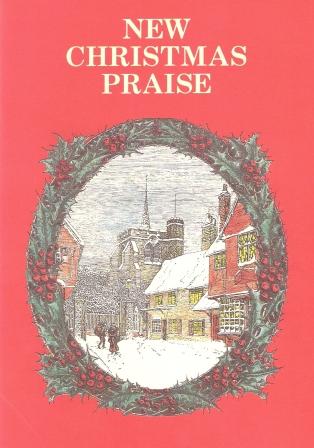
£0.99New Christmas Praise Song Book 1 - 95
These books are now an archive publication and, although are still available, have been superseded by Christmas Collection (available in marchcard size: https://www.sps-shop.com/cc-marchcard or A4 size https://www.sps-shop.com/cc-largeprint). Christmas Collection includes 46 new carols and songs as well as 10 extended carols (originally seen in the Sounds of Christmas books).Ideal for congregational singing.CONTENTS 1. A child this day is born 2. A Christmas Lullaby 3. A great and mighty wonder 4. A starry night 5. A virgin most pure 6. All my heart this night rejoices 7. Angels from the realms of Glory (Come and worship) 8. Angels from the realms of Glory (Iris) 9. Angels, sing again? 10.Angels we have heard on high 11.As with gladness men of old 12. Away in a manger 13. Away in a manger (The manger scene) 14. Bethlehem 15. Brightest and best 16. Brightest and best (Spean) 17. Child of Mary 18.. Calypso Carol 19. Carol for the Nativity 20. Carol of the bells 21.Carol of the drum 22. Christ was born on Christmas Day 23. Christians Awake 24. Come, children, come quickly 25. Coventry carol 26. Do you hear what I hear 27. Ding dong! merrily on high 28. Gabriels message 29. Glory in the highest 30. Go, tell it on the mountain 31. God of God, the uncreated 32. God rest you merry, gentlemen 33. Good Christian men, rejoice 34. Good King Wenceslas 35. Hark the glad sound! 36. Hark! the herald angels sing 37. How far is it to Bethlehem 38. I saw three ships come sailing in 39. I wonder as I wander 40. Il est n 41. Immanuel Appears 42. In the bleak mid-winter 43. Infant Holy 44. It came upon the midnight clear (Traditional) 45. It came upon the midnight clear (Willis) 46. Jesus, good above all other 47. Joy to the world 48. Little baby Jesus 49. Little Jesus, sweetly sleep. 50. Little donkey 51. Long, long ago 52. Marys boy child 53. Masters in this hall 54. Noel 55. o come, all ye faithful 56. o come, Immanuel 57. O come with me to Bethlehem 58. O little town of Bethlehem (Christmas Carol) 59. O little town of Bethlehem (Forest Green) 60. O little town of Bethlehem (St Louis) 61. O Heaven-sent King 62. O holy night 63. Once, in royal Davids city 64. Past three oclock 65. Personent hodie 66. Praise ye the Lord 67. Rise up, shepherd! 68. Sans day carol 69. See, amid the winters snow 70. Silent night! 71. Sleep, holy Babe 72. Softly the night is sleeping 74. Stars are shining 73. Sussex carol 76. Sweet chiming bells 75. Sweet chiming Christmas bells 77. The angels sang the story 78. The first Nowell 79. The holy Boy 80. The holly and the ivy 81. The infant King 82. The shepherds farewell 83. The virgin Mary had a baby boy 84. The stable door 85. They all were looking for a king 86. Three kings march 87. Unto us a boy is born 88. Wayfaring 89. We gather round the manger-bed 90. We three kings of Orient are 91. What child is this 92. When wise men came seeking 93. While shepherds watched 94. Who is he 95. Zither carol
Estimated dispatch 7-14 working days
-
 £65.00
Royal Fireworks, Music from the (Brass Band - Score and Parts) - Handel, George Frideric - Blakeson, Don
Handel's Music For The Royal Fireworks was composed in 1749 to celebrate the signing of the Treaty of Aix-la-Chapelle and the end of the War of the Austrian Succession. The site chosen was the fashionable upper part of St. James Park, which was becoming known at that time as Green Park. The Green Park 'Machine', which housed the pyrotechnics was an elaborate affair adorned with "statues and other figures, festoons of flowers, and other lustres". It was announced that there would be some 10,000 rockets and other devices to be let off, all culminating in a grand, burning sun with 'Vivat Rex' at its centre. There were also rumours that the event was to be accompanied by an impressively large band of military music and mention was made of "40 trumpets, 20 french horns, 16 hautboys (oboes), 16 bassoons, 8 pairs of kettle drums, 12 side drums, a proper number of flutes and fifes; with 100 cannon to go off singly at intervals". It is unlikely that Handel had ever conceived such forces and it was merely the promoter's hyberbole, not least because it was unlikely that there were sufficient numbers of extra military musicians available that could read music, as most played from memory. It is also likely that Handel, and his publisher, were conscious that future performances would be hindered by such forces. The autographed score lists the instrumentation as 9 trumpets, 9 french horns, 24 hautboys, 12 bassoons, 3 pairs of kettle drums and up to 4 side drums. The work is in five movements, although Handel's original score did not indicate in which order they should be played. However, in this score they are arranged to be played as follows: Overture; Bour?e; La Paix; Minuets; La R?jouissance. Duration: 19:00
Estimated dispatch 7-14 working days
 View Music