
Results
-
Anyone Who Had A Heart - Burt Bacharach and Hal David - Len Jenkins
"Anyone Who Had A Heart" is a song written by Burt Bacharach (music) and Hal David (lyrics) originally for Dionne Warwick in 1963. However, in the UK, Ireland and New Zealand, the cover version by Cilla Black was, and is still, the best loved. Championed by her friends The Beatles, she began her career as a singer in 1963, and her singles "Anyone Who Had A Heart" and "You're My World" both reached number one in the UK in 1964. From the first line, the song has a certain frisson: "Anyone who ever loved, could look at me, and know that I love you." Sadly, Cilla passed away on 1 August 2015 so this is our tribute to a well-loved lady and singer. Our objective has been to interpret the style of the original performance by Cilla, and whilst the time signatures may not be familiar, experience has shown that these are easier to read and play than the alternative using triplets.
-
Bad Moon Rising - John Fogerty - Len Jenkins
"Bad Moon Rising" is a song written by John Fogerty and performed by Creedence Clearwater Revival. It was the lead single from their album Green River and was released in April 1969, four months before the album. It reached No. 1 on the UK Singles Chart for three weeks in September 1969 and has been recorded by at least 20 different artists, in styles ranging from folk to reggae to psychedelic rock. The last line of the chorus, "there's a bad moon on the rise", is sometimes misheard as "there's a bathroom on the right" and Fogerty occasionally sings the misheard lyric in concert. The song has become notably popular in Argentina as a football chant and in the 2014 FIFA World Cup, a modified version, titled "Brasil, decime que se siente" ("Brazil, Tell Me How It Feels") was sung with Spanish lyrics that taunted Brazil, their traditional rival. It went viral and became very popular (in Argentina).
-
 £42.00
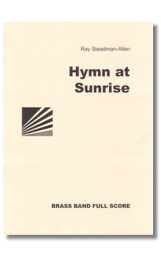
Hymn at Sunrise (Score only) - Ray Steadman-Allen
The idea for this work was prompted by a poem - Hymn Before Sunrise - which describes the majesty of a mountain in darkness, the sounds of a nearby waterfall and so on. Nothing came of the exposure to these pictures except for general thoughts about the dawn of day and a series of movements expressing a personal response to the wonder of creation in an imaginary moment in time. The movement titles, which were added later, are intended to underline a prevailing sense of worship, wonder and exaltation. The music is pure, not pictoral, though listeners may conjure their own images. An actual hymn - Tallis' Cannon - is incorporated. There are five movements: 1. Thanksgiving: A short prelude in two parts. First a brief passage of 'dawn music' before things become more vigorous: fanfare-like music ushers in the trombone section's presentation of the Tallis tune. A broad band version concludes the movement. 2. De Profundis: A slow movement shot through with anxious questionings featuring flugel and trombone. The mood lightens a little in the centre where the soprano cornet is featured and the movement ends serenely. 3. Celebration is characterised by rhythmic drive, this is buoyant with plenty of incident pointed up by the percussion. 4. Invocation: Melodic in nature and sober in mood, the first section is a series of short solos mingled with chorale-like statements. Central to the movement is a chorale-prelude style presentation of the Tallis tune. The third section reintroduces the earlier solo music by the full ensemble. Dissolving, the music enters the last movement without a break. 5. Paean: Marked allegro con spirito there is, quite rightly, a fair amount of fun in the rejoicing. Snatches of Tallis are heard, then comes a gentle passage with a cornet solo leading to fanfare music and recapitulation. Two recitatives are succeeded by a coda which brings the work to a sonorous and exultant conclusion.
Estimated dispatch 7-9 working days
-
 £52.00
Hymn at Sunrise (Parts only) - Ray Steadman-Allen
The idea for this work was prompted by a poem - Hymn Before Sunrise - which describes the majesty of a mountain in darkness, the sounds of a nearby waterfall and so on. Nothing came of the exposure to these pictures except for general thoughts about the dawn of day and a series of movements expressing a personal response to the wonder of creation in an imaginary moment in time. The movement titles, which were added later, are intended to underline a prevailing sense of worship, wonder and exaltation. The music is pure, not pictoral, though listeners may conjure their own images. An actual hymn - Tallis' Cannon - is incorporated. There are five movements: 1. Thanksgiving: A short prelude in two parts. First a brief passage of 'dawn music' before things become more vigorous: fanfare-like music ushers in the trombone section's presentation of the Tallis tune. A broad band version concludes the movement. 2. De Profundis: A slow movement shot through with anxious questionings featuring flugel and trombone. The mood lightens a little in the centre where the soprano cornet is featured and the movement ends serenely. 3. Celebration is characterised by rhythmic drive, this is buoyant with plenty of incident pointed up by the percussion. 4. Invocation: Melodic in nature and sober in mood, the first section is a series of short solos mingled with chorale-like statements. Central to the movement is a chorale-prelude style presentation of the Tallis tune. The third section reintroduces the earlier solo music by the full ensemble. Dissolving, the music enters the last movement without a break. 5. Paean: Marked allegro con spirito there is, quite rightly, a fair amount of fun in the rejoicing. Snatches of Tallis are heard, then comes a gentle passage with a cornet solo leading to fanfare music and recapitulation. Two recitatives are succeeded by a coda which brings the work to a sonorous and exultant conclusion.
Estimated dispatch 7-9 working days
-
 £62.00
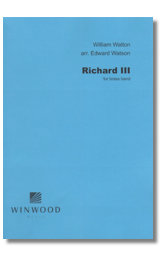
Richard III (Score only) - William Walton
It takes a special ability to compose film scores which serve the images perfectly yet translate into first class concert music. William Walton was such a talent as the continuing popularity of his brilliantly evocative film music shows. This suite presents a rich, vivid musical tapestry with all the drama of the original captured to perfection. Winwood Music are delighted to bring this music from Laurence Olivier's classic film to the brass band world in a fabulous arrangement by Edward Watson - so idiomatic that you'll think this is the original version! There are seven movements: 1. Prelude 2. Fanfare and Processional 3. Sound Drums and Trumpets & Recessional 4. Elegy 5. The Princes in the Tower 6. The Battle of Bosworth Field 7. Death of Richard and Finale
Estimated dispatch 7-9 working days
-
 £74.00
Richard III (Parts only) - William Walton
It takes a special ability to compose film scores which serve the images perfectly yet translate into first class concert music. William Walton was such a talent as the continuing popularity of his brilliantly evocative film music shows. This suite presents a rich, vivid musical tapestry with all the drama of the original captured to perfection. Winwood Music are delighted to bring this music from Laurence Olivier's classic film to the brass band world in a fabulous arrangement by Edward Watson - so idiomatic that you'll think this is the original version! There are seven movements: 1. Prelude 2. Fanfare and Processional 3. Sound Drums and Trumpets & Recessional 4. Elegy 5. The Princes in the Tower 6. The Battle of Bosworth Field 7. Death of Richard and Finale
Estimated dispatch 7-9 working days
-
 £15.00
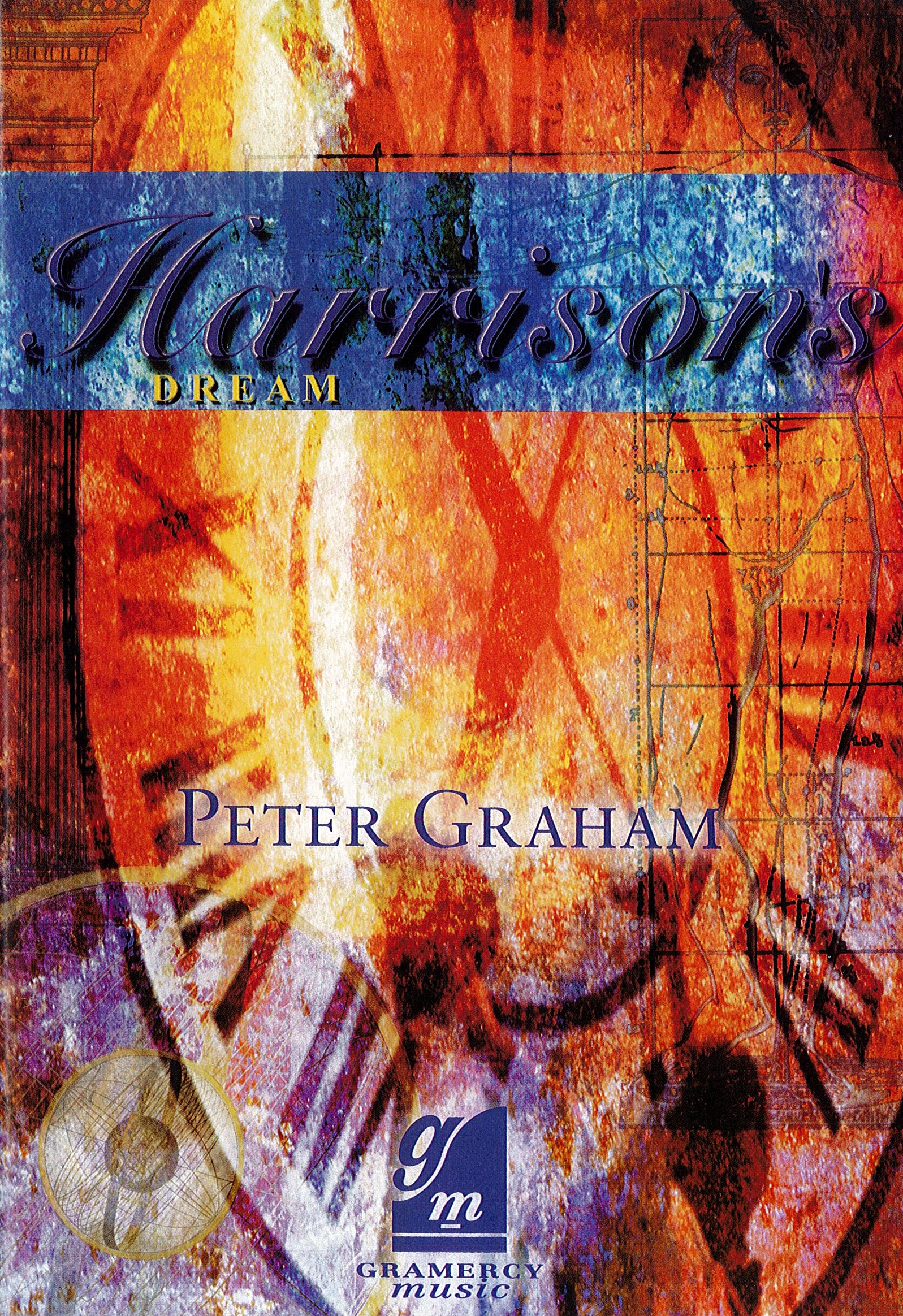
Harrison's Dream (Brass Band - Study Score)
At 8.00pm on the 22nd of October 1707, the Association, flagship of the Royal Navy, struck rocks off the Scilly Isles with the loss of the entire crew. Throughout the rest of the evening the remaining three ships in the fleet suffered the same fate. Only 26 of the original 1,647 crew members survived. This disaster was a direct result of an inability to calculate longitude, the most pressing scientific problem of the time. It pushed the longitude question to the forefront of the national consciousness and precipitated the Longitude Act. Parliament funded a prize of �20,000 to anyone whose method or device would solve the dilemma. For carpenter and self-taught clockmaker John Harrison, this was the beginning of a 40 year obsession. To calculate longitude it is necessary to know the time aboard ship and at the home port or place of known longitude, at precisely the same moment. Harrison's dream was to build a clock so accurate that this calculation could be made, an audacious feat of engineering. This work reflects on aspects of this epic tale, brilliantly brought to life in Dava Sobel's book Longitude. Much of the music is mechanistic in tone and is constructed along precise mathematical and metrical lines. The heart of the work however is human - the attraction of the �20,000 prize is often cited as Harrison's motivation. However, the realisation that countless lives depended on a solution was one which haunted Harrison. The emotional core of the music reflects on this, and in particular the evening of 22ndOctober 1707. Peter GrahamCheshireJuly 2000
Estimated dispatch 7-14 working days
-
 £77.00
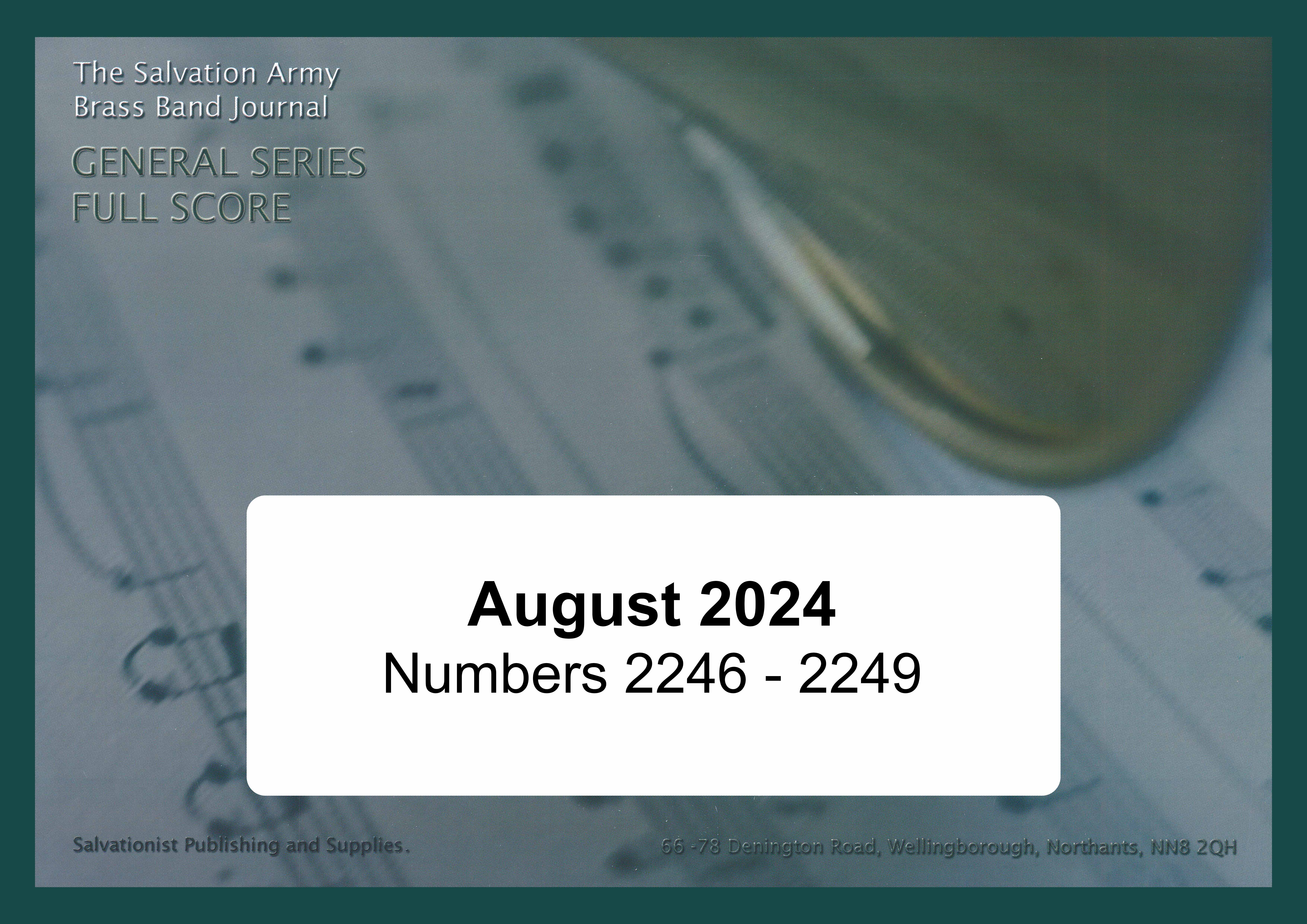
General Series Brass Band Journal, Numbers 2246 - 2249, August 2024
2246: Christmas Prelude - David's City (Noel Jones)In 2 Samuel 5, we read of David's anointing as King of Israel at the age of thirty, a reign that lasted for forty years. Bethlehem was known as 'David's city' because he was born there and worked as a shepherd on the nearby hills. Verses 1, 2 and 5 of Once in Royal David's City (C.C. 68) are featured in this Christmas Prelude. There are also brief references to the carols O come, all ye faithful and O little town of Bethlehem between verses.2247: Cornet and Euphonium Duet - This Kingdom (Stephen Bulla)Geoff Bullock's song, This Kingdom, has been made well known by the American gospel singer Ron Kenoly. Stephen Bulla wrote this duet for a Brass Spectacular concert held in Basel, Switzerland, in May 2019.2248: Wonder (Stephen Gibson)When we stop to consider the mystery of God's love for each one of us, its enormity can only cause us to wonder. The opening bars of this music create an atmosphere, using a rolling accompaniment underneath sustained, music and chromatic Cornets, setting the style for the entire piece. Occasional references to Albert E. Webber's chorus Can you wonder? are heard throughout.2249: O to love thee! (Michael Davis)This piece takes its title from the first verse of Francis Bottome's words, Precious Jesus, O to love thee! The introduction establishes the baroque form of a prelude which leads into the tune Glory to the lamb (T.B. 327). Following a brief interlude, the melody is passed through several sections of the band, with delicate countermelodies in the Flugel and Horns. The majestic ending eventually comes to rest on the final tonic chord.
Estimated dispatch 7-14 working days
-
 £25.00
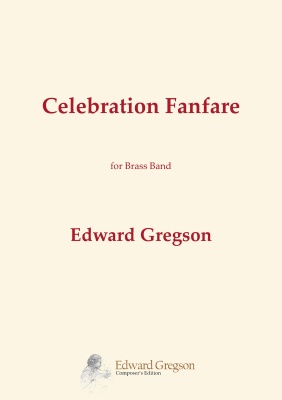
Celebration Fanfare (Brass Band - Score and Parts)
Celebration Fanfare was specially written for the 50th Anniversary concert of the Port Sunlight Lyceum Band. It was a gift from the composer to his cousin, Ralph Peters, co-founder of the band in 1973.The premiere of the Fanfare was given at the band's 50th Anniversary concert on 24 September 2023 at the Gladstone Theatre, Port Sunlight, Wirral, Merseyside, UK.Duration: 1.00
Estimated dispatch 7-14 working days
-
 £38.95
Unity Series Band Journal - Numbers 518 - 521, June 2023
518: March - A Christmas cavalcade (Morgan Juel Stavik)This march contains several Christmas carols and songs. Some are easy to recognise and are identified in the score, while other references are more subtle.519: Christmas bossa nova (Kevin Larsson)Using Jingle Bells, The First Nowell, It came upon the midnight clear and Ding dong! merrily on high, here is a great bossa nova to liven up your Christmas concert.520 (1): In te Domine speravi (Des Prez trs. Zachary Docter)This piece is a transcription of an early 16th century choral work by the Renaissance composer Josquin des Prez. Josquin was a well-known and highly regarded composer in his day. Like many composer of this period, Josquin wrote linearly, valuing independent free-flowing lines over vertical harmonies. As a result, the interlocking counterpoint in this work can be quite complex and the tied rhythms challenging.520 (2): Excerpt from 'Vespers' (Rachmaninoff trs. Andrew Poirier)Sergei Rachmaninoff's setting of the All-Night Vigil (Vespers) Op.37, of which this excerpt is taken, was composed in January and February 1915. The outbreak of World War I in August 1914 took many people by surprise, and to Rachmaninoff it was a severe shock. This compelled him to write a piece that reminded him of his childhood and the importance of the Russian Orthodox Church within the national identity of Russia. The excerpt transcribed here has a quality and enigmatic charm that never fails to move the souls of those that listen to it.521: March - Walk of faith (Stanley Makau)This march introduces Stanley Makau to the band journals. Stanley is currently the Deputy and Youth Bandmaster at Quarry Road Citadel Corps in Nairobi, Kenya. His inspiration for the march primarily came from Psalm 91: 11-12, and the march is in keeping with the traditional style that has been a staple for Salvation Army music-making.
Estimated dispatch 7-14 working days