
Results
-
 £29.95
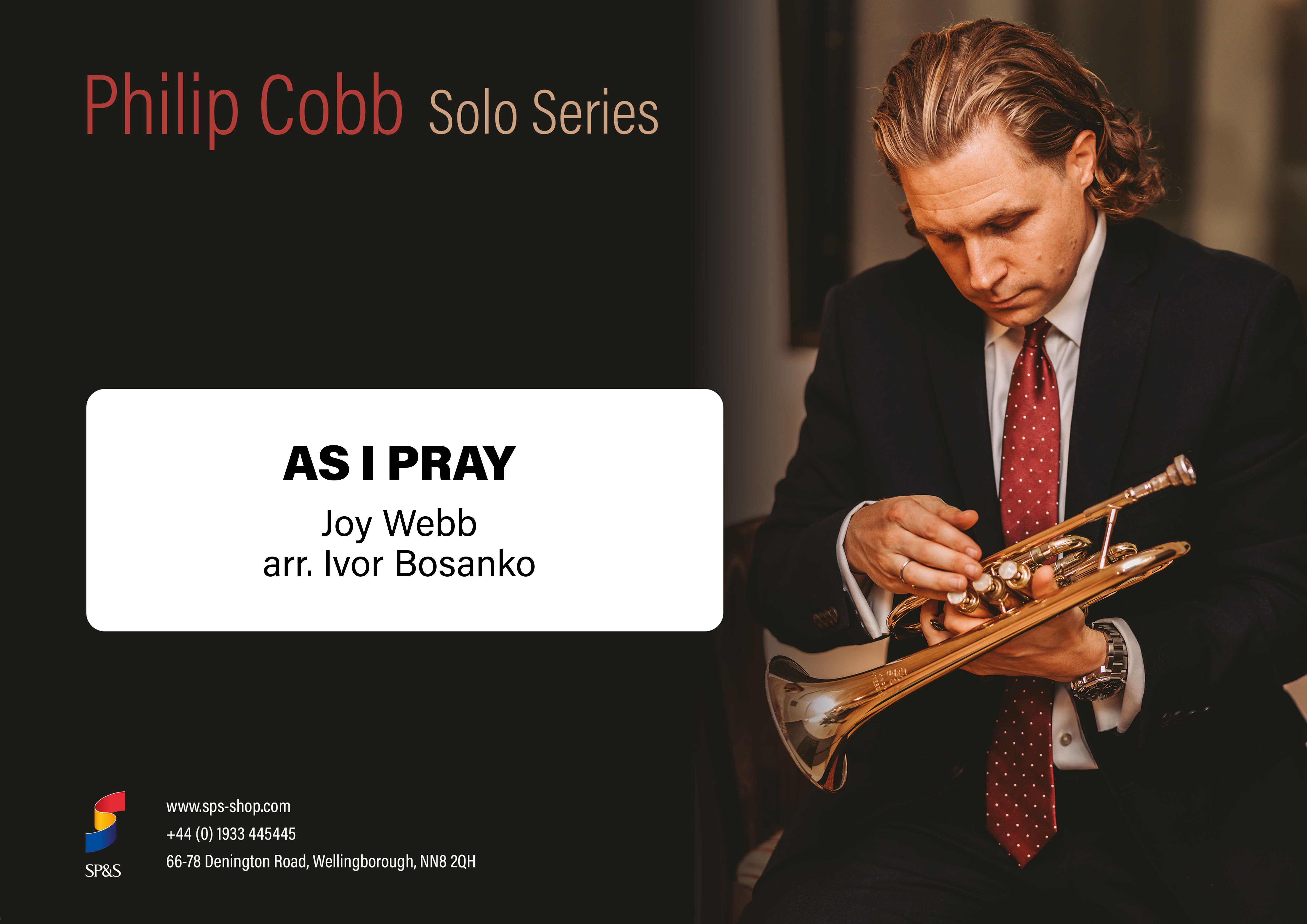
As I Pray (Cornet Solo with Brass Band - Score and Parts)
Joy Webb composed many Christian songs that continue to resonate with people today. As I Pray was originally written as a vocal solo and speaks of the constant need to communicate with God.Duration: 3.00
Estimated dispatch 7-14 working days
-
 £29.95
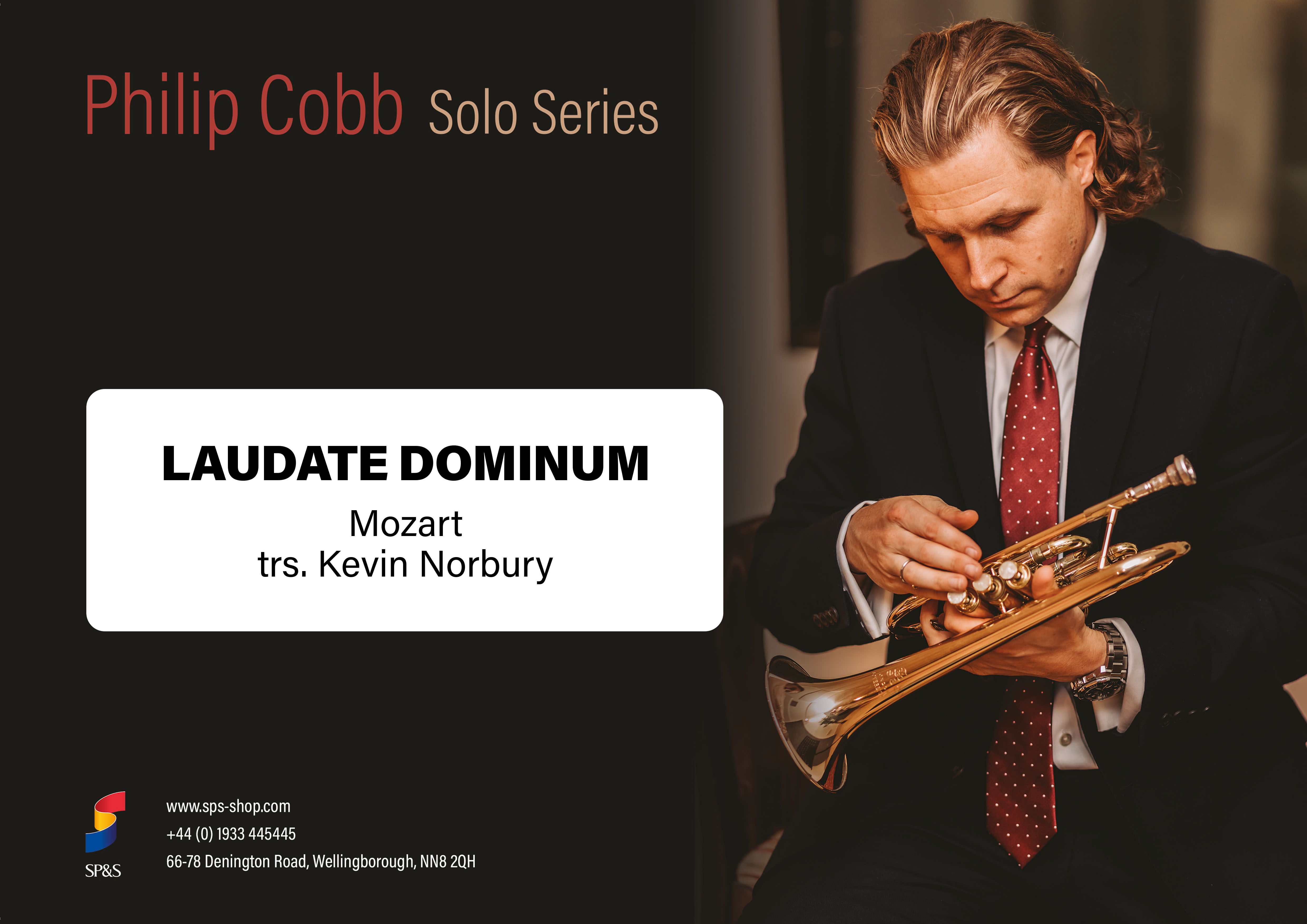
Laudate Dominum (Cornet Solo with Brass Band - Score and Parts)
Originally composed by Mozart in 1780 from the Vesperae ples de Confessore, this setting of the shortest of the psalms, Psalm 117, has an ethereal quality. It seems to express something of the beauty of God and of his love in creation. This work has been beautifully transcribed for brass and soloist by Kevin Norbury.Duration: 5.00
Estimated dispatch 7-14 working days
-
 £29.95
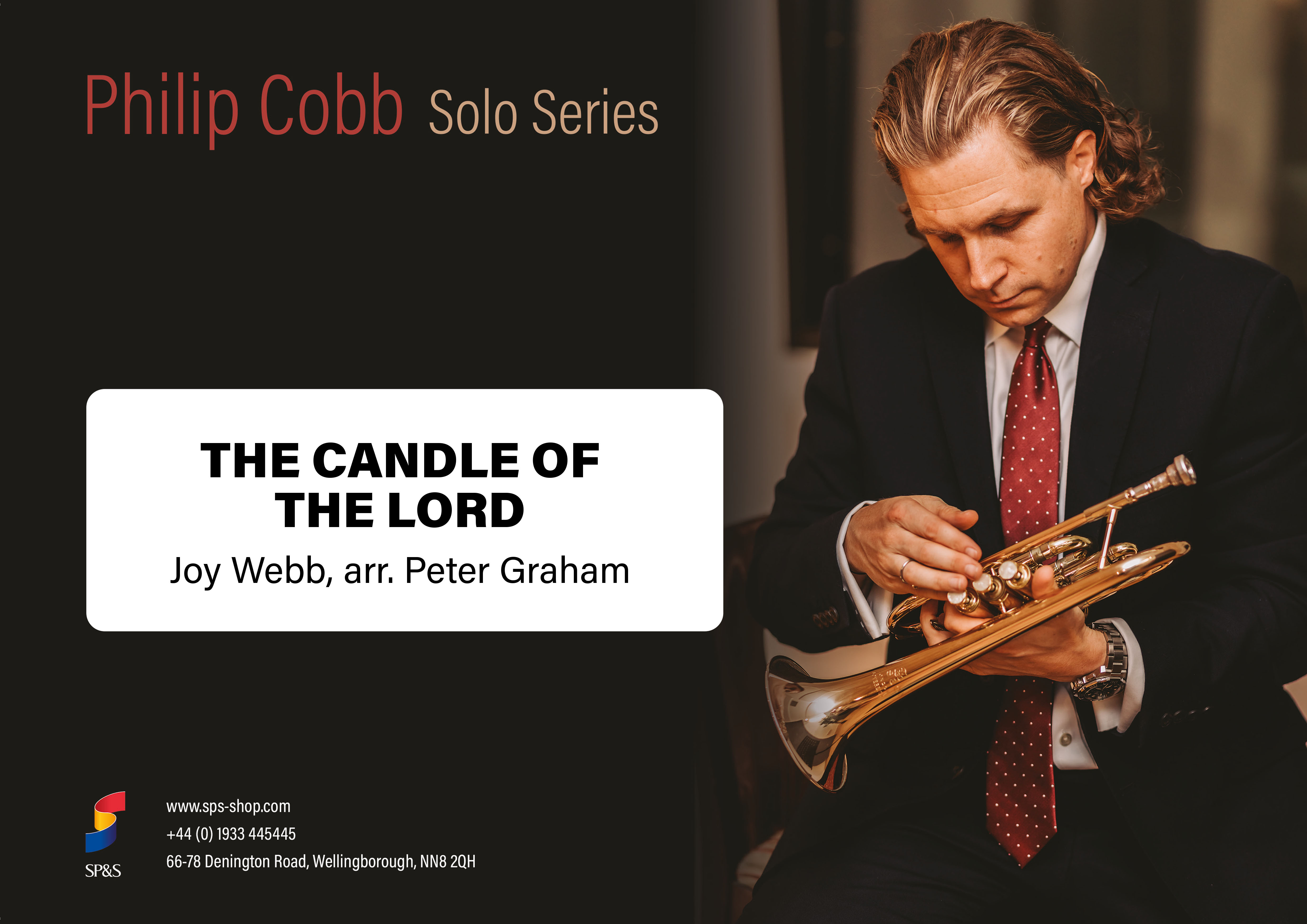
The Candle of the Lord (Cornet Solo with Brass Band - Score and Parts)
The Candle of the Lord, originally written as part of a musical named Breakthrough, finds its inspiration from Proverbs 20, Verse 27. This beautiful setting has been arranged by Peter Graham and was specifically written for Philip Cobb.Duration: 4.00
Estimated dispatch 7-14 working days
-
 £95.00
King Lear (Brass Band - Score and Parts)
Sir Granville Bantock (1868 - 1946) composed the second of his five major brass band work for Callender's Cableworks Band, completing the commission on 30 November 1932. Based in the Thames-side district of Belvedere near Erith, the band was active between 1898 and 1961. The works band of the Callender Cable & Construction Co. Ltd, it was at the peak of its popularity during the 1930s and was a frequent broadcaster on the radio. The band employed an in-house arranger and played saxophones in its lighter material. King Lear was one of the band's major commissions and was not published in Bantock's lifetime. The manuscript score and parts were thought to be lost for decades, but were found in the library of the Haydock Band (Lancashire), which had inherited part of Callender's library of manuscripts material and bespoke arrangements after it has been transferred to nearby Prescott Cables Band after Callender's Cable Works closed.King Lear is a substantial work, in essence a dramatic tone poem in the romantic Tchaikovskian manner, presenting a series of character portraits of the foolish old king and his three daughters, Goneril, Regan and Cordelia. The music is dramatic and lyrical by turns, with the most generous lyrical episode revealing perhaps the warm-hearted Cordelia. An expansive melody that flows from this is brought back towards the end as the main climax of the work.In 2001, Bantock's score was recorded by the University of Salford Brass Band, conducted by Dr. Roy Newsome. The original is serviceable, but in comparison with the orchestral version he made in 1936 (part of which was recorded on a Paxton 78 rpm) and later brass band scores, performing editions of which were prepared by others, it lacks colour and range typical of Bantock's orchestral work. Above all it lacks percussion, which can be heard on the recorded extract. With the kind permission of the Bantock Estate, I have prepared a performing edition for publication that incorporates percussion, derived from the orchestral recording and added editorially in similar manner elsewhere. I have revoiced some of the low- lying instrumental parts to present the material in more comfortable ranges. Editorial interventions more elaborate than revoicing the original text have been identified as cue notes.- Paul HindmarshDuration: 15.00
Estimated dispatch 7-14 working days
-
£40.00
King Lear (Brass Band - Score only)
Sir Granville Bantock (1868 - 1946) composed the second of his five major brass band work for Callender's Cableworks Band, completing the commission on 30 November 1932. Based in the Thames-side district of Belvedere near Erith, the band was active between 1898 and 1961. The works band of the Callender Cable & Construction Co. Ltd, it was at the peak of its popularity during the 1930s and was a frequent broadcaster on the radio. The band employed an in-house arranger and played saxophones in its lighter material. King Lear was one of the band's major commissions and was not published in Bantock's lifetime. The manuscript score and parts were thought to be lost for decades, but were found in the library of the Haydock Band (Lancashire), which had inherited part of Callender's library of manuscripts material and bespoke arrangements after it has been transferred to nearby Prescott Cables Band after Callender's Cable Works closed.King Lear is a substantial work, in essence a dramatic tone poem in the romantic Tchaikovskian manner, presenting a series of character portraits of the foolish old king and his three daughters, Goneril, Regan and Cordelia. The music is dramatic and lyrical by turns, with the most generous lyrical episode revealing perhaps the warm-hearted Cordelia. An expansive melody that flows from this is brought back towards the end as the main climax of the work.In 2001, Bantock's score was recorded by the University of Salford Brass Band, conducted by Dr. Roy Newsome. The original is serviceable, but in comparison with the orchestral version he made in 1936 (part of which was recorded on a Paxton 78 rpm) and later brass band scores, performing editions of which were prepared by others, it lacks colour and range typical of Bantock's orchestral work. Above all it lacks percussion, which can be heard on the recorded extract. With the kind permission of the Bantock Estate, I have prepared a performing edition for publication that incorporates percussion, derived from the orchestral recording and added editorially in similar manner elsewhere. I have revoiced some of the low- lying instrumental parts to present the material in more comfortable ranges. Editorial interventions more elaborate than revoicing the original text have been identified as cue notes.- Paul HindmarshDuration: 15.00
Estimated dispatch 7-14 working days
-
 £74.95
The Pilgrim's Progress (Brass Band - Score and Parts)
Drawing inspiration from John Bunyan's Christian allegory, 'The Pilgrim's Progress' and Eric Ball's setting of Bunyan's 'Pilgrim's Hymn', Rodney Newton has expertly crafted a set of variations, each outlining a chapter in the Pilgrim's journey to the Celestial City.The work was written in 2003 (Eric Ball's centenary year) for Bandmaster Stephen Cobb and The International Staff Band of The Salvation Army to whom it is dedicated.Suitable for 2nd Section Bands and aboveDuration: 14.00
Estimated dispatch 7-14 working days
-
 £45.00
A Song for Bram (Piano Solo with Brass Band - Score and Parts)
A Song for Bram is a short work, originally composed piano and brass band, and is dedicated to the memory of Bramwell Tovey, a close friend and colleague of the composer, and a conductor, composer, pianist and musician of huge talent, who sadly passed away before his time in the summer of 2022. In this short piece the composer has tried to imagine what kind of tune Bram would have improvised at the piano, something he frequently engaged in. No doubt it would have been a mixture of bluesy jazz, hymn tune, and love song, and this is how the solo piano takes off. In the middle section of a what is a simple tertiary structure, introduced are quotes from two hymn tunes Bram particularly loved, never having forgotten his Salvation Army roots. Bram's 'Song' returns, this time on a plaintive flugelhorn horn, and which reaches a climax with the full band before receding, literally, into the distance.....(to a new life beyond?).Duration: 6.00
Estimated dispatch 7-14 working days
-
 £45.00
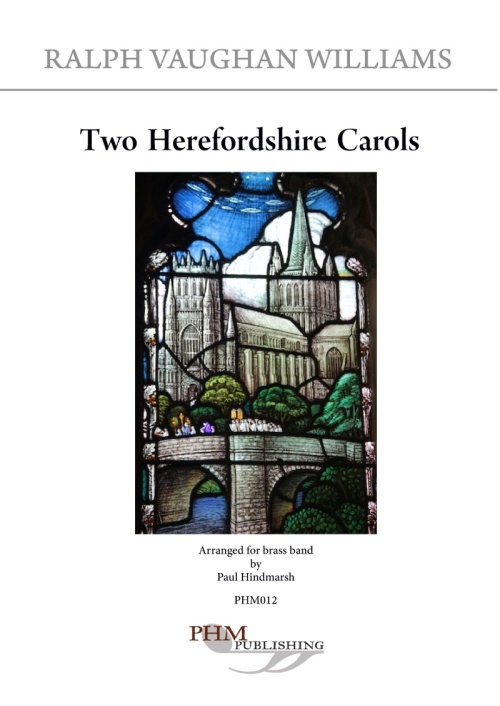
Two Herefordshire Carols (Brass Band - Score and Parts)
The two traditional tunes that comprise this straightforward setting were sung to Ralph Vaughan Williams (1872-1958) by Mrs. Esther Smith of Dilwyn, near Hereford, during one of the great composer's folk song collecting tours of England in the early years of the twentieth century. They were included in Twelve Traditional Carols from Herefordshire, edited by E.M. Leather and Vaughan Williams. The words to which Mrs. Smith sung the first tune were probably drawn from eighteenth century evangelical sources. The editors replaced these with six of the 16 verses of a traditional seventeenth century carol text, Joseph and Mary.The second melody, which appears as the centre piece of this arrangement, was sung to a carol that tells of a farmer who ploughed on Christmas Day. It is in fact a translation of a German traditional carol Gelobet seist du Jesu Christ that was published in Goodly Psalmes and Spiritualle Songes (1546) translated by Miles Coverdale. Vaughan Williams used the title Coverdale's Carol.The brass band settings follow the settings made by Vaughan Williams in 1920 for the Oxford Book of Carols. Since his simple harmonic approach is similar in both settings, three verses of his haunting version of Coverdale's Carol have been folded inside four verses of the slightly more animated treatment of Joseph and Mary. The harmonisations of Vaughan Williams have been given some brass band colour, with some verses taken by soloists from the ensemble. The accompaniment figuration that embellishes the second verse of Joseph and Mary has been used to open and close this arrangement and to bind the verses together.- Paul HindmarshDuration: 5.00
Estimated dispatch 7-14 working days
-
 £30.00
Birthday Prelude (Brass Band - Score and Parts)
This short work for brass band was written specially for a concert to celebrate the 80th birthday of Harry Mortimer, one of the great figures in the world of brass bands. Not surprisingly, it references the well-known song Happy Birthday Song, in an up-tempo, Latin-American-inspired style.Duration: 2.00
Estimated dispatch 7-14 working days
-
 £64.95
The Storm Cone (Brass Band - Score and Parts)
The Storm Cone was commissioned from Lucy Pankhurst as a central part of an immersive artwork by Laura Daly, which considers our intrinsic relationship with the past. The project itself takes the form of a downloadable app, featuring geolocated augmented reality technology and binaural recordings. The music was performed and recorded remotely by the students, staff and friends of the University of Salford during the UK lockdowns in 2021.At its centre, is a journey through music and sound that charts the fading away of a brass band during the interwar years (1918 - 1939). Using new technologies to trace lost bandstands in their final days of mass popularity, we first encounter the band performing as a full ensemble, in 360audio. Breath-taking detail can be heard from every instrument as you move amongst the absent musicians; proximity alters the perception of sounds as Pankhurst's score builds and then returns to a single note. From the powerful, collective sound of the band, the journey then follows the departed musicians into eight spatial sound works by Daly, where their fragile solo phrases merge and mutate in new environments. History, fiction, artifice, and reality combine within this sensory encounter to confront the present with its past.This absorbing work takes its name from the title of Rudyard Kipling's 1932 poem that forewarned of WWII. It considers key aspects of the interwar period and the ensuing break-up and reshaping of communities in different parts of the country. Brass bands, with their strong industrial, religious and militaristic associations, lost many musicians to both World Wars, and the intervening years of shellshock, unemployment, economic migrancy, and industrial action. Their survival and the survival of brass music tell a story of working-class life during this epoch of deindustrialisation. Life, music and creative legacy are all being sustained by breath. As the band's sound lingers in an absent-minded hum or whistle, it becomes both an imprint and portal to these past times.The Storm Cone commemorates the legacy of creativity, music and sound, the power of community and the importance of collective memory, history and storytelling. It highlights the emotive nature of the past and how it can also help foresee possible futures. Serving as a warning shot, The Storm Cone contemplates the residual impact of the interwar period and the cyclical nature of history in terms of current events, including the economic downturn and the rise of populism, extremism, racism and antisemitism; problems seemingly exacerbated by the current pandemic. The resulting experience is an artwork that underlines human strength and fragility and is imbued with a sense of both loss and celebration.Duration: 10.00
Estimated dispatch 7-14 working days