
Results
-
 £19.95
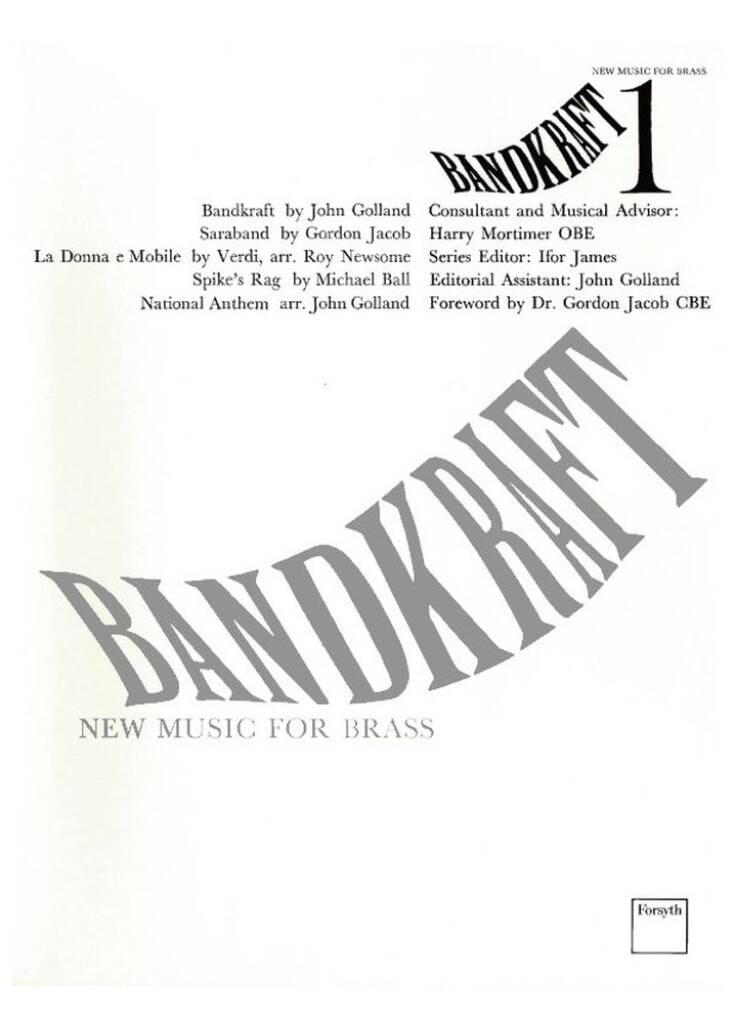
Bandkraft 1
The first of three superb sets of new music and arrangements for brass ensemble, edited by John Golland.1. Bandkraft - John Golland: A substantial piece with an exciting syncopated rhythm introduced in the opening bars and referred to throughout in a fanfare-like manner, to which a hint of dissonance adds extra thrill to the sound.2. Saraband - Gordon Jacob: A stately Elizabethan dance of great beauty, utilising modal harmony in Jacob's characteristic style. Constant speed, full note values and careful playing will achieve a beautiful, delicate effect.3. La Donna E Mobile - Verdi, arr. Roy Newsome: An amusing arrangement of this popular favourite by a conductor and adjudicator of international acclaim. Easy and enjoyable to play and to listen to.4. Spike's Rag - Michael Ball: A skilfully written piece in the true tradition of Scott Joplin, with the ragtime rhythm the backdrop to an unfolding conversation between the sections of the band. Really persuasive entertainment.5. National Anthem - arr. John Golland: A simple first verse setting the scene for the colourful and majestic second, utilising chromatic harmonies and an optional tenor counter melody for added splendour.
Estimated dispatch 5-14 working days
-
 £54.95
Sonata - Derek Bourgeois
This work, composed in 1998, was commissioned by the American trombonist Don Lucas as a work for trombone and piano and first performed by him in Birmingham on 19th May 2000. Subsequently, I arranged the music for both solo trombone and brass band and solo trombone and wind band so that it now exists in three formats. The first movement, in B flat major, is brisk and energetic, and is cast in sonata form. The second subject is gentler and more lyrical. The second movement, a scherzo in C major, is the most complex of the four. Basically the structure is a rond. For a long time the music remains in the opening 5/8 time until a new theme introduces more broken rhythms in a more jazzy idiom. After a return of the opening theme the following episode is more tonally ambiguous. Finally, the main theme returns to round off the movement. The third movement, a lyrical adagio, is really one long extended melodic flow. The harmonies are lush and the textures simple and direct. The tonal center is A minor, but the music meanders through so many keys, that this key centre is heavily disguised. The finale is a fiery affair. G minor is really its home key, but throughout the movement the music moves about a lot and the second subject is first heard in A flat minor. The movement's underlying sonata structure is masked not only by its loose tonality but also by its frequently changing time signatures. Like the first movement the second subject is more lyrical in nature and for a while it seems that the music will end peacefully, but a final flurry heralds a triple forte unison on the home note of the first movement - B flat. Derek Bourgeois
Estimated dispatch 5-14 working days
-
 £56.50
The Best of Sinterklaas! - Muziek Piet
The series for 5 part flexible setting "The Best Of" has been enhanced with this fresh adaptation of 10 of the most famous Dutch "Sinterklaas" Songs by a highly skilled arranger. This set also includes parts for choir. Available in marching and normal size music.
Estimated dispatch 5-14 working days
-
 £95.50
The Best of Michael Jackson - Michael Jackson - Henk Ummels
By popular demand, there is now in The Best Of series for 5 part flexible setting, a selection of some of the best songs of Michael Jackson. Henk Ummels has selected and made a balanced and very playable selection out of Jackson's wide repertoire. The Best of Michael Jackson includes the smash hits; Beat it, Smooth Criminal, Heal The World, Another Part Of Me and Don't Stop 'till You Get Enough.
Estimated dispatch 5-14 working days
-
 £115.60
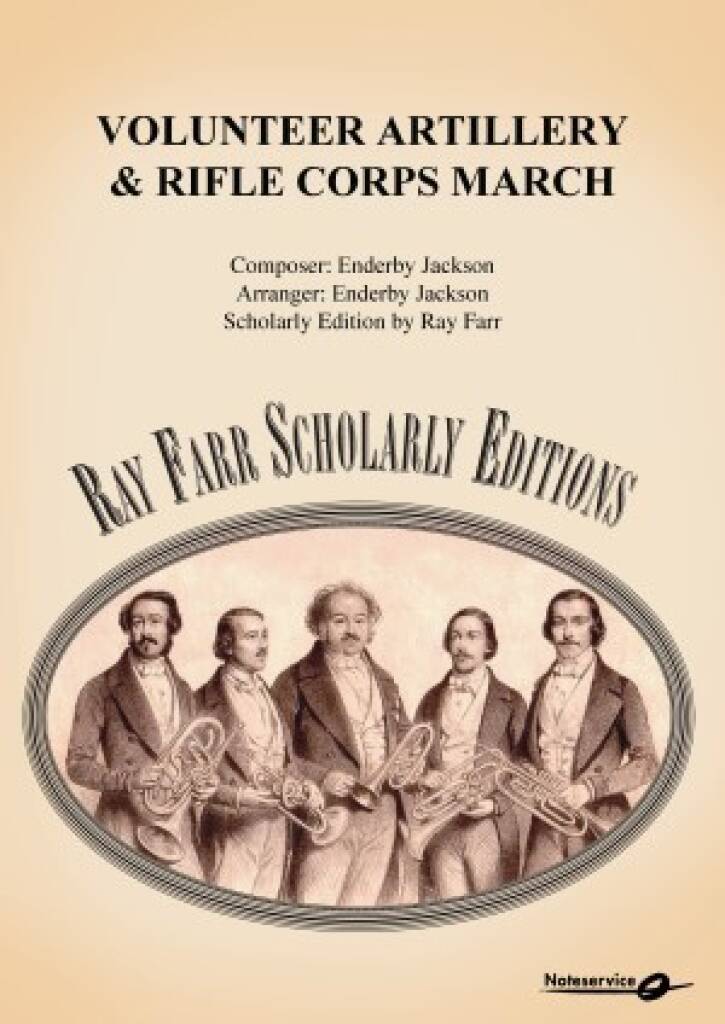
Voluntary Artillery & Rifle Corps March - Endeerby Jackson - Ray Farr
The march was written by Enderby Jackson and performed during a series of brass band events which took place at the Crystal Palace, London 1860 - 1863. Enderby Jackson was the organiser of these historically important events, and also conducted the massed band concerts. The Volunteer Force was a part-time, citizen army created in May 1859 by the British government as a result of increasing tensions between Britain and France. By 1862 more than 200,000 men had enlisted and were paid when on duty however, each member of the corps had to provide his own weapon and equipment.Some of the volunteer corps had bands which normally numbered between six and twelve players plus percussion1 and these bands became an important stimulant to the development of brass band.2 The corps were heavily subsidised by the government and considerable funding was spent on the bands3 which were often local brass bands. These bands were often provided with rehearsal rooms, instruments and uniforms,4 furthermore, the volunteer movement created and saved many brass bands.5Most of the musicians performing at the Crystal Palace Contests were affiliated to the Volunteer Force.
Estimated dispatch 5-14 working days
-
 £105.20
All This Time [Pick-Me-Up Song] - Maria Mena - Bjorn Morten Kjaernes
Maria Mena has been one of Norway's most popular artists the last 15 years, releasing 25 singles and eight albums during this period.This beautiful, melodic song is one of her biggest hits released both as single and as a part of her "Causeand Effect" album in 2008.
Estimated dispatch 5-14 working days
-
 £105.20
Riv i hjertet - Sondre Justad - John Philip Hannevik
The singer/ songwriter Sondre Justad was born in Lofoten in the north of Norway in 1990. His first album Riv i hjertet was released in 2015, and it became a huge success. He got very fine reviews in some of the largest norwegian newspapers, and the title-song was played frequently on the national radio-stations. The song title could loosely be translated as pulling at my heartstrings, and the song has a deep and dark meaning, with the opening lyrics sounding: If I knew - that I would be dying soon, would I be happy with the way I am living my life Please note that the repeating figures in upper cornets should never be dominant, they should only provide texture tothe accompaniment.
Estimated dispatch 5-14 working days
-
 £105.20
Ungarsk marsj - Hector Berlioz - Bjorn Morten Kjaernes
The "Rakoczi March" (Hungarian March) was the unofficial state anthem of Hungary before Ferenc Kolcsey wrote the Himnusz which is today the official national anthem of Hungary. The first version of this march-song was probably created around 1730 by one or more anonymous composers, although tradition says that it was the favorite march of Francis Rakoczi II. That early version called back Francis Rakoczi II to save his people. It was very popular in the 18th century but in the 19th century the more refined Rakoczi March became prevalent. Hector Berlioz included the music in his composition "La Damnation de Faust" in 1846, and Franz Liszt wrote a number of arrangements, includinghis Hungarian Rhapsody No. 15, based on the theme. The march gave its name to a 1933 Austrian-Hungarian feature film - Rakoczy-Marsch This arrangement is based on Berlioz instrumentation and phrasing from his Hungarian March, but in the form of the 19th century Rakoczi March
Estimated dispatch 5-14 working days
-
 £105.20
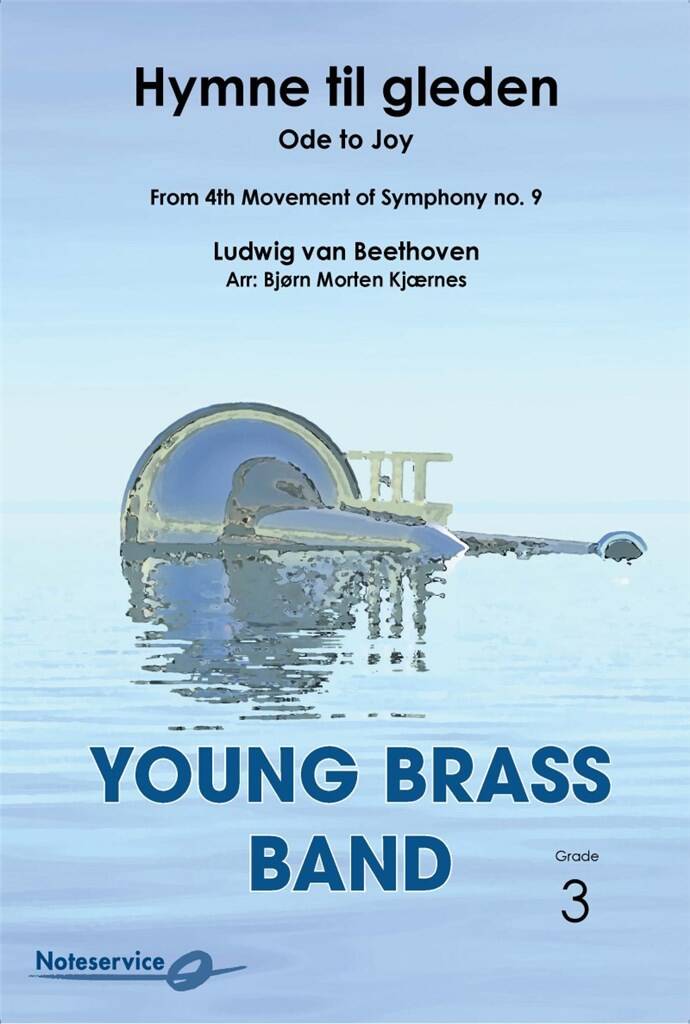
Hymne til gleden - Ludwig van Beethoven - Bjorn Morten Kjaernes
Schiller's text of 1785 was partially used by Beethoven in1824 when he did finish the 4th movement of his 9th Symphony. The melody has later been used in very many contexts. As the anthem of the European Union, a lot of movies (A clockwork Orange, Die Hard, etc.), music to video games, as the anthem of Rhodesia, as rebel song in Chile and by FIFA. Therefore, it can be used in most settings This Young Band arrangement focuses on the main melody. In the original, the B part is repeated in each variation, but to get three variations (out of four), this repetition has been cut. The first variation should be played as soft as possible, but still with a nice sound. Crescendo to forte(f) and going back to pp should be as a surprise.
Estimated dispatch 5-14 working days
-
£115.60
Nar snoen smelter fra Tre notter til Askepott - Astrid Smeplass - Haakon Esplo
Astrid Smeplass, better known under the artist name Astrid S wrote "Nar snoen smelter"( "When the snow melts")in 2021 as the title track for the remake of the famous movie" Three Hazelnuts for Cinderella" from 1973. She also debuted as an actress as Cinderella in the movie.Astrid S came fifth in Norwegian Idol in 2013. She has released songs such as "Think Before I Talk", "Emotion", and collaborated with Shawn Mendes on his debut album "Handwritten", which topped the US Billboard charts in 2015.
Estimated dispatch 5-14 working days
 View Music