
Results
-
 £59.95
Essay (Brass Band - Score and Parts) - Gregson, Edward
This work was specially commissioned as the test piece for a new brass band competition in 1971, held at the Royal Albert Hall, London. It is in three movements, the titles of which all have literary connotations. The first movement, Dialogue takes the form of 'conversations' between the instruments, based on the opening melody announced in unison on cornets and euphoniums. A second theme is introduced on the flugel horn and developed alongside this, creating a sonata form shell.The second movement, Soliloquy is dedicated to the memory of Gilbert Vinter - a composer who did so much in the 1960s to bring the brass band into the modern world. The movement is poignant in mood, which is depicted by a cornet solo announced after a brief introduction. The middle section builds to a powerful climax, at which point the opening theme of the first movement is heard again. Tranquillity returns however, with a solo trombone now playing the original theme with other instruments adding decorative accompanying patterns.The final movement, Epigram, creates strong rhythmic contrasts and exploits the more virtuoso character of the brass band. The middle section, with its changing time patterns and open expansive melody, suggests a 'big-country' style. A rhythmically charged coda concludes the work in exciting fashion.Duration: 12.00
Estimated dispatch 7-14 working days
-
£29.95
Essay (Brass Band - Score only) - Gregson, Edward
This work was specially commissioned as the test piece for a new brass band competition in 1971, held at the Royal Albert Hall, London. It is in three movements, the titles of which all have literary connotations. The first movement, Dialogue takes the form of 'conversations' between the instruments, based on the opening melody announced in unison on cornets and euphoniums. A second theme is introduced on the flugel horn and developed alongside this, creating a sonata form shell.The second movement, Soliloquy is dedicated to the memory of Gilbert Vinter - a composer who did so much in the 1960s to bring the brass band into the modern world. The movement is poignant in mood, which is depicted by a cornet solo announced after a brief introduction. The middle section builds to a powerful climax, at which point the opening theme of the first movement is heard again. Tranquillity returns however, with a solo trombone now playing the original theme with other instruments adding decorative accompanying patterns.The final movement, Epigram, creates strong rhythmic contrasts and exploits the more virtuoso character of the brass band. The middle section, with its changing time patterns and open expansive melody, suggests a 'big-country' style. A rhythmically charged coda concludes the work in exciting fashion.Duration: 12.00
Estimated dispatch 7-14 working days
-
 £42.95
March Prelude (Brass Band - Score and Parts) - Gregson, Edward
March Prelude was commissioned to launch the new brass band series by the publisher Novello, in 1968. What makes this little piece different from the usual march is that in the trio section the time signatures change constantly. The main tune of the March is recognisably modal but the harmony surrounding it takes it away from that world.Duration: 3.30
Estimated dispatch 7-14 working days
-
 £94.95
Machine (Brass Band - Score and Parts) - Dobson, Simon
Machine, was commissioned by the Salvation Army Trading Company for the National Youth Brass Band of Great Britain.The work speaks of the perils of the fast fashion industry, the part it plays in our current understanding of late-stage capitalism and it's complicity in the destruction wrought on our one home planet. It also seeks to portray the incredible efforts of the Salvation Army in their quest to slow the fast fashion industry and recycle clothing in the most innovative and progressive ways.The work is through composed and comprises five movements.Movement 1: The great Machine. The band is placed into 8 groups of three (expect tubas, in their normal position as a 4), who stand in specific places on the stage. This will create machine like antiphonal movement in the written music. The great Machine in question is the fast fashion industry, in all its chaos, seeming grandeur and relentless momentum.Movement 2: Mode phmre is fast, angular and quirky, a nod to the perilous speed and waste of the fast fashion industry (the movement title is the French for fast fashion).Movement 3: A planet to treasure (for DA) is a love letter to our home planet and its finite resources and as well as the beauty of the natural world, which unfortunately, we are destroying (hence the dedication to David Attenborough on his 100th year).Movement 4: The wheels keep turning, returns to the fast, angular, almost unstoppable grasp of capitalism and the damaging structures it promotes.Movement 5: Recycle, re-use, mirrors the opening (though without stage directions) in reference to the cyclic nature of fast fashion and the wonderful work that The Salvation Army do in trying to halt this system.
Estimated dispatch 7-14 working days
-
 £44.95
Machine (Brass Band - Score only) - Dobson, Simon
Machine, was commissioned by the Salvation Army Trading Company for the National Youth Brass Band of Great Britain.The work speaks of the perils of the fast fashion industry, the part it plays in our current understanding of late-stage capitalism and it's complicity in the destruction wrought on our one home planet. It also seeks to portray the incredible efforts of the Salvation Army in their quest to slow the fast fashion industry and recycle clothing in the most innovative and progressive ways.The work is through composed and comprises five movements.Movement 1: The great Machine. The band is placed into 8 groups of three (expect tubas, in their normal position as a 4), who stand in specific places on the stage. This will create machine like antiphonal movement in the written music. The great Machine in question is the fast fashion industry, in all its chaos, seeming grandeur and relentless momentum.Movement 2: Mode phmre is fast, angular and quirky, a nod to the perilous speed and waste of the fast fashion industry (the movement title is the French for fast fashion).Movement 3: A planet to treasure (for DA) is a love letter to our home planet and its finite resources and as well as the beauty of the natural world, which unfortunately, we are destroying (hence the dedication to David Attenborough on his 100th year).Movement 4: The wheels keep turning, returns to the fast, angular, almost unstoppable grasp of capitalism and the damaging structures it promotes.Movement 5: Recycle, re-use, mirrors the opening (though without stage directions) in reference to the cyclic nature of fast fashion and the wonderful work that The Salvation Army do in trying to halt this system.
Estimated dispatch 7-14 working days
-
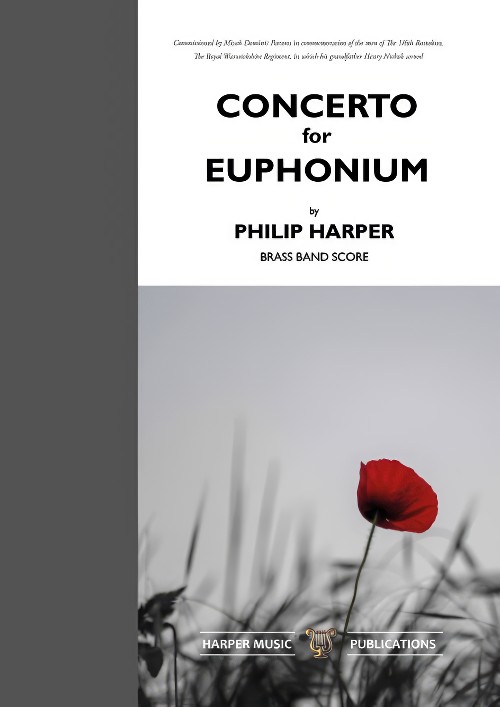 £154.99
Concerto for Euphonium (Euphonium Solo with Brass Band - Score and Parts) - Harper, Philip
This Concerto for Euphonium casts the euphonium soloist as one of the young soldiers in a World War I battalion for an intensely intimate and visceral experience of events. However the music also portrays a more general human journey, and will appeal on a number of levels.There are three movements which have the following subtitles:Summer 1916 - Days of YouthWinter 1916 - The Weight of Maturity4th February 1917 - ReleaseAlthough challenging, the solo part is designed to be achievable by all ambitious euphonium soloists.Duration: 19.00
Estimated dispatch 7-14 working days
-
 £42.95
Song of Peace (Euphonium Solo with Brass Band - Score and Parts) - Bartlett, Darren - Phillips, Richard
Originally written for the BBC Choirboy of the Year 2002, James Eager, who was a Chorister at Llandaff Cathedral and attended the Cathedral Choir school. The concept for the song was to combine classical music with a contemporary flavour including a subtle Celtic influence. After being recorded by Llandaff Cathedral Choir and the BBC National Orchestra of Wales, Richard Phillips arranged it for the world famous Brass Band, YBS. It is hoped that this version as a Euphonium Solo will breathe new life into this ethereal melody. - Darren Bartlett
Estimated dispatch 7-14 working days
-
 £26.95
Flanders' Poppies (Brass Band - Score and Parts) - Wiffin, Rob
A setting of the well-known Great War poem In Flanders Fields, written during the First World War by Canadian physician Lieutenant Colonel John McCrae (1872-1918). I first set some of the words to music for the Royal British Legion Festival of Remembrance during my time in the RAF but returned to them in 2014, setting the whole poem to mark the centenary of the commencement of the Great War.- Rob WiffinDuration: 3.30
Estimated dispatch 7-14 working days
-
 £60.99
Christmas Encounters (Brass Band - Score and Parts) - Bulla, Stephen
Every year it is a challenge to find new music in addition to all of the traditional carols and hymns. Stephen Bulla's Christmas Encounters is a refreshing and surprising Christmas tune, based on Joy to the World. A classic with a twist!Duration: 3.30
Estimated dispatch 7-14 working days
-
 £60.99
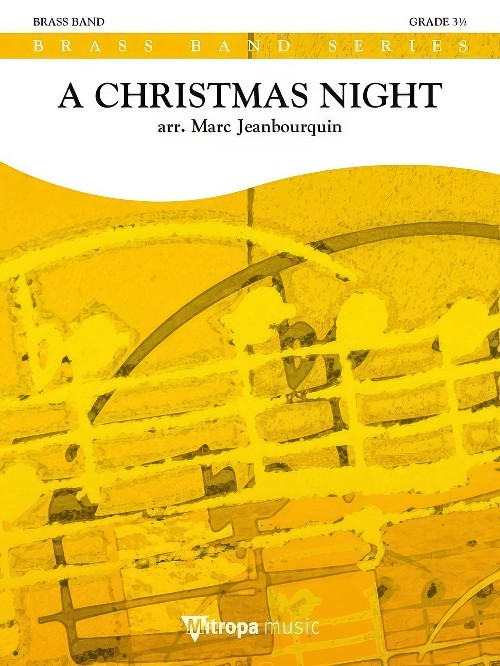
A Christmas Night (Brass Band - Score and Parts) - Jeanbourquin, Marc
In a Christmas Night, Marc Jeanbourquin revisits four great Christmas Eve classics in a fresh style. From the majestic chorale Adeste Fideles to the famous Joy to the World and a jazz version of the equally well-known Jingle Bells followed by We Wish You a Merry Christmas as a fitting conclusion, this medley expresses in music a traditional Christmastime to your audience.Duration: 4:15
Estimated dispatch 7-14 working days
 View Music