
Results
-
 £119.99
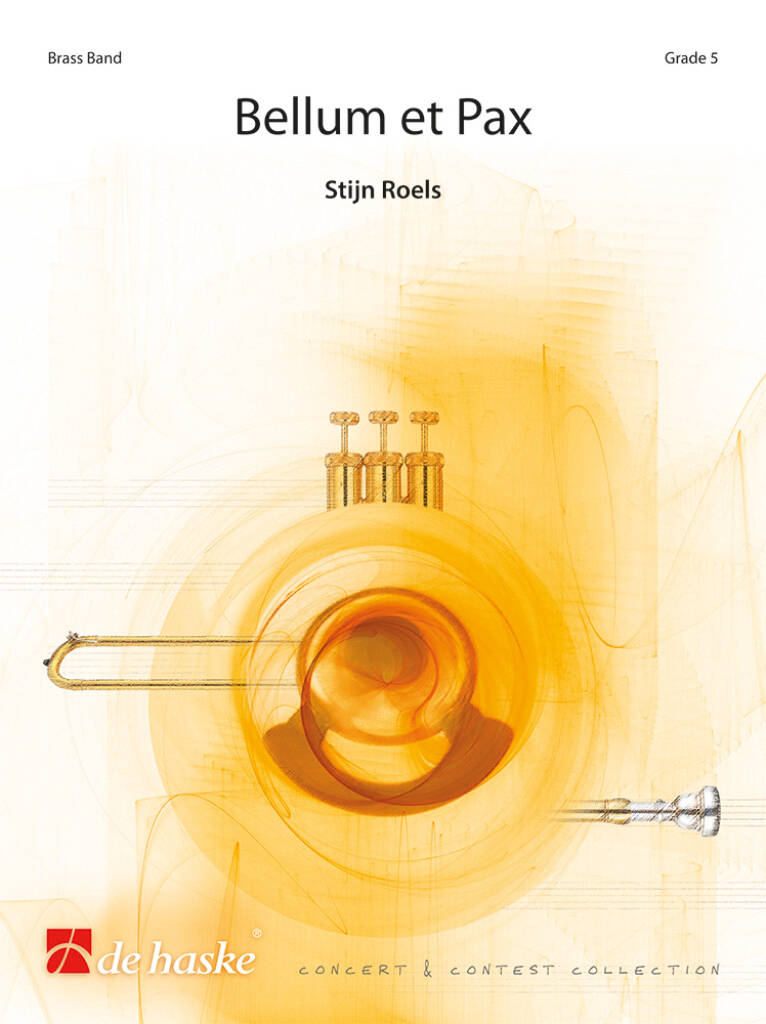
Bellum et Pax - Stijn Roels
Bellum et Pax is a composition describing the two ancient concepts of 'war' and 'peace.' While this piece appears to be one single movement, it consists of four sections that flow into one another. Mysterious and threatening tones lead the way into an epic battle between the chaos of war and enlightenment of peace. Peace triumphs, but menacing bass notes at the end symbolize the constant presence and threat of war and violence in the world.
Estimated dispatch 5-14 working days
-
 £44.27
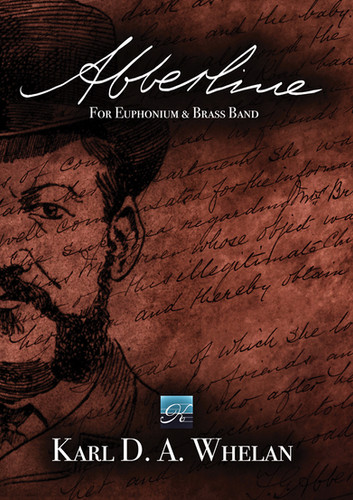
Abberline (Euphonium Solo with Brass Band) Karl Whelan
Inspired by the infamous investigation into Jack the Ripper, Abberline follows Detective Inspector Frederick Abberline through the mist-shrouded streets of Victorian London in his desperate pursuit of a killer who remains forever just out of reach. Scored for brass band and solo euphonium, the piece blends atmospheric textures, shifting musical identities, and virtuosic demands to capture a narrative that is as haunting as it is unresolved. The piece opens in a world of shadows - the foggy alleys of Whitechapel - where tension simmers beneath the surface. The euphonium enters cautiously, as if stalking unseen figures, echoing the danger and uncertainty that cloaked the city in fear. This eerie calm is broken suddenly: the Ripper strikes. The moment is brief but brutal, leaving only silence and horror in its wake. From here, the music shifts into an uneasy, angular waltz: the figure of Abberline takes center stage, portrayed by the soloist as he investigates the aftermath. The waltz is melodically off-kilter and harmonically unstable, capturing both the grotesque nature of the crime and the detective's mental burden. The scene then returns to the streets - but this time, the musical material is more intricate, fragmented, and tense. The threat has deepened, and again the silence is shattered by violence. A second, slightly altered waltz follows, further reflecting Abberline's obsessive descent into the case. In the final section, the chase begins in earnest. Themes from earlier return in quick succession, intensified and overlapping as time runs out. The ancient Dies Irae chant is woven into the texture, evoking fate and judgment. In a final, erratic surge, the euphonium and band race toward an ending that is breathless and unresolved - a reflection of history's unanswered questions and the ghost that always stayed one step ahead. To view a rolling score video of the work please visit https://www.youtube.com/watch?v=i59xYzJRMaI Duration: approx. 7.30 minutes This PDF download includes parts and score. Sheet music available at www.brassband.co.uk (UK) or https://satradecentral.org (USA) Instrumentation: Euphonium Soloist Bb Soprano Cornet Eb Solo Cornet 1-2 & 3-4 Bb Repiano Cornet Bb 2nd Cornet Bb 3rd Cornet Bb Flugel Horn Bb Solo Horn Eb 1st Horn Eb 2nd Horn Eb 1st Baritone Bb 2nd Baritone Bb 1st Trombone Bb 2nd Trombone Bb Bass Trombone Euphonium (tutti) Bb Bass Eb Bass Bb Timpani Percussion 1-3
In Stock: Estimated dispatch 1-3 working days
-
Game Of Thrones - Ramin Djawadi - Len Jenkins
"Game of Thrones" is an American fantasy drama television series based on George Martin's "A Song of Ice and Fire" and has received widespread acclaim by critics, although its use of nudity and violence has caused controversy. Filmed in Belfast and on location elsewhere in Northern Ireland, Malta, Croatia, Iceland, and Morocco, it premiered in 2011 and continues into a fourth season in 2014. The series interweaves several plot lines and through its morally ambiguous characters, explores the issues of social hierarchy, religion, loyalty, corruption, sexuality, civil war, crime, and punishment. It is set in a period that contains elements from the dark ages through to the medieval. The music for the series was composed by Ramin Djawadi and is noted for its popular main theme which is presented here as an arrangement for Brass Band. In keeping with the period depicted, the piece contains a significant contribution from the percussion section and care has been taken to achieve the desired effect with the normal resources of the average band.
-
 £110.00
Diversions After Benjamin Britten (Brass Band - Score and Parts)
Suite by Lucy Pankhurst, Simon Dobson, Paul McGhee and Gavin HigginsHaving devised a collective centenary tribute for Michael Tippett at the 2006 RNCM Festival of Brass (Variations on a Theme of Michael Tippett by five eminent composers of brass band music, PHM002), I commissioned this companion piece as a Benjamin Britten tribute for the 2013 festival. In the late 1970s, while researching a book about the English composer, and Britten's first teacher, Frank Bridge (1879 - 1941), I came across a copy of the printed score of Benjamin Britten's Variations on a Theme of Frank Bridge (Op.10) for string orchestra, in which Britten had written descriptive titles for each of the variations suggesting appropriate character traits of his much loved mentor and guide. The character variations are cast in march, song and dance forms.Taking inspiration from Britten's youthful tribute, I invited four award-winning composers, who have all made significant contributions to the brass band medium, to create their own personal reflections on four aspects of Britten's character and music, designed to form a suite of Diversions after Benjamin Britten, but which can also be played separately.Lucy Pankhurst's hauntingly lyrical Prelude: His Depth refers to the emotional and symbolic subtexts that underpin Britten's operas, taking its musical cue from Britten's many arrangements of folk songs. The flugel horn takes a prominent role throughout.Simon Dobson's breathless Scherzo: His Vitality reminds us with its rapid passage work and leaping bass 'groove' that Britten loved tennis and fast cars in his younger days.Paul McGhee's evocative interpretation of the March: His Sympathy represents Benjamin Britten's pacifism, as the composer writes: 'We view the music through the eyes of a pacifist. Whilst war and violence surround us, we do not engage in it and though it continues to happen around us. With the use of muted effects in most of the band throughout the piece, the flugel horn is the lone voice of reason, standing firm against the mechanical and destructive society in which it is forced to live. As the machine of war continues around the lone voice, the voice is gradually dismissed and mocked as the war machine rumbles on into the distance.'In an extended finale, entitled Toccata: His Skill, Gavin Higgins celebrates Benjamin Britten's consummate creativity. For the RNCM Festival of Brass premiere, the four contrasting movements were framed and connected by Britten's Fanfare for St. Edmundsbury for three trumpets, with the trumpet soloists spaced round the hall. I am grateful to the Britten Estate and publishers Boosey & Hawkes for giving permission for the elements of Britten's fanfare to be incorporated in the collective work.- Paul HindmarshDuration: 19.30
Estimated dispatch 7-14 working days
-
£45.00
Diversions After Benjamin Britten (Brass Band - Score only)
Suite by Lucy Pankhurst, Simon Dobson, Paul McGhee and Gavin HigginsHaving devised a collective centenary tribute for Michael Tippett at the 2006 RNCM Festival of Brass (Variations on a Theme of Michael Tippett by five eminent composers of brass band music, PHM002), I commissioned this companion piece as a Benjamin Britten tribute for the 2013 festival. In the late 1970s, while researching a book about the English composer, and Britten's first teacher, Frank Bridge (1879 - 1941), I came across a copy of the printed score of Benjamin Britten's Variations on a Theme of Frank Bridge (Op.10) for string orchestra, in which Britten had written descriptive titles for each of the variations suggesting appropriate character traits of his much loved mentor and guide. The character variations are cast in march, song and dance forms.Taking inspiration from Britten's youthful tribute, I invited four award-winning composers, who have all made significant contributions to the brass band medium, to create their own personal reflections on four aspects of Britten's character and music, designed to form a suite of Diversions after Benjamin Britten, but which can also be played separately.Lucy Pankhurst's hauntingly lyrical Prelude: His Depth refers to the emotional and symbolic subtexts that underpin Britten's operas, taking its musical cue from Britten's many arrangements of folk songs. The flugel horn takes a prominent role throughout.Simon Dobson's breathless Scherzo: His Vitality reminds us with its rapid passage work and leaping bass 'groove' that Britten loved tennis and fast cars in his younger days.Paul McGhee's evocative interpretation of the March: His Sympathy represents Benjamin Britten's pacifism, as the composer writes: 'We view the music through the eyes of a pacifist. Whilst war and violence surround us, we do not engage in it and though it continues to happen around us. With the use of muted effects in most of the band throughout the piece, the flugel horn is the lone voice of reason, standing firm against the mechanical and destructive society in which it is forced to live. As the machine of war continues around the lone voice, the voice is gradually dismissed and mocked as the war machine rumbles on into the distance.'In an extended finale, entitled Toccata: His Skill, Gavin Higgins celebrates Benjamin Britten's consummate creativity. For the RNCM Festival of Brass premiere, the four contrasting movements were framed and connected by Britten's Fanfare for St. Edmundsbury for three trumpets, with the trumpet soloists spaced round the hall. I am grateful to the Britten Estate and publishers Boosey & Hawkes for giving permission for the elements of Britten's fanfare to be incorporated in the collective work.- Paul HindmarshDuration: 19.30
Estimated dispatch 7-14 working days
-
 £89.95
Four Etudes (Brass Band - Score and Parts) - Gregson, Edward
This work was written during August and September 2016. In it, I wanted primarily to explore the elements of timbre, rhythm, texture and colour. The first three tudes (or studies) are based on a set of piano pieces I composed in 1982, whilst the last, the longest of the set, was composed specially. My reference point was the Four tudes for orchestra of 1928 by Stravinsky, a work I have always admired, and of which the first three also happen to be based on a set of earlier pieces, in his case for string quartet, with the last being a re-arrangement of a work for pianola. I have also borrowed the titles he gave to the individual studies as they seemed to fit the mood of my pieces.However, the exception is the final study, where instead of the exuberant mood of his colourful portrayal of Madrid, mine was influenced by the terrible human tragedy that was unfolding in Aleppo at the time I was writing it, and thus reflects the violence and barbarism of those events; yet towards the end it does offer a glimmer of hope for humanity with a return to the Canticle (Song) of the first study, and concludes quietly with the chords and bells that began the work. The titles of the tudes are Canticle, Dance, Excentrique, and Aleppo. Like Stravinsky's, the set is relatively short, lasting around 8 minutes.The Four tudes were commissioned by Black Dyke Band and were written specially for the recording marking the conclusion of my year as Composer-in-Residence. The concert premiere will be given by Black Dyke Band, conducted by the composer, at the RNCM Festival of Brass in January 2017.- Edward GregsonDuration: 8.00
Estimated dispatch 7-14 working days
-
 £37.95
Four Etudes (Brass Band - Score only) - Gregson, Edward
This work was written during August and September 2016. In it, I wanted primarily to explore the elements of timbre, rhythm, texture and colour. The first three tudes (or studies) are based on a set of piano pieces I composed in 1982, whilst the last, the longest of the set, was composed specially. My reference point was the Four tudes for orchestra of 1928 by Stravinsky, a work I have always admired, and of which the first three also happen to be based on a set of earlier pieces, in his case for string quartet, with the last being a re-arrangement of a work for pianola. I have also borrowed the titles he gave to the individual studies as they seemed to fit the mood of my pieces.However, the exception is the final study, where instead of the exuberant mood of his colourful portrayal of Madrid, mine was influenced by the terrible human tragedy that was unfolding in Aleppo at the time I was writing it, and thus reflects the violence and barbarism of those events; yet towards the end it does offer a glimmer of hope for humanity with a return to the Canticle (Song) of the first study, and concludes quietly with the chords and bells that began the work. The titles of the tudes are Canticle, Dance, Excentrique, and Aleppo. Like Stravinsky's, the set is relatively short, lasting around 8 minutes.The Four tudes were commissioned by Black Dyke Band and were written specially for the recording marking the conclusion of my year as Composer-in-Residence. The concert premiere will be given by Black Dyke Band, conducted by the composer, at the RNCM Festival of Brass in January 2017.- Edward GregsonDuration: 8.00
Estimated dispatch 7-14 working days
-
 £110.00
Diversions after Benjamin Britten (Brass Band - Score and Parts)
Suite by Lucy Pankhurst, Simon Dobson, Paul McGhee and Gavin HigginsHaving devised a collective centenary tribute for Michael Tippett at the 2006 RNCM Festival of Brass (Variations on a Theme of Michael Tippett by five eminent composers of brass band music, PHM002), I commissioned this companion piece as a Benjamin Britten tribute for the 2013 festival. In the late 1970s, while researching a book about the English composer, and Britten's first teacher, Frank Bridge (1879 - 1941), I came across a copy of the printed score of Benjamin Britten's Variations on a Theme of Frank Bridge (Op.10) for string orchestra, in which Britten had written descriptive titles for each of the variations suggesting appropriate character traits of his much loved mentor and guide. The character variations are cast in march, song and dance forms.Taking inspiration from Britten's youthful tribute, I invited four award-winning composers, who have all made significant contributions to the brass band medium, to create their own personal reflections on four aspects of Britten's character and music, designed to form a suite of Diversions after Benjamin Britten, but which can also be played separately.Lucy Pankhurst's hauntingly lyrical Prelude: His Depth refers to the emotional and symbolic subtexts that underpin Britten's operas, taking its musical cue from Britten's many arrangements of folk songs. The flugel horn takes a prominent role throughout.Simon Dobson's breathless Scherzo: His Vitality reminds us with its rapid passage work and leaping bass 'groove' that Britten loved tennis and fast cars in his younger days.Paul McGhee's evocative interpretation of the March: His Sympathy represents Benjamin Britten's pacifism, as the composer writes: 'We view the music through the eyes of a pacifist. Whilst war and violence surround us, we do not engage in it and though it continues to happen around us. With the use of muted effects in most of the band throughout the piece, the flugel horn is the lone voice of reason, standing firm against the mechanical and destructive society in which it is forced to live. As the machine of war continues around the lone voice, the voice is gradually dismissed and mocked as the war machine rumbles on into the distance.'In an extended finale, entitled Toccata: His Skill, Gavin Higgins celebrates Benjamin Britten's consummate creativity. For the RNCM Festival of Brass premiere, the four contrasting movements were framed and connected by Britten's Fanfare for St. Edmundsbury for three trumpets, with the trumpet soloists spaced round the hall. I am grateful to the Britten Estate and publishers Boosey & Hawkes for giving permission for the elements of Britten's fanfare to be incorporated in the collective work.- Paul HindmarshDuration: 19.30
Estimated dispatch 7-14 working days
-
£45.00
Diversions after Benjamin Britten (Brass Band - Score only)
Suite by Lucy Pankhurst, Simon Dobson, Paul McGhee and Gavin HigginsHaving devised a collective centenary tribute for Michael Tippett at the 2006 RNCM Festival of Brass (Variations on a Theme of Michael Tippett by five eminent composers of brass band music, PHM002), I commissioned this companion piece as a Benjamin Britten tribute for the 2013 festival. In the late 1970s, while researching a book about the English composer, and Britten's first teacher, Frank Bridge (1879 - 1941), I came across a copy of the printed score of Benjamin Britten's Variations on a Theme of Frank Bridge (Op.10) for string orchestra, in which Britten had written descriptive titles for each of the variations suggesting appropriate character traits of his much loved mentor and guide. The character variations are cast in march, song and dance forms.Taking inspiration from Britten's youthful tribute, I invited four award-winning composers, who have all made significant contributions to the brass band medium, to create their own personal reflections on four aspects of Britten's character and music, designed to form a suite of Diversions after Benjamin Britten, but which can also be played separately.Lucy Pankhurst's hauntingly lyrical Prelude: His Depth refers to the emotional and symbolic subtexts that underpin Britten's operas, taking its musical cue from Britten's many arrangements of folk songs. The flugel horn takes a prominent role throughout.Simon Dobson's breathless Scherzo: His Vitality reminds us with its rapid passage work and leaping bass 'groove' that Britten loved tennis and fast cars in his younger days.Paul McGhee's evocative interpretation of the March: His Sympathy represents Benjamin Britten's pacifism, as the composer writes: 'We view the music through the eyes of a pacifist. Whilst war and violence surround us, we do not engage in it and though it continues to happen around us. With the use of muted effects in most of the band throughout the piece, the flugel horn is the lone voice of reason, standing firm against the mechanical and destructive society in which it is forced to live. As the machine of war continues around the lone voice, the voice is gradually dismissed and mocked as the war machine rumbles on into the distance.'In an extended finale, entitled Toccata: His Skill, Gavin Higgins celebrates Benjamin Britten's consummate creativity. For the RNCM Festival of Brass premiere, the four contrasting movements were framed and connected by Britten's Fanfare for St. Edmundsbury for three trumpets, with the trumpet soloists spaced round the hall. I am grateful to the Britten Estate and publishers Boosey & Hawkes for giving permission for the elements of Britten's fanfare to be incorporated in the collective work.- Paul HindmarshDuration: 19.30
Estimated dispatch 7-14 working days
-
 £119.99
Bellum et Pax (Brass Band - Score and Parts) - Roels, Stijn
Bellum et Pax is a composition describing the two ancient concepts of 'war' and 'peace.' While this piece appears to be one single movement, it consists of four sections that flow into one another. Mysterious and threatening tones lead the way into an epic battle between the chaos of war and enlightenment of peace. Peace triumphs, but menacing bass notes at the end symbolise the constant presence and threat of war and violence in the world.Duration: 11:45
Estimated dispatch 7-14 working days
 View Music