
Results
-
 £164.99
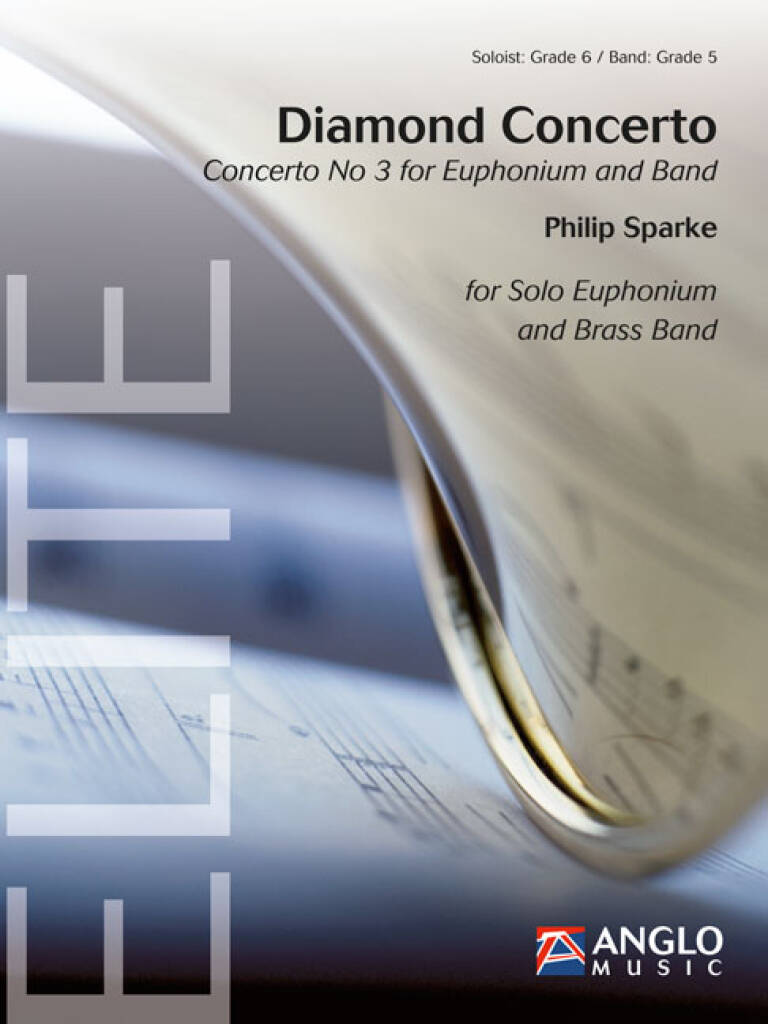
Diamond Concerto - Philip Sparke
Diamond Concerto was commissioned by Musikverein Morschied from Germany - Dr. Eric Grandjean, conductor - for a special concert featuring Steven Mead as guest soloist. Together they gave the world premiere on 28th April 2012 in the town theatre of Idar-Oberstein.The commission is a highlight in the 30-year friendship between composer and soloist, which has included many mutual CD projects and concerts and, now, a concerto. Sparke had Steven Mead's special euphonium sound in his head throughout the composition process and made free use of the variety of styles which the world-renowned virtuoso has made his own during his highly successful solo career.The village ofMorschied lies to the west of Frankfurt am Main in the area known as the German Road of Precious Stones, which is famous for its thriving gem industry. Because of this it was decided to give the commission a local connection by choosing the title, Diamond Concerto. Each of the three movements is named after a famous diamond:1 EARTH STARis rather stern in mood, opening with a free fantasy for the soloist over a static chord from the band. This leads to an Allegro Moderato in minor mode where small motives are gradually repeated and developed by both band and soloist.2 OCEAN DREAMuses a varied quote from the composer's Music for Battle Creek, including a melting slow melody that was originally written with Steven Mead in mind.3 BLUE HEARTwas written, at Steven Mead's suggestion, in bebop style and takes the form of a jazz waltz. The quasi-improvisatory central section features a call-and-response passage for the soloist and upper woodwinds.Soloist: Difficulty 6Diamond Concerto is available for euphonium and piano (AMP 374-401) as well as for euphonium and concert band (AMP 354-010).
Estimated dispatch 5-14 working days
-
£84.99
Utopia - Jacob de Haan
Utopia is the name of a book written by the English author Thomas More and was published in 1516. The title is a word thought up by More himself, after the Greek language, meaning "Nowhereland" and leading to the invention of the words utopian scheme and utopian. Utopia pictured an ideal state on an island far from the inhabited world. This idea was the basis of the composition. It makes one think of Oregon in variety of themes and style. Utopia also exists of a combination of styles that breathe the atmosphere of film music. However, Utopia sounds less American. The slow and stirring middle part for example is closer to the European romanticism: the chord signals in the brasssection remind of Wagner's music.
Estimated dispatch 5-14 working days
-
£60.99
Song of Israel - Traditional - Roland Kernen
Song of Israel is based on a world-famous tune, the traditional song from Israel entitles Hatikva. Roland Kernen makes creative use of this melody, presenting it a variety of styles, including a section with a 'rock' feel, to produce a cheerful concert work.
Estimated dispatch 5-14 working days
-
 £54.99
School's Cool - Jacob de Haan
This short, "cool" suite in three movements can be performed with a variety of instruments from a handful of players to a complete brass band. The first movement radiates joy with a powerful 3/4 beat. The second movement is in the style of a pavane, which gives a sense of nostalgia and the final movement forms a cheerful and high-spirited closing with a really funky beat. This wonderful suite has been composed especially for youth musicians and they will all gain great pleasure from performing it.
Estimated dispatch 5-14 working days
-
 £69.99
Trumpeter's Lullaby - Leroy Anderson - Naohiro Iwai
Leroy Anderson is part of American cultural heritage and he is often compared to such masters as Gershwin and Copland. Trumpeter's Lullaby was written for The Boston Pops Orchestra of which he was the conductor. This new arrangement for brass band gives your three cornet soloists a chance to 'take to the fore' in a variety of up-tempo jazz styles. Once performed this item will become a favourite that you will use time and time again.
Estimated dispatch 5-14 working days
-
 £104.99
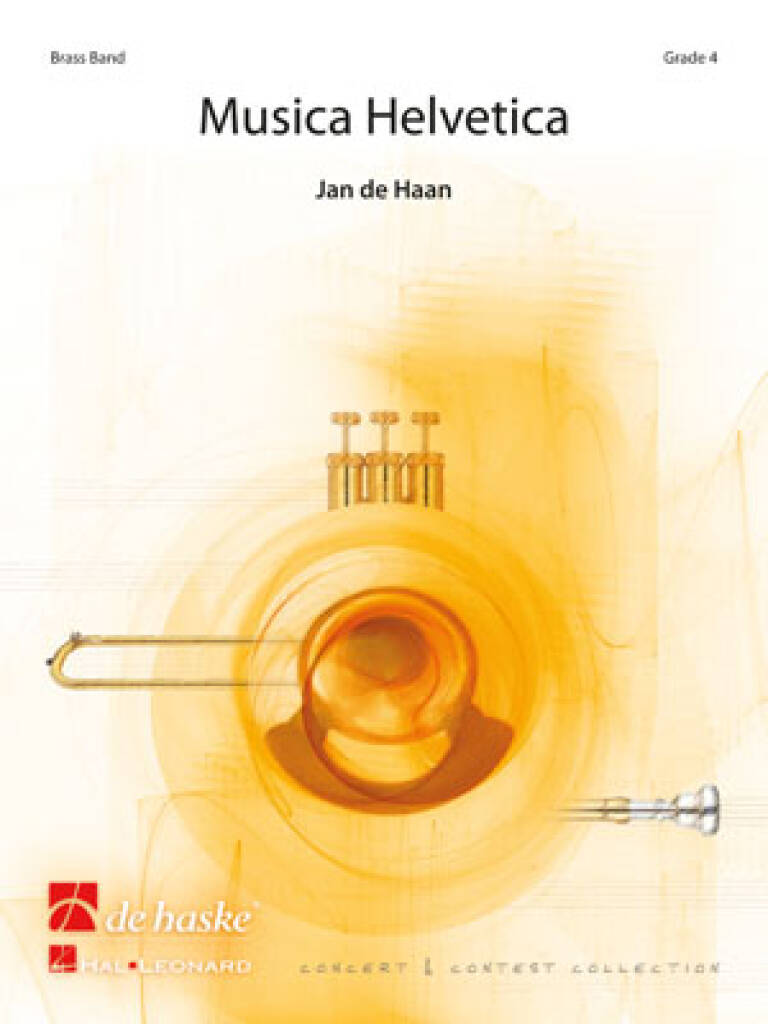
Musica Helvetica - Jan de Haan
Every year a competition for wind orchestras and brass bands takes place in Wallberg, Switzerland. Apart from a hymn and a solo piece, all orchestras also have a compulsory piece to play. The commission to create a compulsory piece for the 2012 competition fell to Jan de Haan. The composition is entitled Musica Helvetica. It takes the form of a three-part concert work, in which the last two parts flow directly from one to the other. The first part, Musica Prima, is a brisk virtuoso opening with jazz flavours woven in. The following section, Musica Sacra, offers a contrast with an extraordinarily colourful instrumentation for the gorgeous main theme. Thefinal part, Musica Alpina, is inspired by the great variety of scenery in Switzerland. With its witty humour it makes a worthy conclusion to this beautiful tryptich.
Estimated dispatch 5-14 working days
-
£54.99
March - Dimitri Shostakovich - James Curnow
The Suite for Variety Orchestra, No. 1 (1956) is a work by Dmitri Shostakovich in eight movements that draws from the composer's earlier themes. The first of these movements is the delightful March, originally found in Korzinkina's Adventures, Op. 59 (1940). James Curnow has skillfully adapted this work for band, sure to become a welcome addition to the repertoire for your band.
Estimated dispatch 5-14 working days
-
 £104.99
Lord Tullamore - Carl Wittrock
In Lord Tullamore, composer Carl Wittrock shows us his vision for Irish folk music. The result is a diverse three-part composition of rousing Irish folk with a continental touch. Lord Tullamore reflects the full variety of the folk music of the Emerald Isle, featuring not only brilliant technical passages, but also tranquil sections of lyrical calm.
Estimated dispatch 5-14 working days
-
 £59.99
Welcome to the Jungle - Paul Murtha
Named the greatest hard rock song of all time by VH1, Guns N' Roses' signature hit was introduced back in 1987 and remains as popular and recognizable today as ever. Featuring plenty of musical variety and excitement, this version will challenge young players but is guaranteed to inspire them to practice!
Estimated dispatch 5-14 working days
-
 £82.19
All Tuned Up - 120 Famous Tunes for All Occasions (Brass Band Set - A5) PDFs
This unique new resource from BrookWright Music will be an essential part of every band's library! All Tuned Up is designed to cater for ensembles for occasions throughout the year. Tunes are drawn from genres including Classical, Hymns, Folk and Patriotic amongst many others to form a comprehensive book that will cover a wide variety of events such as Weddings, Funerals, Graduation Ceremonies, Parties, Proms, Remembrance, Street Playing and Thanksgiving. Playable by as few as five players but also designed to work for full brass band or wind band, it features flexible parts in a wide variety of transpositions. These excellent arrangements have been expertly created by Andrew Wainwright, David E. Jones, Dean H. Jones and Steven Ponsford. The general harmonic format of All Tuned Up is in five parts, although additional notes have been included to thicken the harmony where more players are available. Therefore, the book will work equally well with larger groups, including full brass bands and wind bands. To view a promotional video please visit www.youtube.com/watch?v=nmodRrXQRRs At the end of the Part 1 Bb book are four a capela tunes for Remembrance/Memorial occasions. This PDF download is for International sizes: Full Score - A4 Size - 297mm x 210mm Band Parts - A5 Size - 210mm x 148mm Physical copies of the books available from: UK - Individual Books Full Set Brass Band Set USA - www.solidbrassmusic.com/product/all-tuned-up-ensemble-books The Brass Band set includes: Full Score Part 1 Eb (optional) - Soprano Cornet Eb Part 1 Bb - Cornet Bb, Flugel Part 2 Bb - Cornet Bb, Flugel Part 2 Eb - Tenor Horn Part 3 Bb - Baritone, Trombone, Euphonium Part 3 Eb - Tenor Horn Part 4 Bb - Euphonium, Baritone Part 5 C (Bass Clef) - Bass Trombone Part 5 Eb - Bass Eb Part 5 Bb - Bass Bb Percussion (optional) - Various
In Stock: Estimated dispatch 1-3 working days
 View Music