Searching for Wind Band Music? Visit the Wind Band Music Shop
We've found 33 matches for your search. Order by

Results

  • £65.00

    Royal Fireworks, Music from the (Brass Band - Score and Parts) - Handel, George Frideric - Blakeson, Don

    Handel's Music For The Royal Fireworks was composed in 1749 to celebrate the signing of the Treaty of Aix-la-Chapelle and the end of the War of the Austrian Succession. The site chosen was the fashionable upper part of St. James Park, which was becoming known at that time as Green Park. The Green Park 'Machine', which housed the pyrotechnics was an elaborate affair adorned with "statues and other figures, festoons of flowers, and other lustres". It was announced that there would be some 10,000 rockets and other devices to be let off, all culminating in a grand, burning sun with 'Vivat Rex' at its centre. There were also rumours that the event was to be accompanied by an impressively large band of military music and mention was made of "40 trumpets, 20 french horns, 16 hautboys (oboes), 16 bassoons, 8 pairs of kettle drums, 12 side drums, a proper number of flutes and fifes; with 100 cannon to go off singly at intervals". It is unlikely that Handel had ever conceived such forces and it was merely the promoter's hyberbole, not least because it was unlikely that there were sufficient numbers of extra military musicians available that could read music, as most played from memory. It is also likely that Handel, and his publisher, were conscious that future performances would be hindered by such forces. The autographed score lists the instrumentation as 9 trumpets, 9 french horns, 24 hautboys, 12 bassoons, 3 pairs of kettle drums and up to 4 side drums. The work is in five movements, although Handel's original score did not indicate in which order they should be played. However, in this score they are arranged to be played as follows: Overture; Bour?e; La Paix; Minuets; La R?jouissance. Duration: 19:00

    Estimated dispatch 7-14 working days

     PDF View Music

  • £62.00

    Montage (Score only) - Peter Graham

    Each of the movements of the symphony take as their starting point forms originating in music of the 16th and 17th centuries. The first, an intrada, introduces the main thematic material (based on the interval of a minor third) in its embryonic state. As the piece progresses, this material is developed and manipulated in a variety of ways. The interval of the third remains central to the overall scheme of the work, even unifying the three movements on a tonal plane (I: F (minor); II: A flat (major); III: C flat (minor). The internal structure of the intrada is an arch form: ABCBA, roughly modelled on the first movement of Concerto for Orchestra by Witold Lutoslawski, to whose memory the movement is dedicated. A chaconne follows - the basic material now transformed into expansive solo lines underpinned by a recurring sequence of five chords (again, a third apart). The movement's structure combines both ternary form and golden section principles and the chaconne's continuous cycle of chords may be visualised as circles. The final movement, a rondo, bears the dramatic weight of the entire work, as the underlying tonal tensions surface. A musical journey ensues, making diversions through lyrical territories as well as through more spiky, jazz-flavoured ones. The aural (and visual) montage is perhaps most apparent towards the climax of the piece, where three keys and polyrhythms sound simultaneously in the upper brass, xylophone, horns, and timpani. The climax itself combines the lyrical music heard earlier with the rondo theme, now presented by cornets and trombones in canon. The teleological thrust of the movement (if not the entire work) can be symbolized by the flight of an arrow, as it steers a predetermined course towards its target. Duration: 16:00

    Estimated dispatch 7-9 working days
  • £74.00

    Montage (Parts only) - Peter Graham

    Each of the movements of the symphony take as their starting point forms originating in music of the 16th and 17th centuries. The first, an intrada, introduces the main thematic material (based on the interval of a minor third) in its embryonic state. As the piece progresses, this material is developed and manipulated in a variety of ways. The interval of the third remains central to the overall scheme of the work, even unifying the three movements on a tonal plane (I: F (minor); II: A flat (major); III: C flat (minor). The internal structure of the intrada is an arch form: ABCBA, roughly modelled on the first movement of Concerto for Orchestra by Witold Lutoslawski, to whose memory the movement is dedicated. A chaconne follows - the basic material now transformed into expansive solo lines underpinned by a recurring sequence of five chords (again, a third apart). The movement's structure combines both ternary form and golden section principles and the chaconne's continuous cycle of chords may be visualised as circles. The final movement, a rondo, bears the dramatic weight of the entire work, as the underlying tonal tensions surface. A musical journey ensues, making diversions through lyrical territories as well as through more spiky, jazz-flavoured ones. The aural (and visual) montage is perhaps most apparent towards the climax of the piece, where three keys and polyrhythms sound simultaneously in the upper brass, xylophone, horns, and timpani. The climax itself combines the lyrical music heard earlier with the rondo theme, now presented by cornets and trombones in canon. The teleological thrust of the movement (if not the entire work) can be symbolized by the flight of an arrow, as it steers a predetermined course towards its target. Duration: 16:00

    Estimated dispatch 7-9 working days
  • £29.95

    Song for the Skies

    Song for the Skies was commissioned by Tuba virtuoso Les Neish and was given its world premier on the December 9th 2010 with the James Madison University Brass Band in Harrisonburg, Virginia, USA.Les asked me to compose a slow melody that highlights the wonderful sonorous sound of the Tuba. I am a big fan of Les and of the instrument and knowing the capabilities of Les as a soloist I wanted to experiment with the range and colour of the instrument in this solo.After a warm introduction from the ensemble the soloist enters almost timeless over the muted cornets. The melody when it is first heard has a somewhat haunting Celtic feel to it. It is intentionally marked as con rubato so that the soloist can really put their own musical stamp on the music. As the haunting melody repeats again this time in a change of key the accompaniment takes more of a role within the piece of music performing counter melodies within this second section.The middle of the piece introduces a new secondary melodic device that serves as an introduction to the original melody played in all its glory by the ensemble. This dies away to leave the second half of the melody in the euphoniums and baritones as the soloist plays a soaring counter melody in the highest register of the instrument.The piece starts to return home with a recapitulation of the introduction followed by the second part of the original melody by the soloist. After a momentary reflective solo from the soloist the introduction is used for a final time before the tuba guides us home to conclude.For the soloist, there are a number of occasions where the opportunity to play in the upper register of the instrument arises. However, I have also given the opportunity for the soloist to play various passages down the octave so it suits the performers playing style and range.Song for the Skies is very simple yet beautiful and I feel it suits the playing of the Eb Tuba perfectly. I hope you enjoy performing it.Paul Lovatt-Cooper

    Estimated dispatch 7-14 working days
  • £45.00

    Triumph Series Band Journal July 2013 Numbers 1239 - 1242

    No. 1239 March - Moving Onward (Nicholas Samuel)This march, written by Lieutenant Nicholas Samuel includes the melody from the song The Challenge of the Future written for the 125th Corps Anniversary at Upper Norwood. Other songs included are There's power in the blood of the Lamb , Here is the place and Wonder-working power.No. 1240 Selerction - O for a heart whiter than snow (Noel Jones)Eliza Edmunds Hewitt's song 'O for a heart that is whiter than snow', forms the basis for this selection written by retired Bandmaster Noel Jones. Brief references are also made to the choruses 'Grace ther is my every debt to pay' and 'Take up thy cross and follow me.No. 1241(1) Cornet Solo - In the bleak mid-winter (Trevor Worthington)A setting for cornet and band of the tune 'Cranham', written by Gustav Holst, with which we associate the words of the well-loved popular Christmas Carol.No. 1241(2) Invocation for thanksgiving (David Rowsell)Invocation, by definition, means ' a call to worship'. This music will serve this purpose for any Harvest or Thanksgiving service, using the tune, 'Come, ye thankful people, come'.No. 1242 High and lifted up (Steven Ponsford)This is music of an exciting yet relaxed nature, and it is intended that this piece be used to inspire and to 'lift up' listeners and players alike. Based on Michael W Smith's contemporary worship song, 'Open the eyes of my heart', this also contains the song 'Holy, holy, holy', to the tune of Nicea.

    Estimated dispatch 7-14 working days
  • £29.95

    Judd: California

    In retirement, Emil Soderstrom moved to California and honoured his new home with this light-hearted but demanding march. The composer has said that the motif given to the upper cornets in the second strain stands for 'Ca-li-for-nia'! His love of startling chromatic passages is evident in the 'break up' strain of the trio section which is marked by a sudden key change and a fragment of the song Sunshine in my soul today, a reference to the Californian weather.

    Estimated dispatch 7-14 working days
  • £14.95

    Bel Canto (Tenor Horn and Piano)

    Bel Canto, a solo for Eb Tenor Horn and band, was written for Sheona White. As the title suggests the music is very song-like and features soaring melodic lines which exploit the middle and upper registers of the tenor horn.

    Estimated dispatch 7-14 working days
  • £228.70

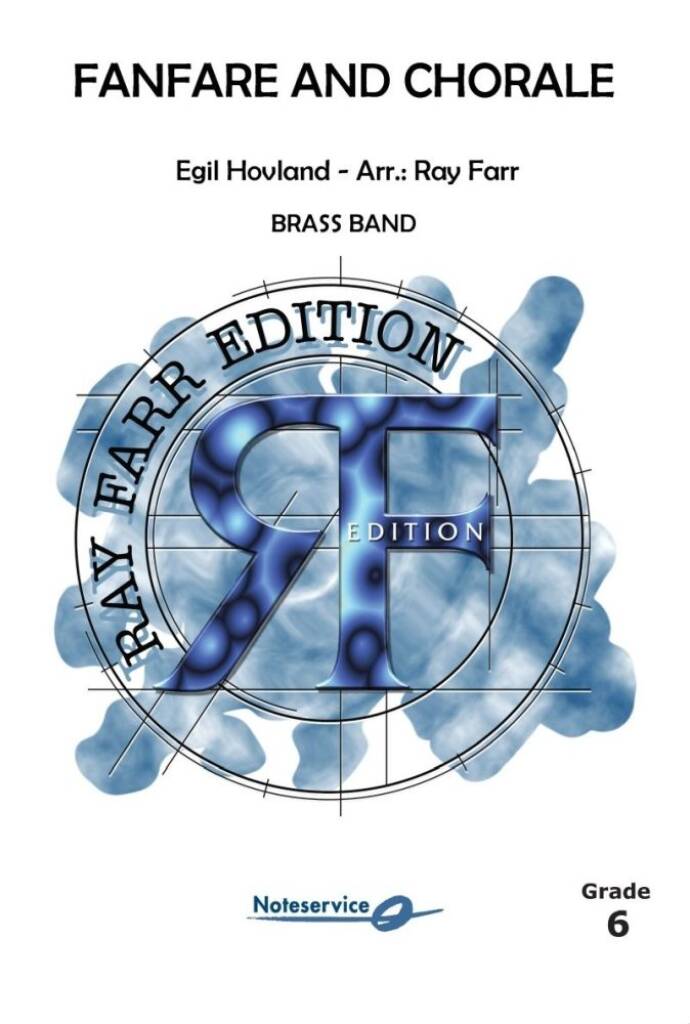
    Fanfare and Chorale - Egil Hovland - Ray Farr

    This arrangement (or edition) for brass band will give the possibility for more performances of this fine work by Hovland. The composer, before his death, examined my work and made no suggestions for changes, and his approving comments were complimentary and encouraging. The work was originally written for Concert Band in 1966 as Op. 54a to St. Olaf College Band in the US. It was transcribed in 1967 for symphony orchestra as Op. 54b by the composer himself. The challenges in arranging the piece for brass band were mostly concerned with satisfactorily covering the upper register used by piccolo, flutes and clarinets, and while there are wonderful brass players around who have amazing high registers, I have aimed this edition at a level achievable by reasonably good brass band players who are willing to give time and effort into the proper preparation and delivery of the music. Having worked on this new edition with a top-class brass band, I think it sounds wonderful and interestingly different to the original. Besides the obvious differences of tone-colour and absent high notes, I have used in my scoring, the option for using a vibraphone in place of a celeste. Vaughan Williams, in his Variations for brass band writes for celeste, but because the instrument is quite rare, performances have been mostly given using a glockenspiel- but this, of course sounds two octaves higher than it was intended. I think that vibraphone and brass is an excellent combination and recommend it without hesitation in this piece. Every detail of articulation and dynamic has been considered, so in order to keep the integrity of the music, please do not change anything in the name of "interpretation". As Ravel says- "What is there to interpret?" Ray Farr

    Estimated dispatch 5-14 working days
  • £23.50

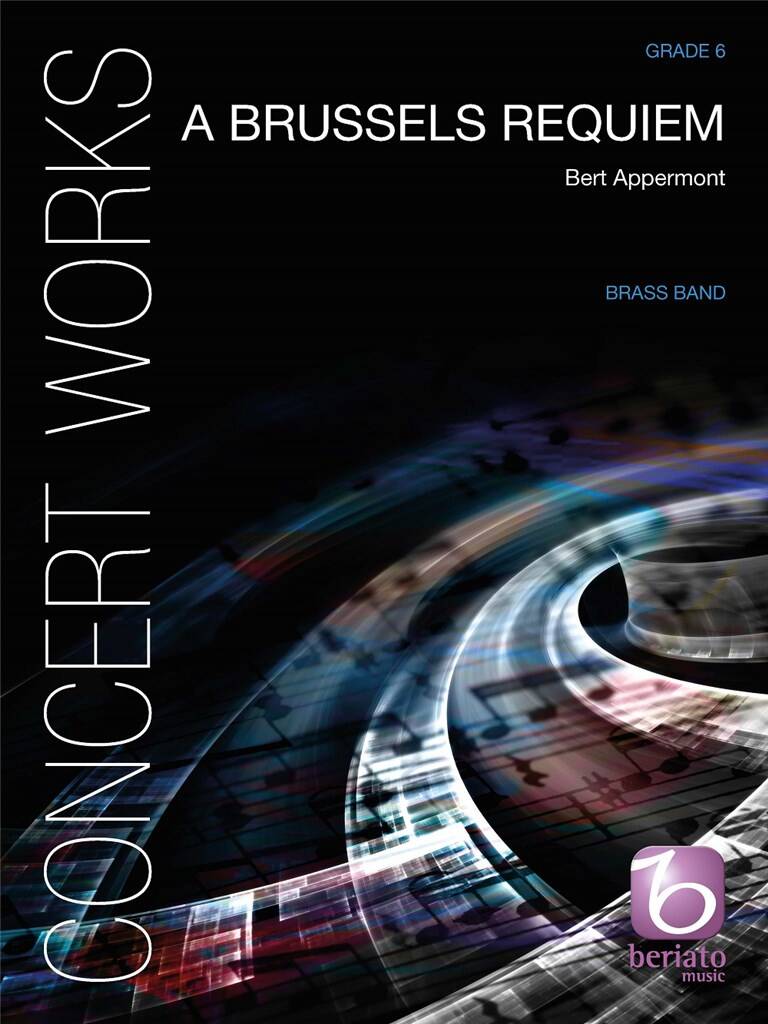
    A Brussels Requiem - SCORE ONLY - Bert Appermont

    The attacks in Brussels on 22 March 2016 created a shockwave throughout Belgium and the rest of the world. Equally, the attacks in Paris and Nice led to great public indignation, fear and disbelief. What has happened to the western world? Have our cultures grown apart to such an extent that we do not understand each other anymore? Bert Appermont's intention was to voice certain emotions that these acts of terror have caused: particularly fear, grief, anger, and helplessness. He uses the French children's song Au Claire de la Lune as a connecting thread throughout the work. This piece is also about hope and faith in another world, and is meant to pay homage to all victims, resulting in a dignified remembrance. The musical development is presented in four through-composed parts, titled Innocence, In Cold Blood, In Memoriam - We Shall Rise Again and A New Day. This work was commissioned by the Brassband Oberosterreich (Brass Band Upper Austria) to be played at the European Brass Band Championships 2017.

    Estimated dispatch 5-14 working days

     PDF View Music

  • £154.99

    A Brussels Requiem - Bert Appermont

    The attacks in Brussels on 22 March 2016 created a shockwave throughout Belgium and the rest of the world. Equally, the attacks in Paris and Nice led to great public indignation, fear and disbelief.What has happened to the western world? Have our cultures grown apart to such an extent that we do not understand each other anymore? Bert Appermont's intention was to voice certain emotions that these acts of terror have caused: particularly fear, grief, anger, and helplessness. He uses the French children's song Au Claire de la Lune as a connecting thread throughout the work.This piece is also about hope and faith in another world, andis meant to pay homage to all victims, resulting in a dignified remembrance. The musical development is presented in four through-composed parts, titled Innocence, In Cold Blood, In Memoriam - We Shall Rise Again and A New Day.This work was commissioned by the Brassband Obersterreich (Brass Band Upper Austria) to be played at the European Brass Band Championships 2017.

    Estimated dispatch 5-14 working days

     PDF View Music