
Results
-
 £54.99
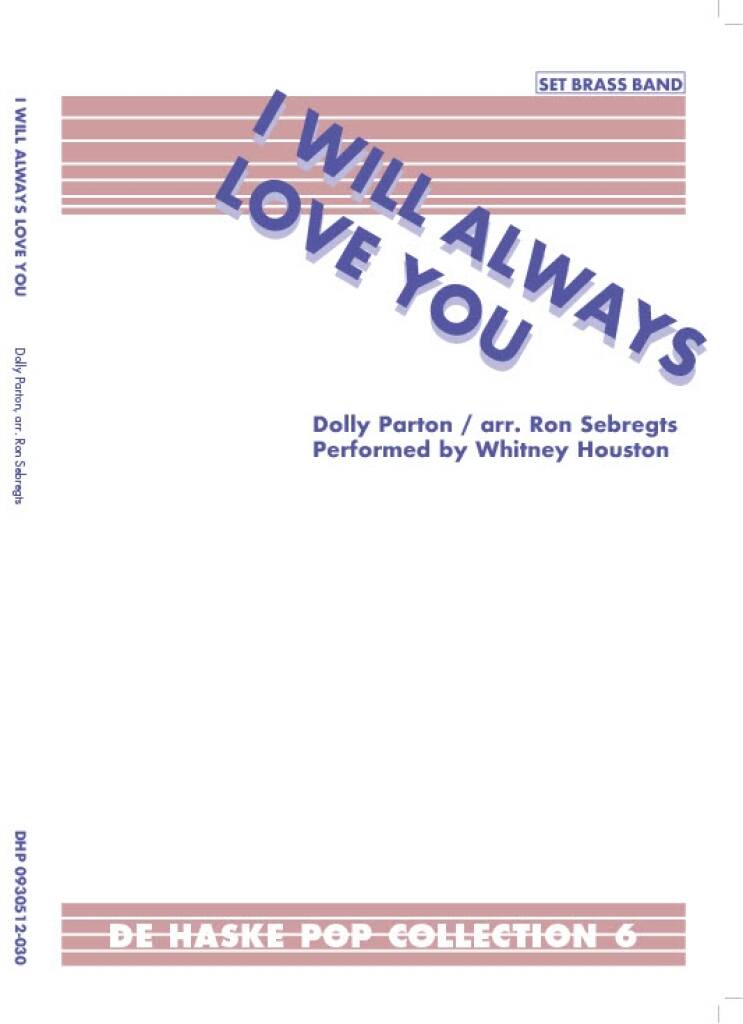
I Will Always Love You - Ron Sebregts
The title song to the 1992 film The Bodyguard, I Will Always Love You, written by Dolly Parton and sung by Whitney Houston spent over 10 weeks at number one in the UK charts. The beautiful ballad has been sensitively arrangement for brass band and is sure to be a big hit with both musicians and audiences.
Estimated dispatch 5-14 working days
-
£54.99
Pleasure for Band - Kees Schoonenbeek
As the title suggests Pleasure for Band is a pleasant composition it is based in five equal parts. The first movement makes use of A-B-A form, with the A theme having a bright joyous character and the B theme having a contrasting more lyrical feel. This work will make an idea encore for any concert.
Estimated dispatch 5-14 working days
-
£54.99
Intrada & Wilhelmus - John Blanken
John Blanken wrote Intrada & Wilhelmus in 2002 for the brass band Euphonia from Wolvega, the Netherlands.The title speaks for itself. It's an introduction to the national anthem of The Netherlands; Wilhelmus. In this piece the national anthem is heared two times followed by a short postlude.
Estimated dispatch 5-14 working days
-
 £54.99
First Concerto - Peter Kleine Schaars
As the title suggest this work offers the young musician their first opportunity to take the stage as a soloist. The solo part of First Concerto can be played on a variety of brass or woodwind instruments (parts in different keys are supplied) and is also particularly suitable for recorder. If one of your students can play 5 notes, First Concerto can be the first solo work to showcase their future music talent!
Estimated dispatch 5-14 working days
-
 £60.99
Hymn of Faith - Louis Bourgeois - John Blanken
The French composer Louis Bourgeois lived from c.1510 to 1560. Bourgeois was cantor in Geneva and, commissioned by John Calvin, he composed melodies for metrical (rhyming) versions of the psalms. After completing about a hundred one-part psalms, he made some four-part arrangements, which were denounced and even resulted in his imprisonment for a day. Later, Bourgeois published a number of psalm collections, and judging from his book Le droict chemin de musique he was also an excellent educator. The melodies Bourgeois composed, are (contrary to Gregorian chants) particularly suitable for community singing. This applies to his hymn tune Saint Michael, which is why this melody hasbeen used for various texts, written for many occasions. John Blanken made this arrangement for a wedding ceremony: an occasion in which faith and trust play a large - if not the largest - role. Hence the title Hymn of Faith. The arrangement contains four verses of the hymn. After a majestic opening the hymn follows twice, the second verse being embellished in the tenor register. After a short interlude verse three follows, played by a quartet. The majestic opening is then repeated as a modulation into the fourth verse, which concludes the work in a brilliant tutti.
Estimated dispatch 5-14 working days
-
 £54.99
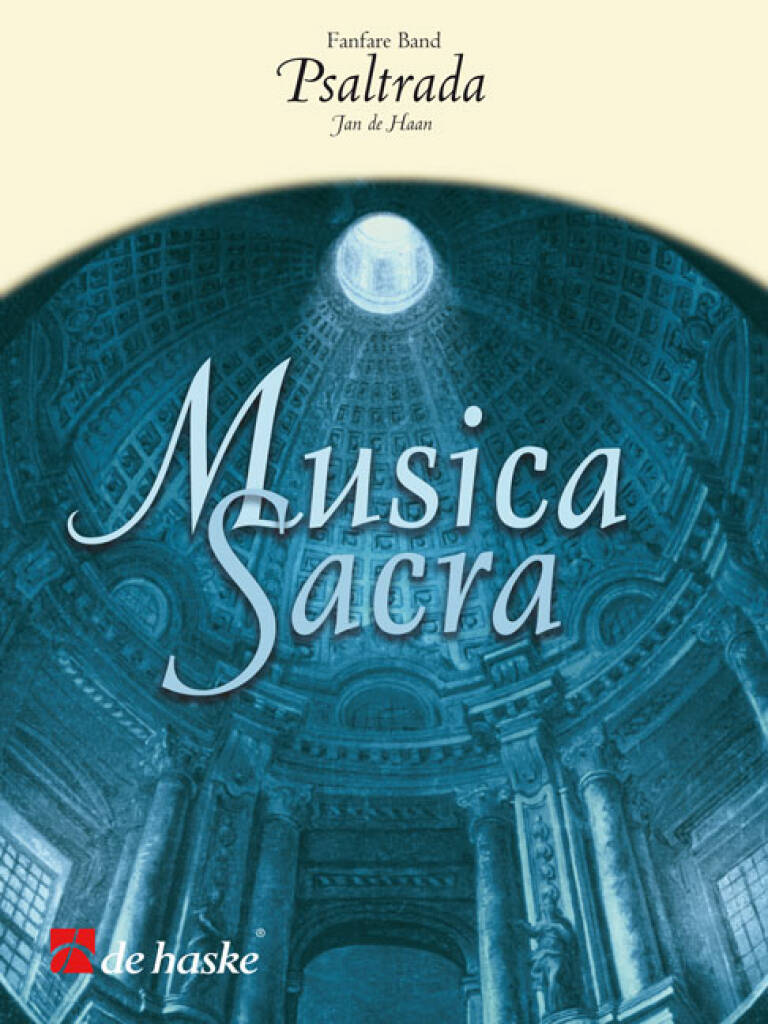
Psaltrada - Jan de Haan
The title of this piece gives a clue as to how it came about: Jan de Haan took the setting of psalm 149 from the Geneva Psalter of 1562 and created from this simple, beautiful melody a glorious, lively opening work for concert band. So it was that from a psalm and an intrada (prelude) a Psaltrada was born - for you to begin your next concert in splendid fashion.
Estimated dispatch 5-14 working days
-
 £94.99
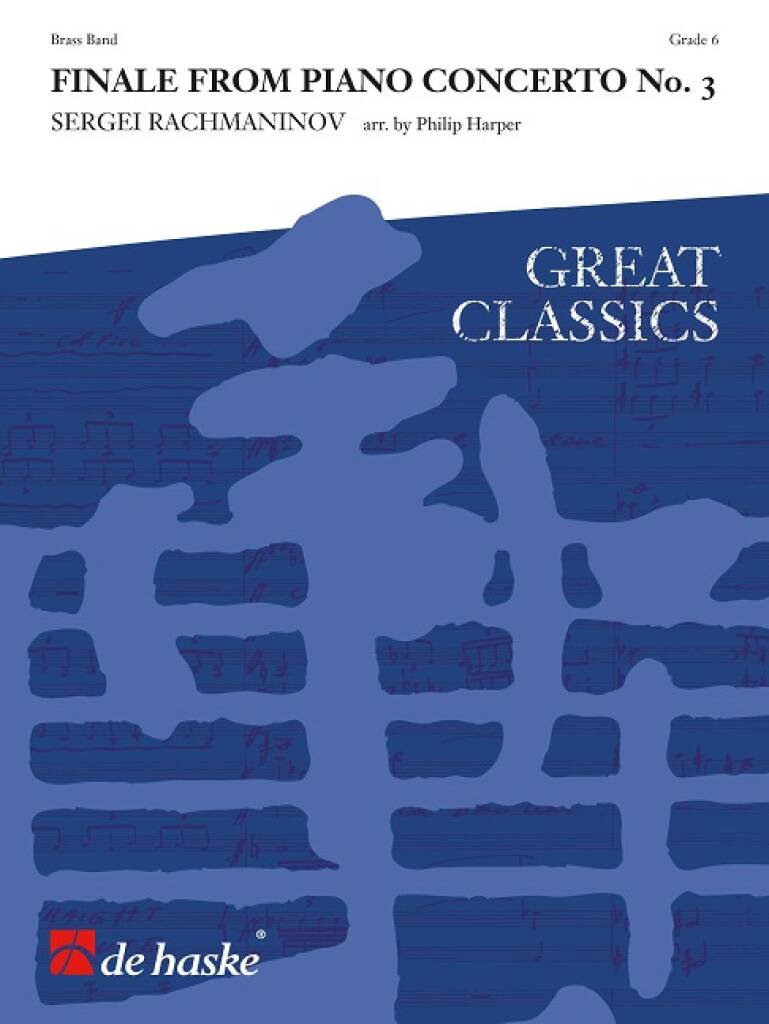
Finale from Piano Concerto N3 - Sergei Rachmaninov - Philip Harper
Philip Harper has created a fabulous transcription of the energetic third movement of Rachmaninoff's Piano concerto No. 3 in D minor. This movement is comprised of variations on a theme from the first movement of the concerto. The final notes would become Rachmaninoff's musical signature. An outstanding and very spectacular title!
Estimated dispatch 5-14 working days
-
 £84.99
Christmas Brass - Richard Peaslee
Christmas Brass is a fantasy on six carols, originally commissioned by Mark Freeh for the Manhattan Brass Choir. Duration: 16:30The well-known tune, O Come, O Come Emmanuel, a hymn originally based on a plainsong melody, is here set in 5/4 meter. Modal harmonies are combined with big band style as the piece gains momentum, greatly accentuating the mood of the words, "Rejoice! Rejoice! Emmanuel." The opening 5/4 statement of the theme returns, and the piece ends quietly.In Beautiful Savior (also known by the title Fairest Lord Jesus), a hushed beginning featuring horns, euphoniums, and a muted trumpet, leads through a key change to a satisfying, chorale-likeclosing passage.In Away in a Manger, Peaslee sets two tunes, Cradle Song and Away in a Manger. Following a straightforward presentation of each melody, Peaslee plays them against one another. The music swells to a full climax followed by a hushed ending.Peaslee employs a gentle hand in It Came Upon a Midnight Clear, using flugelhorn solos and duets in a jazz-waltz style.In Silent Night, the traditional carol gets an untraditional harmonization, propelled forward by give-and-take between the two groups of brass instruments in the brass choir: trumpets and trombones versus horns, euphoniums, and tuba.Hark! The Herald Angels Sing begins with a humorous blast of discordant harmonies as multiple carols are sounded at the same time. An up-tempo 4/4 announcement of the melody in the trombone is followed by a metrical modulation in 6/8-3/4 time. An additional metrical modulation bring the music back into 4/4, but at a slower tempo and in a pronounced jazz style. Tempo I returns, and the set of six pieces closes with a big ending.Instrumentation: 4 Trumpets, 2 Horns in F, 4 Trombones, 2 Euphoniums, Tuba, Guitar, Bass, Percussion
Estimated dispatch 5-14 working days
-
 £85.00
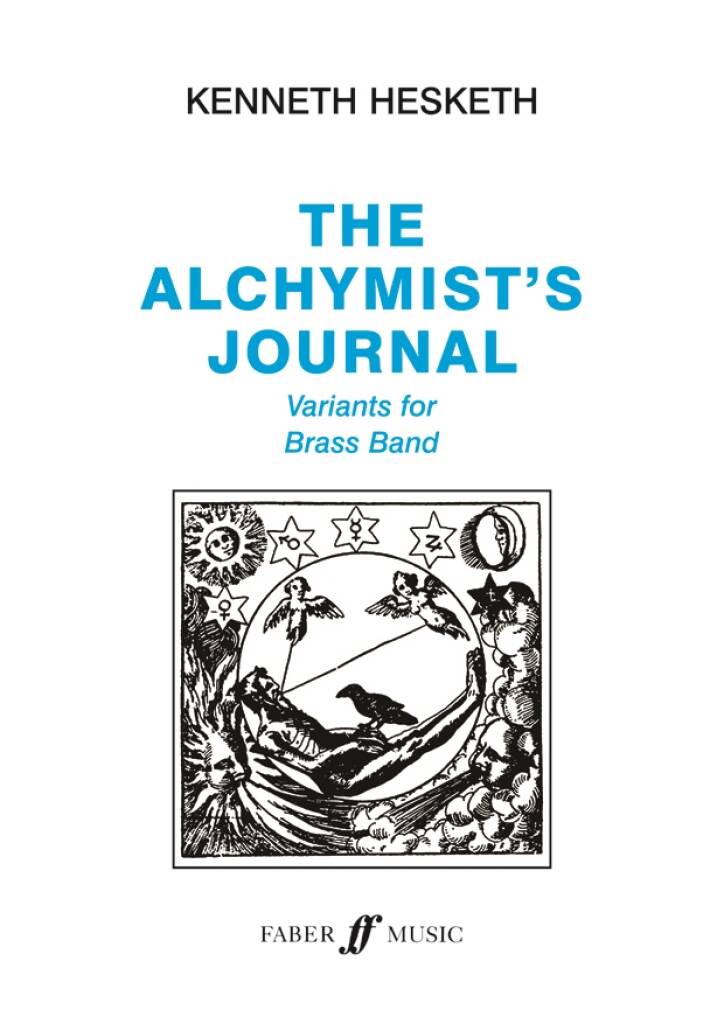
Alchymist's Journal. - Kenneth Hesketh
'The Alchymist's Journal' gets its title from the book of the same name by American author Evan S. Connell. The book fictionalises a number of famous Alchemist's writings, each one developing another's thoughts thuscontinuing one idea but changing it subtly to provide a new view point or way of thinking. This process is, in fact, alchemical as one idea transmutes into another. This idea is parallel to the processes at work within thesevariants. The whole work is constructed from 6 notes (C, A, B flat, E flat, F sharp, E) and is presented in nine different sections, each individual in mood but still based upon the original pitches. This is not a thematic setofvariations, as the themes are developed one at a time from small segments of the six notes. For example, the opening theme is the complete number of pitches, the second theme uses three notes transposed then repeated at theoriginal level, and so on. Harmonically, the six notes can be divided into two triads, A minor and E flat minor - each key beginning and ending the piece respectively. Whilst this is essentially abstract music with noprogramme there is an introduction, menacing scherzo, slow reflective section followed by a recap of the scherzo and final coda. 'The Alchymist's Journal' was commissioned by the Brass Band Heritage Trust at the suggestionof Paul Hindmarsh, to whom the work is dedicated.
Estimated dispatch 5-14 working days
-
 £94.99
Concert Piece - Alexandre Guilmant - Klaas van der Woude
Felix-Alexandre Guilmant-Amedee (Boulogne-sur-Mer, March 12, 1837 - Meudon, March 29, 1911) was a French composer and organist. Like many other composers, he was very talented on a young age, he was 12 years when he was playing organ smoothly. He studied with Lemmens with Charles-Marie Widor and Gigout. Between 1871 and 1901 he the leading man in the Paris organ scenery, along with his fellow students, later on he teached at the Paris Conservatoire National Superieur de Musique, inter alia, Joseph Bonnet and Marcel Dupre. Known are his organ sonatas, which are equivalent to the famous organ symphonies of Widor. His work was very popular. Also knownunder the title Morceau Symphonique, Opus 88.
Estimated dispatch 5-14 working days
 View Music