Results
-
 £30.00
Three Pieces from Czechoslovakia - Leos Janacek
This is the music of Leos Janacek (1854-1928) - exciting, powerful, emotive, impassioned, unpredictable, and many other definitions all rolled into one! Janacek was little known in Britain until the 1960's, when the conductor Charles Macherras introduced his unique music and opera to the western audience. His orchestral Sinfonietta was an instant hit. Janacek has since been one of the featured composers in the 'Proms'.The three pieces which I have arranged for brass band are INTRODUCTION, ORGAN SOLO and INTRADA from Janacek's Glagolitic Mass. They work equally well together or on their own, as they each have their own identity. They can be purchased together or separately.1. INTRODUCTIONA great 'starter' for the first or second half of a concert. 2. ORGAN SOLOThis is a 'must' if you want to impress your audience - every section of the band is incredibly busy, (although they can be assured that they do have time to breath)! 3. INTRADAThis piece, (and no.1 "Introduction"), both contain that 'fanfare' like quality which Janacek is famous for in his Sinfonietta.
In Stock: Estimated dispatch 3-5 working days
-
 £95.00
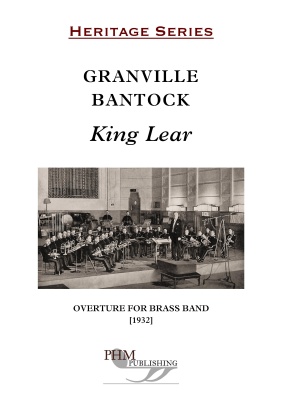
King Lear (Brass Band - Score and Parts)
Sir Granville Bantock (1868 - 1946) composed the second of his five major brass band work for Callender's Cableworks Band, completing the commission on 30 November 1932. Based in the Thames-side district of Belvedere near Erith, the band was active between 1898 and 1961. The works band of the Callender Cable & Construction Co. Ltd, it was at the peak of its popularity during the 1930s and was a frequent broadcaster on the radio. The band employed an in-house arranger and played saxophones in its lighter material. King Lear was one of the band's major commissions and was not published in Bantock's lifetime. The manuscript score and parts were thought to be lost for decades, but were found in the library of the Haydock Band (Lancashire), which had inherited part of Callender's library of manuscripts material and bespoke arrangements after it has been transferred to nearby Prescott Cables Band after Callender's Cable Works closed.King Lear is a substantial work, in essence a dramatic tone poem in the romantic Tchaikovskian manner, presenting a series of character portraits of the foolish old king and his three daughters, Goneril, Regan and Cordelia. The music is dramatic and lyrical by turns, with the most generous lyrical episode revealing perhaps the warm-hearted Cordelia. An expansive melody that flows from this is brought back towards the end as the main climax of the work.In 2001, Bantock's score was recorded by the University of Salford Brass Band, conducted by Dr. Roy Newsome. The original is serviceable, but in comparison with the orchestral version he made in 1936 (part of which was recorded on a Paxton 78 rpm) and later brass band scores, performing editions of which were prepared by others, it lacks colour and range typical of Bantock's orchestral work. Above all it lacks percussion, which can be heard on the recorded extract. With the kind permission of the Bantock Estate, I have prepared a performing edition for publication that incorporates percussion, derived from the orchestral recording and added editorially in similar manner elsewhere. I have revoiced some of the low- lying instrumental parts to present the material in more comfortable ranges. Editorial interventions more elaborate than revoicing the original text have been identified as cue notes.- Paul HindmarshDuration: 15.00
Estimated dispatch 7-14 working days
-
£40.00
King Lear (Brass Band - Score only)
Sir Granville Bantock (1868 - 1946) composed the second of his five major brass band work for Callender's Cableworks Band, completing the commission on 30 November 1932. Based in the Thames-side district of Belvedere near Erith, the band was active between 1898 and 1961. The works band of the Callender Cable & Construction Co. Ltd, it was at the peak of its popularity during the 1930s and was a frequent broadcaster on the radio. The band employed an in-house arranger and played saxophones in its lighter material. King Lear was one of the band's major commissions and was not published in Bantock's lifetime. The manuscript score and parts were thought to be lost for decades, but were found in the library of the Haydock Band (Lancashire), which had inherited part of Callender's library of manuscripts material and bespoke arrangements after it has been transferred to nearby Prescott Cables Band after Callender's Cable Works closed.King Lear is a substantial work, in essence a dramatic tone poem in the romantic Tchaikovskian manner, presenting a series of character portraits of the foolish old king and his three daughters, Goneril, Regan and Cordelia. The music is dramatic and lyrical by turns, with the most generous lyrical episode revealing perhaps the warm-hearted Cordelia. An expansive melody that flows from this is brought back towards the end as the main climax of the work.In 2001, Bantock's score was recorded by the University of Salford Brass Band, conducted by Dr. Roy Newsome. The original is serviceable, but in comparison with the orchestral version he made in 1936 (part of which was recorded on a Paxton 78 rpm) and later brass band scores, performing editions of which were prepared by others, it lacks colour and range typical of Bantock's orchestral work. Above all it lacks percussion, which can be heard on the recorded extract. With the kind permission of the Bantock Estate, I have prepared a performing edition for publication that incorporates percussion, derived from the orchestral recording and added editorially in similar manner elsewhere. I have revoiced some of the low- lying instrumental parts to present the material in more comfortable ranges. Editorial interventions more elaborate than revoicing the original text have been identified as cue notes.- Paul HindmarshDuration: 15.00
Estimated dispatch 7-14 working days
-
 £45.00
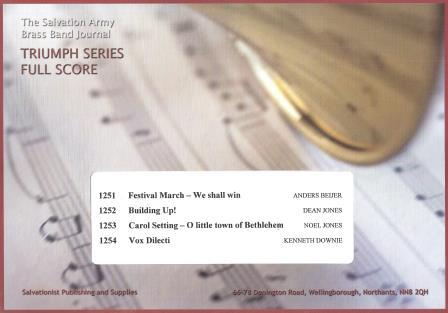
Triumph Series Band Journal July 2014 Numbers 1251-1254
No. 1251 Festival March - We Shall Win (Captain Anders Beijer)This march features the tune, 'We shall win' (T.B. 508) and portrays the belief that 'if we fight in the strength of the King' - 'We shall win!'No. 1252 Building Up! (Dean Jones)In 2012, the corps at Horsham were marking their 125th anniversary and this piece was used as part of that occasion. The theme adopted for the celebrations was 'Building hope for tomorrow', which was the inspiration for this piece. The tunes featured are 'Will your anchor hold?' and 'Building up the temple'.No. 1253 Carol Setting - O little town of Bethlehem (Noel Jones)An arrangement of the popular carol, 'O little town of Bethlehem', using the tune 'Forest Green'.No. 1254 Vox Dilecti (Kenneth Downie)Vox Dilecti means 'beautiful voice'. This is an arrangement of J.B.Dykes' melody, complementing words by Horatius Bonar.
Estimated dispatch 7-14 working days
-
 £34.95
Fox's Air and Dance (Brass Band - Score and Parts)
This is a one-movement composition, albeit in two sections, that is accessible to bands of most abilities and to all audiences. The Air is in a good-natured, easy-going style while the Dance section is a bit of a romp loosely based on the traditional tune 'In and out the dusty bluebells'.
Estimated dispatch 7-14 working days
-
 £29.95
Tournament for Brass (Score Only)
This is not descriptive music: the tournament is within the band!In the first movement, small groups of instruments are featured - mainly in duets and trios - in a kind of "conversation piece".The second movement is in the form of a Theme with Variations, the band's main soloists being given a chance to show their paces.In the final Scherzo there is more general ensemble playing, although soloists again carry some of the responsibility.
Estimated dispatch 7-14 working days
-
 £33.62
A Century of Art (Brass Band) Robbert Vos
A Century of Art was composed for Brass Band Kunst naar Kracht from the town of De Goorn (The Netherlands) for its 100th anniversary in 2022. A version for Fanfare Orchestra was commissioned by the Fanfare Project Orchestra in 2023. The title of the work refers to Brass Band Kunst naar Kracht's 100-year existence and the array of art that has been created in that time. A Century of is a flashy and virtuosic opening work where melodic lines are combined with other surprising compositional elements. You can hear, among some references to some famous brass band test pieces, a quote from Lohengrin by Richard Strauss. A transcription of Lohengrin was used at the 1922 British Open in England, one of the most famous brass band competitions in the world, the same year as Brass Band Kunst naar Kracht was founded. To view a performance by Fanfare 'Project Orkest' of the work please visit www.youtube.com/watch?v=D6zuoaxf_kg (please note this is the Fanfare Band version, although it is essentially the same). Duration: 4.00 minutes Difficulty Level: 2nd Section + PDF download includes parts and score. Sheet music available from www.brassband.co.uk Instrumentation: Soprano Cornet Eb Solo Cornet Bb Repiano Cornet Bb 2nd Cornet Bb 3rd Cornet Bb Flugel Horn Bb Solo Horn Eb 1st Horn Eb 2nd Horn Eb 1st Baritone Bb 2nd Baritone Bb 1st Trombone Bb 2nd Trombone Bb Bass Trombone Euphonium Bb Bass Eb Bass BbTimpani Percussion 1-4
In Stock: Estimated dispatch 1-3 working days
-
£90.00
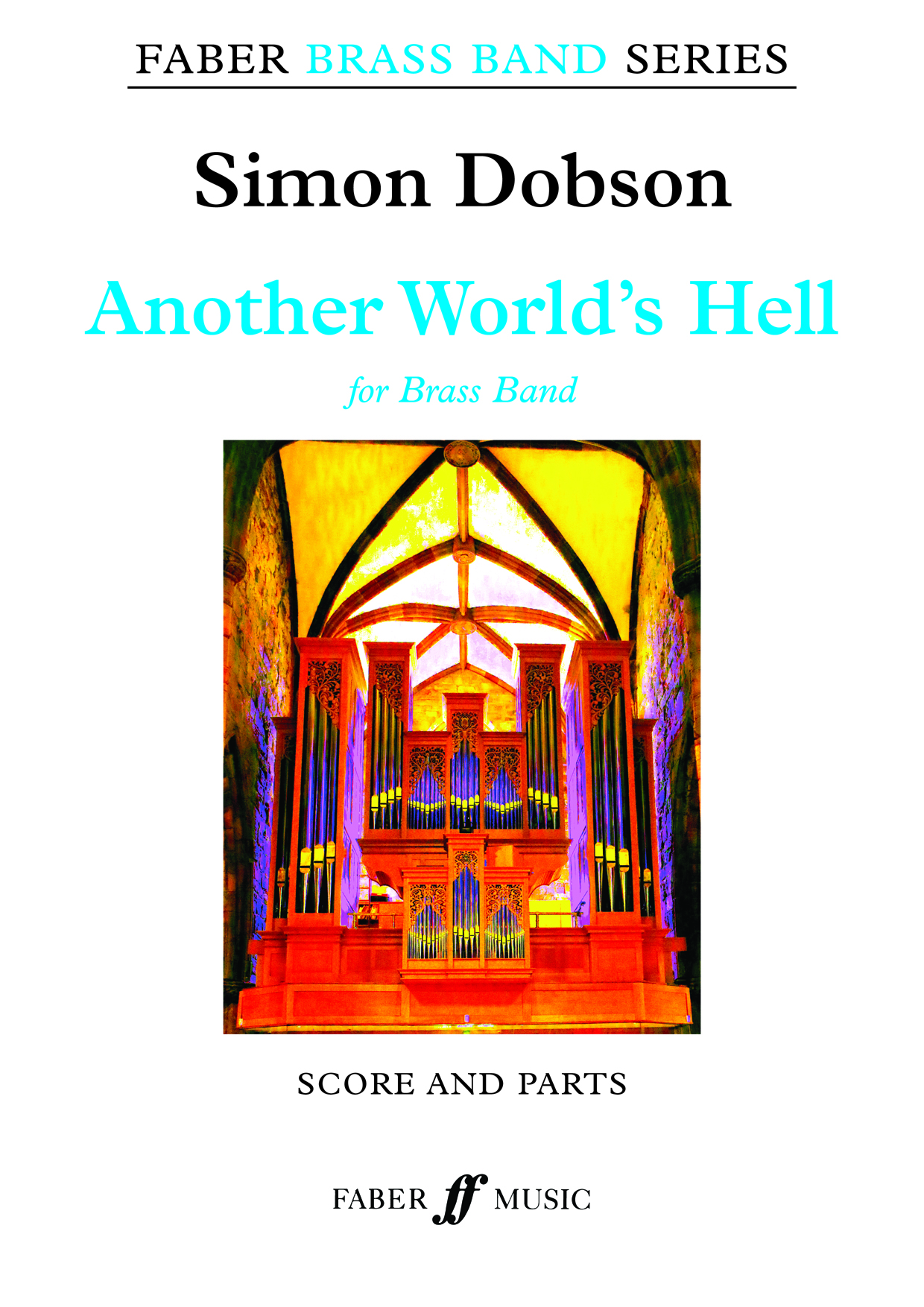
Another World's Hell - Simon Dobson
Another World's Hell was commissioned in versions for brass, wind and fanfare bands by the Socit Cantonale des Musiques Vaudoises and the Association Cantonale des Musiques Neuchteloises for the 2013 Swiss Cantonales festivals. It is inspired by a passage in Aldous Huxley's classic 1932 science-fiction novel Brave New World, which describes in unusually close detail the music that is being played at a dance. This is Dobson's interpretation of the imagined 'future music' that Huxley dreamed of.Brass Band Grade 5Duration: 13 minutes, Score & Parts
In Stock: Estimated dispatch 1-3 working days
-
 £30.00
Ave Maria - Flugel Horn & Brass Band - RMP003 - Caccini - Peter Ratnik
COMPOSER: CacciniARRANGER: Peter RatnikOne of the most simply beautiful melodies in the world has now been arranged for solo flugel and band by Peter Ratnik. This moving arrangement of Julio Caccini's Ave Maria will stop the world as your band plays it at your next concert. This is a must for any band library.CLICK HERE TO HEAR THIS PIECE - Ave Maria (Caccini) Arr Peter Ratnik for Flugel Solo and Brass Band
In Stock: Estimated dispatch 3-5 working days
-
 £25.00
Ring'd with the Azure World
DescriptionRing'd with the Azure World was commissioned by the Harmonia Brass quintet for their final recital at the University of Huddersfield in 2016.He clasps the crag with crooked hands; Close to the sun in lonely lands, Ring'd with the azure world, he stands.The wrinkled sea beneath him crawls; He watches from his mountain walls, And like a thunderbolt he falls.- The Eagle by Alfred, Lord TennysonThe music was inspired by Tennyson's poem reproduced above; it seeks simply to reflect the spirit of the poem. It opens in sparse, lonely mood as the eagle surveys the world beneath. The work quickens in three bursts using metrical modulation to disguise the actual moment of acceleration, reflecting the lazy energy stored in the circling raptor before concluding dramatically in a fall 'like a thunderbolt'. Tennyson's poem, although brief, has inspired much analysis and writing, and is notable for being written in the (then somewhat unfashionable) iambic tetrameter, indicating a foursquare emphasis reflected in the main theme of the music. This is heard first in an octatonic version and later in a purely tonal (if somewhat modal) version. The instrumentation reflects that of Harmonia Brass, a quintet composed of brass band instruments (two B flat cornets, an E flat tenor horn, tenor trombone and E flat tuba). However the music is also available for the more conventional brass quintet of two trumpets, french horn, trombone and tuba.To listen to an audio export preview and follow the music, click play on the video below!Performance Notes1st cornet/trumpet requires a cup mute, ideally with an adjustable cup (the marking "tight" denotes that the cup should be adjusted closer to the bell), and a harmon mute with the tube removed (denoted by "TR" in the score). 2nd cornet/trumpet requires a fibre straight mute and a harmon mute with the tube removed. Tenor horn require a fibre straight mute and a practice mute (any sort) - in the orchestral brass version the french horn requires a stop mute. Trombone requires a cup mute (only). Tuba requires a fibre straight mute and a practice mute (of any sort).Metronome marks should be closely observed - starting either too fast or too slow will have a disproportionate effect on the tempi later in the piece due to the metrically controlled tempo changes.
Estimated dispatch 7-14 working days