
Results
-
 £290.99
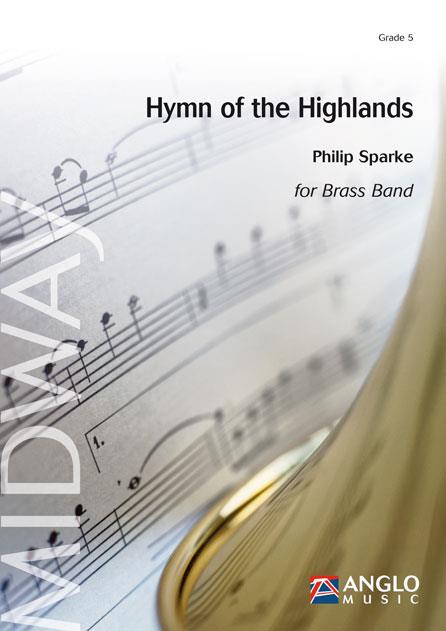
Hymn of the Highlands (Complete Edition) (Brass Band - Score and Parts) - Sparke, Philip
Hymn of the Highlands was commissioned by David King and the Yorkshire Building Society Band for first performance at the 2002 European Brass Band Championships Gala Concert in Brussels. The complete suite lasts approximately 35 minutes however it is possible that pieces of different lengths can be constructed to feature particular soloists or fit different programming constraints.Includes:Ardross Castle, Duration: 7:00Summer Isles (Euphonium solo), Duration: 4:00Flowerdale (Soprano Cornet solo), Duration: 4:30Strathcarron (Sword Dance), Duration: 5:30Lairg Muir (Cornet solo), Duration: 4:30Alladale (Flugel Horn, Horn and Baritone trio), Duration: 4:15Dundonnell (Finale), Duration: 5:45Duration: 35:00
Estimated dispatch 7-14 working days
-
 £35.00
Ascend the Brightest Heaven...
DescriptionThe band's uniform badges feature a significant local landmark, a transmission tower officially known as The Arqiva Tower but known more colloquially to locals as 'Emley Moor mast'. The current elegantly tapered concrete sculpture, the tallest freestanding structure in the UK at 1084 feet, is the third mast on this site and was built between 1969 and 1971 after the catastrophic collapse of the previous structure.On 19 March 1969 a combination of extreme icing and strong winds caused the tubular mast to collapse across Jagger Lane and the chapel opposite - fortunately, despite the fact that the organist was in the chapel practising, nobody was injured. Several million people lost their BBC2 and ITV signals, until the Independent Television Authority managed to set up a temporary transmitter nearby!Just over two years later the new mast was operational, and despite initial opposition from some locals who feared another, potentially worse, collapse, Emley Moor Mast is now a popular local landmark and a grade II listed building. In 2015 the mast was illuminated with coloured lights at night to mark the 'Grand Depart' of the Tour de France coming to Yorkshire.You can listen and follow the score in the video below:
Estimated dispatch 7-14 working days
-
 £32.00
The Beacons (Score only) - Ray Steadman-Allen
For centuries hilltop beacon fires blazed across the land signals of important happenings or warnings of invasion. This music tells no specific story but the titles of the four thematically related sections are a guide to the idea: The Beacons; Far Horizons; The Invaders; Celebration. The first movement has something of the character of the march and the fanfare; spirited and tightly driving, it promises most of the thematic material of the work. The second is largelt tranquil and is thinly scores with solo passages. The third has the most dramatic potential; its energy and conflict subsides to a lament and a tolling bell before a vigorous rounding off. Appropriately, the fourth movement is in a merry-making mood, and the jubilant music concludes with fragment statements of the main themes. The Beacons was first performed by IMI Yorkshire Imperial Band (James Scott) at the 'Concert of the Century', celebrating the Centenary of the British Bandsman, at the Free Trade Hall, Manchester, on 5 September 1987. Duration: 12:30
Estimated dispatch 7-9 working days
-
 £42.00
The Beacons (Parts only) - Ray Steadman-Allen
For centuries hilltop beacon fires blazed across the land signals of important happenings or warnings of invasion. This music tells no specific story but the titles of the four thematically related sections are a guide to the idea: The Beacons; Far Horizons; The Invaders; Celebration. The first movement has something of the character of the march and the fanfare; spirited and tightly driving, it promises most of the thematic material of the work. The second is largelt tranquil and is thinly scores with solo passages. The third has the most dramatic potential; its energy and conflict subsides to a lament and a tolling bell before a vigorous rounding off. Appropriately, the fourth movement is in a merry-making mood, and the jubilant music concludes with fragment statements of the main themes. The Beacons was first performed by IMI Yorkshire Imperial Band (James Scott) at the 'Concert of the Century', celebrating the Centenary of the British Bandsman, at the Free Trade Hall, Manchester, on 5 September 1987. Duration: 12:30
Estimated dispatch 7-9 working days
-
 £42.00
The Lord is King! (Score only) - Philip Wilby
The Lord is King! for baritone solo, Chorus, Organ (ad lib.) and brass band was rst performed by the North Yorkshire Chorus with the Grimethorpe Colliery Band in 1999. It is also available with solo trumpet and organ accompaniment. It is made up of three colourful song settings: The Trumpet, Come Down, O Love Divine, and Psalm 96.
Estimated dispatch 7-9 working days
-
 £52.00
The Lord is King! (Parts only) - Philip WIlby
The Lord is King! for baritone solo, Chorus, Organ (ad lib.) and brass band was rst performed by the North Yorkshire Chorus with the Grimethorpe Colliery Band in 1999. It is also available with solo trumpet and organ accompaniment. It is made up of three colourful song settings: The Trumpet, Come Down, O Love Divine, and Psalm 96.
Estimated dispatch 7-9 working days
-
 £13.95
The Lord is King! - Philip Wilby
The Lord is King! for baritone solo, Chorus, Organ (ad lib.) and brass band was rst performed by the North Yorkshire Chorus with the Grimethorpe Colliery Band in 1999. It is also available with solo trumpet and organ accompaniment. It is made up of three colourful song settings: The Trumpet, Come Down, O Love Divine, and Psalm 96.
Estimated dispatch 7-9 working days
-
 £44.95
PROCESSION TO THE CATHEDRAL - Wagner arr. Peter Graham
Commissioned by David King and Yorkshire BuildingSociety Band for their exciting recording, Introduction,
Estimated dispatch 3-7 working days
-
 £44.95
The Holy Well (Euphonium Solo with Brass Band - Score and Parts) - Graham, Peter
The main theme from?On Alderley Edge?was commissioned for euphonium solo by Riki McDonnell. Recorded by both Riki and Morgan Griffiths of Yorkshire Building Society Band.
Estimated dispatch 7-14 working days
-
 £59.95
Bonnie Northumbria - Brass Band - LM786
COMPOSER: Laurie JohnstonProgramme NotesNorthumberland, or Northumbria as it is also known, is the most northern county in England and has magnificent and stunning landscapes just waiting to be explored. Filled with mystical castles, atmospheric ruins and historical sites and edged by spectacular coastal scenery, there is something wonderful to see at every turn. The Devils Causeway passes through Northumbria and reaches Berwick upon Tweed at the coast. Walkers and cyclists can also take the Coast and Castles Cycle Route or the North Sea Trail which journey through some of the most beautiful scenery along the way.The Blaydon Races is aGeordiefolk songwritten in the 19th century byGeordie Ridley, in a style deriving frommusic hall. It is regarded by many as the unofficialanthemofTynesideand is frequentlysungby supporters ofNewcastle United Football ClubandNewcastle Falconsrugby club.Blaydonis a small town inGateshead, situated about 4 miles (6.4km) fromNewcastle upon Tyne, inNorth East England. The race used to take place on the Stella Haugh 1 mile (1.6km) west of Blaydon.Stella South Power Station(demolished in 1995) was built on the site of the track in the early 1950s, after the races had stopped taking place in 1916.Water of Tyne (sometimes rendered as The Waters of Tyne) is a folk song (Roud number1364) from the north-east of England. The song is sung by a girl or woman lamenting the fact that her paramour is on the opposite bank of theRiver Tyne. Sleeve notes to Michael Hunt's recording of Tyneside songs states that "the ferry is believed to be that atHaughton Castleon theNorth Tyne". Alternatively the "rough river" in the last line may indicate a point further downstream, possiblyTynemouth.The song was collected byJohn Bellin 1810 and published two years later inRhymes of Northern Bards.The Keel Row is a traditional Tyneside folk song evoking the life and work of thekeelmenofNewcastle upon Tyne. A closely related song was first published in aScottishcollection of the 1770s, but may be considerably older, and it is unclear whether the tune is Scottish or English in origin.The opening lines of the song set it inSandgate, that part of the quayside overlooking the River Tyne to the east of the city centre where the keelmen lived and which is still overlooked by theKeelmen's Hospital.Versions of the song appear in both England and Scotland, with Scottish versions referring tothe Canongaterather than Sandgate. The earliest printing was in the 1770s inEdinburghin A Collection of Favourite Scots Tunes, edited by Charles Maclean, though the tune was also found in several late eighteenth-century English manuscript collections. As the term "keel" was used both sides of the border, it has not been determined which version was the original, althoughFrank Kidsonsurmised that like many other songs collected by Maclean it may originally have been aJacobiteair from the time of the1745 rebellion. Some versions of the song make reference to a "blue bonnet[...] with a snowy rose upon it", a clear attempt to evoke Jacobite symbolism, whether dating from 1745 or not.Kidson, however, also noted that he had found the tune of The Keel Row associated with an early dance called "The Yorkshire Lad" as early as 1748.By the 19th century the tune was well associated with the River Tyne; a few years before the 1850s the keelmen had met yearly to celebrate the founding of the Keelmen's Hospital, perambulating the town to the accompaniment of bands playing The Keel Row.Dance To Thy Daddyis a traditional Englishfolksong, originating inNorth East England. An early source for the lyrics, Joseph Robson's "Songs of the bards of the Tyne", published 1849, can be found on the Farne archive. In Farne's notes to the song, it is stated that these lyrics were written by William Watson around 1826.
In Stock: Estimated dispatch 3-5 working days
 View Music