
Results
-
Dance The Night Away - Raul Malo - Len Jenkins
"Dance The Night Away" is an upbeat song by The Mavericks taken from their 1998 album Trampoline. The song was released as a single that same year and reached No. 4 in the UK charts.The music video of the song, set in a supermarket in America, exemplifies the infectious pull of the tune and its persistent rhythm which eventually gets everyone involved. This is an ideal piece for fetes and concerts alike, and should be played in a pronounced 'latino' style for maximum effect.
-
 £44.95
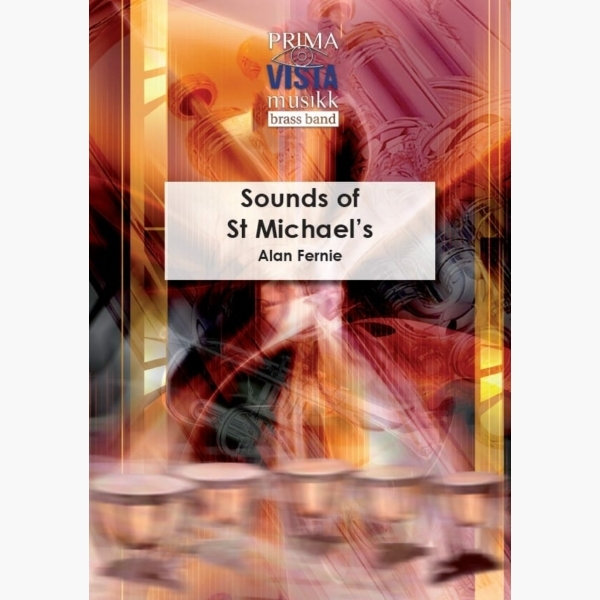
Sounds of St Michael's - Alan Fernie
Sounds of St Michael's was commissioned and premiered by Martlesham Brass (Suffolk) in 2016 to help commemorate their 20th anniversary. The band rehearse in their local church, St Michael's, and the piece reflects, perhaps, a year in the life of...
Estimated dispatch 5-7 working days
-
 £42.00
The Seasons (Score only) - Philip Wilby
Composer Philip Wilby writes... "The music of this little suite of pieces traces the year's change; from a cold, late autumn to an indoor winter; though a spring waltz to a final open-air march. My aim was to provide music which is both enjoyable to rehearse and perform but not forbiddingly difficult to play". The work's popularity among brass bands the world over suggests that he hit the nail on the head - audiences love it, too!
Estimated dispatch 7-9 working days
-
 £52.00
The Seasons (Parts only) - Philip WIlby
Composer Philip Wilby writes... "The music of this little suite of pieces traces the year's change; from a cold, late autumn to an indoor winter; though a spring waltz to a final open-air march. My aim was to provide music which is both enjoyable to rehearse and perform but not forbiddingly difficult to play". The work's popularity among brass bands the world over suggests that he hit the nail on the head - audiences love it, too!
Estimated dispatch 7-9 working days
-
£40.00
Christmas Number of Celebrated Carols - Traditional
Includes a full band set (no score)Featuring:Once in Royal David's CityWhen the Crimson SunThe First NowellHere We Come A-WassailingGood King WenceslasBethlehemO SanctissimaGod Send You a Happy New YearGod Rest Ye Merry GentlemenThe Seven JoysO Holy Voices of The SkyThe Mistletoe Bough
In Stock: Estimated dispatch 1-3 working days
-
£42.00
The Very Best Time of Year - Rutter, J - Griffiths, D
This new arrangement for Solo Euphonium & brass band by David Griffiths, truly evokes that feeling of nostalgia and longing anticipation of the joyous season and is a true celebration of all that we love about Christmas time!4th section +Duration 3 mins 30 secs
In Stock: Estimated dispatch 1-3 working days
-
 £41.20
 -
 £54.95
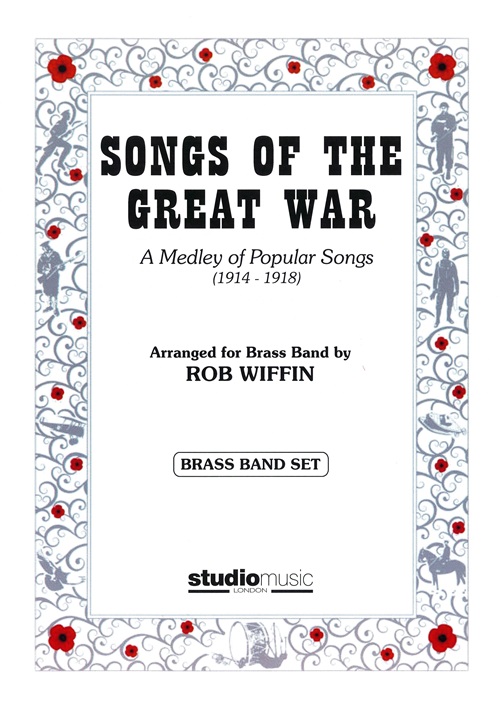
Songs of the Great War (Brass Band - Score and Parts) - Wiffin, Rob
A Medley of Popular Songs, 1914 - 1918Music of the Great War is a five year project to use music of the period to educate and engage schools, colleges, town bands, and the wider public across the UK and the world to learn in a positive way about the events, the experience of the troops involved from all sides, and how music played its part.This year, to commemorate the centenary of the Great War a specially arranged medley Songs of the Great War has been created. The medley has been arranged for bands to rehearse and eventually perform on the 11 November 2015. It brings together some of the most popular tunes played, sung and performed by the men and women of the time - in the trenches and on the various home fronts.With the support of many countries and organisations, on the 11 November the medley will be first played in New Zealand and Australia. It will ripple east across the world being performed in countries like India and Pakistan before hitting Europe and onwards to include performances in Canada and the Caribbean. This could become one of the most played pieces of music in a 24-hour period.In Britain, there will be performances across the country, including some at key events and sites involving a wide range of military and non-military personnel.The medley includes:It's a Long Way to TipperaryYour King and Country Want YouGood Bye-eeOh! It's a Lovely WarHello! Hello! Who's Your Lady FriendTake Me Back to Dear Old BlightyMademoiselle from ArmentieresThere's a Long, Long Trail A-windingIf You Were the Only Girl in the WorldPack Up Your Troubles (In Your Old Kit Bag)Old Soldiers Never Die/Last Post
Estimated dispatch 7-14 working days
-
 £40.00
Magic Flute Overture, The (Brass Band - Score and Parts) - Mozart, Wolfgang Amadeus - Littlemore, Phillip
Mozart's The Magic Flute is a two-act opera composed in 1791, the year of his death. It was the culmination of a period of increasing involvement by Mozart with Emmanuel Schikaneder's theatrical troupe, which since 1789 had been the resident company at the Theater auf der Wieden. The Magic Flute is noted for its prominent Masonic elements; both Schikaneder and Mozart were believed to be Masons and also lodge brothers. Much of Mozart's Masonic music is written in the key of E flat. This key, with 3 flats is indicative of Masonic symbolism. There are other examples of the number three in the opera as well. The opening chords of the introduction sound three times, which also happens during the Temple scenes. Also represented in threes are the three temples of Wisdom, Reason and Nature. Tamino tries to open the three doors of the temple. There are three ladies, the attendants to the Queen of the Night, and three boys who serve as guides to Tamino and Papageno. Duration: 6:30
Estimated dispatch 7-14 working days
-
 £45.00
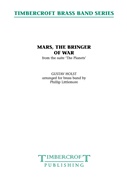
Mars, The Bringer of War (from The Planets) (Brass Band - Score and Parts) - Holst, Gustav - Littlemore, Phillip
Holst's suite The Planets was written between 1914 and 1916 and with the exception of Mercury, which was written last, Holst wrote the music in the sequence we hear them. So, in 1914, came the insistent rhythmic tread of Mars, The Bringer of War. It is widely known that the sketches were completed prior to the outbreak of the First World War, so the music is less a reaction to the declaration of war itself, but more an impending sense of inevitability of a war to unfold. An ideal concert opener, especially in this current year as it is not only the 100th anniversary of the piece itself, but of The Great War. Duration: 7:20
Estimated dispatch 7-14 working days
 View Music