
Results
-
 £15.99
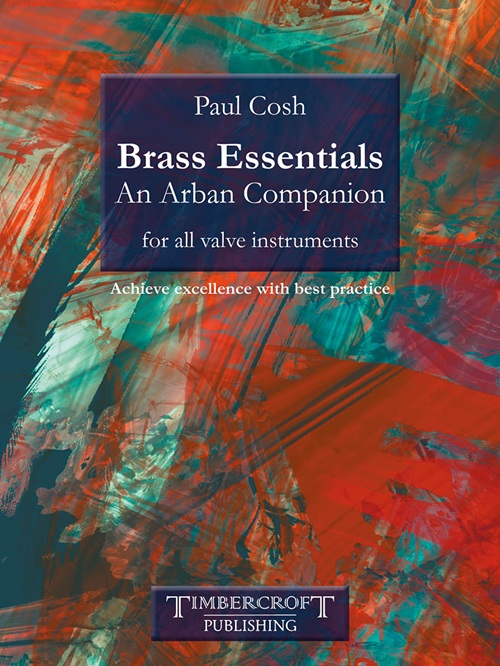
Brass Essentials - An Arban Companion (for all valve instruments)
Brass Essentials: An Arban Companion works through the Arban Cornet Method in the sequence that the excerpts appear in the original publication. It is not a method in itself, but a way to address the building blocks of a solid technique - good sound, good intonation, developing technical skills and applying rhythmic accuracy. It is suitable for all valve instruments.Simply choose which of the sections applies to the issues you are facing in your playing at any given time. Advice is given at the head of each section on how to deal with the technical processes involved for that particular area of practice as well as suggestions on rehearsal and performance tempi.A regular approach to the most basic aspects of playing a brass instrument will help maintain a strong technique whilst addressing any problems that may occur during your playing life, as they do from time to time. It can also provide a regular practice diet that will encourage real attention to detail.Brass Essentials: An Arban Companion can be used as a resource for teachers helping players starting out on their musical journey, but also performers at any point in their musical life as a back-to-basics approach is often the way forward when dealing with playing issues. The overriding principle is that every note counts!Section Headings : Set-Up, Articulation and Sound; Light Articulations; Syncopation, Spacing and Rhythm; Single Tonguing; Controlled Slurring Technique; Running Scales and Chromatics; Breathing, Shaping and Phrasing; Arpeggios, Dominant Sevenths and Diminished Sevenths; Triple Tonguing; Double Tonguing; The Studies
Estimated dispatch 7-14 working days
-
 £34.95
Time Eternal (Brass Band - Score and Parts)
Time Eternal (2011) was written as a showcase for band in the form of a seven-minute journey which demonstrates the ability of the band and its soloists. As the title suggests, the idea of time is important in the work, with bell-like gestures forming the opening and closing sections. Rhythmic material is heard, often juxtaposing more lyrical passages, sometimes with dramatic percussion or semiquaver running accompaniments in the cornets.A slow and expressive middle section hears soloistic contributions from the flugel horn and euphoniums, as well as fuller tutti passages, before a return to the energetic tempo of the opening where material is heard again, often presented in different ways with a real sense of drive through to the close.
Estimated dispatch 7-14 working days
-
 £69.00
Jodrell Bank - P. Yorke/J. B Ham
The title refers to the big radio telescope at Jodrell Bank in England. This composition is not exactly a symphonic poem, although it tries to give a musical portrait of eternity and infinity. 'Jodrell Bank' is a real classic of the brass band repertoire with its romantic style, its impressive climaxes alternating with quiet pauses and its sparkling finale. Peter York was above all a composer of film and theatre music and was very active in the world of entertainment and light music. Yet he had one musical hobby: composing for brass band even if he had no links at all with the brass band world. At first, he signed his brass band compositions with the pen name Ivor Gould but later used his own name. Among his most important compositions are The Shipbuilders Suite, Gallions Reach and Jodrell Bank.
Estimated dispatch 10-14 working days
-
£72.00
Paradise City - Guns'n' Roses - Haakon Esplo
Paradise City is one of the most famous songs from the band Guns N 'Roses, recorded on the Appetite for Destruction album. It was released as single in 1988 and may contain the most famous guitar riff from Guns N 'Roses played by Slash. The lyrics expresses a desire to come home to a place referred to as "Paradise City". If you want a real rock song on your next concert, this arrangement is a great choice with challenges for all groups and the opportunity to really hit loose.
Estimated dispatch 7-14 working days
-
£44.95
GOLDEN SLIPPERS (Cornet Solo with Brass Band Set) - Norman Bearcroft - David Mortlock
Written originally in the early 1970's for Deryck Diffey, of the Canadian Staff Band, this solo has now become 'the property' of the incomparable David Daws. Full of examples of the virtuosity one associates with David's playing, and requiring a real flexibility of style. Warning! - Before tackling this solo, practice your lip trills!
Estimated dispatch 7-14 working days
-
 £88.00
Bass Trombone Concerto - Christopher Brubeck
Grammy-nominated composer Chris Brubeck continues to distinguish himself as an innovative performer and composer who is clearly tuned into the pulse of contemporary music. Respected music critic for The Chicago Tribune, John von Rhein called Chris: "a composer with a real flair for lyrical melody--a 21st Century Lenny Bernstein." In addition to creating an impressive body of work, including several band pieces, chamber pieces, 3 concertos for trombone, a trombone quartet, and several concertos for stringed instruments, Chris maintains a demanding touring and recording schedule playing bass and trombone with his two groups: the Brubeck Brothers Quartet, with brother Dan on drums, Chuck Lamb on piano and Mike DeMicco on guitar (www.brubeckbrothers.com); and Triple Play, an acoustic jazz-funk-blues-Americana trio with Joel Brown on guitar and Peter Madcat Ruth on harmonica and Chris on bass, trombone and piano (www.chrisbrubeckstripleplay.com.) Additionally, Chris performs as a soloist playing his trombone concertos with orchestras and has served as Artist in Residence with orchestras and colleges in America, coaching, lecturing, and performing with students and faculty. Once a year he tours England with the group "Brubecks play Brubeck" along with brothers Darius (on piano) and Dan as well as British saxophonist Dave O'Higgins. Chris had been a long-standing member of the Dave Brubeck Quartet, writing arrangements and touring and recording with his father's group for over 20 years.
-
 £30.00
Espresso Street - Jock McKenzie
Musically this piece packs a real punch - with hints of Soca, Calypso and Township. Definitely a piece that can be taken to the streets for a festival / party / parade / carnival etc. Just like the coffee, the duration of the piece can be adapted to suite the mood and need.
-
£45.00
Elephant Patrol - Harper, P
A real feel-good concert item to put a smile on your audience's faces. The music is in the style of a patrol, starting quietly in the distance, reaching its peak in the middle and then fading to close and depicts a majestic line of elephants passing by. Featuring the bass section!Check out Cory Band's video3rd section +Duration 4 mins
In Stock: Estimated dispatch 1-3 working days
-
 £44.95
Judd: Golden Slippers
Written originally in the early 1970's for Deryck Diffey, of the Canadian Staff Band, this solo has now become 'the property' of the incomparable David Daws. Full of examples of the virtuosity one associates with David's playing, and requiring a real flexibility of style. Warning! - Before tackling this solo, practice your lip trills!
Estimated dispatch 7-14 working days
-
 £54.95
Wall of Sound - Paul Lovatt-Cooper
A real 'feel-good' piece that mixes the genres of dance, jazz, rock and funk that is an ideal showcase for band and soloists. Commissioned by Dr Nicholas Childs and Philip Biggs for the National Children's Band of Great Britain 2010. Circa 7'20".
Estimated dispatch 10-14 days
 View Music