
Results
-
 £119.99
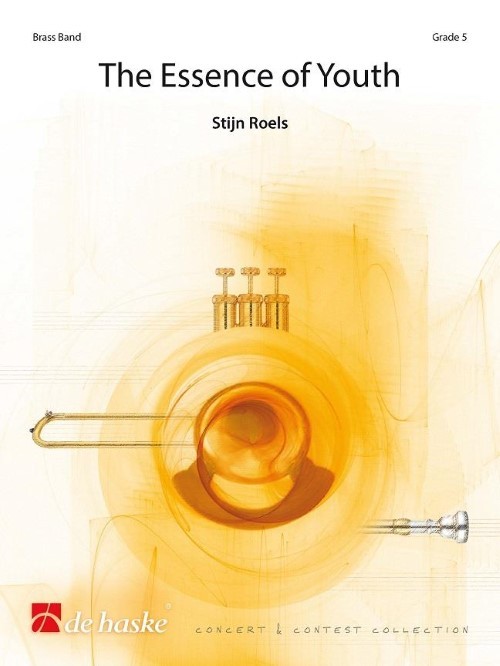
The Essence of Youth (Brass Band - Score and Parts) - Roels, Stijn
In The Essence of Youth the composer gives an insight into childhood and youth -- inspired by his own daughter. The opening of sparking rhythms, dynamic contrasts and changes of time signature paint a vivid picture of the unpredictability of children. The first and second movements recount the love -- and also tension and the worries -- in the adult-child bond, through dissonant harmonies but also pretty melodies. The fugue-like ending leads to a final splendid chorale: a picture of proud parents with their child! Duration: 9.45
Estimated dispatch 7-14 working days
-
 £183.99
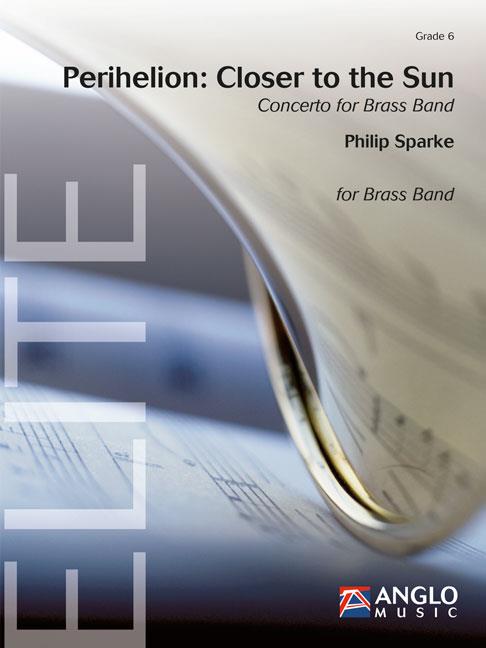
Perihelion: Closer to the Sun (Brass Band - Score and Parts) - Sparke, Philip
Perihelion was commissioned by the Cory Band as their own-choice piece for the 2013 European Brass Band Championships, held in Oslo, Norway. Winning the set piece section of the contest and coming second to Eikanger-Bjorsvik Musikklag with their own choice selection, Cory went on to become European Champions for the fifth time. Cory MD Philip Harper had asked for a 'Concerto for Band' to fully exploit his outstanding band of virtuosi, and composer Philip Sparke created a one-movement work with contiguous sections, first featuring horns and flugel, then trombones followed by cornets and a slower central section for percussion and baritones, euphonium and basses. The piece is abstract in nature, without a specific programme, and the title merely reflects the fact that the piece was begun on January 2nd 2013, the day of Earth's perihelion - the point in its orbit when it is closest to the sun. It could also be argued that the piece weaves between moments of brilliant optimism and dark shadow, both of which can be the result of bright sunshine.Duration: 19:15
Estimated dispatch 7-14 working days
-
 £76.99
The Universal Band Collection (Brass Band - Score and Parts) - De Haan, Jacob
A collection of 5 short works in pop style which can be performed by any kind of compilation. The titles can be presented on the programme as separate works but the Universal Band Collection can also be performed as a complete suite. From a didactic point of view it is a suitable work to teach musicians something about the structure in music. For this purpose not only the big structure but also the small structure was kept very clear.Western Girl: A girl from the west of the USA rides her horse across the prairie, dreaming of her future. The rough structure: introduction - theme in a blues scale - the same thing in a different instrumentation - finale.Just a ballad: A ballad in pop style with a rough A-B-A form. First there is the introduction of the main theme (A), then follows a tenor melody in minor with a rhythmical reference to the main theme (B). Finally there is the main melody, performed tutti with a different rhythm in the drums (A').Play the Game: An English saying meaning: play fairly. Playful music in up-tempo with a wink to China, where almost all games are manufactured nowadays. Once again an A-B-A structure here.San Diego: A Mexican fugitive enjoys his freedom in America but also remembers his place of birth with melancholy. A sad minor melody with a straight trendy beat appears twice. The second time it has a slightly different instrumentation, in which the muted trumpets represent the Mexican feeling.Final Dance: Eventually there is a dance with an introduction in renaissance style, followed by a fast dance in rock style. All this composed in a classical song structure: introduction, verse, bridge, chorus, shortened verse, bridge, chorus, chorus.Duration: 10:30
Estimated dispatch 7-14 working days
-
 £29.50
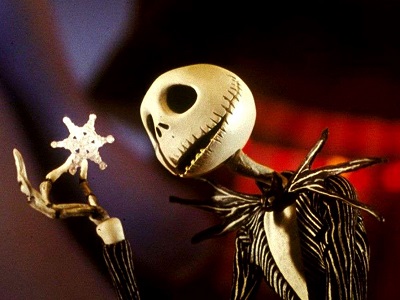
What's This? - Danny Elfman - Naomi Styles
Tim Burton's Nightmare Before Christmas needs little introduction, as it is regularly hailed of one of the greatest Christmas films of all time. The originality of stop motion animation at a time where many were turning to computer animations, helped the movie on its way to great critical acclaim and financial success. The score for the movie was provided by Danny Elfman (of Simpsons & Batman fame) who also provided the singing voice for the character, Jack. Now, for the first time ever, the energetic and memorable track, 'What's This', is now available for band. The film and soundtrack finds favour with audiences of all ages and is a must for bands looking for something different to inject some life into their Christmas concerts this year. For Christmas 2020, we have made backing tracks of this title for you to download. These can be used either for personal playback use, or to create a virtual performance of the piece with your full band. To download the backing track, please RIGHT CLICK HERE & Save As .
In Stock: Estimated dispatch 1-3 working days
-
 £24.95
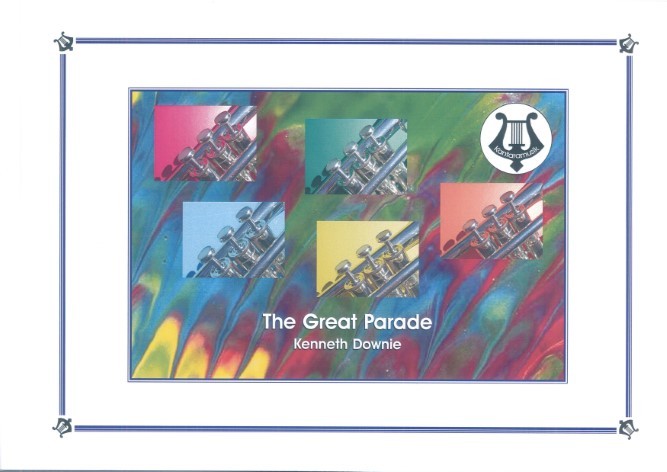
The Great Parade (Brass Band - Score and Parts) - Downie, Kenneth
This piece is intended to be a bright, sparkling concert march and features the spiritual 'I got a robe'. The quick tempo is to encourage a performance of sparkle and wit and, at the same time, to reflect the mood of celebration in the spiritual. The song was sung by slaves to encourage them to remember that, although they might be deprived of even basic items like robes in their present plight, one day, when they get to heaven, 'all God's children got a robe'.
Estimated dispatch 7-14 working days
-
£12.50
The Great Parade (Brass Band - Score Only) - Downie, Kenneth
This piece is intended to be a bright, sparkling concert march and features the spiritual 'I got a robe'. The quick tempo is to encourage a performance of sparkle and wit and, at the same time, to reflect the mood of celebration in the spiritual. The song was sung by slaves to encourage them to remember that, although they might be deprived of even basic items like robes in their present plight, one day, when they get to heaven, 'all God's children got a robe'.
Estimated dispatch 7-14 working days
-
£24.50
Fakenham Fair - Traditional - A. Cook
The origins of the song Fakenham Fair are somewhat obscure. It was collected by Peter Bellamy, who performed it unaccompanied on his first solo LP, "Mainly Norfolk" in 1968, giving credit to a Peter Bullen of Norwich from whom he had learned it, Bullen in turn giving credit to his grandfather. But beyond that, other than it definitely being a Norfolk folk song, the rest is a mystery.Over the years, Fakenham Fair has become a firm favourite among folk audiences, probably the most famous version being the 2008 recording by folk supergroup 'Bellowhead' which this setting for brass band pays tribute to. A bright, quirky, and bouncy 5:4/10:8 waltz, the band parts dance back and forth from simple time to compound time and back again, giving a constant flow that somehow always feels natural despite the irregular rhythm... but which will also keep your audience guessing where the beat will land next! With solos and features for principal chairs around the band, nobody is left out of the fun. Engaging to listen to and even more so to play, Fakenham Fair is a perfect light concert item for the band that likes to show off their rhythmic and lyrical sides at the same time.
In Stock: Estimated dispatch 1-3 working days
-
 £29.95
In The Firing Line (Brass Band - Score and Parts) - Coles, Bramwell
Bramwell Coles wrote over 50 marches and so has been dubbed The Salvation Army's 'march king'! First published in 1925, this march has stood the test of time and remains a favourite.
Estimated dispatch 7-14 working days
-
£14.95
In The Firing Line (Brass Band - Score only) - Coles, Bramwell
Bramwell Coles wrote over 50 marches and so has been dubbed The Salvation Army's 'march king'! First published in 1925, this march has stood the test of time and remains a favourite.
Estimated dispatch 7-14 working days
-
 £24.95
When the Saints Go Marching In (Brass Band Set) - Siebert, Edrich
This is the first piece ever published by Studio Music. Expertly arranged by Edrich Siebert, this work has stood the test of time. A great standard for any library.
Estimated dispatch 7-14 working days
 View Music
 Listen to MP3