
Results
-
£125.00
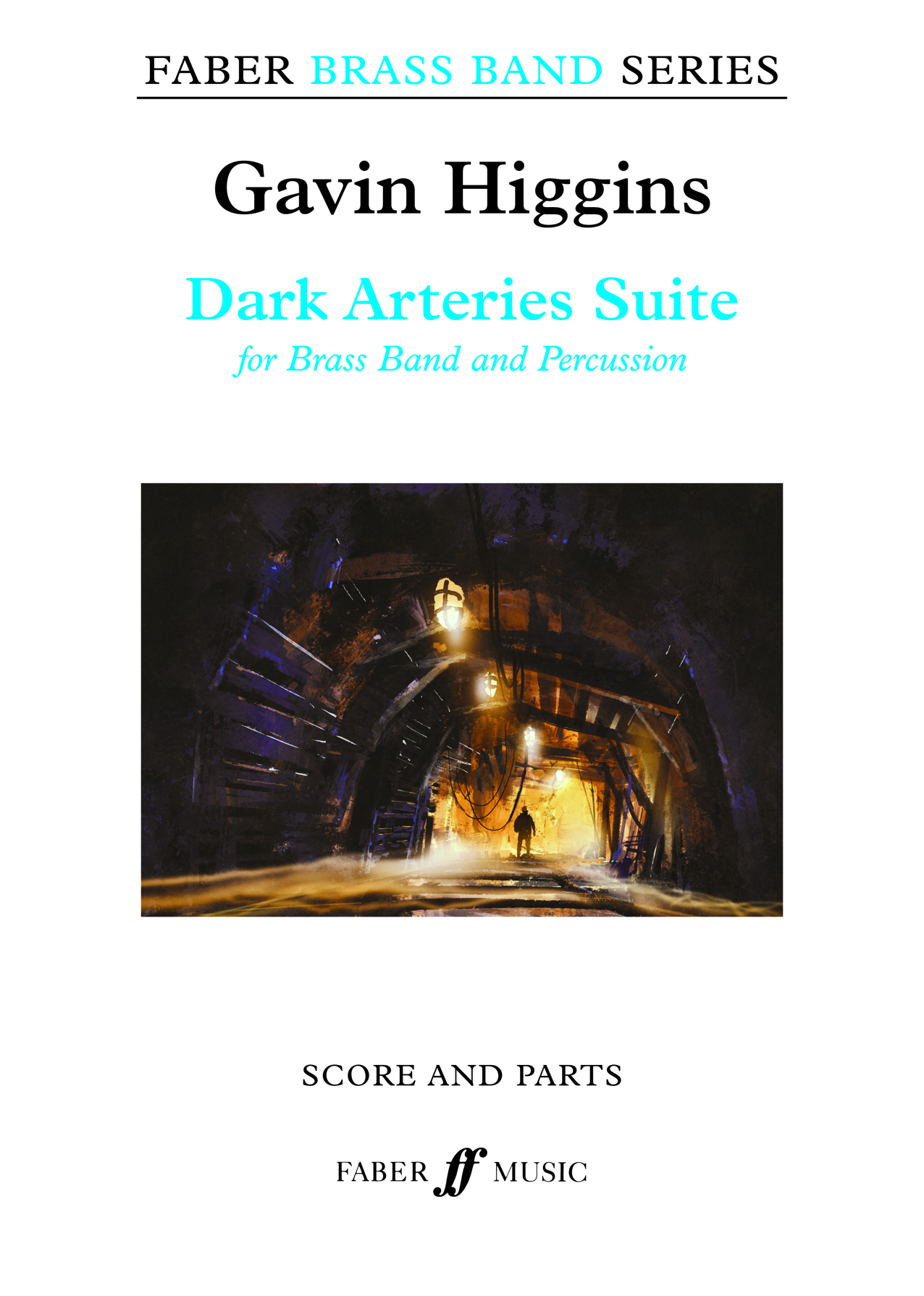
Dark Arteries Suite - Gavin Higgins
Dark Arteries was commissioned by Rambert Dance Company and first performed in May 2015 with the Tredegar Town Band sharing the stage with Rambert dancers. Dark Arteries is a personal and at times highly wrought response to the Miners Strike and its aftermath. It is in three movements, the first and last are expansive, with widely contrasting sound worlds, from dark, brooding melodies and the haunting sounds of solo flugel horn to wild syncopations on cornets, suggestive of an imposing, but often bleak mining landscape.In 2016 Higgins re-worked Dark Arteries into a virtuoso concert suite, which captures the essence of the work in three connected movements.Dark Arteries Suite was premiered by the National Youth Brass Band of Great Britain, conducted by Bramwell Tovey at the Barbican Centre, London, 22 April 2017.
In Stock: Estimated dispatch 1-3 working days
-
£50.00
Whirlegigg - Kenneth Hesketh
'Whirlegigg' is the middle English word for a contraption that continuously spins. A great fascination with many inventors of the medieval period was to develop a perpetual motion machine constantly turning and giving off energy. This idea is particularly apt for this piece. A simple ternary structure gives ample opportunity for both boisterous and reflective material with gyrating accompaniment figures never far away. The machine almost stops near the end, but finally musters one last burst of excitement and energy to bring the work to its close.Brass Band Grade 5: 1st SectionDuration: 5 minutes.Whirlegigg has been recorded by the Leyland Band, conducted by Jason Katsikaris, and is available on the CD Penlee.
In Stock: Estimated dispatch 1-3 working days
-
 £60.00
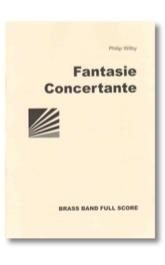
Fantasie Concertante (Score only) - Philip Wilby
This exciting new concerto is a welcome addition to the repertoire of french and tenor horn players alike. Like the 18th-Century Serenade form there are five movements, arranged symmetrically around a slow movement - Soliloquy - which separates movements entitled Burlesque (two) and Valse Caprice (three) respectively. The first and last movements share common material of a more symphonic stature, and the concerto ends with a brisk fugato. The solo horn is (in the band version) accompanied by a quintet of solo players (two cornets, euphonium, trombone, and tuba) who provide the lion's share of the counterpoint and contrast with the main body of musicians who provide musical punctuation in the more sonorous tutti sections. The first movement, Don Quixote's Dream, contains references to Cervantes' famous hero, the Spanish nature of his stories, and the ambling gait of his horseback adventures.
Estimated dispatch 7-9 working days
-
 £74.00
Fantasie Concertante (Parts only) - Philip Wilby
This exciting new concerto is a welcome addition to the repertoire of french and tenor horn players alike. Like the 18th-Century Serenade form there are five movements, arranged symmetrically around a slow movement - Soliloquy - which separates movements entitled Burlesque (two) and Valse Caprice (three) respectively. The first and last movements share common material of a more symphonic stature, and the concerto ends with a brisk fugato. The solo horn is (in the band version) accompanied by a quintet of solo players (two cornets, euphonium, trombone, and tuba) who provide the lion's share of the counterpoint and contrast with the main body of musicians who provide musical punctuation in the more sonorous tutti sections. The first movement, Don Quixote's Dream, contains references to Cervantes' famous hero, the Spanish nature of his stories, and the ambling gait of his horseback adventures.
Estimated dispatch 7-9 working days
-
£50.00
Peniel - Ball, E
This work is not intended to actually portray in music the events described in Genesis, Chapter 32, although the varying moods were evoked by a re-reading of the story. However, the following sequence of ideas may sometimes prove useful in presenting the work to audiences.Under Divine compulsion, Jacob sets out with Family, retainers, servants and cattle, to return to his homeland (Introduction and Sections 1 - 3).He is brought news of possible attack by his estranged brother Esau (Sections 4 - 6).Jacob seeks guidance in a lone vigil and, wrestling with a divine visitor, at last wins acceptance at the place he names Peniel--The Prince of God. He goes forward with his people and becomes reconciled with Esau (Section 12 to the end).Eric BallDuration 9 mins
In Stock: Estimated dispatch 1-3 working days
-
 £93.00
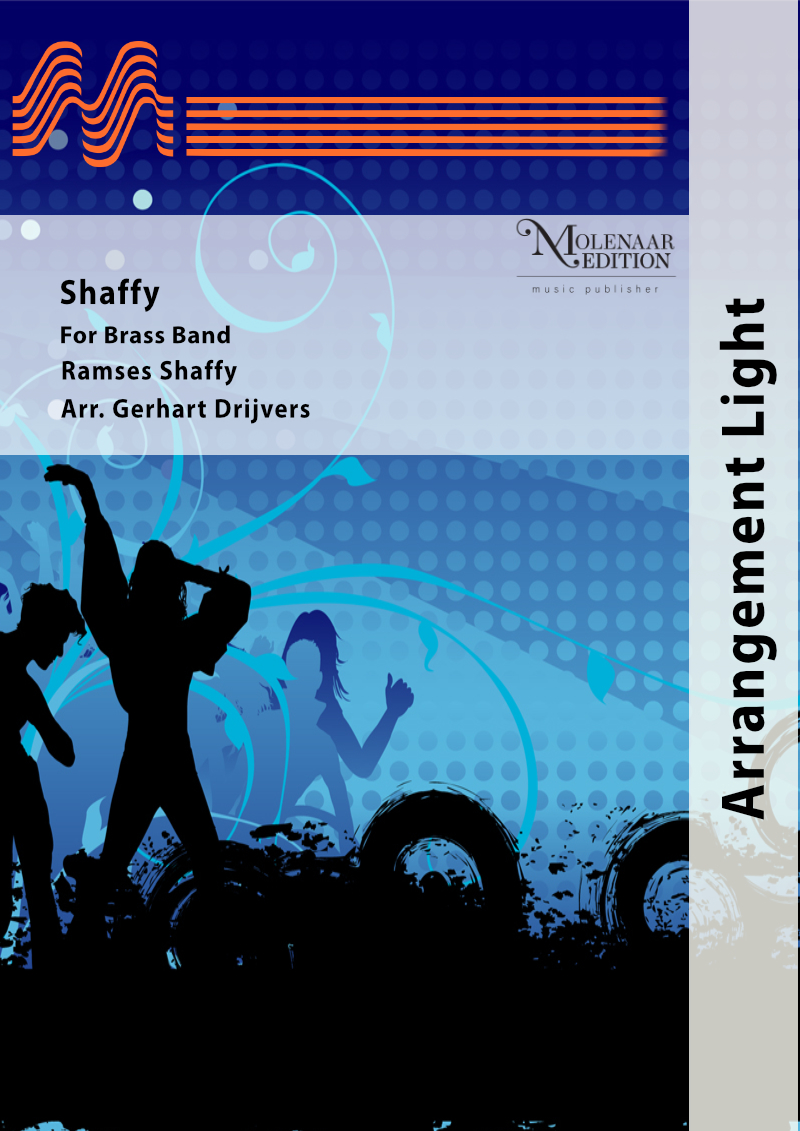
Shaffy - Ramses Shaffy/Gerhart Drijvers
Ramses Shaffy is one of the greatest and most popular singers The Netherlands have known in the 20th century but he had never been honoured with any arrangement for wind band of his songs. At last, the present medley 'Shaffy' fills this gap. With: Shaffy Cantate, We zullen doorgaan, Pastorale, Sammy, Zing - Vecht - Huil - Bid - Lach - Werk en Bewonder.
Estimated dispatch 10-14 working days
-
£79.00
Sovnlaus - Haug en, Haugen & Aadland - Idar Torskangerpoll
Hellbillies is a Norwegian rock band founded in 1990 in the small village of Al, Hallingdal. They are now among the most popular bands in Norway with 16 CD-releases. They are awarded the Norwegian "Spellemannsprisen" (an equivalent to Grammy) several times."Sovnlaus" ("Sleepless") is the title track from their last record album released in 2016. It's a typical powerful rock song and should be played with power and precision.
Estimated dispatch 7-14 working days
-
£67.00
Sovnlaus - Haugen-Haugen-Aadland - Idar Torskangerpoll
Hellbillies is a Norwegian rock band founded in 1990 in the small village of Al, Hallingdal. They are now among the most popular bands in Norway with 16 CD-releases. They are awarded the Norwegian "Spellemannsprisen" (an equivalent to Grammy) several times."Sovnlaus" ("Sleepless") is the title track from their last record album released in 2016. It's a typical powerful rock song and should be played with power and precision.
Estimated dispatch 7-14 working days
-
£34.95
GYMNOPEDIE No.1 (Brass Band Set) - Satie - Brian Bowen
This is a transcription for brass band of the first, and most well-known, of Erik Satie's three Gymnopedies for piano which were composed in 1888. All three are similar melodically and pianistically. However, the first and last are more well-known, partly due to the later orchestrations by Debussy. Tenor Horn and Eb Bass mutes are requested by the arranger and will enhance the transcription if available.
Estimated dispatch 7-14 working days
-
 £34.95
Judd: Gymnopedie
This is a transcription for brass band of the first, and most well-known, of Erik Satie's three Gymnopedies for piano which were composed in 1888. All three are similar melodically and pianistically. However, the first and last are more well-known, partly due to the later orchestrations by Debussy. Tenor Horn and Eb Bass mutes are requested by the arranger and will enhance the transcription if available.
Estimated dispatch 7-14 working days
 View Music