
Results
-
 £73.60
West of the Mississippi - Dean Jones
There's always a sense of adventure about America that makes it a really exciting topic to write about. The 3 States that sprang to mind in bringing a piece of music together were: California, Hawaii and Texas.We start out our American journey on the West Coast....California has provided much in the way of film and music for over 100 years. Combining this sense of free expression with the 'Surfing' culture, this initial section of the piece has an easy-going, fun feel in a pop idiom. Maybe wearing some shades might be quite a good look for this section!We move even further West now to the island of Hawaii where the free and easy goes onto a new level! The use of chromatics is a feature of Hawaiian melodies and has a feel a 'sliding' between notes that somehow sums up this feel of living on a tropical island! Have some fun with this section and have a Hawaiian garland to wear!Back into the USA mainland, and the fabulous state of Texas! Here we have the concept of the old fashioned rodeo and the 'Wild West'. Even today, the culture of horses, cowboys and tales of adventure are celebrated in places such as Fort Worth. The music captures some of these themes and has a fun and enjoyment...some get your Cowboy hats at the ready and enjoy the finale!
Estimated dispatch 5-14 working days
-
 £60.99
The Swan on the Hill - Jan Van der Roost
This stately opening work begins in the low register with a broad main theme from the low brass immediately setting the tone. Gradually other sections and registers enter and despite retaining a majestic character the rhythmic element becomes more active. This work makes truly creative use of sound, without great virtuosity or complexity, but maintains a good balance between static and dynamic elements.
Estimated dispatch 5-14 working days
-
 £52.70
The Goodbye - Paul Voet
We sail the ocean with stubborn, hardworking but weak hearted Flemish fishermen to the Northern parts of the Atlantic. A sailor is leaving his wife or girlfriend not knowing if he is going to come back soon. Leaving for good fishing grounds around Iceland. This sad song(the first line of the text says; The wind that blows from the east, my love, is not going to blow for ever) is a solo for flugelhorn accompanied by the whole lower brass section. In a certain way of counterpoint tenorhorns, baritones and euphoniums are woven around thesoloist. The warmth from these saxhorn section is coloured by some chords from trombones and a quite virtuosi marimba line.
Estimated dispatch 5-14 working days
-
 £127.30
The Incredibles - Michael Giacchino - Lars Erik Gudim
Michael Giacchino (1967) has become one of the great composers scoring for Film, Television and Video Games. Music in the movies "Star Trek", "Ratatoille", "Mission Impossible III", "Sin" and "The Incredibles" has come from his hand, but even more known should be the music from the Television shows "Alias" and "Lost". In "The Incredibles", music with high energy and a lot of wind players fits well. To play this music with a wind band takes good care of this intentions. The super heroes are matched with music in all dimensions. This is well taken care of in the arrangement by Lars Erik Gudim.
Estimated dispatch 5-14 working days
-
 £115.60
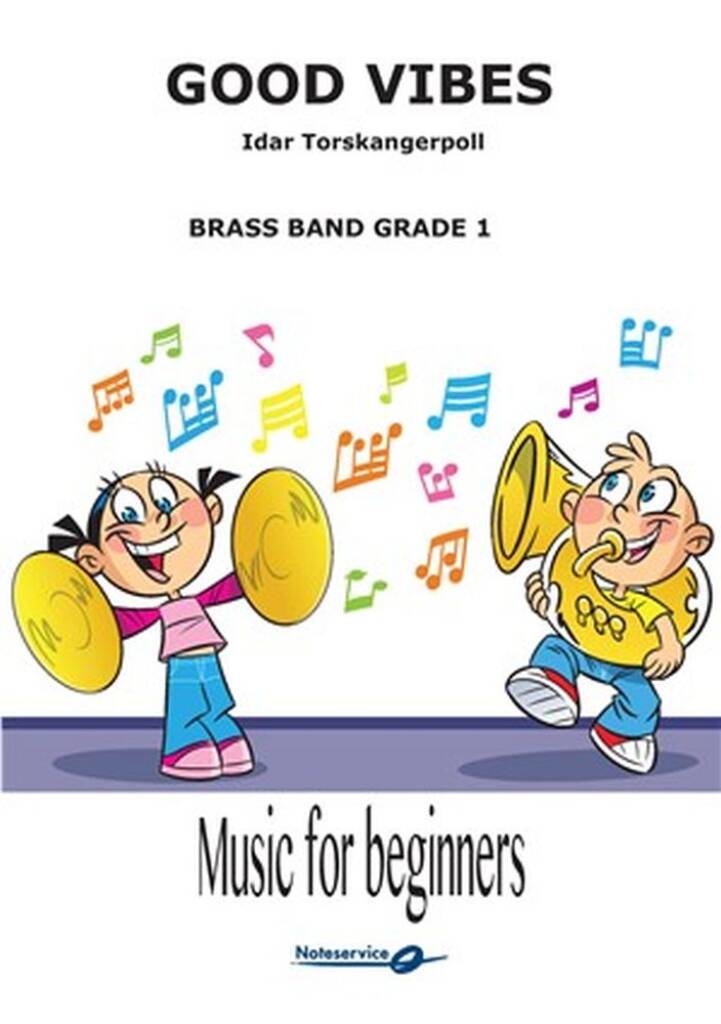
Good Vibes - Idar Torskangerpoll
This piece for beginning band was written as a commission for Norsk Noteservice to the "Music for Beginners" serie.The piece is a feelgood item with limited range for all instruments, suitable for young players. The rhythmic structure is repetitive and polyphony is often in the "call and response" form. Hence it is an easy piece to read and play.The refrain is rhythmically unison making it easy for all to play syncopated rhythms.
Estimated dispatch 5-14 working days
-
 £72.70
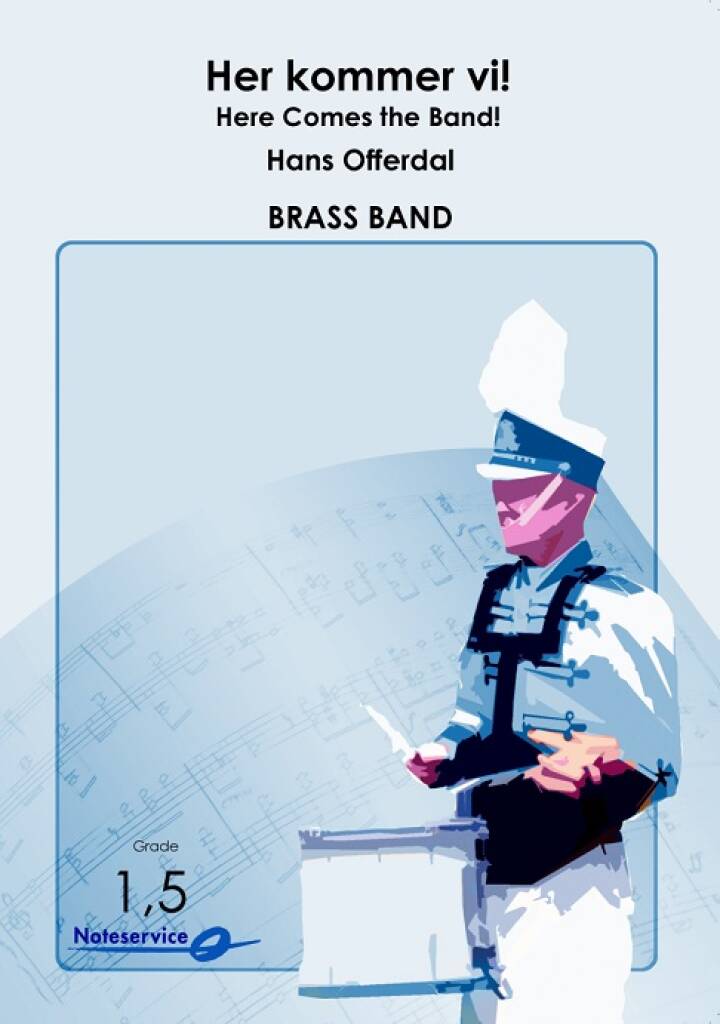
Here Comes the band! - Hans Offerdal
Hans Offerdal wrote this march for Furuset skoles musikkorps and Haugen skolekorps for the 17th of May 2007 and here it is now finally in a version for Brass! It has a simple texture that you will have sounding good with not too muchpractice. During rehearsal one should stress the melodic aspect of each part, and that all parts are just as important. Because of its title and duration of appx. two minutes, this march is perfect for presenting the band at various arrangements youtake part in.
Estimated dispatch 5-14 working days
-
£60.99
The Challenger - Bertrand Moren
As the title suggests, this piece would be a good venture for those who like to tackle challenges - whether they are life's grand challenges or somewhat simpler tasks such as performing this sonorous, impressive and demanding march. The technical and rhythmical effects contribute to this bravura work which will keep both the audience and the musicians spellbound.
Estimated dispatch 5-14 working days
-
 £139.00
The Jazz Police - Gordon Goodwin - Reid Gilje
This is really a powerhouse of a piece! Hard-driving rock'n roll at a high tempo with the Jazz Police at the heels... Please note the dynamics. Tempo and good articulation is a very big part of the energy of this piece. Fortissimo first appears at bar 113. A useful tip: It's possible to practice this one also at lower dynamic levels.
Estimated dispatch 5-14 working days
-
 £39.99
Fanfare for the Best - Thomas Doss
Fanfare for the Best is a short composition inspired by best friends and memories of good times in pleasant company. I wrote this piece for the 50th birthday of my friend Otto M. Schwarz.
Estimated dispatch 5-14 working days
-
£54.99
The Seminar Hymn - Jacob de Haan
This flexible piece in 4 parts was written by Jacob de Haan as a 'theme tune' for the Yamaha teaching method seminars in Germany. The solemn and dignified hymn-like melody will add a touch ofgrandeur to any performance. Its simplicity and rich harmonies suggest overtones of Land of Hope and Glory and this would be a good item to bring a deep and uplifting sense of occasion to your concert.
Estimated dispatch 5-14 working days
 View Music