
Results
-
 £59.95
The Pacemakers (Brass Band - Score and Parts) - Gregson, Edward
Concert OvertureThis work was commissioned in 1970 for a brass band championship sponsored by WD and HO Wills, whose slogan was The Pacemakers. The title was added after the work was finished and has nothing to do with the content or character of the piece which, as Paul Hindmarsh remarks, is 'arguably the most satisfying in purely musical terms of all of Gregson's early compositions for band'.The Overture is cast in a sonata form exposition, with a slow central section, giving the opportunity for expressive cornet and euphonium solos. The final section begins with a strict fugal exposition which leads to a recapitulation of the opening material and a powerful climax built on the opening pyramid of fifths, which remains unresolved.Duration: 11:00
Estimated dispatch 7-14 working days
-
 £35.00
Fairy Garden, The (from Mother Goose Suite) (Brass Band - Score and Parts) - Ravel, Maurice - Littlemore, Phillip
Ravel wrote his five short piano pieces entitled?Ma M?re l'Oye?(Mother Goose) for two young children, Mimie and Jean Godeski in 1910. The suite invites us to the enchanted world of childhood through these five atmospheric tales. The final part of Ravel's suite is a grand finale, although where Ravel got his inspiration for the fairy garden is unknown. Whatever its origin, it certainly is a delightful piece of music - slow in tempo, quiet to start, with rich harmonies and delicate solos, all leading to a tumultuous climax.?Duration: 3:00
Estimated dispatch 7-14 working days
-
 £50.90
GOING THE DISTANCE - THE FINAL BELL (from Rocky 1) (Brass Band) - Conti, Bill - Barry, Darrol
Medium
Estimated dispatch 7-14 working days
-
 £56.00
The Final Farewell (Brass Band - Score and Parts) - Ridgley, Thomas
Slightly reduced Brass Band instrumentation (no rep cornet, no 2nd horn, no 2nd trombone part).
Estimated dispatch 7-14 working days
-
£29.50
Celebration - Lawrence Killian
Celebration for Brass Band is a suite of music in three movements.The piece's overall aim is to provide both the players and the audience with a positively uplifting and fun musical showcase. The listener is taken on a journey through the various moods and feelings associated with three types of celebration: birthday, anniversary, and jubilee. The music is generally light in character, a subtle blend of the familiar and not-so-familiar, with a few 'cheesy bits' to make you smile in between.The first movement is 'Birthday Treat', a light-hearted look at the fun and games surrounding a birthday party for any age. Opportunity is given within the music for the players and audience to join in and echo the sounds of a live party with exclamations of: "Happy Birthday!", "Congratulations!", "Well done!".The second movement in the suite is 'Anniversary', a touching musical tableau recalling memories of bygone days.The final movement, 'Jubilee', is precisely that. Full of jubilation, energy, and carnival, the music will engage the listener from the start. Listen out for musical snippets recalling the musical moods heard earlier in the first two movements.
In Stock: Estimated dispatch 1-3 working days
-
£24.50
Good Christian Men Rejoice - Traditional - David Holling
Good Christian Men, Rejoice (or In Dulce Jubilo) was of course made famous by Mike Oldfield back in 1975 and is possibly one of the most played Christmas tunes there is. In this arrangement David Holling treats us to a Rock/Jazz fusion style in the opening section before settling into a calm, lush cornet solo of the Sussex Carol with jazz-inspired harmonies and orchestrations. The final section brings back the original theme in a Lovatt-Cooper style big finish with all-guns-blazing to the end! This arrangement would suit all bands from Section 3 upwards (not excluding ambitious 4th section bands too!) and works perfectly as a good opener or finisher to a Christmas concert.
In Stock: Estimated dispatch 1-3 working days
-
 £24.50
Praise My Soul - John Goss - Andi Cook
This special arrangement of the well-known hymn tune was crafted by arranger Andi Cook for his recent wedding, to be played by an all-star group of players made up of instrumentalists from Grimethorpe, Black Dyke, Hepworth, Faireys & EYMS. Whilst originally scored for a congregation to sing along to, with optional organ part (included in this publication), Andi had in mind that no one really likes to sing at weddings, and so the final verse was written to wow the congregation and show his wife's family the awe-inspiring sound a brass band can generate. Since then, this arrangement has been used several times and has found favor with adjudicators, winning best hymn tune at the Morley Contest and the Brighouse Contest this year. The work is a perfect addition to any bands repertoire, working perfectly in all manners of occasions.
In Stock: Estimated dispatch 1-3 working days
-
 £29.50
Sing - Andrew Lloyd Webber & Gary Barlow - Dave Houghton
When it was announced that prolific composer Sir Andrew Lloyd Webber and hit song writer Gary Barlow were to collaborate on a project to commemorate the Diamond Jubilee of Queen Elizabeth II, the public were left in little doubt that the music would be an instant hit. We were not disappointed! Gary Barlow travelled across the Commonwealth searching for instruments and voices to perform on the single and the 'Military Wives Choir' were also included in the final edition. Now available for the first time for brass band in an arrangement by Dave Houghton, this moving work projects the 'feel good' factor to your audience and is a perfect addition to a programme on both the bandstand and concert hall. A must for every bands library.
In Stock: Estimated dispatch 1-3 working days
-
 £37.50
A Small Christmas Suite - Jonathan Mead
This fresh new Christmas Suite is an upbeat 'festive suite' from the pen of Welsh Composer, Jonathan Mead. It features three well known carols that have been given an overhaul concerts this year. The three movements can be played as one continuous suite, or separated and performed individually if time doesn't permit for the full suite to be performed. The first Movement features a 'jazzed up' version of O Come All Ye Faithful. Movement 2 allows the bands soloists to shine if a stunningly reflective setting of See Amid the Winter's Snow. The final movement sees Silent Night in a way you've never heard before and has all the 'razzmatazz', and big finish that your concert needs. A must for your band and audiences this Christmas Season.
In Stock: Estimated dispatch 1-3 working days
-
 £24.50
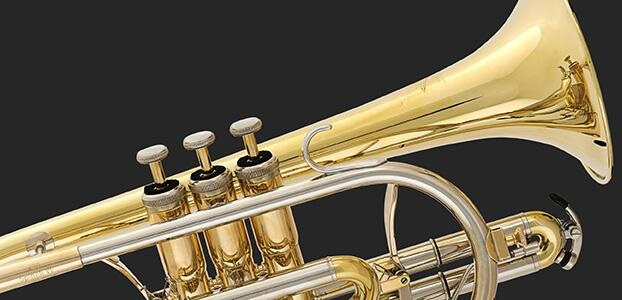
Kathleen Mavourneen - Frederick Crouch - Andi Cook
Composed by Frederick Crouch with lyrics by Marion Crawford, this easy listening piece was popular during the American Civil War years. The term "Mavourneen" is derived from Irish Gaelic "My Beloved.". Now skilfully arranged as a cornet solo by Andi Cook, the work is open to soloists of most standards and was recently recorded on the final James Shepard Versatile Brass CD, Legacy which has increased it's popularity again within the Brass Band movement.
In Stock: Estimated dispatch 1-3 working days
 View Music
 Listen to MP3