
Results
-
 £50.90
CELEBRATION OF CHRISTMAS, A (Brass Band) - Lorriman, Howard
Includes: Hark! The Herald Angels Sing; Christmas Lullaby; Tochter Zion (Zion's Daughter). Grade: Easy/Medium.
Estimated dispatch 7-14 working days
-
£50.90
CHRISTMAS CELEBRATION, A (Brass Band) - Lorriman, Howard
Angels, from the Realms of Glory. Grade: Easy/Medium.
Estimated dispatch 7-14 working days
-
 £54.99
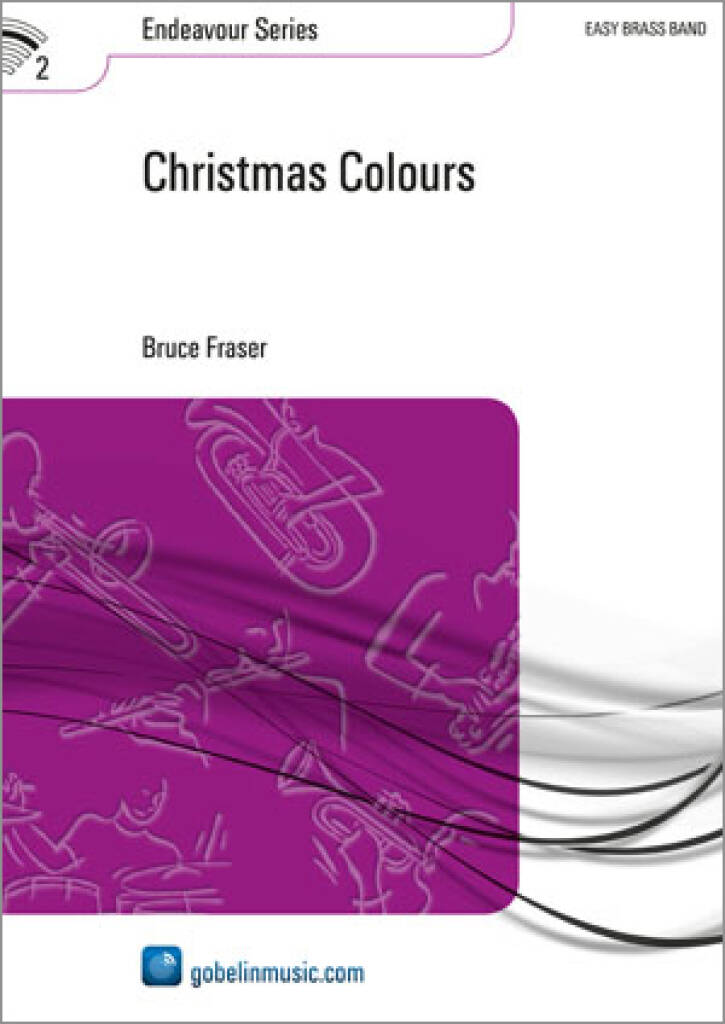
Christmas Colours - Bruce Fraser
'Christmas Colours' is a palette consisting of several Christmas songs. Bruce Fraser has mainly used the colours green (the colour of holly) and white (the colour of snow). This composition begins with the chiming of festive bells - if you listen well, however, you can already hear short fragments from 'The Holly and the Ivy', whose entire melody is finally played, alternated with 'The Sussex Carol'. After this, the pace slows down and the stately 'See amid the Winter Snow' sounds, but parts from 'Jingle Bells' and 'Silent Night' can also be heard. Then, after walking under 'The Holly and the Ivy' once again, the celebration of Christmas may begin!
Estimated dispatch 5-14 working days
-
 £332.70
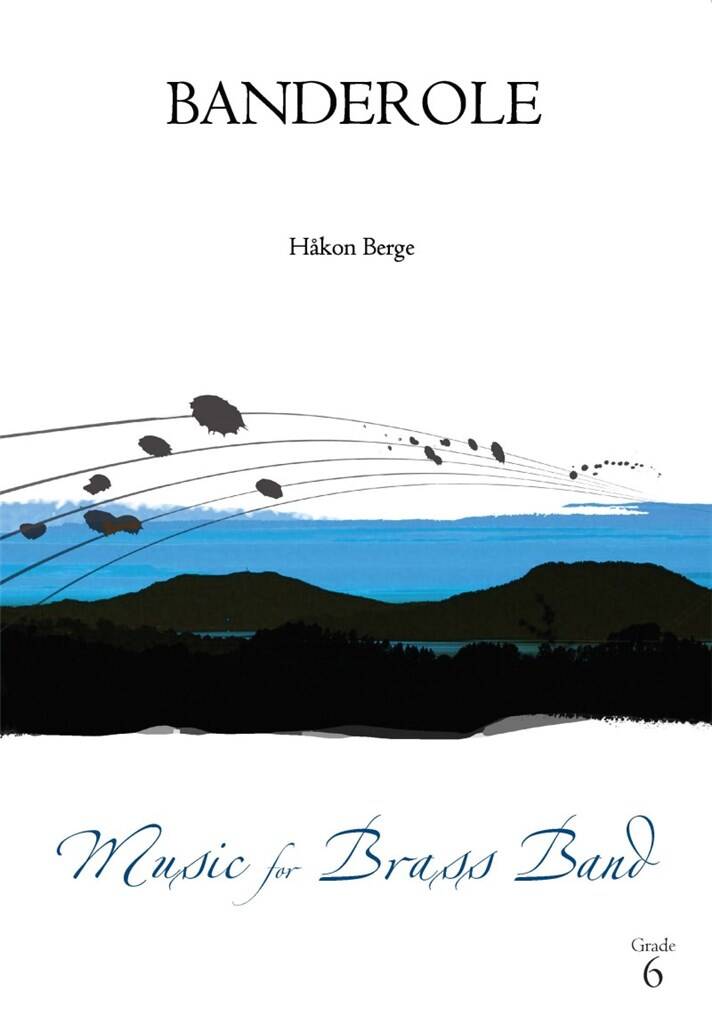
Banderole - Håkon Berge
Hakon Berge (born 22 April 1954 in Stavanger) is a Norwegian composer, conductor, arranger and music administrator, resident in Oslo. He studied at the Rogaland Conservatoire and at the Norwegian State Academy of Music. Berge has composed music for theatrical productions in venues such as the Rogaland Theatre, The National Theater in Bergen and the National Theatre in Oslo. He is also experienced in television production and was responsible for televised opera Gagarin - A Space Travel Opera(1991). He has composed a considerable number of commissions, including the music for the opening of the Alexandria Library, music for the opening of the Nobel Peace Centre in Oslo, and the testpiece Brass Blot (for the European Brass Band Championships in Stavanger in 2008, in which Cory Band from South Wales won the first prize. Berge has also written the music to the documentary musical Byterminalen, also described as a rock opera, which was premiered in May 2008 in connection with the celebration of Stavanger as European City of Culture. Hakon Berge has held a number of offices in the musical life of Norway: he has been chairman both of the Norwegian Society of Composers and of TONO, the Norwegian performing rights organization.
Estimated dispatch 5-14 working days
-
£158.00
Banderole - Hakon Berge
Hakon Berge (born 22 April 1954 in Stavanger) is a Norwegian composer, conductor, arranger and music administrator, resident in Oslo. He studied at the Rogaland Conservatoire and at the Norwegian State Academy of Music.Berge has composed music for theatrical productions in venues such as the Rogaland Theatre, The National Theater in Bergen and the National Theatre in Oslo. He is also experienced in television production and was responsible for televised opera Gagarin - A Space Travel Opera(1991). He has composed a considerable number of commissions, including the music for the opening of the Alexandria Library, music for the opening of the Nobel Peace Centre in Oslo, and the test piece Brass Blot (for the European Brass Band Championships in Stavanger in 2008, in which Cory Band from South Wales won the first prize.Berge has also written the music to the documentary musical Byterminalen, also described as a rock opera, which was premiered in May 2008 in connection with the celebration of Stavanger as European City of Culture.Hakon Berge has held a number of offices in the musical life of Norway: he has been chairman both of the Norwegian Society of Composers and of TONO, the Norwegian performing rights organization.
Estimated dispatch 7-14 working days
-
 £45.00
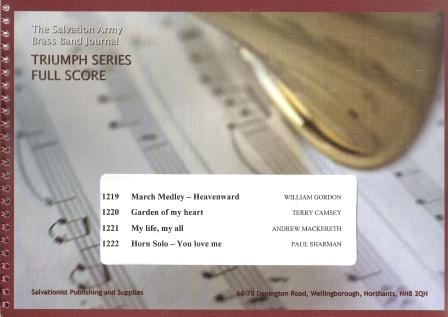
Triumph Series Band Journal November 2011 Numbers 1219-1222
No.1219 March Medley - Heavenward (William Gordon)A variety of songs are used in this up-tempo march medley which potrays the celebration of a life looking forward to an eternity in Heaven. The tunes used are 'When we all get to Heaven', 'When the roll is called up yonder' and 'We shall win'.No.1220 Garden of my heart (Terry Camsey)The publication of this music is, in a small part, a fitting tribute to Major Terry Camsey who was Promoted to Glory in June 2011. The title is taken from the refrain from a much-loved Sidney Cox song; 'Jesus, Jesus, Lily of the valley, Bloom in all thy beauty in the garden of my heart'.No.1221 My life, my all (Andrew Mackereth)This selection attempts to emphasise the personal nature of Christian commitment hence the emphasis given to the words 'my' and 'I' in the songs chosen. The tunes 'Rockingham', 'All I have I am bringing to thee' and 'At thy feet I bow adoring' are included.No.1222 Tenor Horn Solo - You love me (Brian Willetts arr. Paul Sharman)This arrangement was made at the request of David Lynch, Solo Horn player in The International Staff Band. Originally published in April 1993, the song speaks of the fact that, despite the wonder and vastness of God's creation, he still loves each one of us individually.
Estimated dispatch 7-14 working days
-
 £33.62
Novus Vitae (Euphonium Solo with Brass Band) Darren Bartlett
Written for the dedication (Christening) of the composer's two young nephews (Jake and Oliver) to celebrate their birth, this beautiful euphonium solo gives thanks for their safe arrival. Darren Bartlett writes: 'A beautiful melody transpired out of the love we all feel for our families and those who have a faith in God... At the key change the listener needs to feel the excitement and anticipation of new life and long to be a part of the celebration.' To view a video of Anthony Smith performing the version with piano accompaniment version please visit www.youtube.com/watch?v=kM9bUys27OM Sheet music available from: UK - www.brassband.co.uk USA - www.solidbrassmusic.com Difficulty Level: Third Section + Instrumentation: Euphonium Soloist Bb Soprano Cornet Eb Solo Cornet Bb Repiano Cornet Bb 2nd Cornet Bb 3rd Cornet Bb Flugel Horn Bb Solo Horn Eb 1st Horn Eb 2nd Horn Eb 1st Baritone Bb 2nd Baritone Bb 1st Trombone Bb 2nd Trombone Bb Bass Trombone 2nd Euphonium Bb Bass Eb Bass Bb Timpani Drum Kit Tuned Percussion
In Stock: Estimated dispatch 1-3 working days
-
 £59.95
Judd: Skydance - Martin Cordner
Built around Sidney Carter's song 'The Lord of the dance' and largely Celtic in style, Skydance seeks to describe the celebration, energy and exuberance that life in eternity will represent.
Estimated dispatch 7-14 working days
-
£37.50
Triumphalis - Ed Keeley
Triumphalis is a celebration that honours victory - a musical epitaph that reflects on the horrors and sacrifices of WWII. The BBC began prefixing its transmissions to the European Mainland with V for Victory in Morse Code (3 dots and a dash) in 1941, this motif corresponds to the famous opening of Beethoven's 5th Symphony on the timpani - becoming a symbol of resistance and hope. The music continues with a quasi bugle call, followed by a victory fanfare. Then, the music meanders through both major and minor keys symbolising victories and defeats, joy and sorrow, finally culminating in a joyous and flourishing celebration.
In Stock: Estimated dispatch 1-3 working days
-
 £24.50
Hymn For Carers - Gavin Somerset
The Covid pandemic broughtheartbreak to so many, across the globe, yet our NHS Staff & Workers held the front line and gave their all. This year, we celebrate 75 Years of the NHS.This piece gives both players and audiences a chance to reflect on their hard work, bringing together moments ofsadness, interspersed with moments of celebration in a piece of music filled with emotional highs and lows, felt by many of the hospital and care staff who worked tirelessly to keep our people safe. Music has for centuries being used to keep our spirits up and the music ends with a timely nod to Vera Lynn who passed away in 2020. This uplifting work is dedicated to the NHS staff & Care Workers. This work is also available as a digital download
In Stock: Estimated dispatch 1-3 working days
 View Music
 Watch video