
Results
-
 £154.99
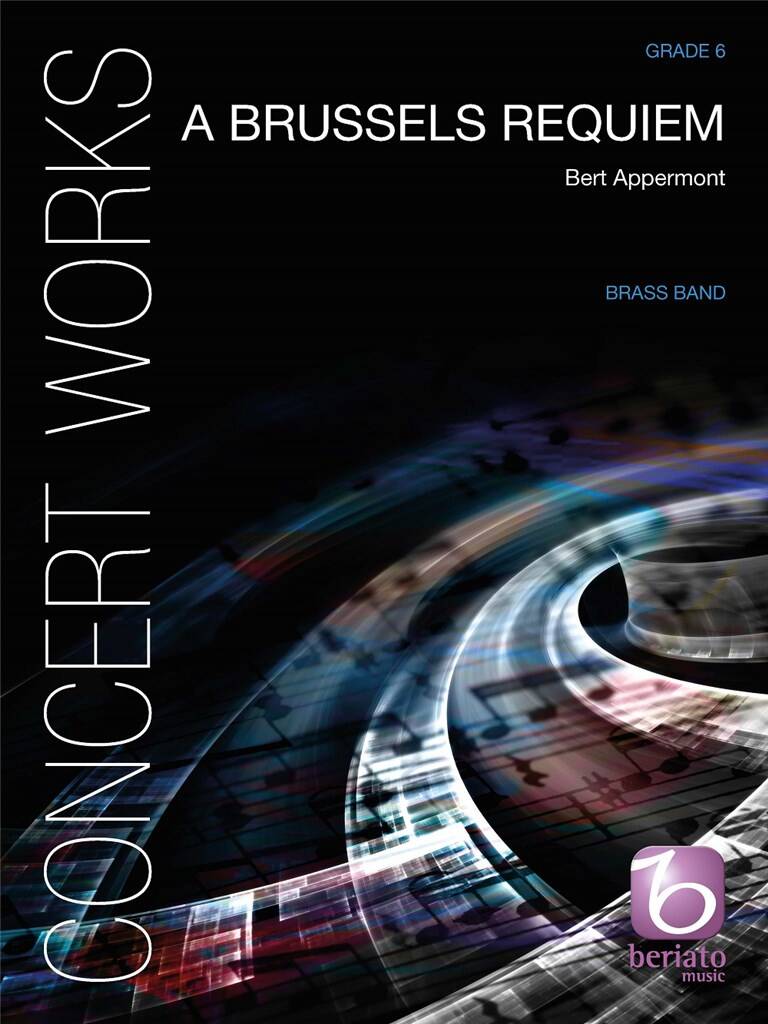
A Brussels Requiem - Bert Appermont
The attacks in Brussels on 22 March 2016 created a shockwave throughout Belgium and the rest of the world. Equally, the attacks in Paris and Nice led to great public indignation, fear and disbelief.What has happened to the western world? Have our cultures grown apart to such an extent that we do not understand each other anymore? Bert Appermont's intention was to voice certain emotions that these acts of terror have caused: particularly fear, grief, anger, and helplessness. He uses the French children's song Au Claire de la Lune as a connecting thread throughout the work.This piece is also about hope and faith in another world, andis meant to pay homage to all victims, resulting in a dignified remembrance. The musical development is presented in four through-composed parts, titled Innocence, In Cold Blood, In Memoriam - We Shall Rise Again and A New Day.This work was commissioned by the Brassband Obersterreich (Brass Band Upper Austria) to be played at the European Brass Band Championships 2017.
Estimated dispatch 5-14 working days
-
 £115.60
Eventyr-Suite - Øystein Sjøvaag Heimdal
Fairytale-Suite is an original work for beginning band. The name of the movements are taken from well-known themes from Norwegian fairytales. The music may not tell a story itselv, but it may be a good base for an exciting fairytale on a concert? This piece gives challenging parts to every player and it's a good choice to showcase the entire band. To the conductor: It's several doublings of the voices. This makes it possible to omit certain instruments or parts. The Drum Set part may be split and played by several players.
Estimated dispatch 5-14 working days
-
 £115.60
God Natt Suite - Hilde Høyvik Dahl
Good Night Suite is written for beginning band and suitable for the youngest musicians. The level of difficulty is at lowest grade and the rhythms are equal in all wind parts. The register on each instrument is also customized to each part. Some easy solos appears in some sections and in Mvt. 4 there are different rhythm in the melody and bass parts. The level of difficulty is the same for all five movements. The movements may of course be played as single pieces. When all movements are mastered it's possible to play the suite as a kind of fairytale with simple dramaturgy or choreography. Maybe the whole band can be dressed in their pajamas?
Estimated dispatch 5-14 working days
-
 £115.60
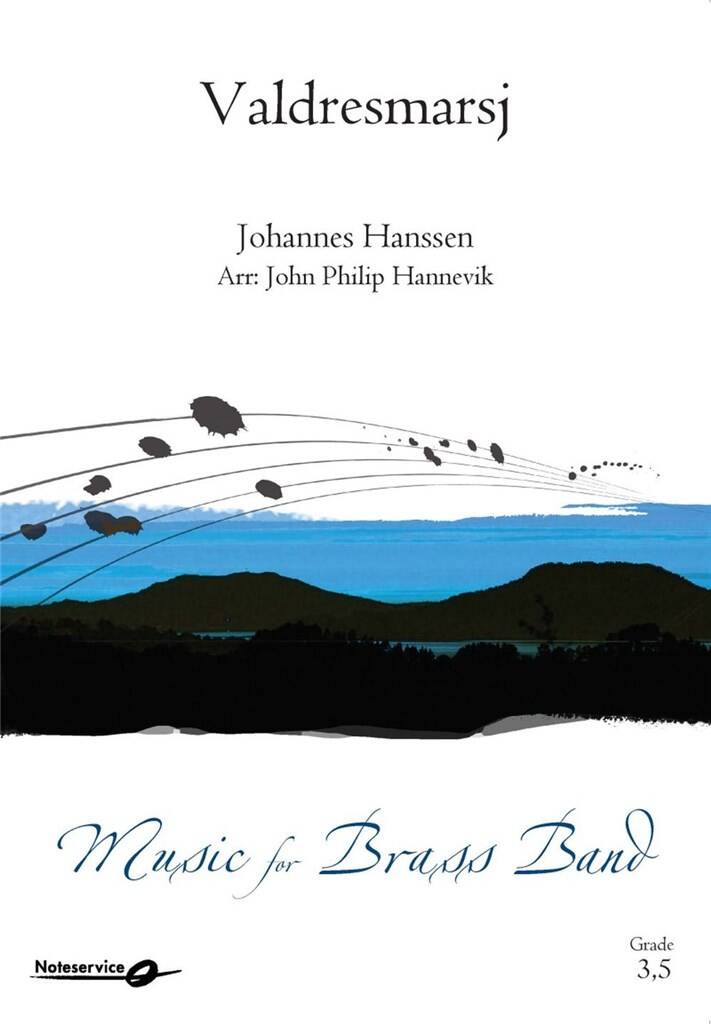
Valdresmarsj - Johannes Hanssen - John Philip Hannevik
Valdres is a mountain region that lies between Oslo and Bergen. Johannes Hanssen (1874-1967) composed the march for the Valdres Battalion between 1901 and 1904, using the Battalions horn-signal combined with a traditional style folk-tune. The march has been named "one of the greatest marches in the world" on many occasions, and it is a firm favourite with it's national flavor and unusual style. This version is similar to Johannes Hanssens revised version for Wind Band from 1954. However, it is interesting to notice that in Hanssens very first version of the march half a century earlier, the first theme was played by the Eb-Cornet, just like in this arrangement for brassband.
Estimated dispatch 5-14 working days
-
 £105.20
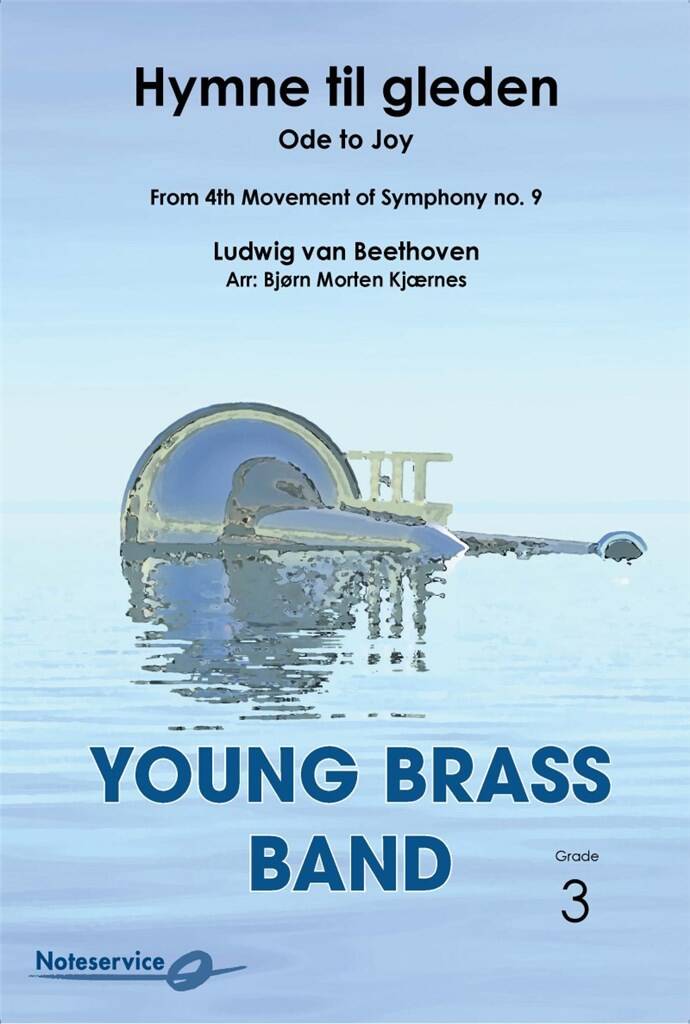
Hymne til gleden - Ludwig van Beethoven - Bjorn Morten Kjaernes
Schiller's text of 1785 was partially used by Beethoven in1824 when he did finish the 4th movement of his 9th Symphony. The melody has later been used in very many contexts. As the anthem of the European Union, a lot of movies (A clockwork Orange, Die Hard, etc.), music to video games, as the anthem of Rhodesia, as rebel song in Chile and by FIFA. Therefore, it can be used in most settings This Young Band arrangement focuses on the main melody. In the original, the B part is repeated in each variation, but to get three variations (out of four), this repetition has been cut. The first variation should be played as soft as possible, but still with a nice sound. Crescendo to forte(f) and going back to pp should be as a surprise.
Estimated dispatch 5-14 working days
-
 £129.99
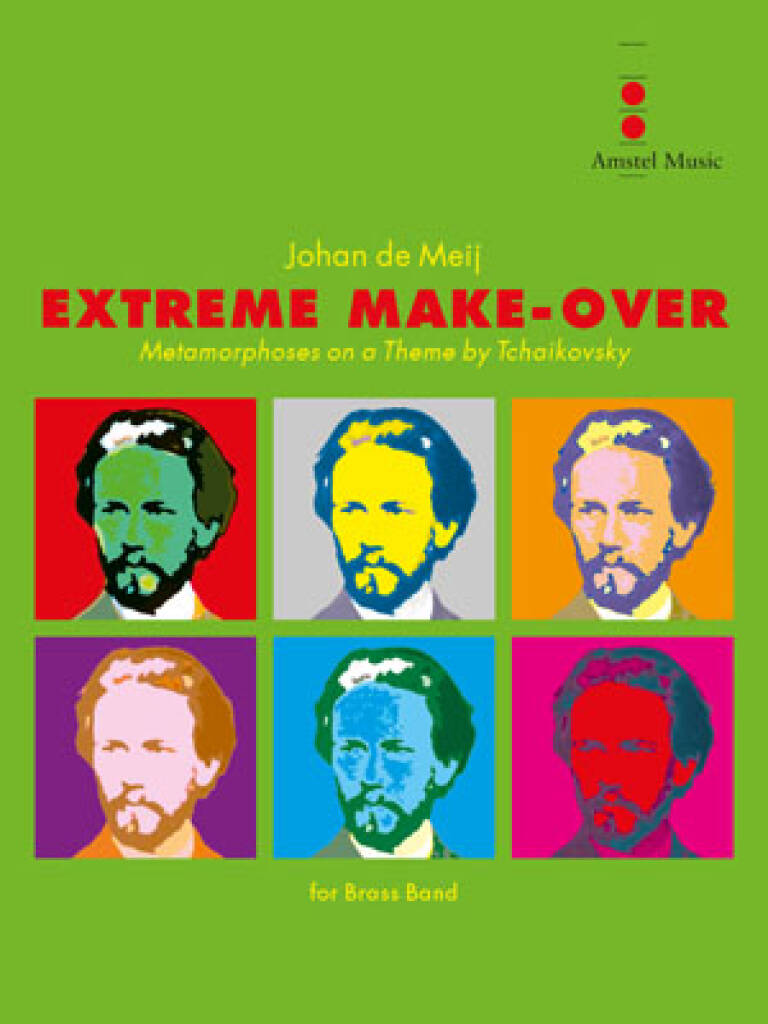
Extreme Make-Over - Johan de Meij
The work, set as the test-piece for the 2005 European Brass Band Championships was inspired by a theme from the second movement of Tchaikovsky's String Quartet No.1 (Andante Cantabile). It consists of a number of musical metamorphoses on the theme and includes several excerpts from Tchaikovsky's Fourth and Sixth Symphonies and Romeo and Juliet. The most unconventional element of the work is instrumentation for ten tuned bottles to be played by members of the Cornet section. This gives the piece an Indonesian Gamelan effect. Why not give your players something to get their teeth into with this impressive major new work.
Estimated dispatch 5-14 working days
-
 £60.99
Fantasia Di Pasqua - Michael Bilkes
Fantasia di Pasqua is a fantasy in which traditional Easter melodies have been used. The work is written for brass band with a separate brass quartet which, since this music is often performed in churches, the composer suggests should be positioned on a gallery. This creates a double choir effect and perfectly fits the Renaissance-like style. Each of the melodies is played in various dance-like cadences that, partly because of the double choir effect, will result in a very lively and original performance.
Estimated dispatch 5-14 working days
-
 £54.99
My First Solo - Jerry B. Bensman
You only have had a couple of months of lessons and already you are to play a solo at your band's annual gala concert. in a big concerthall, on a huge platform and in front of people from your own town or village. Now there's something ! This circumstance inspired Jerry Bensman into writing your very first solo piece with band accompaniment. The solo part may be played by various instruments and was kept very simple indeed. Parts are available in various transpositions and keys.
Estimated dispatch 5-14 working days
-
£73.00
Stealing Apples - Fats Waller - Reid Gilje
"Stealing Apples" is an old swing-tune written by Fats Waller. Performances by Benny Goodman and his big band made the song very popular.In this arrangement for brass band, the mallet percussion is very essential. Mallet Percussion presents the melody from letter A and is also featured as soli-instruments from letter L to P. These parts can alternatively be played as vibraphone solo.Please be aware of the balance at letter A. Horn and Trombones must play piano but well articulated. Letter D must sound sparkling and fresh with articulated and powerful trombones and cornets (using straight-mute).Make shue that the 8th-notes are not played too dotted two bars before letter G. Almost even 8th-notes accentuated on the start of the slur is a good tip.Watch the balance at letter H. This part have to sound homogeniously.The soloistic Soprano Cornet at letter Q must be played in the style of Benny Goodan. The accompaniment must not be too powerful from letter R to S. Best of luck with the performance!
Estimated dispatch 7-14 working days
-
 £99.95
Malcolm Arnold Variations (Score and Parts)
MALCOLM ARNOLD VARIATIONS was commissioned by Philip Biggs and Richard Franklin for the 20th All England Masters International Brass Band Championship held in the Corn Exchange, Cambridge on 25 May 2008. The work is dedicated to Anthony Day, long time carer of Sir Malcolm Arnold in his final years. I first met Malcolm and Anthony in 1990 and remained in constant touch until Malcolm's passing in 2006. Anthony, of course, remains a friend and plays his own role subliminally in this piece. The work is not based on any of Malcolm Arnold's own themes, rather it is a portrait of him (and by association Anthony Day) through my eyes and as a result of my friendship with both parties over some 18 years. If there is any theme as such it is the personalities of the players, the protagonist and his carer placed together by my own efforts coloured and influenced by aspects of Arnold's style and technique without recourse to direct quotation but through allusion and parody. It is of course designed as a brass band test piece but in my eyes is first and foremost a musical challenge. The pyrotechnical elements are there but always secondary to the musical thrust of the work's structure. I have long beforehand submerged myself in Malcolm Arnold's music and ultimately delivered this tribute. Music Directors will be advised to acquaint themselves with the composer's personal music, particularly the film scores, symphonies, concertos and ballets: the solutions towards a successful interpretation of my piece are all in there - and YES, I want, and sanction, this piece to be interpreted, and therein lies the challenge for those of you 'up front'! The challenge for players is that of virtuosity, ensemble and careful attention to where they are individually in relation to their colleagues - a question of balance, taste and insight. With regard to tempi, as is my usual custom, I have indicated all metronome marks with the prefix circa. I would suggest that the fast music is played at these tempos but that the more rubato moments can be allowed some freedom in expression and fluidity of line. With regard to the type of mutes to be employed - this decision I leave to the discretion of players and conductors. Structurally the work is cast as an Introduction, 20 Variations and a Finale. Some variations are self contained, others run into each other as sequences in the same tempo. In other variations, segments are repeated and developed. I could describe the overall concept as a miniature ballet or a condensed film score - there is much drama and character and the repeated elements assist this in driving the action forward. I have deliberately avoided the more extremely dark qualities of Malcolm's own music in this, my celebration of this master-composer, as I have always viewed (and evidenced by my previous Masters scores Tristan Encounters and Chivalry) that the Cambridge contest is a 'sunshine- affair' and firmly believe that Malcolm Arnold would have had it no other way too!
Estimated dispatch 7-14 working days
 View Music