Results
-
£90.00
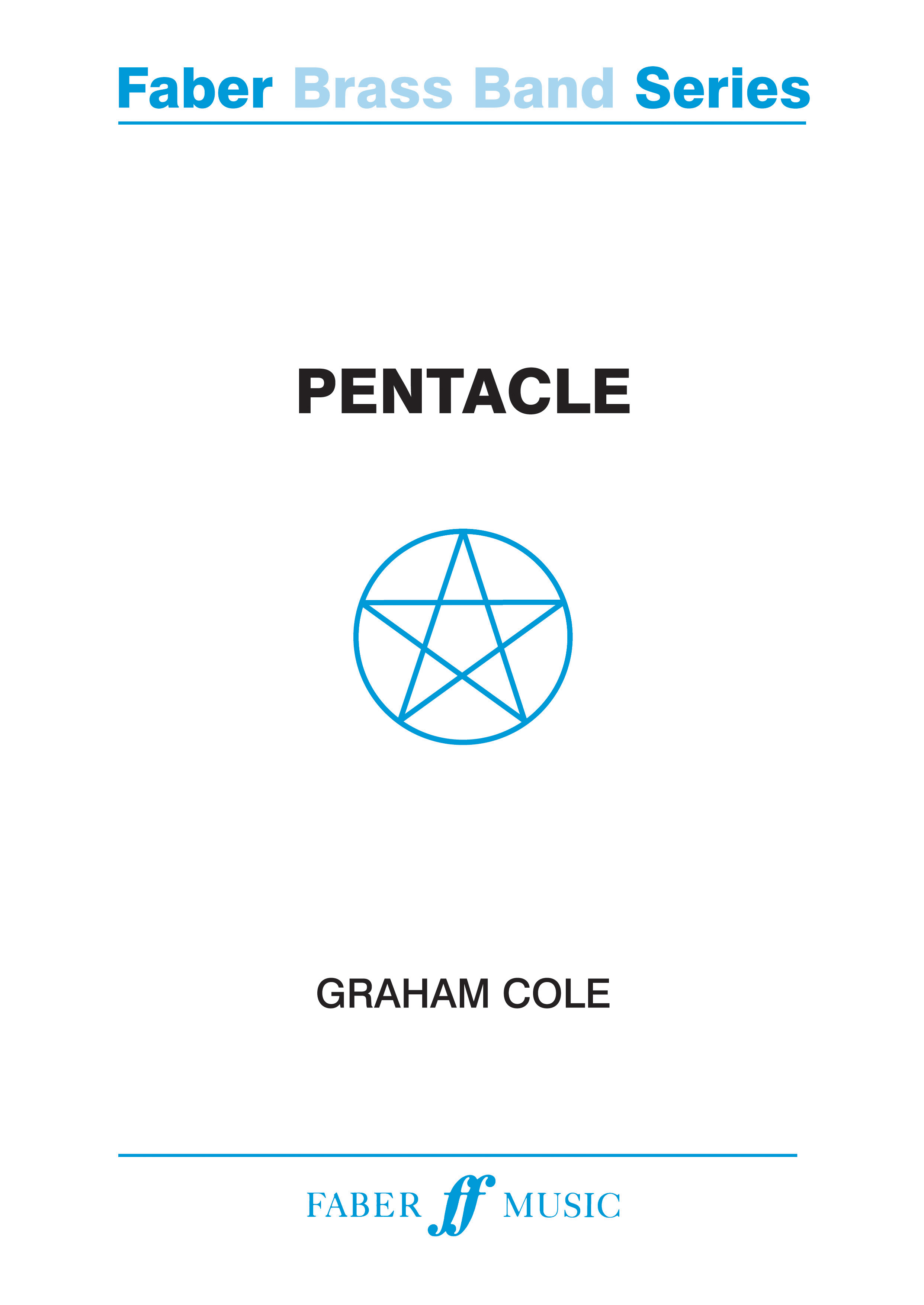
Pentacle (Score & Parts) - Graham Cole
Pentacle was selected as a test piece for the National Brass Band Championships of Great Britain, First Section regional competition in 2009. The Pentacle is an image of an upright five-pointed star drawn inside a circle with a single continuous line making the five points equally spaced. Traditionally, each of the five angles has been attributed to the five metaphysical elements of the ancients. These provide the titles for the five sections of the piece: Earth (representing stability and physical endurance), Wind (representing intelligence and the arts), Fire (representing courage and daring), Water (representing emotions and intuition) and Quintessence (which represents the All and the Divine spirit).Brass Band Grades 1 & 2: Novice and Learner bands.Duration: 13 minutes.
In Stock: Estimated dispatch 1-3 working days
-
 £64.95
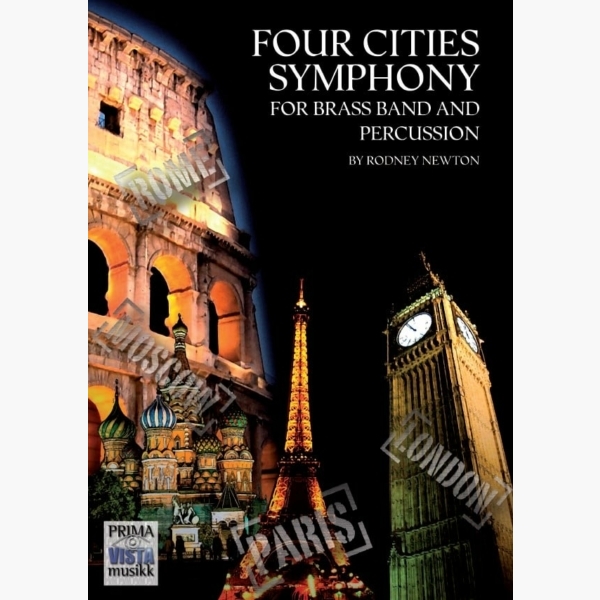
Four Cities Symphony - Rodney Newton
This piece was commissioned by the National Contesting Council as the 4th section test piece for the 2008 Regional Brass Band Championships of Great Britain. This symphony (the composer's 12th) has four movements played without a break. The first centres...
Estimated dispatch 5-7 working days
-
.jpg) £64.95
£64.95Partita (Brass Band - Score and Parts)
Selected as the Section 4 test piece for the National Brass Band Championships of Great Britain 2025Partita dates from 1971, when it was commissioned by the Redbridge Youth Band. The musical thread that runs through the work is the 13th century plainsong Dies Irae from the Requiem Mass. This gives the work a rather sombre tone which is audible right from the start of its first movement Intrada. The initial hammer-like chords of the opening and conclusion are only interrupted momentarily by a more lyrical modal tune. Even here, on its repetition, it is surrounded by more insistent textural patterns.The second movement, Chorale and Variations, uses the Dies Irae as the basis for an extended melody in the manner of a baroque sarabande. The five variations that follow are varied in texture, tempi, and dynamics. The final March is more optimistic in mood and presents as its main idea a rather jaunty theme which gets developed throughout the movement. However, the ominous presence of the Dies Irae has the last say with a final statement to round off the work.Duration: 11.00
Estimated dispatch 7-14 working days
-
£32.50
Partita (Brass Band - Score only)
Selected as the Section 4 test piece for the National Brass Band Championships of Great Britain 2025Partita dates from 1971, when it was commissioned by the Redbridge Youth Band. The musical thread that runs through the work is the 13th century plainsong Dies Irae from the Requiem Mass. This gives the work a rather sombre tone which is audible right from the start of its first movement Intrada. The initial hammer-like chords of the opening and conclusion are only interrupted momentarily by a more lyrical modal tune. Even here, on its repetition, it is surrounded by more insistent textural patterns.The second movement, Chorale and Variations, uses the Dies Irae as the basis for an extended melody in the manner of a baroque sarabande. The five variations that follow are varied in texture, tempi, and dynamics. The final March is more optimistic in mood and presents as its main idea a rather jaunty theme which gets developed throughout the movement. However, the ominous presence of the Dies Irae has the last say with a final statement to round off the work.Duration: 11.00
Estimated dispatch 7-14 working days
-
 £19.99
Journey of the Lone Wolf (Brass Band - Score Only)
Championship Section Test Piece for the 2016 National Finals of the British Brass Band Championship.The Lone Wolf of the title is the great Hungarian composer and folklorist Bla Bartok. Bartok's journey took him from the hills of the Balkans to the heart of the new world. His singular vision may have meant a life out in the cold, a life without warmth and love, a life without true happiness, a death mourned by a few in a strange land.The first of the three linked movements is capturing the Peasants' Song and follows the young Bartok and fellow composer Zoltan Kolday as they embark on Summertime adventures through the Hungarian countryside to collect and catalogue the astonishing variety of Gypsy and folk music heard in the Balkan hills. The arrival of WW1 plunges Bartok's beloved Hungary into chaos.Bartok was at times a cold man, aloof and lonely. The occasional moments of tenderness he showed are portrayed in Night Music. His brief but intense affairs speak of a love he could only long for. Jazz is my night music and here there are hints of what Bartok may have heard in the USA later in his life.Having been forced by the world's evils to leave his homeland of Hungary for America Bartok, the anti-fascist, felt isolated and angry. In the finale, Flight and Fight, we hear his longing for a simpler time of Gypsy folk dances as well as his maturity and depth as a composer finally exploring deeper colours and darker themes.Duration: 15.00
Estimated dispatch 7-14 working days
-
 £79.99
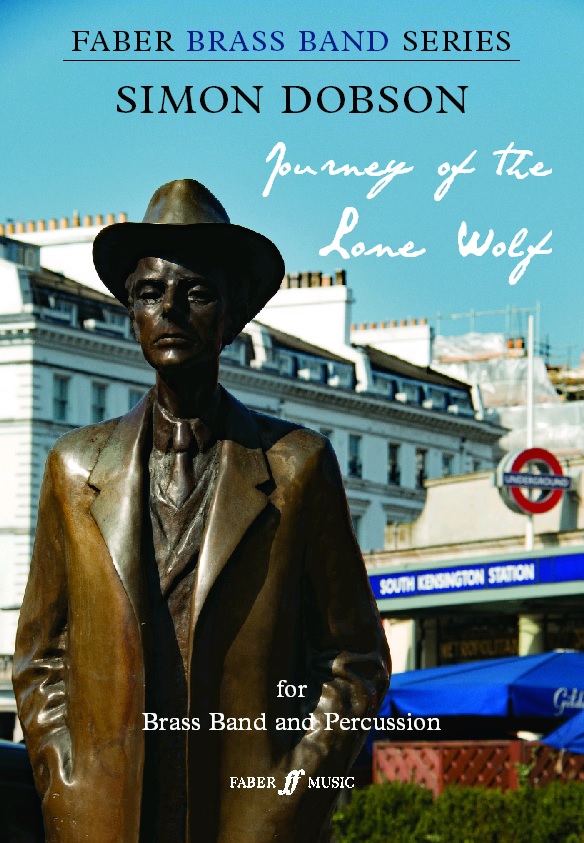
Journey of the Lone Wolf (Score and Parts)
Championship Section Finals Test Piece for National Brass Band Championships of Great Britain 2016Journey of the Lone Wolf tells the story of the hungarian composer Bla Bartk. It was commissioned by Dr. Nicholas Childs for Black Dyke Band, who gave the first performance on Sunday 26 January 2014 at the Bridgewater Hall, Manchester as part of the Royal Northern College of Music Festival of Brass.The composer's programme notes for each movement:1. Capturing the Peasants' SongAfter the upheaval of moving to Budapest the young Bla Bartk meets Zoltn Kodly and the pair embark on summertime adventures throughout the Hungarian countryside to collect and catalogue the astonishing variety (both harmonically and rhythmically) of gypsy and folk music heard in the Balkans. The arrival of WW1 plunges Bartk's beloved Hungary into chaos.2. Night MusicBartk was at times a cold man, aloof and lonely. The odd moments of tenderness he showed are portrayed here in a series of evocative solos. His brief but intense affairs speak of a love he could only long for. Jazz is my night music and here there are hints of what Bartk may have heard in the USA later in his life.3. Flight and FightHaving been forced by the world's evils to leave his homeland of Hungary for America, Bartk, the anti-fascist, felt isolated and angry. In this movement we hear his longing for a simpler time of gypsy folk dances as well as his maturity and depth as a composer finally exploring deeper colours and darker themes.
Estimated dispatch 7-14 working days
-
 £24.95
Music from Kantara (Score Only)
4th Section Test Piece 2016 National Finals of the British Brass Band Championship. Music from Kantara was written in 1994 and was first performed by Watership Brass, a band based near Newbury. The title comes from the name of the former home of the composer, in Winchester, a name which was inherited from the previous owners, and which presumably comes from the ruined castle of that name on the Northern coast of Cyprus. The music is not programmatic: it does not tell a story. It is a three-movement suite of absolute music, in a tuneful and straightforward idiom. The slow, central movement calls for playing of a sensitive, vocal nature.
Estimated dispatch 7-14 working days
-
£74.95
Sinfonietta for Brass Band (Score and Parts)
Sinfonietta was written in 1970, published the following year, and used as test piece for the National Brass Band Suitable for Championship section bandss in 1972. It was his first work for Brass Band, and he later rescored it for orchestra: 'legitimat
Estimated dispatch 7-14 working days
-
£37.95
Sinfonietta for Brass Band (Score Only)
Sinfonietta was written in 1970, published the following year, and used as test piece for the National Brass Band Suitable for Championship section bandss in 1972. It was his first work for Brass Band, and he later rescored it for orchestra: 'legitimat
Estimated dispatch 7-14 working days
-
 £65.00
Lyonesse (Brass Band - Score and Parts) - Dobson, Simon
Lyonesse was commissioned by the Brass Band Heritage Trust as the test piece for the Finals of the National Youth Brass Band Championships held in Manchester in April 2005. This atmospheric music, ideal as a test piece for First and Second section bands, takes its inspiration from the lost kingdom of Lyonesse, the mythical spur of land linking Cornwall and the Scilly Isles, and its associated legend of Tristan and Isolde.Suitable for 1st Section Bands and aboveDuration: 13.00
Estimated dispatch 7-14 working days