
Results
-
 £106.99
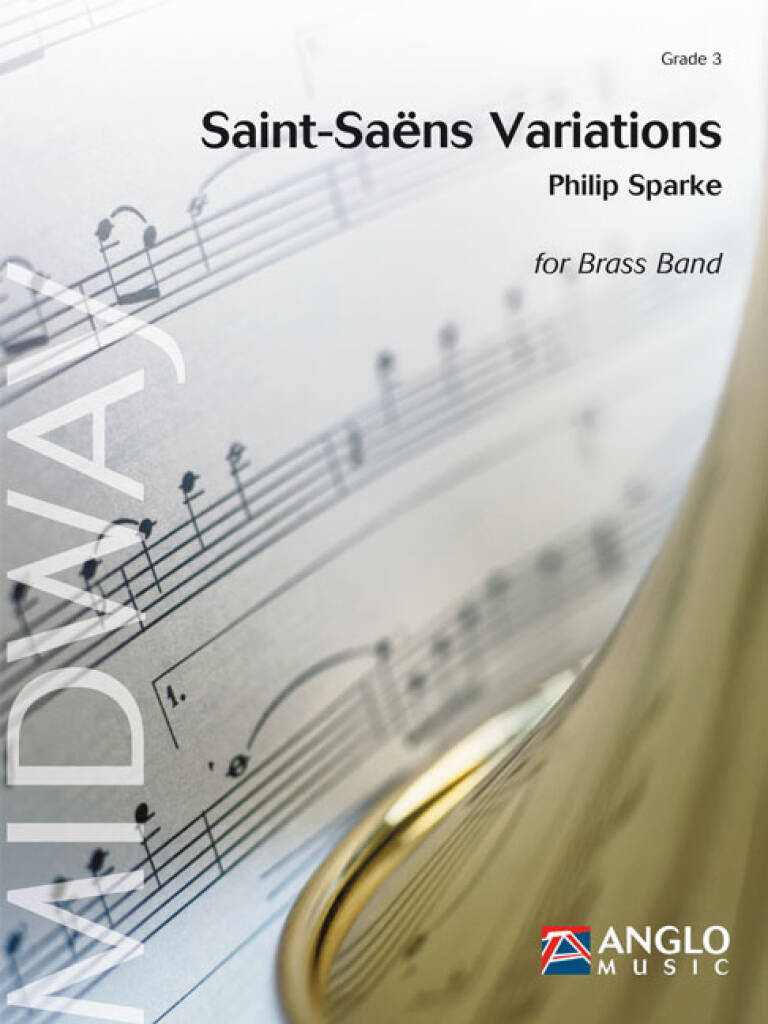
Saint-Saens Variations - Philip Sparke
In 2006, a long-time dream of Philip Sparke finally became reality: to compose a set of variations on the famous chorale from Saint-Saens' renowned Organ Symphony. In 2009 the composer reworked the piece for brass band. The resulting Saint-Saens Variations has been simplified, shortened and in many places completely recomposed, to distill the essence of the symphony even further and allow younger bands to enjoy the power of Saint-Saens' masterpiece in an approachable, yet completely faithful, work.
Estimated dispatch 5-14 working days
-
 £42.00
Sinfonietta (Score only) - James Curnow
Sinfonietta for Brass Band is basically a short symphony in three movements. The maestoso opening of the first movement introduces the melodic, harmonic, and rhythmic material from which the entire work is structured. The first movement, allegro vivace, is a brilliant capriccio built upon two contrasting melodic lines that are developed throughout the movement. The form is sonata-allegro and it creates an atmosphere of energy and drive. The percussion section opens the second movement and presents the underlying rhythmic ostinato on which this brief but expressive siciliano (pastorale) is developed. Movement three is a rollicking rondo that challenges the technical and rhythmic control of the whol;e ensemble. The brilliant closing fanfare is based on material which has been developed in all three movements.
Estimated dispatch 7-9 working days
-
 £52.00
Sinfonietta (Parts only) - James Curnow
Sinfonietta for Brass Band is basically a short symphony in three movements. The maestoso opening of the first movement introduces the melodic, harmonic, and rhythmic material from which the entire work is structured. The first movement, allegro vivace, is a brilliant capriccio built upon two contrasting melodic lines that are developed throughout the movement. The form is sonata-allegro and it creates an atmosphere of energy and drive. The percussion section opens the second movement and presents the underlying rhythmic ostinato on which this brief but expressive siciliano (pastorale) is developed. Movement three is a rollicking rondo that challenges the technical and rhythmic control of the whol;e ensemble. The brilliant closing fanfare is based on material which has been developed in all three movements.
Estimated dispatch 7-9 working days
-
 £24.50
Keep The Rhythm Going - Neil Brownless
Keep the Rhythm Going was written for Abingdon Concert Band during the 2020 Coronavirus pandemic as a tribute to musicians around the world who found ways to play together virtually in order to 'keep the rhythm going'. This exciting piece will be a great opener for any concert or contest programme and is available for both brass band and wind band. When performing the wind band arrangement the Cor Anglais, Eb Clarinet and Alto Clarinet parts are optional and can be omitted without affecting the music. The premiere performance can be viewed here: https://youtu.be/b6f7zRzxI7k The piece was premiered virtually on 19th November 2020 by 109 musicians from around the world from the following musical organisations:Abingdon Concert BandAbbey Brass BandAbergavenny Borough BandAbingdon and District Music SocietyAlnwick PlayhouseConcert BandAlnwick Symphonic Wind EnsembleAnything Goes Swing BandAshby Concert BandAylesbury Concert BandAylesbury Symphony OrchestraBacchus Wind OrchestraBanbury Symphony OrchestraBicester Concert BandBisham Concert BandBlaina Town BandBoobs and BrassBourne Concert Band of WokingBrass for AfricaBucks WindBurford OrchestraCastleton BrassCity of Cardiff Melingriffith Brass Band OrganisationCoquet Concert BandCorpo Bandistico G. Puccini - DLF BolognaDarlington Clarinet EnsembleDidcot Concert OrchestraDragon's Big BandDurham Miners' Association Brass BandEast Grinstead Concert BandGoring & Streatley Concert BandHalifax Concert BandHenley Symphony OrchestraJazz ColossusBig BandJupiter BrassKidlington Concert BrassLangtree SinfoniaNantwich Concert BandThe British Police Symphony OrchestraNew Buckenham Silver BandNottingham Concert BandNottingham Daytime OrchestraNottingham Symphonic WindsPaddock OrchestraPeebles Concert BandPotterspury Big BandReading Concert BandRoyal College of MusicRoyal Welsh College of Music & DramaSalvation Army West Midlands Fellowship BandSalvo BrassSaxophone SundaeSevenoaks and Tonbridge Concert BandShirley BandSlinfold Concert BandSouth Norfolk Youth Symphonic BandStockport Silver BandSuper BoneTewkesbury CamerataThame Concert BandThe Band of The Royal British Legion, LeistonVale Symphonic Wind BandTowcester Studio BandUniversity of Nottingham BlowsocThe University of Trinidad and TobegoWadhurst Brass BandWest Forest SinfoniaWeston BrassWindsor & Maidenhead Symphony OrchestraYorkshire Wind OrchestraYoung Musicians Symphony Orchestra...and some freelancers.
In Stock: Estimated dispatch 1-3 working days
-
£29.50
Utopia - Max Stannard
This solo was composed for Amy Partington and the Friezland Brass Band for their performance at the Red Admiral Entertainment Contest. The band won most entertaining performance and the award for best composition or arrangement. The piece is based on the theme of Utopia, representing left wing anarchy, in a set which also featured the Sex Pistols, System of a Down and Black Sabbath, this provided a gentle contrast to the mayhem. Based on themes from Beethoven's Pastoral Symphony and Vivaldi's Spring's 3rd movement, this is a beautiful solo which shows of some lyrical and gentle euphonium playing.
In Stock: Estimated dispatch 1-3 working days
-
 £44.95
Judd: Excerpts from The Little Russian
The nickname 'Little Russia' refers to the Ukraine from where folk-songs used by Tchaikovsky in his second symphony come from. This is a transcription of excerpts from the exciting finale of that symphony.
Estimated dispatch 7-14 working days
-
 £89.95
Revelation (Score and Parts)
Symphony for Double Brass on a theme of Purcell 1995 marked the tercentenary of Purcell's death, and my new score Revelation has been written as a tribute to his music and the ornate and confident spirit of his age. There are five major sections: 1 Prologue 2 Variations on a ground bass I 3 Fugue 4 Variations on a ground bass II 5 Epilogue and Resurrection The score uses many features of the Baroque Concerto Grosso, and arranges players in two equal groups from which soloists emerge to play in a variety ofvirtuoso ensembles. It quotes freely from Purcell's own piece Three Parts on a Ground in which he has composed a brilliant sequence of variations over a repeating six-note bass figure. This original motif can be heard most clearly beneath the duet for Cornet 5 and Soprano at the beginning of the 2nd section. There is, of course, a religious dimension to Revelation as the title suggests, and the score is prefaced by lines by the 17th century poet John Donne. His Holy Sonnet paraphrases the Book of Revelation in which the dead are raised at the sounds of the last trumpet. Donne's trumpets are themselves placed stereophonically ". . . At the round Earth's imagined corners" and it is this feature that today's players represent as they move around the performing area. Their final apocalyptic fanfares can be heard at the close of the score, as Purcell's music re-enters in a lasting tribute to England's first composer of genius. Philip Wilby September 1995 At the round Earth imagined corners, blow your trumpets, angels, and arise, arise from death, you numberless infinities Of souls, and to your scattered bodies go. All whom the flood did, and fire shall o 'erthrow All whom war, dearth, age, agues, tyrannies, Despair, law, chance hath slain, and you whose eyes Shall Behold God, and never taste death woe. John Donne after Revelation Ch. 11 v.15
Estimated dispatch 7-14 working days
-
 £44.95
Revelation (Score Only)
Symphony for Double Brass on a theme of Purcell 1995 marked the tercentenary of Purcell's death, and my new score Revelation has been written as a tribute to his music and the ornate and confident spirit of his age. There are five major sections: 1 Prologue 2 Variations on a ground bass I 3 Fugue 4 Variations on a ground bass II 5 Epilogue and Resurrection The score uses many features of the Baroque Concerto Grosso, and arranges players in two equal groups from which soloists emerge to play in a variety ofvirtuoso ensembles. It quotes freely from Purcell's own piece Three Parts on a Ground in which he has composed a brilliant sequence of variations over a repeating six-note bass figure. This original motif can be heard most clearly beneath the duet for Cornet 5 and Soprano at the beginning of the 2nd section. There is, of course, a religious dimension to Revelation as the title suggests, and the score is prefaced by lines by the 17th century poet John Donne. His Holy Sonnet paraphrases the Book of Revelation in which the dead are raised at the sounds of the last trumpet. Donne's trumpets are themselves placed stereophonically ". . . At the round Earth's imagined corners" and it is this feature that today's players represent as they move around the performing area. Their final apocalyptic fanfares can be heard at the close of the score, as Purcell's music re-enters in a lasting tribute to England's first composer of genius. Philip Wilby September 1995 At the round Earth imagined corners, blow your trumpets, angels, and arise, arise from death, you numberless infinities Of souls, and to your scattered bodies go. All whom the flood did, and fire shall o 'erthrow All whom war, dearth, age, agues, tyrannies, Despair, law, chance hath slain, and you whose eyes Shall Behold God, and never taste death woe. John Donne after Revelation Ch. 11 v.15
Estimated dispatch 7-14 working days
-
 £94.95
Whitsun Wakes (Score and Parts)
Whitsun Wakes was commissioned by the BBC and first performed by Black Dyke Band, conducted by James Watson, in Manchester's Bridgewater Hall on 26th May, 1997 as part of the BBC's 'Music Live' Festival. It was subsequently selected as a test piece for the British Open Championship which was scheduled to be held on 6th September 1997 at Birmingham's Symphony Hall. Unfortunately this was the day of the funeral of Diana, Princess of Wales and so the British Open was postponed until 17th January, 1998. However the greatest irony is the fact that although this piece takes its inspiration from the Manchester area it was destined to be played at the first British Open Championship to take place outside Manchester.
Estimated dispatch 7-14 working days
-
 £44.95
Whitsun Wakes (Score Only)
Whitsun Wakes was commissioned by the BBC and first performed by Black Dyke Band, conducted by James Watson, in Manchester's Bridgewater Hall on 26th May, 1997 as part of the BBC's 'Music Live' Festival. It was subsequently selected as a test piece for the British Open Championship which was scheduled to be held on 6th September 1997 at Birmingham's Symphony Hall. Unfortunately this was the day of the funeral of Diana, Princess of Wales and so the British Open was postponed until 17th January, 1998. However the greatest irony is the fact that although this piece takes its inspiration from the Manchester area it was destined to be played at the first British Open Championship to take place outside Manchester.
Estimated dispatch 7-14 working days
 View Music
 Listen to MP3