
Results
-
 £36.30
Russian Rag - George L Cobb, Sandy Coffin
Interpolating the world famous"Prelude" by RachmaninoffCommissioned by John Wallace, this arrangement of Russian Rag has been crafted by Sandy Coffin through close listening of the available recordings of the Harlem Hellfighters Band. Sandy had been heavily involved with the Historic Brass Society symposium 2017 held in New York and assisted John with his research on this fascinating band and the style of music it generated.Eye-witness accounts refer to the 369th band 'dancing' rather than 'marching'. Above all, in modern performance, finding a 'dancing beat' is crucial to a successful performance of this Ragtime march in order to do justice to the great pioneering work of James Reese Europe. Note the cheeky virtuosity and rubato!Look and Listen (courtesy of Tullis Russell Mills Band):Background to the Harlem HellfightersThe US Army 369th Regiment, made up largely of African-Americans from New York, became known as the Harlem Hellfighters because of the heroic reputation which accrued to them during the actions they engaged in during the First World War in Europe.James Reese Europe was one of the most active African-American composer/musical directors in the pre-war American music scene. The legendary Harlem Hellfighters Band, which he assembled in 1917 from African-American and Puerto Rican musicians, came at an important transitional point in musical history. A new form of music called jazz was emerging from Ragtime and the performing style of Europe's band was immersed in the flow of this new direction.Europe's Harlem Hellfighters influenced and inspired everyone who heard them, including the welcoming crowd when they disembarked in France, bowled over by their swinging rendition of La Marseillaise. Reese Europe became a war hero, commanding a machine-gun unit as well as the band.On return from War in 1919 the band led a ticker-tape parade along Fifth Avenue in New York and soon made about 30 shellac recordings. These recordings display some of the fingerprints of their performing style: ragging, improvising, muting, wailing, smearing (their word for glissando) - and from the evidence of their recordings they took the printed page as a blueprint for individuality.In May 1919 during the Hellfighters' triumphant coast-to-coast tour after their return, James Reese Europe was tragically murdered, bringing to premature close, at the age of 39, the work of a great musical innovator.
In Stock: Estimated dispatch 3-5 working days
-
 £36.30
That Moaning Trombone - Carl D Bethel, Sandy Coffin
Comic March One-StepCommissioned by John Wallace, this arrangement of That Moaning Trombone has been crafted by Sandy Coffin through close listening of the available recordings of the Harlem Hellfighters Band. Sandy had been heavily involved with the Historic Brass Society symposium 2017 held in New York and assisted John with his research on this fascinating band and the style of music it generated.Eye-witness accounts refer to the 369th band 'dancing' rather than 'marching'. Above all, in modern performance, finding a 'dancing beat' is crucial to a successful performance of this Ragtime march in order to do justice to the great pioneering work of James Reese Europe.Note the the reckless abandon with which glissando, at that time a novel effect, is used!Look and Listen (courtesy of the Tullis Russell Mills Band):Background to the Harlem HellfightersThe US Army 369th Regiment, made up largely of African-Americans from New York, became known as the Harlem Hellfighters because of the heroic reputation which accrued to them during the actions they engaged in during the First World War in Europe.James Reese Europe was one of the most active African-American composer/musical directors in the pre-war American music scene. The legendary Harlem Hellfighters Band, which he assembled in 1917 from African-American and Puerto Rican musicians, came at an important transitional point in musical history. A new form of music called jazz was emerging from Ragtime and the performing style of Europe's band was immersed in the flow of this new direction.Europe's Harlem Hellfighters influenced and inspired everyone who heard them, including the welcoming crowd when they disembarked in France, bowled over by their swinging rendition of La Marseillaise. Reese Europe became a war hero, commanding a machine-gun unit as well as the band.On return from War in 1919 the band led a ticker-tape parade along Fifth Avenue in New York and soon made about 30 shellac recordings. These recordings display some of the fingerprints of their performing style: ragging, improvising, muting, wailing, smearing (their word for glissando) - and from the evidence of their recordings they took the printed page as a blueprint for individuality.In May 1919 during the Hellfighters' triumphant coast-to-coast tour after their return, James Reese Europe was tragically murdered, bringing to premature close, at the age of 39, the work of a great musical innovator.
In Stock: Estimated dispatch 3-5 working days
-
 £36.30
The St Louis Blues - Sandy Coffin, W C Handy
Two-Step MarchCommissioned by John Wallace, this arrangement of The St Louis Blues has been crafted by Sandy Coffin through close listening of the available recordings of the Harlem Hellfighters Band. Sandy had been heavily involved with the Historic Brass Society symposium 2017 held in New York and assisted John with his research on this fascinating band and the style of music it generated.Eye-witness accounts refer to the 369th band 'dancing' rather than 'marching'. Above all, in modern performance, finding a 'dancing beat' is crucial to a successful performance of this Ragtime march in order to do justice to the great pioneering work of James Reese Europe.Note the flutter-tonguing and use of muting, the counter-melody in soprano cornet, and the wilder and yet wilder nature of each repetition of the Chorus.Look and Listen:Background to the Harlem HellfightersThe US Army 369th Regiment, made up largely of African-Americans from New York, became known as the Harlem Hellfighters because of the heroic reputation which accrued to them during the actions they engaged in during the First World War in Europe.James Reese Europe was one of the most active African-American composer/musical directors in the pre-war American music scene. The legendary Harlem Hellfighters Band, which he assembled in 1917 from African-American and Puerto Rican musicians, came at an important transitional point in musical history. A new form of music called jazz was emerging from Ragtime and the performing style of Europe's band was immersed in the flow of this new direction.Europe's Harlem Hellfighters influenced and inspired everyone who heard them, including the welcoming crowd when they disembarked in France, bowled over by their swinging rendition of La Marseillaise. Reese Europe became a war hero, commanding a machine-gun unit as well as the band.On return from War in 1919 the band led a ticker-tape parade along Fifth Avenue in New York and soon made about 30 shellac recordings. These recordings display some of the fingerprints of their performing style: ragging, improvising, muting, wailing, smearing (their word for glissando) - and from the evidence of their recordings they took the printed page as a blueprint for individuality.In May 1919 during the Hellfighters' triumphant coast-to-coast tour after their return, James Reese Europe was tragically murdered, bringing to premature close, at the age of 39, the work of a great musical innovator.
In Stock: Estimated dispatch 3-5 working days
-
 £37.50
Brass Monkey's Jazz Workout
This huge release brings together a selection of music composed by Paul H Traves that introduces your learners to the different style of Jazz that is available. Naturally, the rhythmic work required to play such styles means that this publication will push your learners on and will challenge them at a new level. Syncopation and swing are at the heart of the music in this collection and it is the perfect way to get your learners playing in new styles not always covered by training band music. This title offers excellent value for money with seven titles included. This publication features:SNAKES & LADDERS - (teaching dynamics and expressive playing)CHROMATICS - (As the title suggest, ensuring every valve us used!)ROCKIN' GERONIMO - (featuring triplets and accidentals)TRUMPET DRIFT - (introducing crotchet triplets & syncopation)J.B.'s 12 BAR BLUES - (a well-known style that feature sharp key signatures)J.B.'s CALYPSO (unison playing and tight rhythmic playing required)ZIG-ZAG (getting players into a lazy swing style)
Estimated dispatch 7-14 working days
-
 £45.00
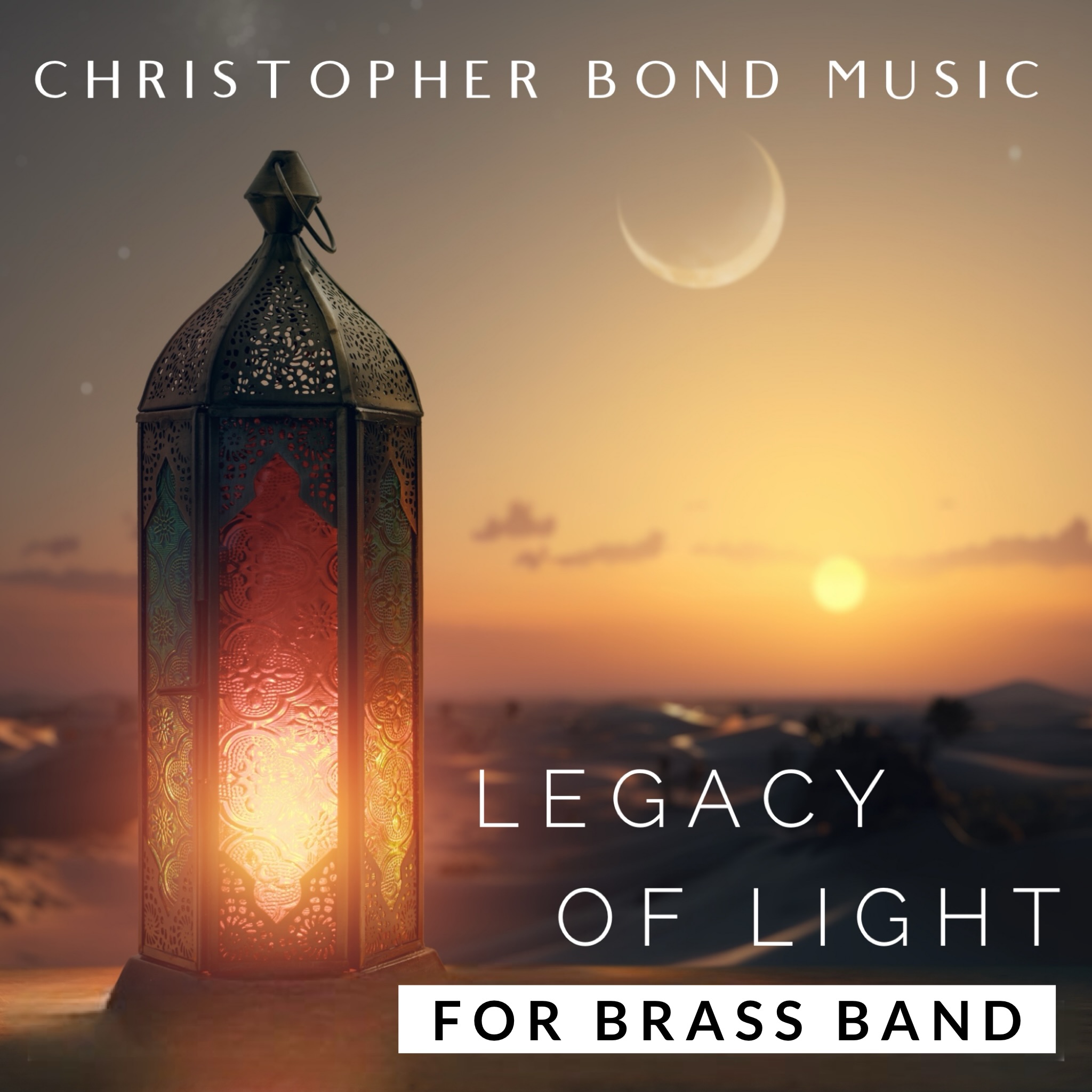
Legacy Of Light - Christopher Bond
Legacy of Light was commissioned by the family of Howard Bland, Honorary Secretary of Wessex Band Summer School for many years. Rather than a work in a reflective style, the brief was to provide a work which celebrated his life - energy and music which would be fun to perform and listen to. The bubbling compound time signature combined with the cornet and tuned percussion ostinato to open provide immediate impact with the work's subsequent soaring melodies and joyous style a fitting tribute. The work received its world premiere by the joint forces of the brass and wind bands at the 2024 Wessex Band Summer School, conducted by Michael Fowles.
Estimated dispatch 10-14 working days
-
 £29.95
Tireless Flame, The - Jonathan Bates
DIFFICULTY: 1st+. DURATION: 6'00". Commissioned by the Reg Vardy Brass Band for their 2019 appearance at the Brass in Concert Championships, held at The Sage in. Gateshead, 'The Tireless Flame' is an energetic and driven concert finisher inspired by the idea of a fire burning at different velocities. but never truly going out. The outer 2 sections are the work are in a minimalist style using effects typical of the style such as phasing. and development throughout, whilst the central section is almost hymn like in nature, showcasing the band's ability to control the . extremes of dynamics. .
In Stock: Estimated dispatch 1-3 working days
-
 £33.91
Adagio (Soprano Cornet) - Kevin Ackford
Score & Parts This Beautiful melody is a mixture of old and new. The solo starts in classical style before being brought up to date with the feel of a modern ballad then reverting to the classical style to finish. A great addition to your Soprano Cornet player's repertoire.
Estimated dispatch 5-7 working days
-
 £34.95
Skylines - Paul Lovatt-Cooper
Skylines is composed in a funk style with a rigid bass line allowing various soloists to shine. It is composed in a style that many brass band traditionalists won't find stereotypical. That doesn't mean it won't challenge the youth bands...
Estimated dispatch 5-7 working days
-
£44.95
IMAGES OF PRAISE (Euphonium Solo with Brass Band Set) - Kenneth Downie
This solo was written for Derick Kane and consists of two sections. The first is built on an original, lyrical melody which is introduced immediately by the soloist while the second is more virtuosic in style and features a tune by the late Keith Prynn, 'I feel like singing all the time'. The solo is jaunty and light-hearted, with a fine sense of style, and not without a dash of humour.
Estimated dispatch 7-14 working days
-
 £30.00
Django - Jock McKenzie
Django is inspired by the sounds of 'Hot Club Jazz'. The origins of this style also known as Gypsy Swing or Jazz Manouche were to be found in France in the 1930s. Indeed, the most famous group, based in Paris was the "Quintette du Hot Club de France" and featured in its ranks the legendary guitarist Django Reinhardt and violinist Stephane Grappelli. My composition Django seeks to provide a 'beginners guide' to some of the typical elements of this musical style: After a 'faux improvised' opening flourish, the main theme is in the characteristic minor key, including use of arpeggio figures to point the direction of the melodic line. The melodies throughout the piece are presented in a duet-like manner, spaced in intervals of 3rds and 6ths. The accompaniment based strongly around the minor 6th chords is designed to imitate the role of the rhythm section in a typical gypsy swing band.