
Results
-
 £64.99
The Flying Doctors - Garry McDonald & Lawrence Stone - Rieks van der Velde
Estimated dispatch 10-14 working days
-
 £59.70
Ein Schnaps - Dave Baker, Pol Stone - John Howarth
Publisher Closed for Holidays. Est Delivery 12-14th Aug
-
Walk, Don't Run - Johnny Smith - Len Jenkins
"Walk, Don't Run" is an instrumental composition written and first recorded by jazz guitarist Johnny Smith in 1954. Chet Atkins also recorded it. However, the most well-known version is by a rock band called The Ventures from Tacoma (near Seattle) who released their version of the tune as a single in spring 1960. It was an instant success. In 1964, The Ventures released an updated version called "Walk Don't Run '64," which also made the Top 10 in the US, and there were 4 further editions up until 2000. In the UK, the tune was covered by the John Barry Seven. Rolling Stone magazine rated the Ventures' version of "Walk, Don't Run" as number 82 on their list of the 100 Greatest Guitar Songs of All Time.
-
 £24.95
David of the White Rock (Cornet Solo with Brass Band - Score and Parts)
This melody is reputed to have originated in Caernarvonshire, North Wales. Tradition holds that a bard called David, lying on his deathbed, called for his harp and performed this plaintive tune, expressing a desire that it should be played at his funeral. Ever since the tune has been called by his name and that of his house 'Garagwen' ('Druid Stone' or 'White Rock'). The solo is not just a slow melody with brass band accompaniment but is a composite whole, the band needing as much sensitivity as the soloist in the presentation.
Estimated dispatch 7-14 working days
-
 £159.99
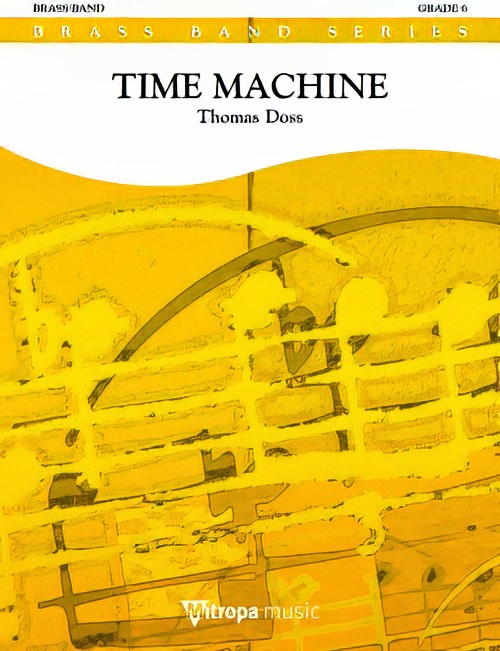
Time Machine (Brass Band - Score and Parts) - Doss, Thomas
Time Machine is a journey through time that begins in the Stone Age. Evolution and the coming of man take place. The journey takes us into the present, in which disorientation and chaos abound. We travel further into the future. An unfamiliar, quiet and surreal landscape lies before us and we wander through it, bewildered as we become aware of the destruction of the environment. Suddenly, and for no reason, memories from our childhood are awoken. Cultures have become completely mixed into one and the evolution of man has run its course. We realise that there is no "afterwards" as before us lies the Stone Age once again... The wheel of time spins blindly on and all is repeated.Duration: 13:30
Estimated dispatch 7-14 working days
-
 £76.99
The Haunter of the Dark (Brass Band - Score and Parts) - Cesarini, Franco
The Haunter of the Dark is based on a tale by the author Howard Phillips Lovecraft (1890-1937) about a deserted church, where according to an old legend a monster had been lying low for years. A scientist who studies ancient religions visits this church. Besides some ancient writings he discovers a box, which contains a luminous stone. Every time the stone sheds its light, the scientist experiences all sorts of weird visions. The church in the tale actually exists, and can be found in Providence (USA). Franco Cesarini has visited it and sketches the mysterious and occult atmosphere in The Haunter of the Dark.Duration: 9:30
Estimated dispatch 7-14 working days
-
 £45.99
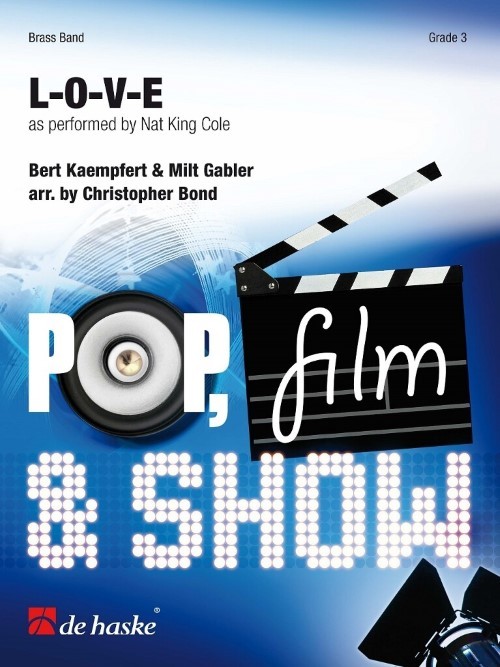
L-O-V-E (Brass Band - Score and Parts) - Gabler & Kaempfert - Bond, Christopher
L-O-V-E was written by Milt Gabler and Bert Kaempfert for the final album of the same name by the American singer and pianist Nat King Cole. This album, released in 1965, is largely regarded as a classic. Over the years, many cover versions have been made, including one by Michael Buble. In 2007, the English soul singer and songwriter Joss Stone recorded the song for the promotion campaign around the Coco Mademoiselle perfume by Chanel. Christopher Bond arranged this catchy music for brass band.
Estimated dispatch 7-14 working days
-
 £24.95
David Of The White Rock (Cornet Solo with Brass Band - Score and Parts) - Bowes, Ray
This melody is reputed to have originated in Caernarvonshire, North Wales. Tradition holds that a bard called David, lying on his deathbed, called for his harp and performed this plaintive tune, expressing a desire that it should be played at his funeral. Ever since the tune has been called by his name and that of his house 'Garagwen' ('Druid Stone' or 'White Rock'). The solo is not just a slow melody with brass band accompaniment but is a composite whole, the band needing as much sensitivity as the soloist in the presentation.
Estimated dispatch 7-14 working days
-
£12.50
David Of The White Rock (Cornet Solo with Brass Band - Score only) - Bowes, Ray
This melody is reputed to have originated in Caernarvonshire, North Wales. Tradition holds that a bard called David, lying on his deathbed, called for his harp and performed this plaintive tune, expressing a desire that it should be played at his funeral. Ever since the tune has been called by his name and that of his house 'Garagwen' ('Druid Stone' or 'White Rock'). The solo is not just a slow melody with brass band accompaniment but is a composite whole, the band needing as much sensitivity as the soloist in the presentation.
Estimated dispatch 7-14 working days
-
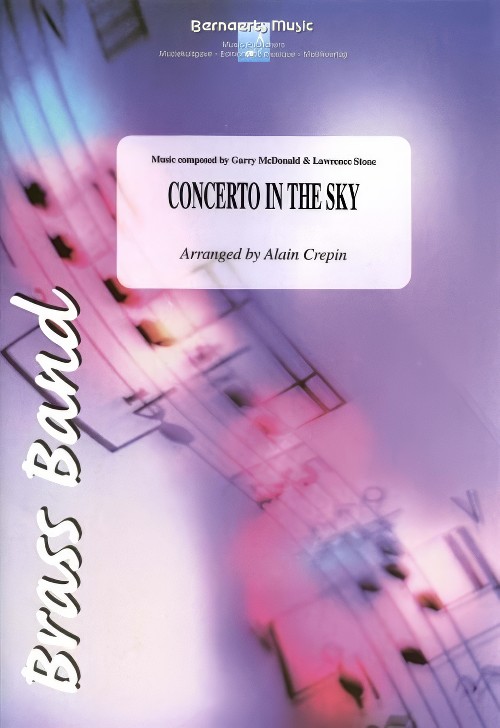 £53.99
Concerto in the Sky (Brass Band - Score and Parts) - McDonald & Stone - Crepin, Alain
Duration: 03:20
Estimated dispatch 7-14 working days
 View Music