
Results
-
 £54.99
Inner Space - John Emerson Blackstone
Today's society means to many people: bustle, hurry, quick and more ... No wonder that many are looking for (inner) tranquility and balance in their overloaded existence. Listen to music or active music is a way to relax and also to draw new energy. The repetitive motifs in Innerspace provide a relaxing effect. Enjoy and use the strength of your own 'innerspace'.
Estimated dispatch 5-14 working days
-
 £24.95
SPACE INVADERS (Brass Band Parts) - Scott, Andy
Brass Band parts only. Space Invaders is an arcade video game designed by Tomohiro Nishikado. Following its release in 1978, the game caused a temporary shortage of 100-yen coins in Japan, and the Guinness World Records ranks it the top arcade game. The piece commences with a fanfare-like passage with shifting time signatures, before settling into a funk-inspired groove, led by the bass section, bass trombone and percussion. An intricate ensemble section, either side of a tongue-in-cheek 'B' section (where Space Invader images and firing sounds were projected behind Foden's at Brass in Concert) all lead to a powerful and tight finish. Dur: 4:00
Estimated dispatch 7-14 working days
-
£15.00
SPACE INVADERS (Brass Band Score) - Scott, Andy
Brass Band score only. Space Invaders is an arcade video game designed by Tomohiro Nishikado. Following its release in 1978, the game caused a temporary shortage of 100-yen coins in Japan, and the Guinness World Records ranks it the top arcade game. The piece commences with a fanfare-like passage with shifting time signatures, before settling into a funk-inspired groove, led by the bass section, bass trombone and percussion. An intricate ensemble section, either side of a tongue-in-cheek 'B' section (where Space Invader images and firing sounds were projected behind Foden's at Brass in Concert) all lead to a powerful and tight finish. Dur: 4:00
Estimated dispatch 7-14 working days
-
 £168.50
Music of the Spheres - Philip Sparke
Music of the Spheres was commissioned by the Yorkshire Building Society Band and first performed by them at the European Brass Band Championships in Glasgow, May 2004.The piece reflects the composers fascination with the origins of the universe and deep space in general. The title comes from a theory, formulated by Pythagoras, that the cosmos was ruled by the same laws he had discovered that govern the ratios of note frequencies of the musical scale. ('Harmonia' in Ancient Greek, which means scale or tuning rather than harmony - Greek music was monophonic). He also believed that these ratios corresponded to the distances of the sixknown planets from the sun and thatthe planets each produced a musical note which combined to weave a continuous heavenly melody (which, unfortunately, we humans cannot hear). In this work, these six notes form the basis of the sections Music of the Spheres and Harmonia.The pieces opens with a horn solo called t = 0, a name given by some scientists to the moment of the Big Bangwhen time and space were created, and this is followed by a depiction of the Big Bangitself, as the entire universe bursts out from a single point. A slower section follows called The Lonely Planet which is a meditation on the incredible and unlikely set of circumstances which led to the creation of the Earth as a planet that can support life, and the constant search for other civilizations elsewhere in the universe. Asteroids and Shooting Stars depicts both the benign and dangerous objects that are flying through space and which constantly threaten our planet, and the piece ends with The Unknown, leaving in question whether our continually expanding exploration of the universe will eventually lead to enlightenment or destruction.
Estimated dispatch 5-14 working days
-
 £87.40
Lost In Space - Bruce Broughton - Michal Worek
Estimated dispatch 5-14 working days
-
 £168.50
Music of the Spheres (Brass Band - Score and Parts)
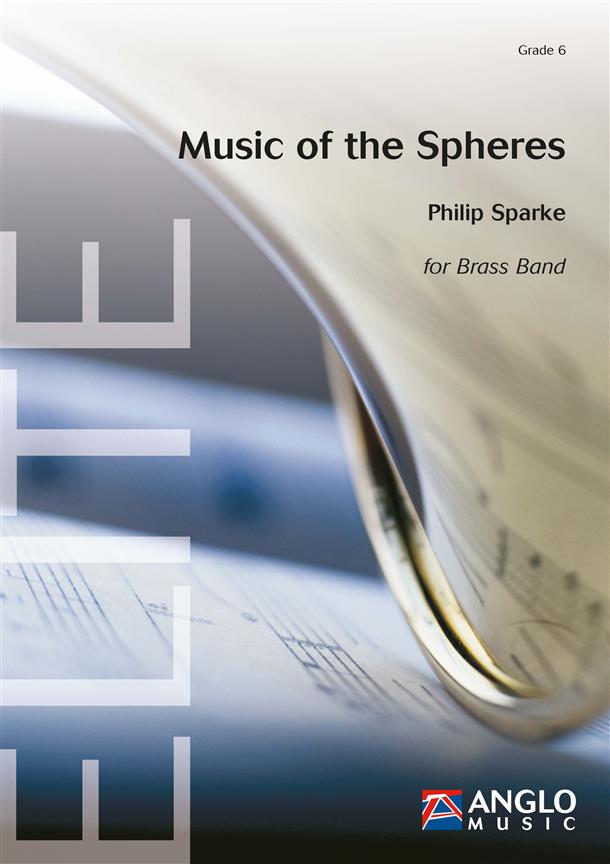
Music of the Spheres was commissioned by the Yorkshire Building Society Band and first performed by them at the European Brass Band Championships in Glasgow, May 2004. The piece reflects the composers fascination with the origins of the universe and deep space in general. The title comes from a theory, formulated by Pythagoras, that the cosmos was ruled by the same laws he had discovered that govern the ratios of note frequencies of the musical scale. ('Harmonia' in Ancient Greek, which means scale or tuning rather than harmony - Greek music was monophonic). He also believed that these ratios corresponded to the distances of the six known planets from the sun and thatthe planets each produced a musical note which combined to weave a continuous heavenly melody (which, unfortunately, we humans cannot hear). In this work, these six notes form the basis of the sections Music of the Spheres and Harmonia. The pieces opens with a horn solo called t = 0, a name given by some scientists to the moment of the Big Bang when time and space were created, and this is followed by a depiction of the Big Bang itself, as the entire universe bursts out from a single point. A slower section follows called The Lonely Planet which is a meditation on the incredible and unlikely set of circumstances which led to the creation of the Earth as a planet that can support life, and the constant search for other civilisations elsewhere in the universe. Asteroids and Shooting Stars depicts both the benign and dangerous objects that are flying through space and which constantly threaten our planet, and the piece ends with The Unknown, leaving in question whether our continually expanding exploration of the universe will eventually lead to enlightenment or destruction.Duration: 18:00
Estimated dispatch 7-14 working days
-
 £168.50
Music of the Spheres (Brass Band - Score and Parts) - Sparke, Philip
Music of the Spheres was commissioned by the Yorkshire Building Society Band and first performed by them at the European Brass Band Championships in Glasgow, May 2004. The piece reflects the composers fascination with the origins of the universe and deep space in general. The title comes from a theory, formulated by Pythagoras, that the cosmos was ruled by the same laws he had discovered that govern the ratios of note frequencies of the musical scale. ('Harmonia' in Ancient Greek, which means scale or tuning rather than harmony - Greek music was monophonic). He also believed that these ratios corresponded to the distances of the six known planets from the sun and thatthe planets each produced a musical note which combined to weave a continuous heavenly melody (which, unfortunately, we humans cannot hear). In this work, these six notes form the basis of the sections Music of the Spheres and Harmonia. The pieces opens with a horn solo called t = 0, a name given by some scientists to the moment of the Big Bang when time and space were created, and this is followed by a depiction of the Big Bang itself, as the entire universe bursts out from a single point. A slower section follows called The Lonely Planet which is a meditation on the incredible and unlikely set of circumstances which led to the creation of the Earth as a planet that can support life, and the constant search for other civilisations elsewhere in the universe. Asteroids and Shooting Stars depicts both the benign and dangerous objects that are flying through space and which constantly threaten our planet, and the piece ends with The Unknown, leaving in question whether our continually expanding exploration of the universe will eventually lead to enlightenment or destruction.Duration: 18:00
Estimated dispatch 7-14 working days
-
£42.50
Music of the Spheres (Brass Band - Score only) - Sparke, Philip
Music of the Spheres was commissioned by the Yorkshire Building Society Band and first performed by them at the European Brass Band Championships in Glasgow, May 2004. The piece reflects the composers fascination with the origins of the universe and deep space in general. The title comes from a theory, formulated by Pythagoras, that the cosmos was ruled by the same laws he had discovered that govern the ratios of note frequencies of the musical scale. ('Harmonia' in Ancient Greek, which means scale or tuning rather than harmony - Greek music was monophonic). He also believed that these ratios corresponded to the distances of the six known planets from the sun and thatthe planets each produced a musical note which combined to weave a continuous heavenly melody (which, unfortunately, we humans cannot hear). In this work, these six notes form the basis of the sections Music of the Spheres and Harmonia. The pieces opens with a horn solo called t = 0, a name given by some scientists to the moment of the Big Bang when time and space were created, and this is followed by a depiction of the Big Bang itself, as the entire universe bursts out from a single point. A slower section follows called The Lonely Planet which is a meditation on the incredible and unlikely set of circumstances which led to the creation of the Earth as a planet that can support life, and the constant search for other civilisations elsewhere in the universe. Asteroids and Shooting Stars depicts both the benign and dangerous objects that are flying through space and which constantly threaten our planet, and the piece ends with The Unknown, leaving in question whether our continually expanding exploration of the universe will eventually lead to enlightenment or destruction.Duration: 18:00
Estimated dispatch 7-14 working days
-
 £67.50
Columbus - Thierry Deleruyelle
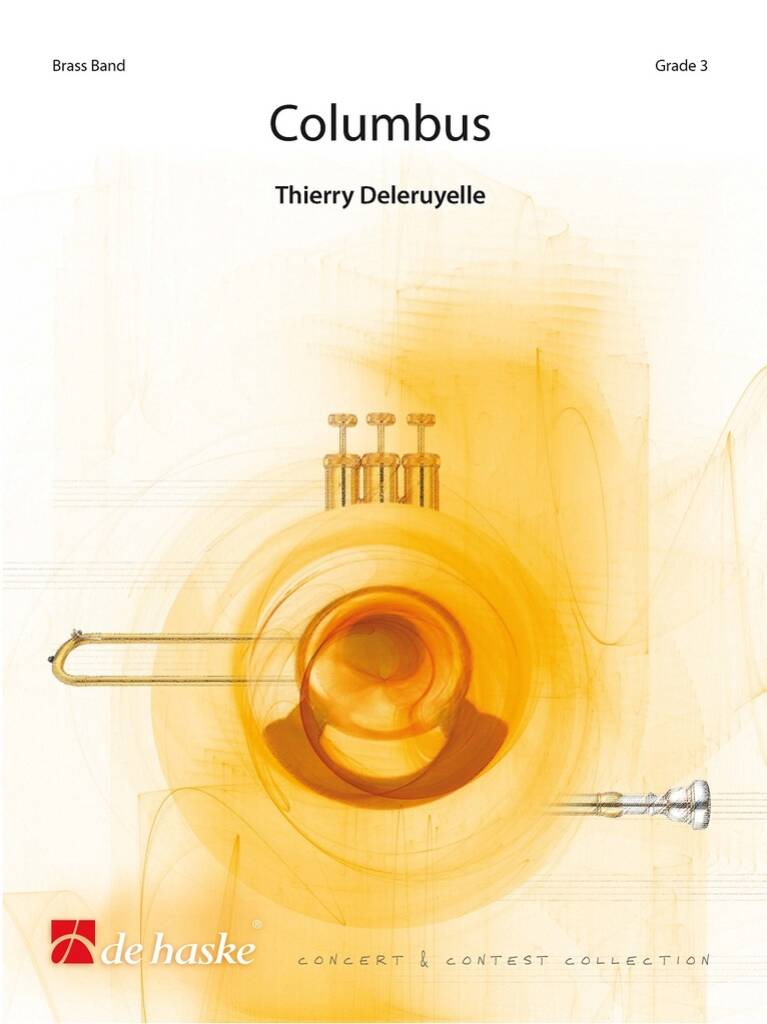
Columbus is a brilliant and dynamic overture for brass band, with a soft and melodious central passage. In addition to the many American towns that hold the name, Columbus is a European space laboratory that is part of the International Space Station. Launched in 2008 by the American space shuttle Atlantis, it makes it possible to carry out continuous scientific experiments in fundamental physics, life sciences, fluid physics, etc. Several hundred experiments take place within Columbus every year. Commissioned by the Brass Band Bourgueillois, this piece celebrates the 10th anniversary of the launch of the band at the instigation of its conductor, Michael Auclert. The ensemble brings together musicians from the various wind bands of the Bourgueillois region and beyond. Thus, just like the space laboratory that inspired this work, the Brass Band Bourgueillois also serves as a laboratory, albeit a musical one, within a territory that is discovering this ensemble and its original repertoire.
Estimated dispatch 5-14 working days
-
 £332.70
Banderole - Håkon Berge
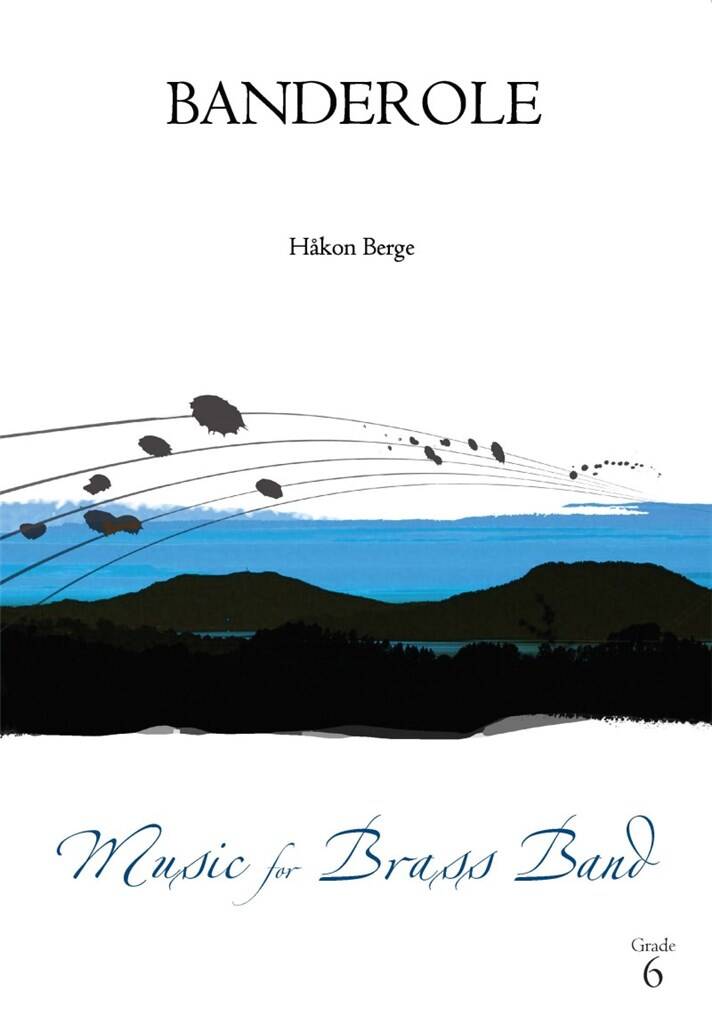
Hakon Berge (born 22 April 1954 in Stavanger) is a Norwegian composer, conductor, arranger and music administrator, resident in Oslo. He studied at the Rogaland Conservatoire and at the Norwegian State Academy of Music. Berge has composed music for theatrical productions in venues such as the Rogaland Theatre, The National Theater in Bergen and the National Theatre in Oslo. He is also experienced in television production and was responsible for televised opera Gagarin - A Space Travel Opera(1991). He has composed a considerable number of commissions, including the music for the opening of the Alexandria Library, music for the opening of the Nobel Peace Centre in Oslo, and the testpiece Brass Blot (for the European Brass Band Championships in Stavanger in 2008, in which Cory Band from South Wales won the first prize. Berge has also written the music to the documentary musical Byterminalen, also described as a rock opera, which was premiered in May 2008 in connection with the celebration of Stavanger as European City of Culture. Hakon Berge has held a number of offices in the musical life of Norway: he has been chairman both of the Norwegian Society of Composers and of TONO, the Norwegian performing rights organization.
Estimated dispatch 5-14 working days
 View Music