
Results
-
 £55.00
Global Variations (Brass Band - Score and Parts) - Hess, Nigel - Littlemore, Phillip
Global Variations takes us around the world in just over eight minutes! The chimes of Big Ben herald the start of a whistle-stop global journey, calling in turn at France, Spain, South Africa, Egypt, Russia, India, China, Australia, South America, and the USA. Suitable for 1st Section Bands and above. Duration: 9.00
Estimated dispatch 7-14 working days
-
 £124.95
The 39th Parallel (Brass Band - Score and Parts) - Graham, Peter
Within The 39th Parallel (South) lies the New Zealand district of Whanganui and at its heart the Whanganui river - Te Awa Tupua.This work is cast in two parts:Part 1, a musical evocation of the course of the river from Mount Tongariro to the sea, is constructed according to golden ratio proportions (the fundamental mathematical principle governing nature). Running in parallel a sequence of metrical modulations finds the tempo of the music increase incrementally over the course of the movement.Part 2, Apakura, ("Lament" in the Maori language) develops a theme previously hinted at in Part 1 but now fully realised. This "Home" theme is an elegy to the late Kevin Jarrett, a towering figure in the New Zealand music scene who for many years lived and worked in the town of Whanganui. The elegy includes references to music which formed a significant part of Kevin Jarrett's musical experiences both as a New Zealand Army Band musician (echoes of the Urbach march Through Bolts and Bars) and through his long association with the National Band of New Zealand (hints of fellow countryman Sir Dean Goffin's classic Rhapsody in Brass). The work concludes with a reprise of the Home theme.The 39th Parallel was commissioned by the Brass Band Association of New Zealand, in memory of the late Kevin Jarrett, with funds primarily provided by WNG Loan Finance & Investment Co; McDonnell Coleman Trust; Brass Whanganui; Riki & Rhys McDonnell; Jonathan Wallace; Graham Hickman; Ian & Denise Levien; and the New Zealand Army Band.- Peter Graham
Estimated dispatch 7-14 working days
-
 £80.00
The Unfortunate Traveller (Brass Band - Score and Parts) - Holst, Imogen - Hindmarsh, Paul
Imogen Holst (1907-1984) submitted The Unfortunate Traveller (1929) as her final work as a student portfolio at the Royal College of Music, where her composition teacher was Gordon Jacob. The title was taken from Thomas Nashe's famous 1594 picaresque novel of the same title. The Suite was first performed on 12 February 1933 at her Majesty's Theatre, Carlisle, by the St. Stephen's Band, with the composer conducting. Te concert was given in memory of Holst's uncle, Dr. H.A. Lediard. Holst had been impressed with the band's performance of his A Moorside Suite at the 1928 National Brass Band Championships (The Crystal Palace, South London) and was keen to work with them. Writing in Imogen Holst, a life in music, Christopher Grogan indicates that it was Gustav Holst's suggestion to include his daughter's work in the programme, quoting Imogen Holst's remarks made in interview to The Daily Mail as follows: "....it is the first time, so far as I know, that a woman has conducted a brass band at a public concert....It has been a delight to rehearse the St. Stephen's Band. It was their performance at the Crystal Palace Festival that inspired me to write this Suite, which I have dedicated to them."Imogen Holst accompanied her father to the Crystal Palace in 1928 to hear the performances of A Moorside Suite, and was so excited by the played and, audibly, by her father's music that she decided to write a brass band piece for her final examination. Te result was The Unfortunate Traveller (1929). However, it was not possible for her to present a brass band work for examination. She arranged it for string orchestra so that it could be played before she left the RCM in July 1930. Following the premiere of the original in 1933, the manuscripts did not resurface until 1969 Imogen found them among her late mother's effects. Although she requested score and parts be destroyed, they ended up in the possession of Manchester composer John Golland, who marked up the score presumably with the intention of creating a new performing edition. The original scoring reveals a lack of experience with what can be a tricky medium.With the agreement of the Holst Foundation, a revised edition, with additional percussion, was prepared in 2011 since when the work has been fortunate to travel round the world as a concert and contest piece. The original includes drums in the March only. The title was taken from Tomas Nashe's famous 1594 picaresque novel of the same title. Several Morris Dance tunes are introduced during the course of the four short movements, including Bonnie Green Garters, Shepherd's Hey, The Rose and The Wind Blaws Cauld. Quirky twists and turns of harmony and spirited rhythms that remind us how much Imogen Holst loved tradition English dance music.In September 2025, I made a performing edition of the composer's arrangement for string orchestra. The manuscript lacks the final movement, which I arranged in a similar style, ie. without extending the upper ranges. Making this edition raised some issues regarding the accuracy of my band version and some of the solutions I used to smooth out the voicing. I have used the composer's second thoughts to refine my performing edition and to correct a textual errors.- Paul HindmarshDuration: 10.00
Estimated dispatch 7-14 working days
-
£40.00
The Unfortunate Traveller (Brass Band - Score only) - Holst, Imogen - Hindmarsh, Paul
Imogen Holst (1907-1984) submitted The Unfortunate Traveller (1929) as her final work as a student portfolio at the Royal College of Music, where her composition teacher was Gordon Jacob. The title was taken from Thomas Nashe's famous 1594 picaresque novel of the same title. The Suite was first performed on 12 February 1933 at her Majesty's Theatre, Carlisle, by the St. Stephen's Band, with the composer conducting. Te concert was given in memory of Holst's uncle, Dr. H.A. Lediard. Holst had been impressed with the band's performance of his A Moorside Suite at the 1928 National Brass Band Championships (The Crystal Palace, South London) and was keen to work with them. Writing in Imogen Holst, a life in music, Christopher Grogan indicates that it was Gustav Holst's suggestion to include his daughter's work in the programme, quoting Imogen Holst's remarks made in interview to The Daily Mail as follows: "....it is the first time, so far as I know, that a woman has conducted a brass band at a public concert....It has been a delight to rehearse the St. Stephen's Band. It was their performance at the Crystal Palace Festival that inspired me to write this Suite, which I have dedicated to them."Imogen Holst accompanied her father to the Crystal Palace in 1928 to hear the performances of A Moorside Suite, and was so excited by the played and, audibly, by her father's music that she decided to write a brass band piece for her final examination. Te result was The Unfortunate Traveller (1929). However, it was not possible for her to present a brass band work for examination. She arranged it for string orchestra so that it could be played before she left the RCM in July 1930. Following the premiere of the original in 1933, the manuscripts did not resurface until 1969 Imogen found them among her late mother's effects. Although she requested score and parts be destroyed, they ended up in the possession of Manchester composer John Golland, who marked up the score presumably with the intention of creating a new performing edition. The original scoring reveals a lack of experience with what can be a tricky medium.With the agreement of the Holst Foundation, a revised edition, with additional percussion, was prepared in 2011 since when the work has been fortunate to travel round the world as a concert and contest piece. The original includes drums in the March only. The title was taken from Tomas Nashe's famous 1594 picaresque novel of the same title. Several Morris Dance tunes are introduced during the course of the four short movements, including Bonnie Green Garters, Shepherd's Hey, The Rose and The Wind Blaws Cauld. Quirky twists and turns of harmony and spirited rhythms that remind us how much Imogen Holst loved tradition English dance music.In September 2025, I made a performing edition of the composer's arrangement for string orchestra. The manuscript lacks the final movement, which I arranged in a similar style, ie. without extending the upper ranges. Making this edition raised some issues regarding the accuracy of my band version and some of the solutions I used to smooth out the voicing. I have used the composer's second thoughts to refine my performing edition and to correct a textual errors.- Paul HindmarshDuration: 10.00
Estimated dispatch 7-14 working days
-
 £40.00
London Eye (from New London Pictures) (Brass Band - Score and Parts) - Hess, Nigel - Littlemore, Phillip
London Eye is an incredibly large rotating wheel situated on the South Bank of the River Thames. This movement depicts a 'flight' on this riverside wheel, at the top of which the panoramic view of London is breath-taking and the expanse of the music is a suitable depiction of that view. This piece is the second movement of Nigel Hess's New London Pictures which represents elements of London in the 21st Century. Suitable for Premier Youth/2nd Section Bands and above. Duration: 4.00
Estimated dispatch 7-14 working days
-
 £125.00
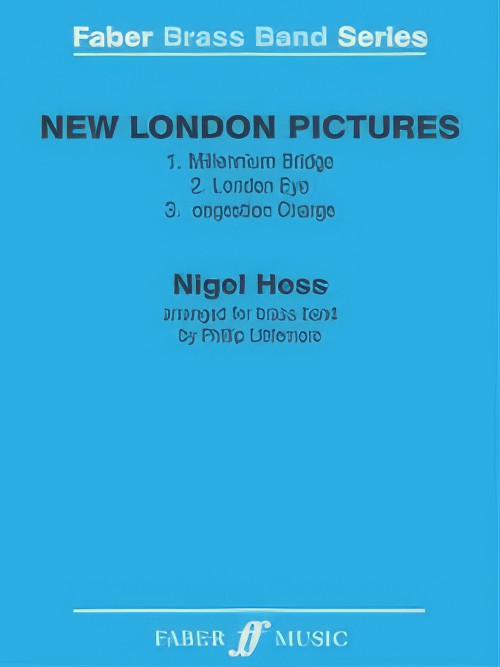
New London Pictures (Brass Band - Score and Parts) - Hess, Nigel - Littlemore, Phillip
New London Pictures represents elements of London in the 21st Century. The Millennium Bridge describes the pedestrian's journey across this wonderful new landmark bridge over the Thames, starting at the imposing Tate Modern, crossing the busy river, and onwards to St. Paul's Cathedral with its bells ringing out over the great city. London Eye is an incredibly large ferris wheel situated on the South Bank of the River Thames. This movement depicts a 'flight' on this riverside wheel, at the top of which the panoramic view of London is breath-taking and the expanse of the music is a suitable depiction of the view. As with all modern cities, London is over-crowded with motor vehicles. London is the first major city in Europe to adopt a Congestion Charge, and this piece (with its stop and go traffic lights) is both racy and comical. Here are Londoners attempting to go about their business in the face of overwhelming odds..... Suitable for Premier Youth/2nd Section Bands and above. Duration: 15.00
Estimated dispatch 7-14 working days
-
 £60.99
Fanfare in Iubilo (Brass Band - Score and Parts) - Doss, Thomas
The power of this bright fanfare reflects the optimism, joy and commitment to tradition that the people of the Italian town of Schlanders have deep within their souls. The golden trumpets from the valleys of South Tyrol echo across the mountains on both sides of the Austrian-Italian border and help to convey the composer's message: just as the sun shines on all parts of the world, music knows no boundaries. This message echoes throughout this brilliant fanfare.Duration: 4:30
Estimated dispatch 7-14 working days
-
 £40.00
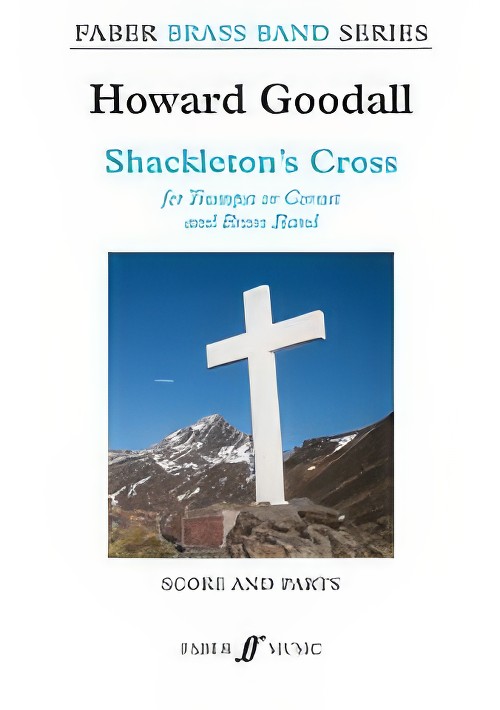
Shackleton's Cross (Cornet Solo with Brass Band - Score and Parts) - Goodall, Howard - Hall, Daniel
Shackleton's Cross was inspired by a painting created in 1957 by the English artist Edward Seago (1910 1974). The title refers to a cross which was erected to the memory of Sir Ernest Shackleton, who led a number of explorations to the Antarctic. Shackleton died in 1922 whilst on a Polar expedition, and the cross can be found on a promontory at the entrance to the bay at Grytviken Whaling Station in South Georgia. The painting is owned by HRH The Duke of Edinburgh, and was part of an exhibition at Buckingham Palace from October 2011 to April 2012. Originally scored for oboe, trumpet and small orchestra, Daniel Hall's sensitive arrangement for trumpet or cornet and brass band follows the composer's alternative version for solo trumpet and organ, created for Crispian Steele-Perkins (trumpet) and David Goode (organ). Duration: 5.00
Estimated dispatch 7-14 working days
-
 £42.95
MYTHIC TREVITHICK! (Brass Band) - Richards, Goff
Composed to mark the 200th anniversary of Richard Trevithick's momentous first journey in his steam locomotive. This event took place in the cornish town of Camborne, and it was 200 years later in 2001 that composer Goff Richards conducted massed local bands in the first performance of MYTHIC TREVITHICK! Following work in South America, Trevithick returned to his native Cornwall and, it is reputed, all the church bells rang out to greet him, an effect captured in the final bars of the piece. Duration: 4' 00' Recorded on Polyphonic QPRL222D And the Band Played On
Estimated dispatch 7-14 working days
-
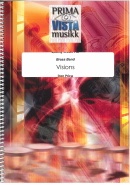 £24.95
VISIONS (Brass Band Extra score) - Price, Dan
2015 National Championships Finals Testpiece - Fourth Section - Extra score only. Visions paints an historical musical portrait of the small town of Briton Ferry (Llansawel) on the mouth of River Neath, South Wales. The area was heavily developed during the industrial revolution and became an important location for steel and tin plate production. Although written as a continuous piece of music, the work is divided into four sections; Briton Ferry, Brunel's Vision, Giant's Grave and Hen Gastell.
Estimated dispatch 7-14 working days
 View Music