
Results
-
£29.50
Busy Line - Murry Semos - Gavin Somerset
Originally a hit for Rose Murphy before being re-recorded by Peter Skellern on his 1982 album "A String Of Pearls", this arrangement is based on the Skellern recording which has a 'trad-jazz' feel throughout. The piece gives your band a chance to show off the soloists, including solo cornet, flugel, solo horn, solo trombone & bass section (however an optional cut is included which removes the soloists section). You may also remember the piece from the BT television adverts in 1990 with its unique use of the 'brr brr brr' sound! If you're looking for something new and entertaining for your concert program this year, look no further!
In Stock: Estimated dispatch 1-3 working days
-
£29.50
Blue Skies - Irving Berlin - Neville Buxton
This wonderful big band style arrangement of this popular classic is sure to bring high entertainment value to any concert. Introducing the music with a broad opening before the swing section starts, fairly straight forward until E when certain members of the band get to show off in this skillfully arranged section. A fast 3/4 time follows giving the Soprano chance to shine before returning to the big band sound to finish.
In Stock: Estimated dispatch 1-3 working days
-
 £24.50
Forever Yours - Darrol Barry
From the pen of Darrol Barry comes a new Flugel Horn solo that allows the soloists the chance to show off the instruments beautiful sound. The simplistic melody in the solo line and the shifting harmonies from the band create a beautiful effect that will draw the listener in throughout the piece until the gently final moments of tranquillity. A great addition to a soloists repertoire. Download the solo part free at: http://penninemusic.com/ForeverYours.pdf
In Stock: Estimated dispatch 1-3 working days
-
 £24.50
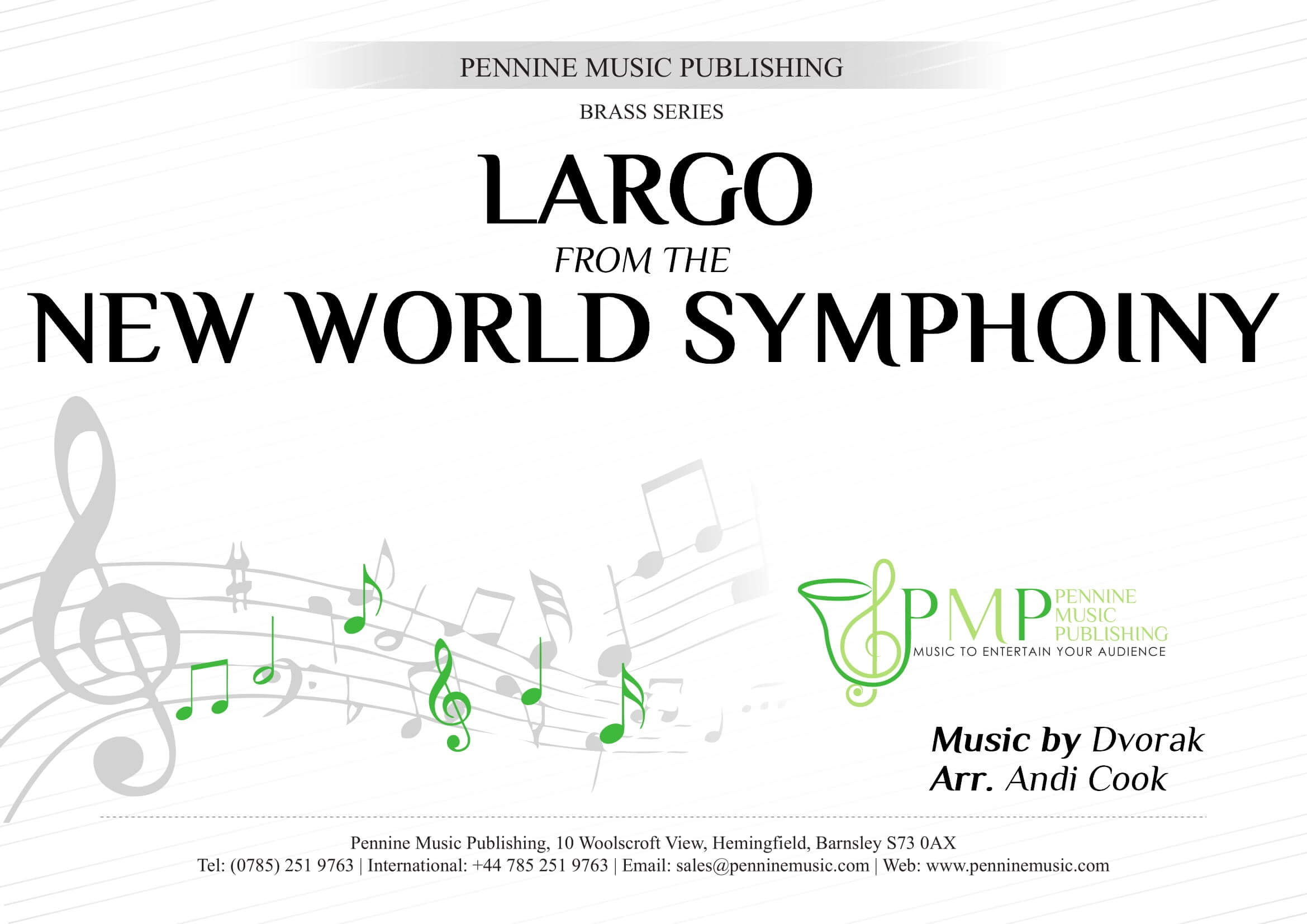
Largo (From the New World Symphony) - Antonin Dvorak - Andi Cook
Dvorak's music, is filled with memorable themes and this movement is no exception. For years associated with Bread advert, this arrangement for brass band is simply stunning, creating a warm sound throughout the sections of the band and playable by all levels of band. A perfect item for any concert.
In Stock: Estimated dispatch 1-3 working days
-
 £89.95
Trombone Concerto (Trombone Solo with Brass Band - Score and Parts) - Gregson, Edward
The Gregson Trombone Concerto was originally written in 1979 to a commission from Bedfordshire Education Service, for a new work for Michael Hext, winner of the first BBC Young Musician of the Year competition. This version for brass band was commissioned by Nicholas Childs, Music Director of the Black Dyke Band, specially for Brett Baker, the then principal trombone of the band. He has recorded it on the Doyen label with the Black Dyke Band.The work falls into three main sections, played without a break, but conforming to the traditional pattern of concerto structure. After a slow introduction, containing most of the motivic and rhythmic ideas used in the work, there follows the main fast section which is itself divided into three parts and concludes with a fierce climax (timpani and gong). The slow and rather intense middle section is linked to a cadenza for the soloist, at first unaccompanied but leading to accompanied references to earlier material. The final section is a scherzo which ends dramatically with a re-statement of the opening slow introduction. A brisk coda concludes the work. The interval of a fourth (and its augmented form) provides melodic and harmonic unity for the work, whilst the tonal juxtaposition between E minor and B flat major throughout the concerto is an important element of the structure.The writing for trombone is virtuosic, encompassing the whole range of the instrument, but it also exploits the rather beautiful lyrical sound of which this instrument is capable.
Estimated dispatch 7-14 working days
-
 £44.95
Trombone Concerto (Trombone Solo with Brass Band - Score only) - Gregson, Edward
The Gregson Trombone Concerto was originally written in 1979 to a commission from Bedfordshire Education Service, for a new work for Michael Hext, winner of the first BBC Young Musician of the Year competition. This version for brass band was commissioned by Nicholas Childs, Music Director of the Black Dyke Band, specially for Brett Baker, the then principal trombone of the band. He has recorded it on the Doyen label with the Black Dyke Band.The work falls into three main sections, played without a break, but conforming to the traditional pattern of concerto structure. After a slow introduction, containing most of the motivic and rhythmic ideas used in the work, there follows the main fast section which is itself divided into three parts and concludes with a fierce climax (timpani and gong). The slow and rather intense middle section is linked to a cadenza for the soloist, at first unaccompanied but leading to accompanied references to earlier material. The final section is a scherzo which ends dramatically with a re-statement of the opening slow introduction. A brisk coda concludes the work. The interval of a fourth (and its augmented form) provides melodic and harmonic unity for the work, whilst the tonal juxtaposition between E minor and B flat major throughout the concerto is an important element of the structure.The writing for trombone is virtuosic, encompassing the whole range of the instrument, but it also exploits the rather beautiful lyrical sound of which this instrument is capable.Duration: 16.00
Estimated dispatch 7-14 working days
-
 £74.95
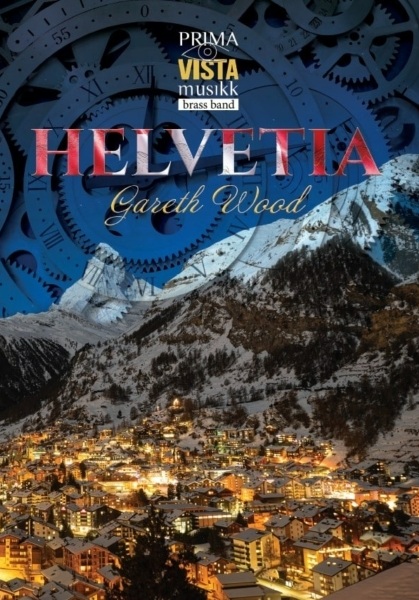
Helvetia (Brass Band - Score and Parts) - Wood, Gareth
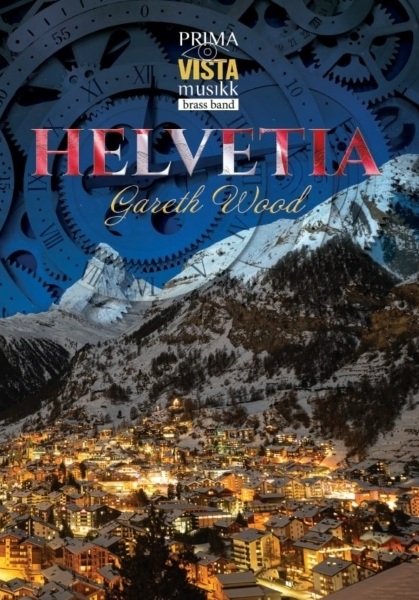
I first went to Switzerland in the early 1970's and regularly played at the Lucerne Festival with the Royal Philharmonic Orchestra. It is a beautiful city, one of my favourite European cities.In writing Helvetia (the Roman name for Switzerland) I wanted to encapsulate the moods that remind me of this wonderful place. The work is in four distinct sections and is on the whole, self-explanatory.It opens with An Alpine Dawn and sunrise, the tubas and euphoniums substituting for the Swiss Alphorns. Next The Clock Shop at Mid-day, a loud ticking, chiming and the sad sound of a cuckoo, builds into the cacophony of the mid-day chimes. The third section is A Walk to Wagner's House. Just along the lake from the centre of town is Tribschen. This walk I have done many times, and it is here that Wagner wrote 'Tristan'. I have quoted the Dresden Amen (written by J.G. Naumann) which is much used in Parsifal. The final section is The Cesta Run, the most famous bob-sleigh run in the world. As we take each corner, the feeling of speed is demonstrated as only a brass band can do!The work is dedicated to the Cory Band and also to the memory of James Watson, a great cornet player, trumpeter and conductor. It was he who got me into writing for brass band and I hope this piece is worthy.- Gareth Wood (Feb. 2011)Duration: 11.00
Estimated dispatch 7-14 working days
-
 £31.95
Helvetia (Brass Band - Score only) - Wood, Gareth
I first went to Switzerland in the early 1970's and regularly played at the Lucerne Festival with the Royal Philharmonic Orchestra. It is a beautiful city, one of my favourite European cities.In writing Helvetia (the Roman name for Switzerland) I wanted to encapsulate the moods that remind me of this wonderful place. The work is in four distinct sections and is on the whole, self-explanatory.It opens with An Alpine Dawn and sunrise, the tubas and euphoniums substituting for the Swiss Alphorns. Next The Clock Shop at Mid-day, a loud ticking, chiming and the sad sound of a cuckoo, builds into the cacophony of the mid-day chimes. The third section is A Walk to Wagner's House. Just along the lake from the centre of town is Tribschen. This walk I have done many times, and it is here that Wagner wrote 'Tristan'. I have quoted the Dresden Amen (written by J.G. Naumann) which is much used in Parsifal. The final section is The Cesta Run, the most famous bob-sleigh run in the world. As we take each corner, the feeling of speed is demonstrated as only a brass band can do!The work is dedicated to the Cory Band and also to the memory of James Watson, a great cornet player, trumpeter and conductor. It was he who got me into writing for brass band and I hope this piece is worthy.- Gareth Wood (Feb. 2011)Duration: 11.00
Estimated dispatch 7-14 working days
-
 £21.95
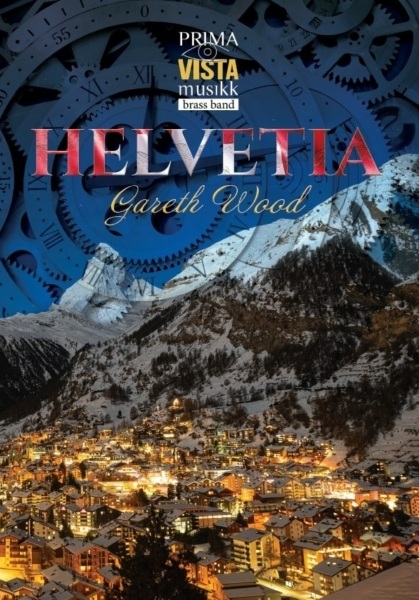
Helvetia (Brass Band - Study Score) - Wood, Gareth
I first went to Switzerland in the early 1970's and regularly played at the Lucerne Festival with the Royal Philharmonic Orchestra. It is a beautiful city, one of my favourite European cities.In writing Helvetia (the Roman name for Switzerland) I wanted to encapsulate the moods that remind me of this wonderful place. The work is in four distinct sections and is on the whole, self-explanatory.It opens with An Alpine Dawn and sunrise, the tubas and euphoniums substituting for the Swiss Alphorns. Next The Clock Shop at Mid-day, a loud ticking, chiming and the sad sound of a cuckoo, builds into the cacophony of the mid-day chimes. The third section is A Walk to Wagner's House. Just along the lake from the centre of town is Tribschen. This walk I have done many times, and it is here that Wagner wrote 'Tristan'. I have quoted the Dresden Amen (written by J.G. Naumann) which is much used in Parsifal. The final section is The Cesta Run, the most famous bob-sleigh run in the world. As we take each corner, the feeling of speed is demonstrated as only a brass band can do!The work is dedicated to the Cory Band and also to the memory of James Watson, a great cornet player, trumpeter and conductor. It was he who got me into writing for brass band and I hope this piece is worthy.- Gareth Wood (Feb. 2011)Duration: 11.00
Estimated dispatch 7-14 working days
-
 £29.95
Before The Cross (Cornet Solo with Brass Band - Score and Parts) - Gregson, Edward
Written at the request of David Daws for his solo album The Sound of David Daws, this meditation for cornet and brass band uses the composer's own song Before the cross (originally published in The Musical Salvationist, April 1965), the first lines of which are Before the cross I stand in fear and wonder, and see that all my sirs on Thee are laid. The song was written at an early stage of the composer's career, just before commencing study at The Royal Academy of Music, London. After a brief introduction the melody is heard twice, first played by the soloist, then on Euphonium and Flugel Horn with the soloist adding ornate counterpoint before taking up the melody once again, this time leading to a quiet and reflective conclusion.
Estimated dispatch 7-14 working days
 View Music