
Results
-
£24.50
Fakenham Fair - Traditional - A. Cook
The origins of the song Fakenham Fair are somewhat obscure. It was collected by Peter Bellamy, who performed it unaccompanied on his first solo LP, "Mainly Norfolk" in 1968, giving credit to a Peter Bullen of Norwich from whom he had learned it, Bullen in turn giving credit to his grandfather. But beyond that, other than it definitely being a Norfolk folk song, the rest is a mystery.Over the years, Fakenham Fair has become a firm favourite among folk audiences, probably the most famous version being the 2008 recording by folk supergroup 'Bellowhead' which this setting for brass band pays tribute to. A bright, quirky, and bouncy 5:4/10:8 waltz, the band parts dance back and forth from simple time to compound time and back again, giving a constant flow that somehow always feels natural despite the irregular rhythm... but which will also keep your audience guessing where the beat will land next! With solos and features for principal chairs around the band, nobody is left out of the fun. Engaging to listen to and even more so to play, Fakenham Fair is a perfect light concert item for the band that likes to show off their rhythmic and lyrical sides at the same time.
In Stock: Estimated dispatch 1-3 working days
-
 £64.95
ESPRIT (Brass Band) - Barry, Darrol
Esprit is a rhapsodic adventure for brass band and percussion.During its twelve minutes, features all soloists and sections of the band. After a vibrant opening the main melodic work is in the lower band accompanied by swirling cornets.The next section is a scherzo like section opened by the horns and closed by the timpani, and in between there are solo's for all.The following adagio is an expressive solo for euphonium accompanied by cup muted cornets and trombones, followed by a section for the flugel which builds up to the full band. A cornet cadenza follows after which a timpani solo takes us to a con brio section in 6/8 which features a round and fugato section which is followed by a slower section for trombones which in turn leads to a musical climax.A short allegro motto section develops an idea from earlier in the piece and leads us into a reprise of the opening section. A vibrant coda concludes the work.Duration: 12:00 Grade: Moderately Difficult
Estimated dispatch 7-14 working days
-
£89.95
TRUMPETS OF THE ANGELS - 2016 Edition (Gregson) (Brass Band - Score and Parts) - Gregson, Edward
The Trumpets of the Angels is a large-scale work, scored for seven solo trumpets (or cornets), brass band and percussion (deploying 'dark' instruments such as three tam-tams, bass drum and two sets of timpani). The genesis of the work is a quotation from the Book of Revelation ... and I saw the seven angels which stood before God; and to them were given seven trumpets.Thus the idea behind the work is highly dramatic and I have tried to achieve this by the spatial deployment of seven solo trumpets around the band. Trumpet 7 remains separate from the band throughout and, indeed, has the most dramatic and extended cadenza, representing the words of the seventh angel ... and time shall be no more.The work opens with a four-note motif announced by off-stage horns and baritones and answered by fanfare figures on four solo trumpets. In turn, each then play cadenzas before joining together, independently playing their own music. This leads to a sung Kyrie Eleison with accompanying solos for Flugel Horn and Baritone, after which we hear the entry of solo trumpets 5 and 6 with music that is more urgent and rhythmic, describing the Horsemen of the Apocalypse.The music reaches another climax, more intense this time, with the horns and baritones (now on-stage) again sounding the transformed motif, before subsiding into what might be described as a lament of humanity - slow, yearning music, which builds from low to high, from soft to loud, with a melody that is both simple and poignant. At its climax, Trumpet 7 makes a dramatic entry, playing the opening four-note motif, but expanded to almost three octaves. This cadenza (to the partial accompaniment of 3 tam-tams, representing the Holy Trinity) introduces new material and foreshadows the ensuing Scherzo, introduced by antiphonal timpani before the band enters with music that is fast and foreboding. Despite the somewhat desolate and 'unstable' mood of this music, it slowly moves towards an optimistic conclusion, transforming the 'humanity' music into an affirmative and triumphant statement.The original version of The Trumpets of the Angels was commissioned by the Fodens Band for their centenary concert at The Bridgewater Hall, Manchester, in 2000, and contained an important part for organ. In 2015 I was asked by Nicholas Childs to create a New Performing Edition for the Black Dyke Band; without organ, and including newly composed material. This New Performing Edition was given its first performance at the European Brass Band Festival in Lille in April 2016. The work is dedicated In tribute to Olivier Messiaen.- Edward Gregson
Estimated dispatch 7-14 working days
-
£44.95
TRUMPETS OF THE ANGELS - 2016 Edition (Gregson) (Brass Band - Score only) - Gregson, Edward
The Trumpets of the Angels is a large-scale work, scored for seven solo trumpets (or cornets), brass band and percussion (deploying 'dark' instruments such as three tam-tams, bass drum and two sets of timpani). The genesis of the work is a quotation from the Book of Revelation ... and I saw the seven angels which stood before God; and to them were given seven trumpets.Thus the idea behind the work is highly dramatic and I have tried to achieve this by the spatial deployment of seven solo trumpets around the band. Trumpet 7 remains separate from the band throughout and, indeed, has the most dramatic and extended cadenza, representing the words of the seventh angel ... and time shall be no more.The work opens with a four-note motif announced by off-stage horns and baritones and answered by fanfare figures on four solo trumpets. In turn, each then play cadenzas before joining together, independently playing their own music. This leads to a sung Kyrie Eleison with accompanying solos for Flugel Horn and Baritone, after which we hear the entry of solo trumpets 5 and 6 with music that is more urgent and rhythmic, describing the Horsemen of the Apocalypse.The music reaches another climax, more intense this time, with the horns and baritones (now on-stage) again sounding the transformed motif, before subsiding into what might be described as a lament of humanity - slow, yearning music, which builds from low to high, from soft to loud, with a melody that is both simple and poignant. At its climax, Trumpet 7 makes a dramatic entry, playing the opening four-note motif, but expanded to almost three octaves. This cadenza (to the partial accompaniment of 3 tam-tams, representing the Holy Trinity) introduces new material and foreshadows the ensuing Scherzo, introduced by antiphonal timpani before the band enters with music that is fast and foreboding. Despite the somewhat desolate and 'unstable' mood of this music, it slowly moves towards an optimistic conclusion, transforming the 'humanity' music into an affirmative and triumphant statement.The original version of The Trumpets of the Angels was commissioned by the Fodens Band for their centenary concert at The Bridgewater Hall, Manchester, in 2000, and contained an important part for organ. In 2015 I was asked by Nicholas Childs to create a New Performing Edition for the Black Dyke Band; without organ, and including newly composed material. This New Performing Edition was given its first performance at the European Brass Band Festival in Lille in April 2016. The work is dedicated In tribute to Olivier Messiaen.- Edward Gregson
Estimated dispatch 7-14 working days
-
 £15.99
A Road Less Travelled By (Brass Band - Study Score) - Sparke, Philip
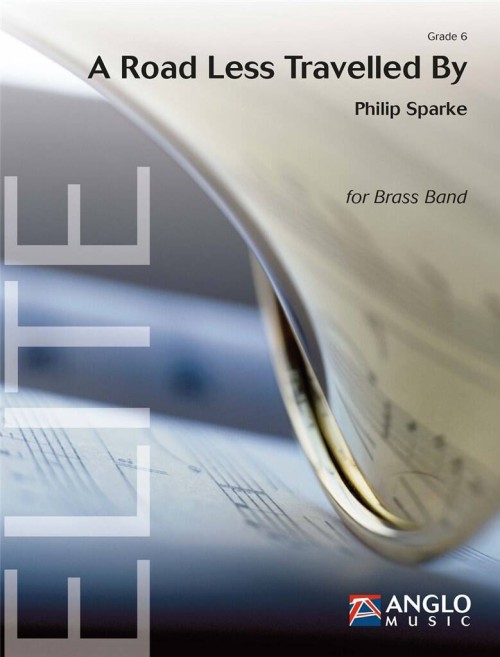
A Road Less Travelled By was commissioned by Palangos Orkestras for the Championship Section of the 2020 European Brass Band Championships held in Palanga, Lithuania.The following was written by the composer, Philip Sparke:The title alludes to a poem by American author, Robert Frost, which appeared in his 1916 collection, Mountain Intervals: The Road Not Taken.In common with most of my larger works, this piece in not programmatic, but purely abstract; there is no extrinsic musical story. The choice of title shares my view of how composers can often develop. There can be no 'destination' in a composer's career, but rather a continuing journey to an unknown place. From piece to piece a composer needs to decide his or her next steps, never really knowing where they might lead. As Frost so eloquently describes, these sorts of instinctive decisions guide all our lives.Set in three movements, which play without a break, A Road Less Travelled By opens with a Moto Perpetuo firmly rooted in classical language, form and syntax. A continuous river of semiquavers, veering from melody to accompaniment and back again, adds drive, every and motion. The second movement, Nocturne, is in the form of a free fantasia; solos for vibraphone, flugel horn and euphonium set the stage for a central cornet solo, quietly echoed by the full band. A triumphal climax is reached before the movement dissolves into a Scherzo Finale. Mercurial and quixotic in nature, this third movement starts jovially until trios for trombones and horns darken the atmosphere. A change of mood and meter leads to a reprise of the opening and a return of the cornet melody, this time accompanied by figures derived from the scherzo theme. A brief coda based on earlier material drives the piece to a close.Duration: 15.30
Estimated dispatch 7-14 working days
-
£154.99
A Road Less Travelled By (Brass Band - Score and Parts) - Sparke, Philip
A Road Less Travelled By was commissioned by Palangos Orkestras for the Championship Section of the 2020 European Brass Band Championships held in Palanga, Lithuania.The following was written by the composer, Philip Sparke:The title alludes to a poem by American author, Robert Frost, which appeared in his 1916 collection, Mountain Intervals: The Road Not Taken.In common with most of my larger works, this piece in not programmatic, but purely abstract; there is no extrinsic musical story. The choice of title shares my view of how composers can often develop. There can be no 'destination' in a composer's career, but rather a continuing journey to an unknown place. From piece to piece a composer needs to decide his or her next steps, never really knowing where they might lead. As Frost so eloquently describes, these sorts of instinctive decisions guide all our lives.Set in three movements, which play without a break, A Road Less Travelled By opens with a Moto Perpetuo firmly rooted in classical language, form and syntax. A continuous river of semiquavers, veering from melody to accompaniment and back again, adds drive, every and motion. The second movement, Nocturne, is in the form of a free fantasia; solos for vibraphone, flugel horn and euphonium set the stage for a central cornet solo, quietly echoed by the full band. A triumphal climax is reached before the movement dissolves into a Scherzo Finale. Mercurial and quixotic in nature, this third movement starts jovially until trios for trombones and horns darken the atmosphere. A change of mood and meter leads to a reprise of the opening and a return of the cornet melody, this time accompanied by figures derived from the scherzo theme. A brief coda based on earlier material drives the piece to a close.Duration: 15.30
Estimated dispatch 7-14 working days
-
£36.50
A Road Less Travelled By (Brass Band - Score only) - Sparke, Philip
A Road Less Travelled By was commissioned by Palangos Orkestras for the Championship Section of the 2020 European Brass Band Championships held in Palanga, Lithuania.The following was written by the composer, Philip Sparke:The title alludes to a poem by American author, Robert Frost, which appeared in his 1916 collection, Mountain Intervals: The Road Not Taken.In common with most of my larger works, this piece in not programmatic, but purely abstract; there is no extrinsic musical story. The choice of title shares my view of how composers can often develop. There can be no 'destination' in a composer's career, but rather a continuing journey to an unknown place. From piece to piece a composer needs to decide his or her next steps, never really knowing where they might lead. As Frost so eloquently describes, these sorts of instinctive decisions guide all our lives.Set in three movements, which play without a break, A Road Less Travelled By opens with a Moto Perpetuo firmly rooted in classical language, form and syntax. A continuous river of semiquavers, veering from melody to accompaniment and back again, adds drive, every and motion. The second movement, Nocturne, is in the form of a free fantasia; solos for vibraphone, flugel horn and euphonium set the stage for a central cornet solo, quietly echoed by the full band. A triumphal climax is reached before the movement dissolves into a Scherzo Finale. Mercurial and quixotic in nature, this third movement starts jovially until trios for trombones and horns darken the atmosphere. A change of mood and meter leads to a reprise of the opening and a return of the cornet melody, this time accompanied by figures derived from the scherzo theme. A brief coda based on earlier material drives the piece to a close.Duration: 15.30
Estimated dispatch 7-14 working days
-
 £89.99
A Symphony of Colours (Brass Band - Score and Parts)
A Symphony Of Colours contains four movements, which merge seamlessly together; Joy; Chroma (a journey through the composer's perception of synesthesia); Endless Time (where tuned percussion features alongside extended solos for the euphonium); and the final, climactic Ascent. This virtuoso score won a BASCA British Composer Award in the Brass & Wind Band category for its composer, Simon Dobson. Suitable for Championship Section Bands. Duration: 17.00
Estimated dispatch 7-14 working days
-
 £44.00
The Liberty Bell (Brass Band - Score and Parts) - Sousa, John Philip - Wilkinson, Keith M.
This march, written in 1893, was originally destined for inclusion in an operetta but after the composer had witnessed a spectacle called "America" in Chicago, which had as its backdrop a huge painting of the Liberty Bell, it was given the name by which it has become famous. Further recognition has come in more recent years by the adoption of the march as the signature tune for the popular TV programme, Monty Python.The arrangement includes several solos for a large unpitched bell which add aural (and visual) interest. It has been recorded by Brass Band of the Western Reserve, musical director Keith M Wilkinson, on the CD Slides Rule.
Estimated dispatch 7-14 working days
-
 £35.00
The Witch of the Westmerlands (Brass Band - Score and Parts) - Fisher, Archie - Harper, Philip
Arranged for the Leyland Band's 2010 Brass in Concert programme. This is a sumptuous, lyrical setting of Scottish folk singer-songwriter Archie Fischer's originally up-beat song, with solos for baritone and cornet. The words tell the story of an ancient knight wounded in battle and dying on the battlefield who is healed by a mysterious old lady appearing from across the moors and swiftly vanishing again.The original version was sung by, amongst others, Barbara Dickson who has said she is a big fan of Philip's sensitive arrangement.Duration: 4.15
Estimated dispatch 7-14 working days
 Listen to MP3
 View Music