
Results
-
 £118.99
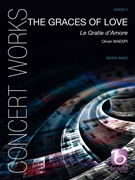
GRACES OF LOVE (Le Gratie d'Amore) (Brass Band Set) - Waespi, Oliver
2015 National Championships Finals Testpiece - Third Section. The Graces of Love (Le Gratie d'Amore) is the title of a book published in 1602 by Cesare Negri, the famous dance master of the Milan court in the Renaissance. It contains numerous dance tunes and precise descriptions of courtly dances. It also includes the tune Il bianco fior (The White Flower) on which the first movement of the present piece is based. A vigorous dance in three-four, it leads to an acceleration and a sudden shift to an even meter towards the end. The second movement, calm and contemplative in character, features the tune Vaghe bellezze ... (Veiled Beauty ...). Widely spaced melodic parts surround two solos during which the tune is varied and developed. Finally, the third movement contains a saltarello with a hypnotic rhythm, ending the work with flair and gusto. Duration: 11:30
Estimated dispatch 7-14 working days
-
 £45.00
SALSATION (Brass Band) - Shire, David - Harper, Philip
This song was composed for the 1977 John Travolta film?Saturday Night Fever, and the 70s disco vibe is never far from the surface of the music. In combination with the scat style of Latin singer Tania Maria, this arrangement features virtuosic solos for tenor horn, trombone and soprano cornet, with all the B? cornets kept thoroughly busy throughout! This piece is on the CD Cory in Concert Volume V. Grade: Championship section. Duration: 4:00
Estimated dispatch 7-14 working days
-
 £24.95
SNARING OF THE SUN, The (Brass Band Extra Score) - Roberts, Stephen
2015 National Championships Finals Testpiece - Second Section - Extra Score. The Graces of Love (Le Gratie d'Amore) is the title of a book published in 1602 by Cesare Negri, the famous dance master of the Milan court in the Renaissance. It contains numerous dance tunes and precise descriptions of courtly dances. It also includes the tune Il bianco fior (The White Flower) on which the first movement of the present piece is based. A vigorous dance in three-four, it leads to an acceleration and a sudden shift to an even meter towards the end. The second movement, calm and contemplative in character, features the tune Vaghe bellezze ... (Veiled Beauty ...). Widely spaced melodic parts surround two solos during which the tune is varied and developed. Finally, the third movement contains a saltarello with a hypnotic rhythm, ending the work with flair and gusto. Duration: 11:30
Estimated dispatch 7-14 working days
-
£99.95
SNARING OF THE SUN, The (Brass Band Set) - Roberts, Stephen
2015 National Championships Finals Testpiece - Second Section. The Graces of Love (Le Gratie d'Amore) is the title of a book published in 1602 by Cesare Negri, the famous dance master of the Milan court in the Renaissance. It contains numerous dance tunes and precise descriptions of courtly dances. It also includes the tune Il bianco fior (The White Flower) on which the first movement of the present piece is based. A vigorous dance in three-four, it leads to an acceleration and a sudden shift to an even meter towards the end. The second movement, calm and contemplative in character, features the tune Vaghe bellezze ... (Veiled Beauty ...). Widely spaced melodic parts surround two solos during which the tune is varied and developed. Finally, the third movement contains a saltarello with a hypnotic rhythm, ending the work with flair and gusto. Duration: 11:30
Estimated dispatch 7-14 working days
-
£24.50
Fakenham Fair - Traditional - A. Cook
The origins of the song Fakenham Fair are somewhat obscure. It was collected by Peter Bellamy, who performed it unaccompanied on his first solo LP, "Mainly Norfolk" in 1968, giving credit to a Peter Bullen of Norwich from whom he had learned it, Bullen in turn giving credit to his grandfather. But beyond that, other than it definitely being a Norfolk folk song, the rest is a mystery.Over the years, Fakenham Fair has become a firm favourite among folk audiences, probably the most famous version being the 2008 recording by folk supergroup 'Bellowhead' which this setting for brass band pays tribute to. A bright, quirky, and bouncy 5:4/10:8 waltz, the band parts dance back and forth from simple time to compound time and back again, giving a constant flow that somehow always feels natural despite the irregular rhythm... but which will also keep your audience guessing where the beat will land next! With solos and features for principal chairs around the band, nobody is left out of the fun. Engaging to listen to and even more so to play, Fakenham Fair is a perfect light concert item for the band that likes to show off their rhythmic and lyrical sides at the same time.
In Stock: Estimated dispatch 1-3 working days
-
 £29.50
Grandfather's Clock - G Doughty - Gavin Somerset
One of the most popular Euphonium solos in the Brass Band repertoire has now been transcribed and re-arranged for the Eb Instruments of the band. Originally arranged for Michelle Ibbotson on Soprano for Black Dyke, this transcription makes the solo perfect for Soprano Cornet, Tenor Horn or even Eb Bass. New percussion parts have also been added for this arrangement. Most bands have the original Euphonium solo in their library, and now is the chance to revive this old classic in a new light, with new soloists.
In Stock: Estimated dispatch 1-3 working days
-
£24.50
Hey Presto! - Gerry McColl
This new gem of a solo for Euphonium is a rousing piece from start to finish. Starting with heavy syncopation from the band before the soloist can show off with this catchy little tune that you will be whistling for days (if you can whistle that fast!) The middle section then breaks into a beautiful legato tune for the soloist up in the top register, whilst the rest of the band keep on ploughing away underneath. The original tune then returns after a modulation and finishing with the soloist showing off their chromatic runs in the last couple of bars. This is one of the best new entertaining solos around.
In Stock: Estimated dispatch 1-3 working days
-
 £29.50
We Three Kings - Traditional - Gavin Somerset
This traditional item has certainly been arranged with the "wow" factor. Starting gently with a solo from the horn before being joined by the rest of the band, after which it's a cocktail of surprises. A Jazz waltz theme ensures the audience enjoy every toe-tapping minute of the piece whilst your players ravish the solos and counter melodies (there's even a solo for the Eb Bass!) Bells ring out and the feel good factor from this arrangement will leave your audiences stunned as the key change at the end is sure to make the hairs on your neck rise! A must for all Christmas programs. For Christmas 2020, we have made backing tracks of this title for you to download. These can be used either for personal playback use, or to create a virtual performance of the piece with your full band. To download the backing track, please RIGHT CLICK HERE & Save As .
In Stock: Estimated dispatch 1-3 working days
-
£29.50
Have Yourself A Merry Little Christmas - Hugh Martin & Ralph lane - Hannah Hawken
Some musical numbers require little introduction and the hit that is 'Have Yourself A Merry Little Christmas' has been entertaining audiences since its first appearance back in 1944. Original sung by Julie Garland in the MGM musical 'Meet Me In St. Louis', the song was later revised and re-recorded. It was this second incarnation that is the popular song that we know today. Christmas solos are a novelty and now, arranged by Hannah Hawkden, this lovely little number fits perfectly into any Christmas concert giving your band and audience something fresh this year.
In Stock: Estimated dispatch 1-3 working days
-
£24.50
In The Bleak Midwinter - Holst/Darke - Andi Cook
This work skilfully brings two popular tunes to the carol 'In The Bleak Midwinter' together. Christmas solos are becoming more popular and this beautiful Flugel solo is a welcome addition to any Christmas concert programme. With sympathetic scoring throughout, this work is not technically demanding on either the band or soloist, but relies on lyrical playing throughout. A perfect addition to any soloist's repertoire.
In Stock: Estimated dispatch 1-3 working days
 View Music
 Listen to MP3