
Results
-
 £29.50
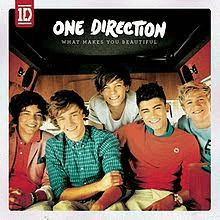
What Makes You Beautiful - One Direction - Alex Parker
Boy band sensation, One Direction, are the successful product of the reality TV programme, the X-Factor. The five boys originally entered the competition as solo artists, however Simon Cowell decided they'd be better off together. The rest as they say is history. Not only have they conquered the UK charts, but also successfully crossed the pond to be hits in the USA. Their BRIT award winning single, 'What Makes You Beautiful' is a something a little bit different for a band's concert programme and one that will certainly prick up the ears of younger listeners and players.
In Stock: Estimated dispatch 1-3 working days
-
 £24.95
TRUMPETERa????S LULLABY, A (Cornet Solo with Brass Band Set)
Estimated dispatch 7-14 working days
-
 £80.00
St. Magnus - Kenneth Downie
Dedicated to Alastair Massey, an inspirational music teacher. Commissioned by the Scottish Brass Band Association for the 2004 European Brass Band Championships in Glasgow. This music is a set of variations on the tune known as St Magnus, which is attributed to Jeremiah Clarke. Most people will associate it with Thomas Kelly's hymn which begins: "The Head that once was crowned with thorns is crowned with glory now". The tune is very simple, consisting of just two, four-bar phrases. Neither is there much in the way of rhythmic variety, every note being a crotchet with the exception of two quavers, and the last note in each phrase. Within such a simple structure, however, lies considerable strength. THEME The listener is given the opportunity of hearing it twice, in full, at the beginning, starting with one player but soon taken up by the full ensemble. It returns in the middle of the music and is stated again near the end. This has been done quite deliberately in the hope that there will be an appreciation of what material is being developed, by the listener as well as by those with access to the score, who are able to see the visual connections. VARIATION 1 This takes the rhythm of the last part of the theme and also uses the shape of the opening as a recurring figure. The mood is whimsical and skittish, with short, teasing rhythmic figures tossed around the band, and quick interplay with percussion, at a fast tempo. An energetic flourish finishes this variation before the Andante espress. VARIATION 2 This commences with chords related to the opening of Variation 1. The cantabile on solo comets establishes a new, lyrical mood and there is scope for expressive playing in a series of short solo passages. The theme works its way unobtrusively into the texture before a reprise of the solo cornet melody and some more lyrical interchanges between Eb bass, euphonium, flugel horn and comets. The variation ends serenely with clear references to the last phrase of the theme. VARIATION 3 The first idea to dominate is clearly linked to the shape of the theme's first phrase. There is a frenetic feel to much of this variation, with considerable energy and instability created by extensive use of cross-rhythms. A thinning-out of the score marks a clear change to development of the start of the second phrase of the theme. This proves to be short-lived however, and the opening material returns leading to a restatement of the theme, "Maestoso," after which a euphonium cadenza links to Variation 4. VARIATION 4 Here we have some solos for euphonium, cornet, trombone and Eb bass set against a background of horns and baritones presenting a pensive statement of the theme's opening. VARIATION 5 This commences Allegro, with lively work for cornet and euphonium spreading to the whole band before attention focuses on the beginning of the second phrase of the theme which is initially presented in diminution, then in regular rhythm, then in inversion. An increase in tempo coupled with a decrease in volume, requires dexterity and control, with several metrical challenges thrown in for good measure. The same fragment of phrase becomes an ostinato which generates a frenzied climax, punctuated by short, dramatic silence, before the opening figure returns and the music gradually winds down. The tubular bells herald the final return of the theme, in augmentation, marking the start of the Finale. FINALE This features the running semiquavers of the previous variation sounding in counterpoint. A fast, furious coda speeds the work to a conclusion while references to the opening of the theme are still trying to break into the texture of the music. Kenneth Downie
Estimated dispatch 5-14 working days
-
 £102.60
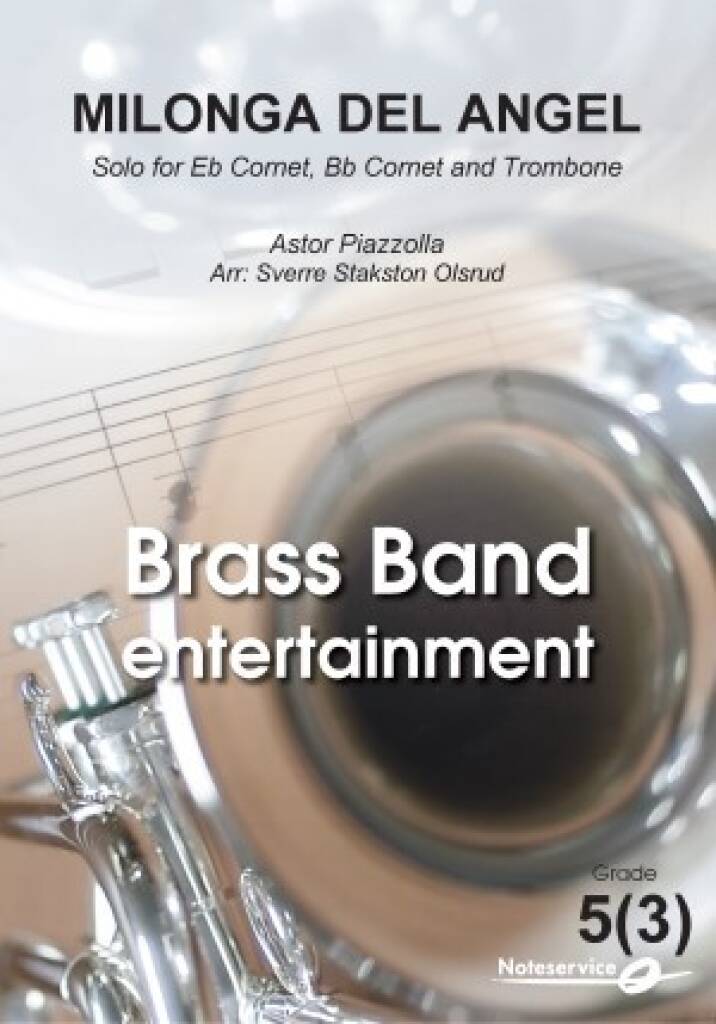
Milonga del Angel - Astor Piazzolla - Sverre Stakston Olsrud
This arrangement was made after hearing Astor Piazzolla's 1986 recording of his own work written in 1965.The original instrumentation of bandoneon, violin and string bass is here arranged for three wind soloists with Concert Band.The Eb Cornet is the main soloist (filling the bandoneon role), while the trombone and Solo Bb Cornet shares the violin part as a kind of flirting undertone to the Eb Cornet.It's not possible to make a 100% correct notation of the solo parts, so it's recommended to listen to the record album "Zero Hour" from 1986 to get the best impression of the work.Enjoy "Milonga Del Angel" and imagine a small, dark cafe in Buenos Aires!
Estimated dispatch 5-14 working days
-
 £87.99
Sunday in the Park - Philip Sparke
Sunday in the Park was written for tenor horn virtuoso Sheona White, and commissioned by her partner, Matt Wade, as a Christmas present.Composer Philip Sparke had known and admired Sheona's playing for many years, having produced her first solo CD and written pieces for her previously.Both composer and performer are huge fans of the late Karen Carpenter, Sheona in part modelling her sound on the singer's sultry voice; so it was decided that this new solo would be a piece which, whilst not being a 'Carpenters' pastiche, paid tribute to their relaxed style and rich harmonic language. Sunday in the Park openswith an accompanied cadenza for the soloist, which leads to a gentle rhythmic melody with a laid-back feel. This is taken up by the band but the soloist sparks a change of mood by introducing a faster light rock interlude. This reaches a climax, at which point the music unwinds until the original mood returns.A variation on the original melody leads to a short cadenza from the soloist, which brings the work to a peaceful close.
Estimated dispatch 5-14 working days
-
 £59.99
Flowerdale From 'Hymn Of The Highlands' - Philip Sparke
Flowerdale is a forest in Wester Ross, Scotland, which is well-known for it's beautiful waterfall. This piece, for solo Soprano Cornet, is one of the movements from Philip Sparke's epic suite Hymn of the Highlands. It depicts the tall trees swaying gently in the wind with the serenity of the area being reflected by the subtle accompaniment of the band. Let your soprano player bloom into colour with this exquisite solo. A real show stopper.
Estimated dispatch 5-14 working days
-
 £60.99
Antonin's New World - Antonín Dvorák - Dizzy Stratford
Antonin's New World is an excellent piece of musical theatre featuring a comedy act for triangle soloist and band. The music itself does not sound comical, being based on Anton Dvorak's Symphony in E Minor (From the New World), but the right mix of seriousness and humour brings a surprising effect. With a bit of acting talent from your triangle soloist, this interpretation of the well known classical melody will be a major hit. Whether you choose Antonin's New World as a "triangle solo" novelty piece or simply as a delightful adaptation of Dvorak's immensely popular Ninth Symphony, both the band and the audience will love it!
Estimated dispatch 5-14 working days
-
 £40.00
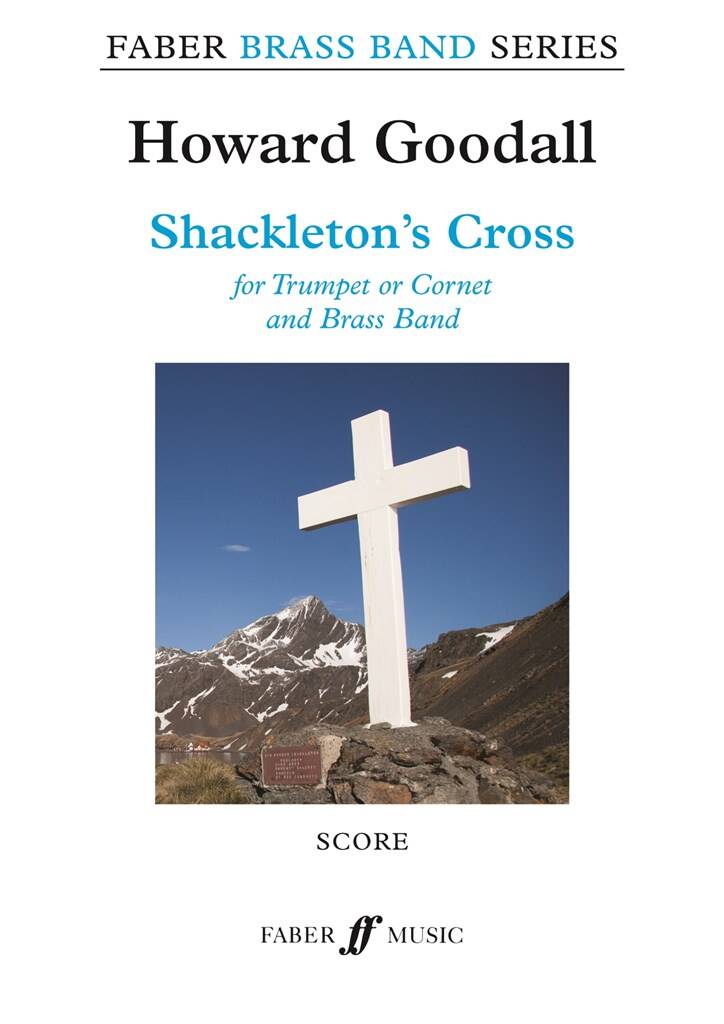
Shackleton's Cross - Howard Goodall
Shackleton s Cross was inspired by a painting created in 1957 by the English artist Edward Seago (1910 1974). The title refers to a cross which was erected to the memory of Sir Ernest Shackleton, who led a number of explorations to the Antarctic. Shackleton died in 1922 whilst on a Polar expedition, and the cross can be found on a promontory at the entrance to the bay at Grytviken Whaling Station in South Georgia. The painting is owned by HRH The Duke of Edinburgh, and was part of an exhibition at Buckingham Palace from October 2011 to April 2012. Originally scored for oboe, trumpet and small orchestra, Daniel Hall s sensitive arrangement fortrumpet or cornet and brass band follows the composer s alternative version for solo trumpet and organ, created for Crispian Steele-Perkins (trumpet) and David Goode (organ).
Estimated dispatch 5-14 working days
-
 £164.99
Diamond Concerto - Philip Sparke
Diamond Concerto was commissioned by Musikverein Morschied from Germany - Dr. Eric Grandjean, conductor - for a special concert featuring Steven Mead as guest soloist. Together they gave the world premiere on 28th April 2012 in the town theatre of Idar-Oberstein.The commission is a highlight in the 30-year friendship between composer and soloist, which has included many mutual CD projects and concerts and, now, a concerto. Sparke had Steven Mead's special euphonium sound in his head throughout the composition process and made free use of the variety of styles which the world-renowned virtuoso has made his own during his highly successful solo career.The village ofMorschied lies to the west of Frankfurt am Main in the area known as the German Road of Precious Stones, which is famous for its thriving gem industry. Because of this it was decided to give the commission a local connection by choosing the title, Diamond Concerto. Each of the three movements is named after a famous diamond:1 EARTH STARis rather stern in mood, opening with a free fantasy for the soloist over a static chord from the band. This leads to an Allegro Moderato in minor mode where small motives are gradually repeated and developed by both band and soloist.2 OCEAN DREAMuses a varied quote from the composer's Music for Battle Creek, including a melting slow melody that was originally written with Steven Mead in mind.3 BLUE HEARTwas written, at Steven Mead's suggestion, in bebop style and takes the form of a jazz waltz. The quasi-improvisatory central section features a call-and-response passage for the soloist and upper woodwinds.Soloist: Difficulty 6Diamond Concerto is available for euphonium and piano (AMP 374-401) as well as for euphonium and concert band (AMP 354-010).
Estimated dispatch 5-14 working days
-
 £127.30
Mahalageasca - Mahala Rai Banda - Reid Gilje
Mahalageasca is a piece that make you happy both to listen and perform.It's possible to play the piece as a stage entrance piece. Repeat bars 1 to 8 several times. You might let the Drum set and some Percussion start alone. After basses have played their first eight bars, move on to bar nine.It is also possible to perform is as an ancore where you might change positions for the brass players but use the same pattern with Percussion as above.Here's a suggestion for set-up:Backrow sits in front of the conductor (on horn chairs)Soprano and Solo Cornets standing behind them.Trombones sits at the conductors right (on Euphonium/Baritone-chairs)Basses sitting behind the TrombonesFlugelhorn and horns on the left (sitting on the solo cornet chairs)Euphoniums and Baritones behind the horns.Please do not play too loud on mf. A bit press on the start of the slurs often better the emphasis (some marcatos written as well)Bars 96 to 136 is challenging for mallet percussion. They can be played as solo, or two players might share it in a convenient way.
Estimated dispatch 5-14 working days
 View Music