
Results
-
 £44.95
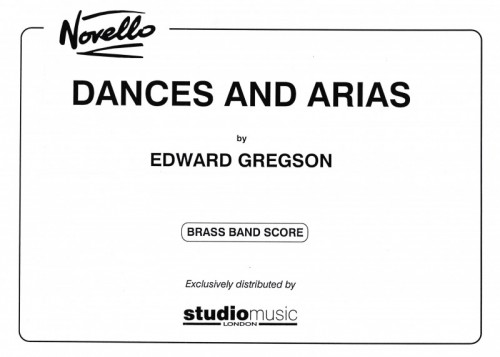
Dances and Arias (Brass Band - Score only) - Gregson, Edward
This work was commissioned by Boosey & Hawkes Band Festivals (with funds provided by the Arts Council of Great Britain) for the National Brass Band Championships of Great Britain, held at the Royal Albert Hall, London, on 7th October 1984.Dances and Arias is in one continuous movement, but as the title suggests is a series of alternating fast and slow sections as follows: Dance - Aria I - Dance (scherzo) - Aria II - Dance. The opening dance is energetic and introduces a four-note motif (on trombones) which is the basis for much of the melodic material in the work. Throughout, there is a continuous process of thematic cross-reference and transformation.The first aria unfolds a long melody on solo cornet, eventually continued by all the solo cornets, and dissolving into a shimmering harmonic background (muted cornets, horns and baritones) over which is heard a brief self-quotation on solo tuba. This leads into the second dance, a frenetic scherzo, followed by the second aria, in the style of a lament (solo euphonium, followed by two flugel horns). This builds to a powerful climax which subsides, leaving the percussion to introduce the final toccata-like dance. It transforms material from the opening before a coda brings the music to a triumphant close. The large percussion section is an integral part in the work and uses a wide variety of instruments including timpani, glockenspiel, vibraphone, xylophone, tubular bells, tom-toms, snare drum, bongos and tam-tam.The work is dedicated to my brother and sister.- Edward GregsonDuration: 14.00
Estimated dispatch 7-14 working days
-
 £20.00
SALT OF THE EARTH, GOSPEL (Euphonium Solo with Brass Band Parts) - Scott, Andy
Brass Band parts only, solo part not included - available separately. 'Salt of the Earth Gospel' is a new arrangment for Solo Euphonium and Brass Band of the second movement of the Concerto for Tuba 'Salt of the Earth'. It is a seven-bar melody that is passed around different soloists whilst the solo euphonium weaves in and out of the melody in an almost improvisatory way. Tension is created by a gradual dynamic build with an ensemble release before the soloist gently brings the piece to rest. Dur: 4:30
Estimated dispatch 7-14 working days
-
 £33.83
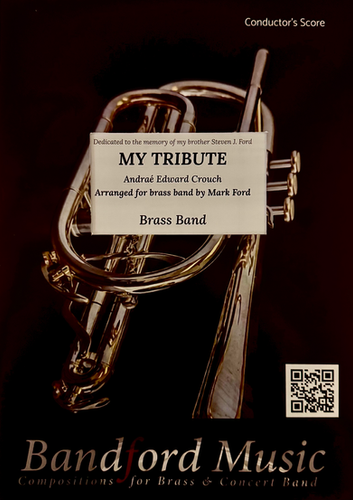
My Tribute (Euphonium Solo with Brass Band) Andrae Crouch arr. Mark Ford
My Tribute (To God Be The Glory) is a gospel song written by American gospel singer and songwriter Andrae Edward Crouch. He first recorded the song in 1972 on his album Keep on Singin'. The song is considered to be one of Crouch's most well-known songs. It is sometimes included in Christian children's song books. This arrangement for brass band from the pen of Mark Ford, features the euphonium as the soloist in a delightful setting sure to be popular with audiences. To view a performance video of the solo featuring Aaron Ford please visit https://youtu.be/6WGtAVgAsWc Duration: 1.30 minutes Difficulty Level: 3rd Section + This PDF download includes the full score and parts. Sheet music available at www.brassband.co.uk (UK) or satradecentral.org (USA) Instrumentation: Euphonium Soloist Bb Soprano Cornet Eb Solo Cornet Bb Repiano Cornet Bb 2nd Cornet Bb 3rd Cornet Bb Flugel Horn Bb Solo Horn Eb 1st Horn Eb 2nd Horn Eb 1st Baritone Bb 2nd Baritone Bb 1st Trombone Bb 2nd Trombone Bb Bass Trombone Euphonium Bb Bass Eb Bass Bb Drum Set Percussion
In Stock: Estimated dispatch 1-3 working days
-
 £30.07
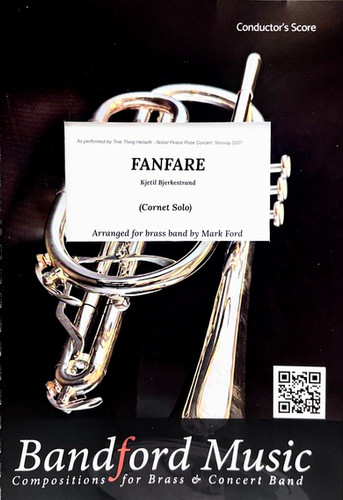
Fanfare (Cornet Solo with Brass Band) Kjetil Bjerkestrand arr. Mark Ford
Capture the prestige and grandeur of one of the world's most celebrated stages. Originally composed by Kjetil Bjerkestrand, this stirring fanfare opened the 2007 Nobel Peace Prize Concert at the Oslo Spektrum. The piece was famously premiered by the acclaimed Norwegian trumpeter Tine Thing Helseth, marking a historic moment broadcast to millions. This arrangement brings that same professional brilliance to the brass band concert stage, featuring a soaring solo cornet part that embodies the spirit of peace and international honor. To view a rolling score video of the work please visit www.youtube.com/watch?v=aMfjKLu8BjA Duration: 1.30 minutes Difficulty Level: 4th Section + This PDF download includes the full score and parts. Sheet music available at www.brassband.co.uk (UK) or satradecentral.org (USA) Instrumentation: Cornet Soloist Bb Soprano Cornet Eb Solo Cornet Bb Repiano Cornet Bb 2nd Cornet Bb 3rd Cornet Bb Flugel Horn Bb Solo Horn Eb 1st Horn Eb 2nd Horn Eb 1st Baritone Bb 2nd Baritone Bb 1st Trombone Bb 2nd Trombone Bb Bass Trombone Euphonium Bb Bass Eb Bass Bb Timpani Sus. Cymbal Marimba
In Stock: Estimated dispatch 1-3 working days
-
 £7.51
£7.51Adoration (Cornet Solo with Brass Band - Additional Parts) Price arr. Wainwright
Florence Price was an American classical composer, pianist, organist and music teacher. She is noted as the first African-American woman to be recognised as a symphonic composer, and the first to have a composition played by a major orchestra. Price composed over 300 works: four symphonies, four concertos, as well as choral works, art songs, chamber music and music for solo instruments. In 2009, a substantial collection of her works and papers that had been previously considered lost was found in her abandoned summer home. Amongst these was this delightful work, Adoration, which had been composed in the 1950s for organ. According to IMSLP.org, the piece "failed to meet notice or renewal requirements to secure statutory copyright with no 'restoration' under the GATT amendments" and therefore is in the public domain. A version for violin and piano by Elaine Fine has become popular. This setting for cornet soloist with brass band has been arranged by Andrew Wainwright. It is also available as a Bb solo with piano here. The additional parts included in this download are for low brass in bass clef. The full brass band set is available here. To view a video of Andrew Roe performing the work, please visit: www.youtube.com/watch?v=_7UYlz8Fzxo Difficulty Level: 4th Section + Length: 3.15 minutes Sheet music available from: UK - www.brassband.co.uk USA - www.cimarronmusic.com Included in download: 1st Baritone B.C. 2nd Baritone B.C. 1st Trombone B.C. 2nd Trombone B.C. Euphonium B.C. Tuba B.C. (Eb Bass Part) Tuba B.C. (Bb Bass Part)
In Stock: Estimated dispatch 1-3 working days
-
 £37.59
March - The Stewards (Brass Band) Dave Collins
This rousing march by Dave Collins is a dedication to the remarkable group of volunteers - the unsung heroes - who, each year, organise and run the iconic Whit Friday brass band contests. They ensure that the heritage and tradition of this uniquely special event is not lost, preserving its ongoing and continued success. BrookWright is offering a 25% discount for bands who perform this march at the Whit Friday Contest. To claim the discount, please send a scan or photo of your band's adjudication card after the event to [email protected] Whit Friday, 'The Greatest Free Show on Earth', is synonymous with the brass band tradition. Its importance in the annual calendar to the players, supporters and spectators is vital to the Tameside and Saddleworth community. However, this mighty contest simply could not take place without the willing volunteers who dedicate their services year after year to keep this unique banding tradition going.Traditionally, on Whit Friday Morning, Hail! Smiling Morn (Roud #1346), also known as Praise Ye the Lord, is heard across the Saddleworth villages. This is where I have taken my inspiration, and the entire march is built upon quotes and references of this joyous work.The Stewards has many traditional elements drawing on the vast repertory of well-known marches, as well as some untraditional techniques and harmonies. The work aims to be a good test for the bands in its performance, but also fun and entertaining for the players and audiences alike - featuring a cheeky cornet solo, thunderous bass feature, and lyrical euphonium melodies, before concluding with a triumphant quote from the original source material.To you all who perform or hear this work, the stewards of the brass band tradition, HAIL! To view a follow-the-score video featuring Tredegar Town Band performing the work please visit www.youtube.com/watch?v=-CNgqvc534s PDF download includes score and parts, and comes in both A4 size and A5 landscape parts for marching purposes. A single page A5 conductor reduced score is also included. Sheet music available from: UK - www.brassband.co.uk USA - www.solidbrassmusic.com Difficulty Level: 3rd Section + Instrumentation: Soprano Cornet Eb Solo Cornet Bb Repiano Cornet Bb 2nd Cornet Bb 3rd Cornet Bb Flugel Horn Bb Solo Horn Eb 1st Horn Eb 2nd Horn Eb 1st Baritone Bb 2nd Baritone Bb 1st Trombone Bb 2nd Trombone Bb Bass Trombone Euphonium Bb Bass Eb Bass Bb Cymbals Side Drum Bass Drum
In Stock: Estimated dispatch 1-3 working days
-
 £37.59
Horn Concerto No.1 1st Movement (Tenor Horn Solo with Band) Haydn arr. Wilson
Franz Joseph Haydn's Horn Concerto No.1 in D major was composed in 1762, when he was new to the Esterhazy court. It is a virtuosic concerto that showcases the beauty and range of the horn. The concerto was originally scored for solo horn and orchestra, and is one of Haydn's most popular works. Here it has been arranged by Duncan Wilson for tenor horn with brass band. His arrangement of the concerto is a faithful and effective adaptation of the original work. The movement opens with a lively tutti introduction, followed by the entrance of the solo horn. The horn plays a series of melodies and passages that are both lyrical and virtuosic. The band provides accompaniment and contrast, and the two interact in a lively dialogue. The movement builds to a climax and then concludes with a triumphant coda. To view a follow-the-score video please visit https://www.youtube.com/watch?v=Uo2K5tge6Fs PDF download includes score and parts. Sheet music available from: UK - www.brassband.co.uk USA - www.solidbrassmusic.com Difficulty Level: 2nd Section + Instrumentation: Tenor Horn Soloist Eb Soprano Cornet Eb Solo Cornet Bb Repiano Cornet Bb 2nd Cornet Bb 3rd Cornet Bb Flugel Horn Bb 1st Horn Eb 2nd Horn Eb 1st Baritone Bb 2nd Baritone Bb 1st Trombone Bb 2nd Trombone Bb Bass Trombone Euphonium Bb Bass Eb Bass Bb Timpani
In Stock: Estimated dispatch 1-3 working days
-
 £33.83
Abide with me (Brass Band) William H. Monk arr. Greg Jasperse trs. Espen Haukas
VIEW SCORE PDF Greg Jasperse's choral setting of the much-loved hymn Abide with me has become very popular with choirs and has here been arranged for brass band by Norwegian composer Espen Haukas. The scoring is for standard brass band although the Repiano Cornet part is set as a second Flugel part. Optional cues are written for some upper register notes meaning the piece is playable by bands of all levels. To view a follow-the-score video with Bjorsvik Brass performing the work please visit: www.youtube.com/watch?v=lVHlQW_8Pao Sheet music available from: UK - www.brassband.co.uk USA - www.solidbrassmusic.com Difficulty Level: 4th Section + Instrumentation: Soprano Cornet Eb Solo Cornet 1&2 Bb Solo Cornet 3&4 Bb 2nd Cornet Bb 3rd Cornet Bb Flugel Horn 1&2 Bb Solo Horn Eb 1st Horn Eb 2nd Horn Eb 1st Baritone Bb 2nd Baritone Bb 1st Trombone Bb 2nd Trombone Bb Bass Trombone Euphonium 1&2 Bb Bass Eb Bass Bb Percussion 1-3
In Stock: Estimated dispatch 1-3 working days
-
 £73.00
Bass Trombone Concerto (Bass Trombone Solo with Brass Band - Score and Parts) - Wood, Gareth
Written in 2006 for Roger Argente, Gareth Wood brings his considerable experience of writing for brass, and brass bands in particular, to an instrument not often blessed with opportunities for solo exposure. It is scored for soloist accompanied by traditional brass band line-up, including timpani and two percussion, and follows the standard three-movement pattern. In the first movement, the soloist launches straight into the musical argument with a low-lying repeated quaver figure punctuated by the band. A lyrical second subject in the high register is also entrusted to the soloist, and the movement comes to a thrilling conclusion. The slow movement opens softly with the percussion, and a mournful bass line sets the mood for a thoughtful long melody. It reaches a powerful climax, which subsides to a return of the opening mood. In the march-like finale, the soloist is pitted against a number of solo instruments from the band and a driving ostinato carries the momentum through to the blazing ending. Duration: 13.00. Suitable for 1st Section Bands and above.
Estimated dispatch 7-14 working days
-
 £60.00
From the Shores of the Mighty Pacific (Cornet Solo with Brass Band - Score and Parts) - Clarke, Herbert L. - Wilkinson, Keith M.
Cornet Solo with Brass BandHerbert L. Clarke (1867 - 1945) is regarded by many as one of the finest cornet players of all time, noted not only for his amazing technique but also for his warm, lyrical tone. He has left a multitude of cornet solos as well as collections of studies which are still very widely used. He was a member of The Sousa Band briefly in 1893 and then from 1898 to 1917 where he was not only the distinguished cornet soloist but also became assistant director.From The Shores Of The Mighty Pacific is an all-time favourite rondo-caprice cornet solo and was first published in 1912. A brass band arrangement was requested by Chris Lichtler, principal cornet of Brass Band of the Western Reserve, musical director Dr. Keith M. Wilkinson. Chris has performed it many times with BBWR and it was recorded by them on the CD, Without Reserve!.
Estimated dispatch 7-14 working days
 View Music