Searching for Wind Band Music? Visit the Wind Band Music Shop
We've found 890 matches for your search. Order by

Results

  • £95.00

    Tenor Horn Concerto 'Three Gods' (Tenor Horn Solo with Brass Band - Score and Parts)

    Edward Gregson's Tenor Horn Concerto (Three Gods) was commissioned by the Belgian tenor horn soloist Tim de Maeseneer for a recording of commissioned works he made in 2024 with his own band, Brass Band Willebroek.The subtitle of 'Three Gods' refers to three mythological Greek Gods: Zeus, Hermes and Apollo. The idea for this came from Gregson's Viola Concerto, which he composed in 2023 and which was similarly subtitled 'Three Goddesses'. Indeed, the first movement of the horn concerto shares some common material with the viola concerto, although the other movements are newly composed.The concerto exploits the noble character of the horn, but the writing is also virtuosic in character as well as lyrical and melodic, demanding an extended playing range of nearly four octaves with a variety of colouration in its sonorities. The unifying motif of the whole concerto is the interval of a rising 5th, heard at the outset. The opening also has some other surprises (both seen and heard).The musical ideas, cast in three separate movements, take their starting point from the characters of the Three Gods in the title:Zeus, ruled as King of the Gods on Mount Olympus, and was the God of Thunder and Lightning and of War. His music is often threatening and violent, but also has a more tender side as portrayed in the lyrical second subject. However, the dominant mood is one of foreboding.Hermes was the great messenger to the Gods who could travel between realms on his winged sandals. Thus, his music is fast, fleet of foot, and mercurial - a dashing scherzo, but with lyrical and expressive moments.Apollo, the God of Music and Dance (and the Sun), symbolises virtue and beauty. This final movement, 'Hymn to Apollo', is mainly slow and hymn-like and cast in a continuous stream of melody passed between soloist and band. Brief fanfares herald a triumphant march, before the music returns to its quiet opening, gradually rising to a triumphant climax with glittering melodic percussion leading the way. The music ends in a blaze of glory!Duration: 17.00

    Estimated dispatch 7-14 working days
  • £49.99

    Marcho Brioso (Brass Band - Score and Parts)

    Marcho Brioso was commissioned by The Brioso Brass, a British-style brass band from Hokkaido, Japan. They gave the first performance in January 2012.The commission was for a bright and breezy march that the band could use as their theme tune, so Marcho Brioso falls into the composer's series of Broadway-style marches, which includes Slipstream, The Bandwagon and Jubiloso. After a short introduction a solo cornet plays the main theme, accompanied by a euphonium counter-melody. A secondary phrase from the horns and baritones leads to a tutti version of the main theme which is followed by the traditional 'bass' strain. A change of key heralds the trio section, which features a cantabile melody on euphonium; this is then taken up by the full band after a short bridge passage and further change of key.This takes us back to the home key which sees a quiet staccato version of the main theme lead to a recapitulation and a short coda which brings the march to a close.Duration: 3:40

    Estimated dispatch 7-14 working days
  • £34.95

    How Can I Keep From Singing (Cornet Solo with Brass Band - Score and Parts)

    A beautiful arrangement of the traditional hymn for cornet soloist with brass band. Originally arranged for Virtuosi GUS Band & former Principal Cornet of Grimethorpe Colliery Band, James Fountain.

    Estimated dispatch 7-14 working days
  • £54.95

    Wall of Sound (Brass Band - Score and Parts)

    This piece was commissioned by Dr Nicholas Childs and Philip Biggs for the National Children's Band of Great Britain.As the commission was for a youth band, I wanted to compose a piece of music that alluded to the styles and genres of music that are abundant in the current popular music market. However, the National Children's Band isn't just any old youth band; they are some of the finest young musicians in Great Britain. So the challenge was to compose a piece that included many popular music styles whilst providing enough of a test to keep the music technically interesting to work on and perform.The driving force behind the whole piece is the percussion section and in particular, the drum kit which is constant throughout. From the start the music is rhythmic and repetitive, similar to many dance tracks. The music begins to slowly unfold and build in texture and at bar 24 the syncopated main theme appears. This theme reappears throughout the piece along with various other motifs and solo lines. The music uses the styles, rock, pop, latin, funk and dance within the score and has a real fun factor about it.There are lots of opportunities for soloists to play and it is marked in the score where to stand and soloists can come out to the front of the stage. I really enjoyed working on this piece and I'm sure performers and audience members will enjoy it too.Paul Lovatt-Cooper

    Estimated dispatch 7-14 working days
  • £60.00

    Fantastic Polka (Trombone Solo with Brass Band - Score and Parts)

    Arthur Pryor is remembered primarily for his 12 years as the amazing trombone soloist with The Sousa Band. However, he was also a prolific composer and conductor, forming his own band following his years with Sousa. He wrote many trombone solos designed to dazzle audiences with his virtuosity.This brass band version was prepared at the request of The Black Dyke Band, musical director Nicholas J Childs, for a recording project with Ian Bousfield, principal trombone of the Vienna Philharmonic, titled Pryor Engagement. It has also been recorded by Brett Baker with Brass Band of the Western Reserve, musical director Keith M Wilkinson, on the CD Slides Rule!

    Estimated dispatch 7-14 working days
  • £34.95

    Elixir of Youth (Brass Band - Score and Parts)

    Elixir of Youth (2013) was written for the 2013 Brass for Heroes charity event where it was premiered on 19th October 2013 at St Paul's Hall in Huddersfield under the baton of Philip Harper. The title of the work reflects the nature of the band that was put together for that premiere performance; an all-star youth band comprising a selection of the country's young brass banding talent, with the term Elixir referring here to the everlasting talent seen in young brass players throughout the United Kingdom's brass bands and bands' and teachers abilities to keep producing such high quality musicians for the banding movement.The work, structured in three sections, is a showcase for band with a heroic opening where fanfare-like gestures in the cornets and trombones juxtapose rapid euphonium and baritone runs, alongside sweeping horns and percussion effects. As the piece progresses, a grove is introduced - just in the tubas at first, accompanied by a hi-hat - before spreading through the band, definitely stuff to tap your toes to! The middle, slower section of the work sees both flugel and cornet solos, with additional inputs from the euphonium and solo horn before a climax and return to the tempo and music of the opening section. A rousing close concludes the work where all of the work's themes are interweaved to create a sense of power, unity and grandeur; an Elixir of Youth.

    Estimated dispatch 7-14 working days
  • £89.95

    Tuba Concerto (Score and Parts)

    This work was commissioned by the Besses o' th' Barn Band with funds provided by the Arts Council of Great Britain. It was written for, and is dedicated to, John Fletcher, who gave the first performance in Middleton Civic Hall, near Manchester, on 24 April, 1976, with Besses o' th' Barn Band conducted by the composer. Another interesting feature about the premire was that it was recorded by BBC Television for an Omnibus programme with Andr Previn as presenter. The concerto exists in three versions: with brass band (1976), orchestra (1978) and wind band (1984).The concerto is in three movements, following the usual, quick-slow-quick pattern: Allegro deciso,Lento e mesto, Allegro giocoso. The first movement has a sonata form shell with two contrasting themes, the first one being rhythmic in character, the second lyrical. There is a reference made in passing to the Vaughan Williams Tuba Concerto, but this merges into the other material in the development section.The second movement begins with a chorale, but after the entry of the tuba it leads to a cantabile theme, softly unfolded by the soloist. The opening chorale passage returns, this time briefly on muted brass, and leads to a middle section which is more chromatic in style and soon builds to a powerful climax, where the opening cantabile theme triumphantly returns. The music subsides, returning to the opening chorale and ending peacefully.The finale is light and breezy in style, and is cast in rondo form. After a brief introduction the tuba announces the main rondo theme, which is dance-like and a little jaunty. There are two episodes: the first a broad sweeping tune, the second a slowish waltz and a little jazz-like. After a virtuoso cadenza reference is made to the very opening of the concerto before the work ends with a triumphal flourish.The Tuba Concerto has established itself as one of the main works in the solo tuba repertoire. It has been performed and broadcast in over 40 countries all over the world. There are currently six commercial recordings of the concerto in its various versions.resolution in C major, pointed by a simple but expansive melody towards which the piece has been heading, and ending in a blaze of joyful colour.

    Estimated dispatch 7-14 working days
  • £30.00

    Scots Fantasia for Euphonium and Brass Band.

    Recommended - Championship to 3rd Section Scots Fantasia is a Euphonium solo with brass band which begins with a slow Celtic folk-style melody followed by an exciting and challenging reel to get the fingers flying and the toes tapping! Scots fantasia was written in 2012 for euphonium soloist, Scott Kerr. Includes score & parts Also see: Scots Fantasia for Euphonium & Piano

  • £50.00

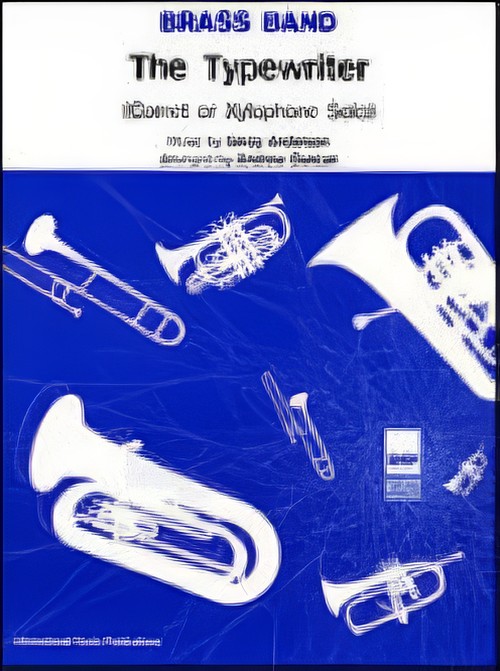
    The Typewriter (Score & Parts) - Leroy Anderson

    The Typewriter arranged for brass band by Andrew Duncan as a cornet or xylophone solo, is probably most recognised now as the theme tune to the long-running BBC Radio 4 show The News Quiz. Brass Band Grade 4: Advanced Youth and 3rd Section. Duration: 4 minutes.

    In Stock: Estimated dispatch 1-3 working days
  • £22.00

    Lullaby (Score & Parts) - Philip Doe

    Lullaby is a beautiful euphonium duet with band accompaniment. The solo and contrapuntal writing, combined with a rich accompaniment from the band, offers peace and serenity.Brass Band Grade 3: Youth and 4th SectionDuration: 4 minutes

    In Stock: Estimated dispatch 1-3 working days