
Results
-
 £60.99
Song of Liberation (Brass Band - Score and Parts) - De Haan, Jacob
A composition with the liberation from the Second World War as its theme. After a solemn introduction one hears the melody of the hymn Abide with you, which was sung a lot during the war. Following there are variations on the theme, finally leading to the magisterial conclusion that represents the ultimate liberation. The work may be interpreted as popular music (with the part for drumset), but a more serious version without drums is possible and, indeed, preferable.Duration: 4:45
Estimated dispatch 7-14 working days
-
 £24.95
BLESS 'EM ALL (Brass Band Marchcard) - Beechfield Carver, Peter
Marchcard size. Bless 'Em All (also known as "The Long And the Short and the Tall" and another title - not Bless) is a war song credited to have been written by Fred Godfrey in 1917. It gained popularity during the Second World War as a patriotic tune after being performed by singers such as Gracie Fields.
Estimated dispatch 7-14 working days
-
 £95.00
Tenor Horn Concerto 'Three Gods' (Tenor Horn Solo with Brass Band - Score and Parts) - Gregson, Edward
Edward Gregson's Tenor Horn Concerto (Three Gods) was commissioned by the Belgian tenor horn soloist Tim de Maeseneer for a recording of commissioned works he made in 2024 with his own band, Brass Band Willebroek.The subtitle of 'Three Gods' refers to three mythological Greek Gods: Zeus, Hermes and Apollo. The idea for this came from Gregson's Viola Concerto, which he composed in 2023 and which was similarly subtitled 'Three Goddesses'. Indeed, the first movement of the horn concerto shares some common material with the viola concerto, although the other movements are newly composed.The concerto exploits the noble character of the horn, but the writing is also virtuosic in character as well as lyrical and melodic, demanding an extended playing range of nearly four octaves with a variety of colouration in its sonorities. The unifying motif of the whole concerto is the interval of a rising 5th, heard at the outset. The opening also has some other surprises (both seen and heard).The musical ideas, cast in three separate movements, take their starting point from the characters of the Three Gods in the title:Zeus, ruled as King of the Gods on Mount Olympus, and was the God of Thunder and Lightning and of War. His music is often threatening and violent, but also has a more tender side as portrayed in the lyrical second subject. However, the dominant mood is one of foreboding.Hermes was the great messenger to the Gods who could travel between realms on his winged sandals. Thus, his music is fast, fleet of foot, and mercurial - a dashing scherzo, but with lyrical and expressive moments.Apollo, the God of Music and Dance (and the Sun), symbolises virtue and beauty. This final movement, 'Hymn to Apollo', is mainly slow and hymn-like and cast in a continuous stream of melody passed between soloist and band. Brief fanfares herald a triumphant march, before the music returns to its quiet opening, gradually rising to a triumphant climax with glittering melodic percussion leading the way. The music ends in a blaze of glory!Duration: 17.00
Estimated dispatch 7-14 working days
-
£40.00
Tenor Horn Concerto 'Three Gods' (Tenor Horn Solo with Brass Band - Score only) - Gregson, Edward
Edward Gregson's Tenor Horn Concerto (Three Gods) was commissioned by the Belgian tenor horn soloist Tim de Maeseneer for a recording of commissioned works he made in 2024 with his own band, Brass Band Willebroek.The subtitle of 'Three Gods' refers to three mythological Greek Gods: Zeus, Hermes and Apollo. The idea for this came from Gregson's Viola Concerto, which he composed in 2023 and which was similarly subtitled 'Three Goddesses'. Indeed, the first movement of the horn concerto shares some common material with the viola concerto, although the other movements are newly composed.The concerto exploits the noble character of the horn, but the writing is also virtuosic in character as well as lyrical and melodic, demanding an extended playing range of nearly four octaves with a variety of colouration in its sonorities. The unifying motif of the whole concerto is the interval of a rising 5th, heard at the outset. The opening also has some other surprises (both seen and heard).The musical ideas, cast in three separate movements, take their starting point from the characters of the Three Gods in the title:Zeus, ruled as King of the Gods on Mount Olympus, and was the God of Thunder and Lightning and of War. His music is often threatening and violent, but also has a more tender side as portrayed in the lyrical second subject. However, the dominant mood is one of foreboding.Hermes was the great messenger to the Gods who could travel between realms on his winged sandals. Thus, his music is fast, fleet of foot, and mercurial - a dashing scherzo, but with lyrical and expressive moments.Apollo, the God of Music and Dance (and the Sun), symbolises virtue and beauty. This final movement, 'Hymn to Apollo', is mainly slow and hymn-like and cast in a continuous stream of melody passed between soloist and band. Brief fanfares herald a triumphant march, before the music returns to its quiet opening, gradually rising to a triumphant climax with glittering melodic percussion leading the way. The music ends in a blaze of glory!Duration: 17.00
Estimated dispatch 7-14 working days
-
 £42.95
Shining Sword (Brass Band - Score and Parts) - Wiffin, Rob
This extended fanfare was written for the Royal Air Force Bomber Command Commemorations, 2012. The prototype Avro Lancaster bomber was launched into the skies in 1941 and proved to be a significant factor in winning the Second World War. Its slender silvery outline led it to be known as the Shining Sword.This musical tribute has featured extensively in Bomber Command commemorations especially at the opening of their Memorial, in London's Green Park, a fitting tribute to the 55,573 crew member who lost their lives during WW2.Duration: 2:00
Estimated dispatch 7-14 working days
-
 £40.00
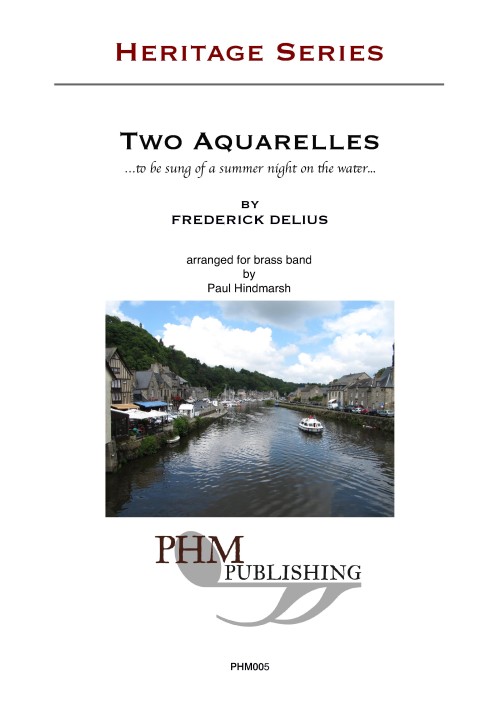
Two Aquarelles (Euphonium Feature with Brass Band - Score and Parts) - Delius, Frederick - Hindmarsh, Paul
In the late spring of 1917, the Bradford born composer, Frederick Delius (1856 - 1934) composed two short part-songs at his home in Grez-sur-Loing. The river ran along the bottom of his garden and he called the two miniatures To be sung of a summer night on the water. The First World War was at its height, but one would never guess that from the languid and serene quality of these richly textured nocturnes. The songs were first heard in London on 28 June, sung by the Oriana Madrigal Society, conducted by Charles Kennedy Scott. In 1932 Delius's amanuensis, Eric Fenby, arranged them for string orchestra as Two Aquarelles. While I have taken Fenby's title, my arrangement is a note-for-note transcription of the choral original. It was prepared in early in 1993 for Besses o' th' Barn Band, of which I was Musical Director at the time. In the second song, the prominent tenor solo has been given to the solo euphonium, who should stand apart from the band in performance.- Paul HindmarshDuration: 5.00
Estimated dispatch 7-14 working days
-
£34.95
Lifestream (Brass Band - Score and Parts) - Pearce, Ralph
This march is modelled on the well-known American quick march called Midwest by J.J. Richards. The melody of the second subject is by the Danish hymn-writer, Sophie Hedvig Dedakam and is associated with words by Major Clara Vint who helped to establish En Evant, the French War Cry. The title of the march is derived from the text of the song.
Estimated dispatch 7-14 working days
-
£17.50
Lifestream (Brass Band - Score only) - Pearce, Ralph
This march is modelled on the well-known American quick march called Midwest by J.J. Richards. The melody of the second subject is by the Danish hymn-writer, Sophie Hedvig Dedakam and is associated with words by Major Clara Vint who helped to establish En Evant, the French War Cry. The title of the march is derived from the text of the song.
Estimated dispatch 7-14 working days
-
£35.00
MANCHESTER TALE, A (Brass Band) - Duncan, Andrew
A Manchester Tale' depicts life in the City of Manchester in the years surrounding the Second World War and the effect these years had on the citizens of Manchester. Towards the end of the piece there is an optional part for a wartime siren which announces the start of an air raid attack. This piece won the prize for the best new arrangement at 'Spennymore' in 2000. Recorded on Polyphonic QPRL237D Master Brass Vol.24. Duration: 6:30
Estimated dispatch 7-14 working days
 View Music