
Results
-
 £48.56
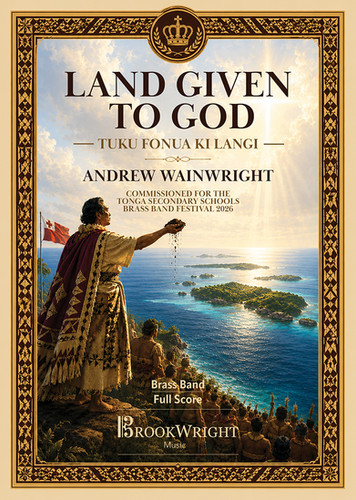
Land Given to God (Tuku Fonua ki Langi) (Brass Band) Andrew Wainwright
Land given to God (Tuku Fonua ki Langi) is a landmark major test-piece for brass band celebrating Tongan faith, history, and cultural identity. Commissioned by Sione Malekamu Manu Jr for the Tonga Secondary School Music Festival, Land given to God marks a monumental achievement in Pacific music literature as the first major brass band test-piece written specifically for the Kingdom of Tonga. Commemorating two centuries of Christianity, this compelling four-movement work traces Tonga's journey from ancient traditions to its historic 1839 dedication to divine protection. The piece draws its principal thematic material from the beloved Tongan hymn Oku 'iai ha ki'i fonua 'oku tu'u 'i 'oseni. The work is divided into four through-composed movements: I. Koe Lotu Mu'a (The Old Religion): Grounded and ritualistic, this movement paints the ancient spiritual order of pre-Christian Tonga - a nation anchored in sacred ancestral tradition on the threshold of change. II. Koe Lotu Fo'ou (The New Religion): Captures a nation in transition, depicting the arrival of Wesleyan missionaries, the conversion of Taufa'ahau (King Siaosi Tupou I), and the powerful 1834 spiritual revival (To 'a e 'Ofa). III. Koe Sivi Fakaosi (The Final Test): A dramatic musical confrontation between doubt and conviction. It recounts the story of Christian teacher Pita Vi being cast into shark-infested waters as a test of faith, surviving unharmed to seal the King's devotion. IV. Koe Tuku Fonua ki Langi (Land Given to God): A solemn, declarative finale recounting the historic 1839 act at Pouono, where King Siaosi Tupou I offered the land and people of Tonga to the divine protection of Heaven. Duration: approx. 8.45 minutes Difficulty Level: 4th Section + This PDF download includes the full score and parts. Sheet music available at www.brassband.co.uk (UK) or https://satradecentral.org (USA) Instrumentation: Soprano Cornet Eb Solo Cornet Bb Repiano Cornet Bb 2nd Cornet Bb 3rd Cornet Bb Flugel Horn Bb Solo Horn Eb 1st Horn Eb 2nd Horn Eb 1st Baritone Bb 2nd Baritone Bb 1st Trombone Bb 2nd Trombone Bb Bass Trombone Euphonium Bb Bass Eb Bass Bb Percussion 1-3
In Stock: Estimated dispatch 1-3 working days
-
 £37.35
The Vow (Brass Band) Andrew Wainwright
VIEW SCORE PDF A majestic processional in the spirit of Elsa's Procession to the Cathedral, this powerful work blends the heartfelt beauty of William Himes' worship song All That I Am with an original theme by Andrew Wainwright. The piece was originally written for the composer's wedding. The piece features expressive interplay between solo lines and rich accompaniment, offering performers a dynamic canvas to shape and build the music. Gradually expanding in depth and intensity, it culminates in a stirring and triumphant conclusion - ideal for sacred ceremonies, concert halls, or moments of solemn celebration. PDF download includes score and full set of parts. Sheet music available from: UK - www.brassband.co.uk USA - www.solidbrassmusic.com To view a video of the Southern Territorial Band performing the work please visit: www.youtube.com/watch?v=h2VUSKHMbho Difficulty Level: Second Section + Instrumentation: Soprano Cornet Eb Solo Cornet Bb 1st Cornet Bb 2nd Cornet Bb Flugel Horn Bb Solo Horn Eb 1st Horn Eb 2nd Horn Eb 1st Baritone Bb 2nd Baritone Bb 1st Trombone Bb 2nd Trombone Bb Bass Trombone 1st Euphonium Bb 2nd Euphonium Bb Bass Eb Bass Bb Timpani Percussion 1-3
In Stock: Estimated dispatch 1-3 working days
-
 £37.35
Unbounded Love (Brass Band) Bortniansky arr. Olaf Ritman
Unbounded Love is a deeply moving work that bridges the gap between sacred tradition and personal tribute. Drawing inspiration from the beloved 18th-century hymn Ich bete an die Macht der Liebe (I Pray to the Power of Love), this arrangement transforms a timeless spiritual message into a profound musical experience. The foundation of this work lies in the 1822 melody by Dmitri Bortniansky. Originally set to the poetry of Gerhard Tersteegen, this dignified and contemplative theme has served as a cornerstone of ceremonial music for centuries, symbolising solace, reverence, and the liberating power of divine love. Unbounded Love is an intimate memorial dedicated to Hein Voskamp, a cherished soprano player and close friend of the composer. Born from a simple final request - to hear this hymn one last time - the piece became the composer's way of navigating grief and expressing gratitude when words were no longer enough. To view a video of the Amsterdam Staff Band performing the work please visit https://youtu.be/Ug6tZwX7MiQ Duration: Approx. 5.45 minutes Difficulty Level: 4th Section + This PDF download includes the full score and parts. Sheet music available at www.brassband.co.uk (UK) or https://satradecentral.org (USA) Instrumentation: Soprano Cornet Eb Solo Cornet Bb Repiano Cornet Bb 2nd Cornet Bb 3rd Cornet Bb Flugel Horn Bb Solo Horn Eb 1st Horn Eb 2nd Horn Eb 1st Baritone Bb 2nd Baritone Bb 1st Trombone Bb 2nd Trombone Bb Bass Trombone Euphonium Bb Bass Eb Bass Bb Timpani Glockenspiel Percussion
In Stock: Estimated dispatch 1-3 working days
-
 £33.62
Les Chasseresses from 'Sylvia' (Brass Band) Delibes arr. Rob Bushnell
Clement Philibert Leo Delibes was a French composer, best known for his ballets and operas, including works such as Lakme (with its famous "Flower Duet"), Coppelia and Sylvia (both key works in the development of modern ballet). The latter started as a play, Aminta, by the Italian poet Torquato Tasso, which Delibes set to music. It was then adapted for the Paris Opera with rehearsals starting in August 1875. The premiere took place on 14 June 1876 and was the first ballet to be shown at the newly-built Opera Garnier. Whilst the scenery and costumes were created by top artists and designers (Cheret and Lacoste), it was Delibes's music that shown thrown, being said to have saved the production, preventing the ballet from drifting into obscurity.Sylvia is said to be one of the first modern ballets, with Tchaikovsky remarking to composer Sergei Taneyev upon its ingenuity: "... the first ballet, where the music constitutes not only the main, but the only interest. What charm, what elegance, what richness of melody, rhythm, harmony." Although Swan Lake, a contemporary to Sylvia, is considered one of the best ballets there is, Tchaikovsky preferred Sylvia to his own work, saying Swan Lake was "poor stuff in comparison". Tchaikovsky said to Taneyev, "I was ashamed. If I had known this music early then, of course, I would not have written Swan Lake". The music to Sylvia, rather than setting only the mood, also sets the action and is noted for its use of leitmotifs - Delibes was an admirer of Wagner - and more dominant use of brass and wind. The most famous piece from this ballet is the Pizzicati in the third act.Act I of the ballet takes place in sacred wood, where creatures are worshipping before Eros when Sylvia arrives with her huntresses to mock the god of love. Aminta, a lowly shepherd and infatuated with Sylvia, protects the deity and Sylvia is wounded by Eros's arrow. The hunter Orion kidnaps Sylvia, whilst Eros revives Aminta. Act II takes place in Orion's Island cave, where Sylvia tries to bribe Orion with jewels and wine. Unsuccessful, she appeals to Eros for help, who arrives and takes her to the temple of Diana (where the final act takes place). Orion and Aminta fight, Sylvia and Orion cause the goddess of the hunt, Diana, to be outraged, smiting Orion and denying the love of Aminta and Sylvia. Eros shows Diana a vision, which changes her mind and the couple finally come together.This brilliant and lively fanfare that introduces the huntresses in the first act is arranged here for the UK-style brass band, with alternative parts for horns in F and bass-clef lower brass. The piece has been lowered by a tone compared to the original. A recording of the original composition can be found here https://youtu.be/6yoGrUH38PI?si=0L0bFa1qXnYNvkR3 Duration: Approx. 3.10 minutes Difficulty Level: 1st Section + This PDF download includes the full score and parts. Includes alternative parts for soloist in Eb, horns in F and lower brass in bass clef. Sheet music available at www.brassband.co.uk (UK) or https://satradecentral.org (USA) Instrumentation: Soprano Cornet Eb Solo Cornet Bb Repiano Cornet Bb 2nd Cornet Bb 3rd Cornet Bb Flugel Horn Bb Solo Horn Eb 1st Horn Eb 2nd Horn Eb 1st Baritone Bb 2nd Baritone Bb 1st Trombone Bb 2nd Trombone Bb Bass Trombone Euphonium Bb Bass Eb Bass Bb Timpani Percussion - Triangle, Cymbal & Bass Drum
In Stock: Estimated dispatch 1-3 working days
-
 £35.00
Gaudete (Brass Band - Score and Parts) - McKenzie, Jock
Gaudete (meaning 'rejoice') is a sacred Christmas Carol of Latin text. As a single line melody to carry the words, is it thought to have been written in the late medieval period, with subsequent harmonies being added in the fifteenth century. The song was published in 1582 in the collection 'Piae Cantiones' - a collection of Finnish / Swedish sacred songs. This carol follows the typical structure for sacred songs at the time of its publication - a uniform series of four-line stanzas each preceded by a two-line refrain. The Latin text is a medieval song of praise about the Virgin Mary. My arrangement, whilst being something of an 'indulgence' seeks to use some musical language typical of the time of the original publication. Duration: 3.00
Estimated dispatch 7-14 working days
-
 £19.95
Myfanwy (Brass Band - Score and Parts) - Downie, Kenneth
This is a setting for brass band of one of the loveliest melodies to come from Wales. The composer was Joseph Parry while the original lyrics were written by Richard Davies and tell a poignant story of unrequited love. Nowadays the tune is often associated with other, sacred words.
Estimated dispatch 7-14 working days
-
£9.95
Myfanwy (Brass Band - Score Only) - Downie, Kenneth
This is a setting for brass band of one of the loveliest melodies to come from Wales. The composer was Joseph Parry while the original lyrics were written by Richard Davies and tell a poignant story of unrequited love. Nowadays the tune is often associated with other, sacred words.
Estimated dispatch 7-14 working days
-
 £59.99
Meditation (Flugel and Horn Section Feature with Brass Band - Score and Parts) - Hassler, Hans Leo - Sparke, Philip
This timeless melody by Hans Leo Hassler (1564-1612), is now chiefly remembered because of its inclusion in J. S. Bach's St. Matthew Passion, (hence its title) where it is treated to a variety of rich harmonisations. It is mostly sung to Paulus Gerhardt's words, O Sacred head! sore wounded. This setting features the flugel and horns, who first play a lyrical descant to the famous hymn tune and then the melody itself, against a Bach-like obbligato in the accompaniment.Duration: 4:30
Estimated dispatch 7-14 working days
-
 £72.99
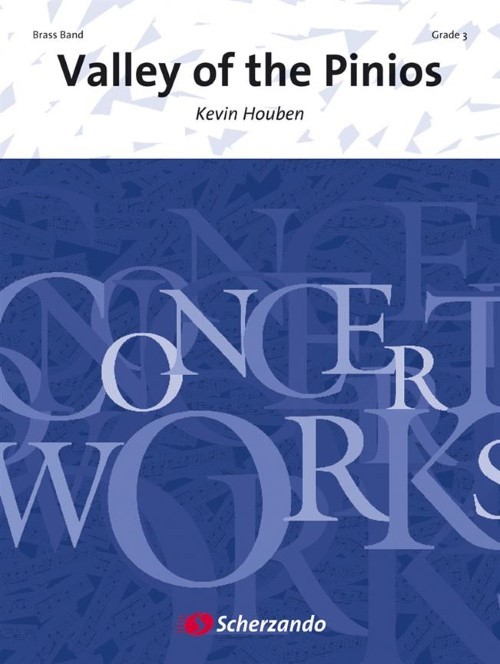
Valley of the Pinios (Brass Band - Score and Parts) - Houben, Kevin
Lying on high, calcareous sandstone rocks are the monumental monasteries of Meteora, a region in north central Greece which look down over the valley of the Pinios River. This region inspired Kevin Houben to compose Valley of the Pinios. You can almost hear the wind swirl around the chalk rocks. The sacred atmosphere of the monasteries, the prayers, the solitude, the grandness of the valley and the splendour of nature are all reflected in this inspirational composition.Duration: 7:00
Estimated dispatch 7-14 working days
-
 £59.99
Largo (from Winter, The Four Seasons) (Brass Band - Score and Parts) - Vivaldi, Antonio - Sparke, Philip
Antonio Vivaldi (1678-1741) stands, with Handel and J.S. Bach, as one of the titanic figures of late Baroque composition. Not only was he lauded as a composer of vocal and instrumental works both sacred and secular, he was without doubt, the most prolific composer of his age. In addition to hundreds of vocal works, including forty-nine operas, he composed five hundred concertos. The Four Seasons are probably the best known of his concerti with the second movement, Largo, portraying time spent by a roaring fire listening to the rain pounding against the window. This arrangement for brass band retains all the warmth of the original.Duration: 3:45
Estimated dispatch 7-14 working days
 View Music