
Results
-
£34.95
IMPACT (Brass Band Set) - Martin Cordner
Written for the re-opening of the Salvation Army building at Romford, this sparkling festival march features the tune, 'Ring the bell, watchman' to which the words, 'Come, join our army, to battle we go' are associated.
Estimated dispatch 7-14 working days
-
£29.95
ANTHEM OF THE FREE (Brass Band Set) - Dean Goffin
Prior to becoming a Salvation Army officer, Dean Goffin was the first Salvationist composer to gain a degree in music composition. This march was originally written for the 4th Brigade Band of the New Zealand Armed Forces (which Goffin conducted during World War Two) and called Bel Hamid before being adapted for Salvation Army use. The march contains the gospel song Ring the bells of heaven (...pealing forth the anthem of the free).
Estimated dispatch 7-14 working days
-
 £55.00
Triumph Series Brass Band Journal, Numbers 1363 - 1366, July 2024
1363: Festival March - Collect the harvest (Anders Beijer)This march is a call to tell others about the salvation we have received and bring people to Jesus. Jesus has bought us with his blood, and we now belong to him and stand under his protection, surrounded by his love and care. After brief references to the melody Bringing in the sheaves (S.A.S.B. 58) (also appearing later in the work in full) and an original melody, we hear the familiar tune Saviour, like a shepherd. This music should be performed with great joy and enthusiasm.1364: O come, Immanuel (Steve Kellner)The text of this beautiful Advent hymn (C.C. 62) dates to the 8th century and its chant-like tune to the 15th century. While the text alludes to Israel's captivity in Babylon and the coming Messiah, it in fact refers to the believer's anticipation of Jesus' second coming. The original chant melody was call and response, so the opening motif serves as the call, returning throughout the arrangement.1365: Our Consecration (Marcus Venables)This arrangement uses the tune St Margaret (T.B. 427) to the beloved hymn by George Matheson, O love that wilt not let me go (S.A.S.B. 616), which highlights the powerful and enduring nature of God's love. The use of the melodic fragment on the word 'go' serves as a subtle question mark, inviting the listener to reflect on the human qualities that may cause doubt in the steadfastness of God's love for us. However, as the piece ends, there is a sense of peace and assurance that we can truly rely on the never-ending love of God in our lives. This powerful and emotive arrangement will leave the listener feeling uplifted and encouraged by the knowledge that they are held securely in the arms of God's love.1366: March - The bell ringer (David Rowsell)The title of this march refers to someone who stands by the iconic Salvation Army Christmas kettle and receives donations from passers-by. They ring a bell to attract attention and subtly invite people to give a donation in support of The Salvation Army's work. This march was written as a tribute to the many volunteers worldwide who support this campaign each year. The music features the choruses from two Christmas carols, Sweet chiming Christmas bells (C.C. 83) and Sweet chiming bells (C.C. 82).
Estimated dispatch 7-14 working days
-
 £34.95
Impact (Brass Band - Score and Parts)
Written for the re-opening of the Salvation Army building at Romford, this sparkling festival march features the tune, 'Ring the bell, watchman' to which the words, 'Come, join our army, to battle we go' are associated.
Estimated dispatch 7-14 working days
-
 £32.95
Three More Negro Spirituals
Includes: Steal Away; Were You There; Oh! Peter, Go Ring Dem Bells.
Estimated dispatch 7-14 working days
-
£33.00
Favourite Melodies - Raymond, W
Includes a full band set (no score)When there's love at homeCome Lasses and LadsListen to the Convent BellsPop goes the WeaselI'll take you home again KathleenRing o' Roses
In Stock: Estimated dispatch 1-3 working days
-
 £94.99
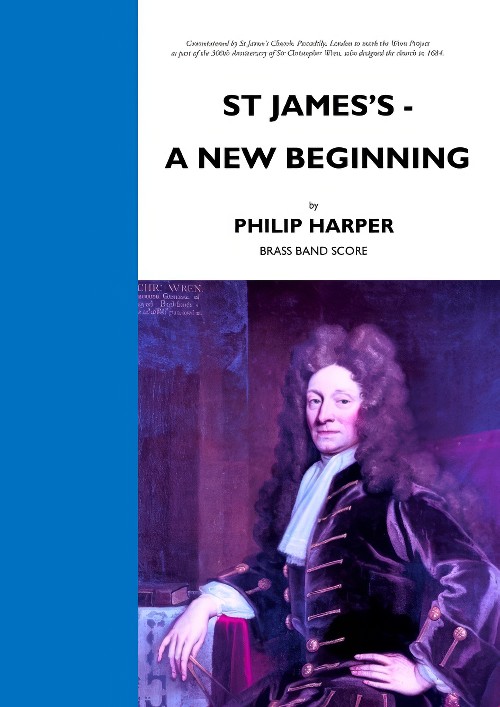
St James's - A New Beginning (Brass Band - Score and Parts) - Harper, Philip
1st Section Finals test-piece for the National Brass Band Champtionships of Great BritainSt James's - A New Beginning commemorates 300 years since the death of English architect Sir Christopher Wren who redesigned and rebuilt London after the Great Fire in 1666.The piece is in four parts:I. The Great FireII. AftermathIII. VisionIV. RenaissanceThe bells ring the alarm and, as the capital city is engulfed by flames, panic and desperation spread. As the fire burns out, we are left to contemplate the aftermath of the inferno. Enter Sir Christopher Wren. His vision and courage were some of the most influential forces in the rebuilding of London which rose to reclaim its place as one of the great cities of the world.Duration: 12:00
Estimated dispatch 7-14 working days
-
 £73.00
Siegfried's Rhine Journey (Brass Band - Score and Parts) - Wagner, Richard - Wilson, Duncan
Arranged by Duncan Wilson, this extended orchestral selection from "G?tterd?mmerung", is one of the epic four-opera's called "Der Ring des Nibelungen" by Wagner. "Siegfried's Rhine Journey" is often presented outside the opera house and is published separately. This excerpt includes especially composed endings by Richard Wagner himself so that the work is better able to stand on its own as a complete composition. Duration: 11.00. Suitable for Championship Section Bands.
Estimated dispatch 7-14 working days
-
 £43.99
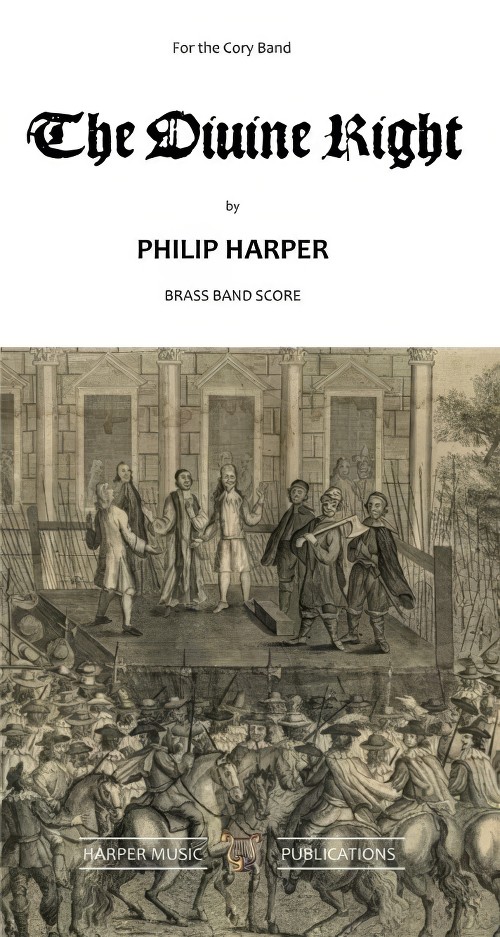
The Divine Right (Brass Band - Score only) - Harper, Philip
At the time of composing this piece, the Arab Spring was sweeping through the Middle East. It seemed that almost every week a new country's people had risen up against the regimes and dictatorships which had prevailed for generations, leaving many nations at a defining crossroads in their history. There were so many possible ways ahead: so many hopes, yet so many uncertainties.This music is a depiction of these revolutionary times, and several musical themes are in turn presented, discussed, considered, fought over, altered, rejected or accepted.Most nations have had, or probably will have, their own Arab Spring, including the United Kingdom. Events of 17th Century Britain provide the context for this piece, particularly those following the execution of the tyrant King Charles I on 30 January 1649. The regicide was in part due to Charless steadfast belief in the Divine Right of Kings, and led to a tumultuous interregnum, where England stood at its own defining crossroads. The music begins turbulently, before King Charles appears and is led to the gallows outside Banqueting House in central London where he is brutally decapitated. From the assembled crowd rose, according to one observer,a moan as I never heard before and desire I may never hear again.The music descends to emptiness.The musical argument which follows is not strictly programmatic, but a number of musical themes are all thrown into the melting pot, representing ideas such as: religion; military force; reasoned Parliamentary debate; and the chattering, irrepressible voice of the people. Additionally, there are some quotations from the music of royalist composer Thomas Tomkins (1572-1656), who was often in tune with the feeling of the times.This defining episode in England's history was brought to a close with the Restoration of the monarchy in 1660, and as the exiled King Charles II rode back into London the diarist John Evelyn wrote:Never was so joyful a day seen in this nation. I stood in the Strand and beheld it, and blessed God.At the end of the piece the bells ring out, and the musical appearance of the King has transformed from turbulent to triumphant.Duration: 17.00
Estimated dispatch 7-14 working days
-
£104.99
The Divine Right (Brass Band - Score and Parts) - Harper, Philip
At the time of composing this piece, the Arab Spring was sweeping through the Middle East. It seemed that almost every week a new country's people had risen up against the regimes and dictatorships which had prevailed for generations, leaving many nations at a defining crossroads in their history. There were so many possible ways ahead: so many hopes, yet so many uncertainties.This music is a depiction of these revolutionary times, and several musical themes are in turn presented, discussed, considered, fought over, altered, rejected or accepted.Most nations have had, or probably will have, their own Arab Spring, including the United Kingdom. Events of 17th Century Britain provide the context for this piece, particularly those following the execution of the tyrant King Charles I on 30 January 1649. The regicide was in part due to Charless steadfast belief in the Divine Right of Kings, and led to a tumultuous interregnum, where England stood at its own defining crossroads. The music begins turbulently, before King Charles appears and is led to the gallows outside Banqueting House in central London where he is brutally decapitated. From the assembled crowd rose, according to one observer,a moan as I never heard before and desire I may never hear again.The music descends to emptiness.The musical argument which follows is not strictly programmatic, but a number of musical themes are all thrown into the melting pot, representing ideas such as: religion; military force; reasoned Parliamentary debate; and the chattering, irrepressible voice of the people. Additionally, there are some quotations from the music of royalist composer Thomas Tomkins (1572-1656), who was often in tune with the feeling of the times.This defining episode in England's history was brought to a close with the Restoration of the monarchy in 1660, and as the exiled King Charles II rode back into London the diarist John Evelyn wrote:Never was so joyful a day seen in this nation. I stood in the Strand and beheld it, and blessed God.At the end of the piece the bells ring out, and the musical appearance of the King has transformed from turbulent to triumphant.Duration: 17.00
Estimated dispatch 7-14 working days
 View Music