
Results
-
 £127.30
Var sang - Svein H. Giske
Our song was commissioned by Knarvik Skolekorps for their junior band in 2020. They wanted an original piece that could challenge their young players.This became a suite in three movements with themes that run through the whole piece.In the 2. movement there is a possibility for the band to sing in Song of friendship.. Young people finding friendship through music, as I myself have done, is one of the nicest things one can experience, in my opinion.Should you choose not to sing, you can just play the notes as printed.Svein H. Giske-September 2022-
Estimated dispatch 5-14 working days
-
 £67.50
Columbus - Thierry Deleruyelle
Columbus is a brilliant and dynamic overture for brass band, with a soft and melodious central passage. In addition to the many American towns that hold the name, Columbus is a European space laboratory that is part of the International Space Station. Launched in 2008 by the American space shuttle Atlantis, it makes it possible to carry out continuous scientific experiments in fundamental physics, life sciences, fluid physics, etc. Several hundred experiments take place within Columbus every year. Commissioned by the Brass Band Bourgueillois, this piece celebrates the 10th anniversary of the launch of the band at the instigation of its conductor, Michael Auclert. The ensemble brings together musicians from the various wind bands of the Bourgueillois region and beyond. Thus, just like the space laboratory that inspired this work, the Brass Band Bourgueillois also serves as a laboratory, albeit a musical one, within a territory that is discovering this ensemble and its original repertoire.
Estimated dispatch 5-14 working days
-
 £105.20
Super Trouper - Benny Andersson & Björn Ulvaeus - Idar Torskangerpoll
This song by ABBA is the core of the European disco-sound in the eighties. It was released in 1980 when ABBA was in its superstardom. A good tune with almost a sing-along guarantee from the audience.This arrangement in the Young Band series is suitable for many bands as the instrumentation is limited in its demand to number of instruments. In the same series several ABBA items are available, and this piece can be programmed alongside other ABBA songs from the same series.This arrangement is similar to the original in form. The semiquavers in the tuba part may be omitted as they also are covered in the euphonium part.
Estimated dispatch 5-14 working days
-
 £39.95
Suite for Saturday - Don Bateman
This work was originally written for a Junior Brass Band with the title Suite for Saturday and was road-tested at a Band Day organized by West Sussex Music Service. It became a piece for 2 clarinets with a version for clarinet and piano. Its title then was Suite for Chloe. As you can see, the original title has been restored as being more appropriate for a full junior brass band and, inevitably, with regard to an Educational project, there is a strong didactic thread running through the sections of the Suite.For Openersrequires a decisive attack, fanfare style. Metro Gnomesdemands articulative skill and metronomic precision.Smooth Operatorsencourages an efficient legato style.Best Foot Forwardstresses rhythmic drive (alla militare).
Estimated dispatch 5-14 working days
-
 £154.60
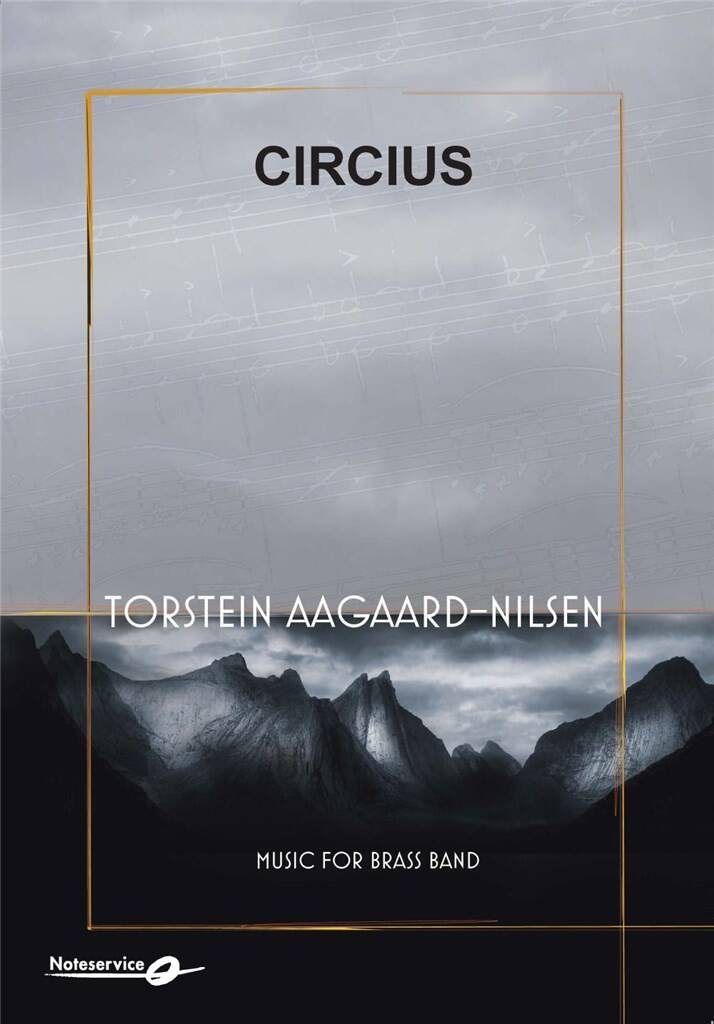
Circius - Torstein Aagaard-Nilsen
The work is important for me because it was my first piece to be performed outside Norway. Black Dyke Band/David King performed it and did a recording of it in 1991. In the original score I quote a Swedish bishop (Olaus Mangnus) who lived in the 15th century. He travelled around Scandinavia and drew maps - very important historic material. When he came to the north of Norway (where I come from) he decribed the wind from the north as Ciricus: (something like) Worst of all winds is Circius, that revolves (?= turn upside down) heaven and earth. (Well, not a good translation Im afraid). The fast sections reflects the mighty winds from the north. In the middle section, I borrowed afolksong-like tune (by C. Elling, a Norwegian composer). The text (by Kristoffer Janson) tells about old times when the fishermen used open boats: they had to put their lives in the hands of God.
Estimated dispatch 5-14 working days
-
 £105.20
When We're Together - Kate Anderson - Haakon Esplo
Disney has done it again! This is music perfect for your band. The arrangement is written for young musicians keeping the challenges in leading part. The important musical elements of the piece are also doubled in several parts making the arrangement playable also with a limited instrumentation. The modulation towards the end differs a half tone from the original to make the arrangement playable for younger musicians.
Estimated dispatch 5-14 working days
-
 £72.99
Fantastic Brass - Gilbert Tinner
Composer and trombone player Gilbert Tinner wrote this original piece to reflect his passion for rhythm and brass instruments.
Estimated dispatch 5-14 working days
-
 £54.99
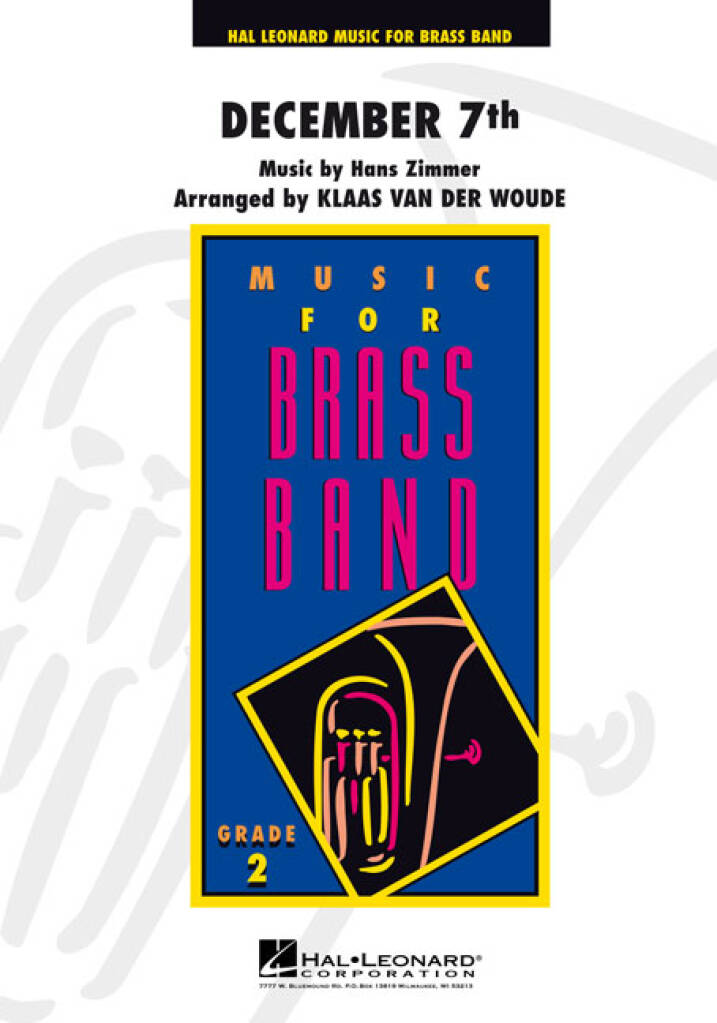
December 7th - Hans Zimmer - Klaas van der Woude
The commemoration of the Japanese attack on Pearl Harbour on 7th December 1941 was portrayed in the unique film Pearl Harbour, staring Tom Cruse. The music was composed by the prize winning composer Hans Zimmer. The piece December 7th is a dramatic work which accompanies the high point of the film and Klaus van der Woude's arrangement looses none of the excitement of the original.
Estimated dispatch 5-14 working days
-
 £69.99
Thumbs Up! - André Waignein
This piece definitely gets a Thumbs Up! Andre Waignein has created an exciting and varied original work in which the solo part can be played, depending on setting, availability, and occasion, by a cornet or vibraphone. Thumbs Up! consists of a slow and a fast movement that are linked together, which are fun to play and will delight the audience at your next concert.
Estimated dispatch 5-14 working days
-
 £59.99
Veni Immanuel - Philip Sparke
The Advent hymn we all know today as O Come, O Come, Immanuel was arranged in its modern form by Thomas Helmore and published in Hymnal Noted in 1856. Both the words and melody, however, predate this version by centuries. The words are based on a 9th century antiphon and the tune, Veni Immanuel, is taken from a 15th century processional of French Franciscan nuns, part of the setting for the funeral hymn Libera Me. This arrangement aims to expand on the power and mystery of the original tune and will be most effective if the solo Cornet at the start and end of the piece can be placed away from the band, maybe at the back of the auditorium.
Estimated dispatch 5-14 working days
 View Music