
Results
-
 £42.95
The Blue Bell of Scotland (Euphonium Solo with Brass Band - Score and Parts) - Pryor, Arthur - Sparke, Philip
Euphonium & Brass Band. This well loved solo is now available with Brass Band accompaniment.Please note that the Euphonium Solo with Piano Accompaniment arranged by Philip Sparke is in a different key and therefore not compatible with this arrangement.
Estimated dispatch 7-14 working days
-
 £35.00
The Water of Tyne (Brass Band - Score and Parts) - Harper, Philip
A delightful setting of a traditional North East melody, arranged in a hauntingly pastorale style with all the skill we have come to expect from Philip Harper. Featuring the euphonium and principal cornet with the melody at first, the piece then builds to a passionate full band rendition which eases back to a tranquil, effective close.A great piece to offer every level of band the opportunity to add some stylish peace to their programme.Duration: 3.45
Estimated dispatch 7-14 working days
-
 £45.00
Three Christmas Portraits (Brass Band - Score and Parts) - Doe, Philip
A delightful set of three Christmas carols expertly adapted by Philip Doe. This suite of three pieces opens with Christmas Day, a dainty and light opening that shows the more delicate aspects of brass playing. The centre piece is a new version of The Coventry Carol, which open with a first verse rendition for quartet before developing a more baroque-style treatment that sits over an ostinato bass line. The movement reaches its climax with flourishes from the cornets leading to a rendition of the carol at fortissimo, and treated with slightly altered, harmonies before coming to rest with the opening quartet delivering the tierce de Picardie. The final movement is I Saw Three Ships, with handy interjections from several other carols, making a rousing climax to a enjoyable set of three Christmas portraits. Duration: 7.00
Estimated dispatch 7-14 working days
-
 £59.99
To a Wild Rose (Brass Band - Score and Parts) - MacDowell, Edward - Sparke, Philip
Edward MacDowell can be regarded as the first great American composer, although he disliked the idea of being classified as any sort of musical nationalist. He composed a large number of orchestral works but it is the charming and unpretentious suite of musical miniatures, Woodland Sketches, that has survived as his best-known work, with To a Wild Rose being the most popular. Philip Sparke has expertly arranged this simple work for brass band.Duration: 3.00
Estimated dispatch 7-14 working days
-
 £54.99
Fantasy on Deck The Hall - Richard Saucedo
Using this familiar carol as a starting point, Richard L. Saucedo has created a high-energy fantasy perfect for the holiday season. The melody is passed from section to section amid a variety of textures and moods. None other than Philip Sparke provided a playable version for brass band. Entertaining and festive!
Estimated dispatch 5-14 working days
-
 £102.99
Gemini Concerto - Philip Sparke
Gemini Concerto was commissioned by and written for Ryukoku University (Japan), Andre Henry and Shoichiro Hokazono. Set in three movements, the concerto aims to explore the close relationship, as solo instruments, between the cornet and euphonium, exploiting the many common factors between the two as well as the subtly different characteristics they possess in terms of both lyrical and rhythmic playing. The first movement is a bustling toccata and the second movement is lyrical and improvisatory in nature. A fantastic piece and a great addition to the repertoire!
Estimated dispatch 5-14 working days
-
 £99.99
Lucerne Dances - Philip Sparke
Lucerne Dances consists of three movements, which play without a break and offer variety in abundance, with athletic figures, full chords, suave melodies, and alternating robust and mysterious themes. Several soloists are brought into the limelight, but each section, as well as the band as a whole, will have the opportunity to shine. In short: a captivating work with a festive touch that both the band and the audience will enjoy.
Estimated dispatch 5-14 working days
-
 £57.50
A Jazzy Christmas - Johnnie Vinson
Traditional carols are not usually thought of in a swing style. Yet Johnnie Vinson has found a creative way to arrange these favorites in a light and appealing jazzy style. This work has been expertly transcribed for brass band by Philip Sparke. Includes: We Wish You a Merry Christmas, The Holly and the Ivy, Good King Wenceslas.
Estimated dispatch 5-14 working days
-
 £52.50
Broadheath - Philip Sparke
Broadheath was commissioned by the Elgar International Brass Band Summer School for their 2024 course. The premiere took place in the Routh Hall at Bromsgrove School on Friday 26 July.It is in conventional march form, opening with a brief fanfare before the horns take up the main theme. This is then repeated by the full band before euphoniums and baritone announce the second subject. This builds to a stirring tutti passage utilising elements of the opening theme, which brings the opening section to a close.In honour of the summer school's tribute to Sir Edward Elgar (it is held in 'Elgar country'), the trio uses the opening melody of his 1st symphony as its main theme, decorating it with filigree work from the cornets. This is repeated on the full band and leads to a varied recapitulation of the opening material to bring the march full circle.
Estimated dispatch 5-14 working days
-
 £57.50
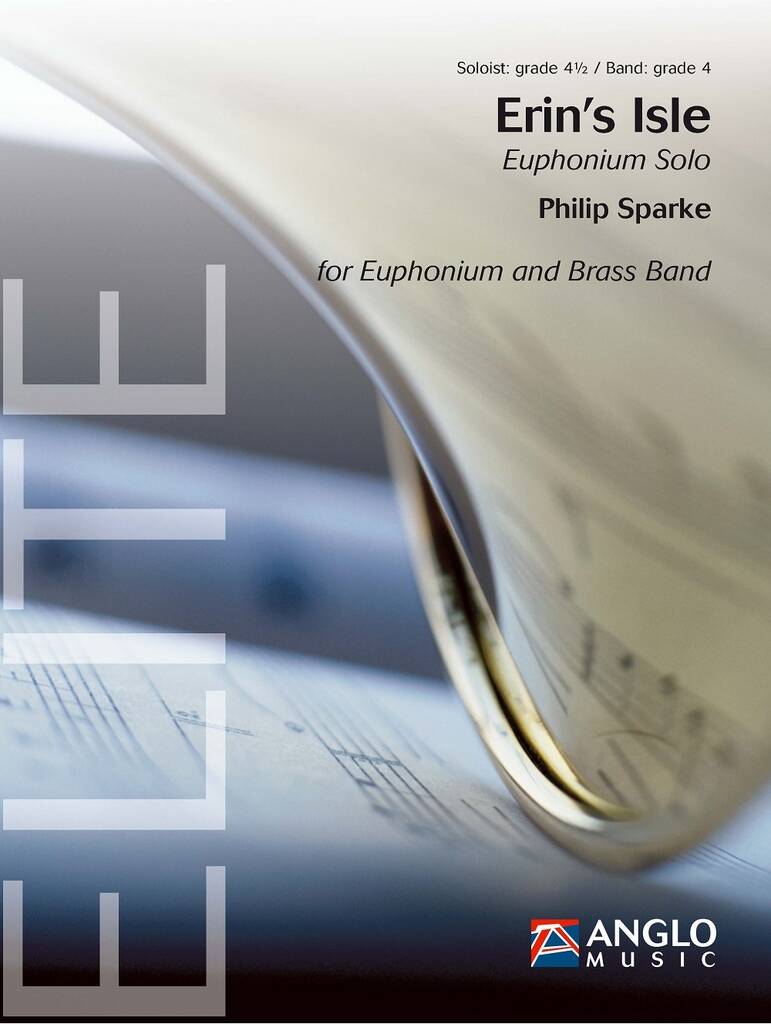
Erin's Isle - Philip Sparke
Erin's Isle was commissioned by euphonium player Micah Parsons and premiered by him in June 2024. The idea was to write a slow melody with an Irish flavour and the title is a romantic, 19th century name often used to refer to the island of Ireland itself. The work opens with fluttering, muted cornets, under which a tentative theme appears. This leads to an accompanied cadenza for the soloist, out of which the main theme emerges. This is a long and expansive melody, which winds through several related phrases with a folk-like flavour. A change of key heralds snatches of the theme by the band with interjections from the soloist, leading to a second cadenza. Eventually the band takes up the main theme again, over which the euphonium weaves an elaborate counter melody. The fluttering cornets return to allow the soloist to close the work with a brief and flowery coda.
Estimated dispatch 5-14 working days
 View Music