
Results
-
 £228.70
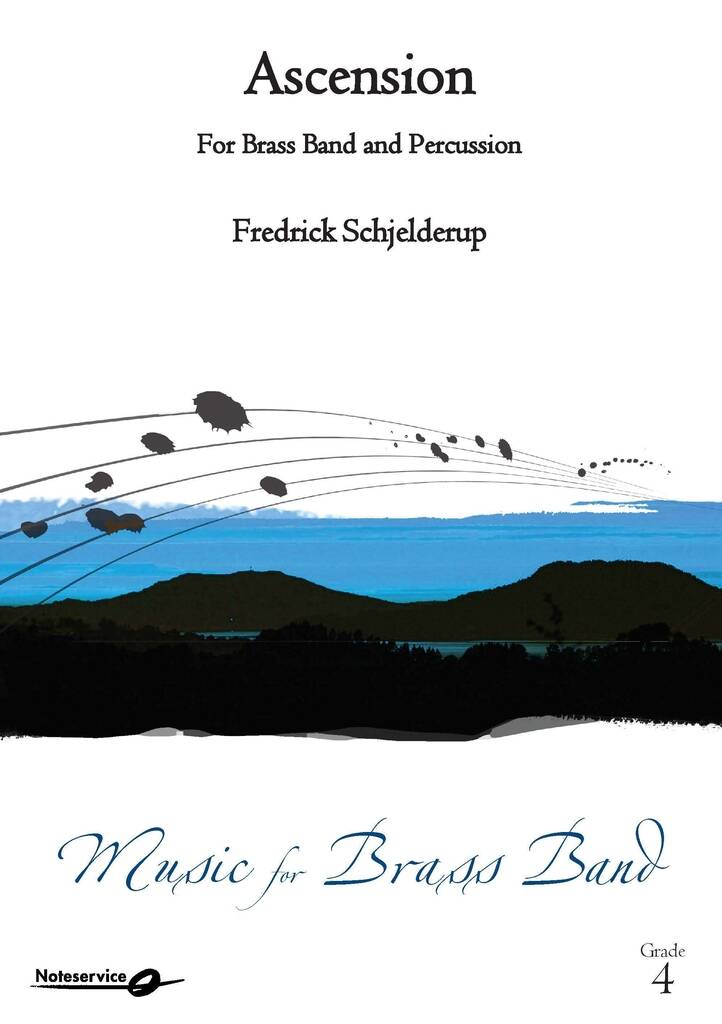
Ascension For Brass Band and Percussion - Fredrick Schjelderup
"Ascension" was commissioned in 2014 for the Norwegian school band, Hellen Skoles Musikkorps for their 60th anniversary.The piece is based on two themes, processed through rhythms, chords and solos in various time signatures.The title, "Ascension" which means rising, is central for the main thematic material and describes the band's hard work for a coming event (concert or a contest) where the musical level is ascending/rising.
Estimated dispatch 5-14 working days
-
 £29.50
Grandfather's Clock - G Doughty - Gavin Somerset
One of the most popular Euphonium solos in the Brass Band repertoire has now been transcribed and re-arranged for the Eb Instruments of the band. Originally arranged for Michelle Ibbotson on Soprano for Black Dyke, this transcription makes the solo perfect for Soprano Cornet, Tenor Horn or even Eb Bass. New percussion parts have also been added for this arrangement. Most bands have the original Euphonium solo in their library, and now is the chance to revive this old classic in a new light, with new soloists.
In Stock: Estimated dispatch 1-3 working days
-
 £84.99
Christmas Brass - Richard Peaslee
Christmas Brass is a fantasy on six carols, originally commissioned by Mark Freeh for the Manhattan Brass Choir. Duration: 16:30The well-known tune, O Come, O Come Emmanuel, a hymn originally based on a plainsong melody, is here set in 5/4 meter. Modal harmonies are combined with big band style as the piece gains momentum, greatly accentuating the mood of the words, "Rejoice! Rejoice! Emmanuel." The opening 5/4 statement of the theme returns, and the piece ends quietly.In Beautiful Savior (also known by the title Fairest Lord Jesus), a hushed beginning featuring horns, euphoniums, and a muted trumpet, leads through a key change to a satisfying, chorale-likeclosing passage.In Away in a Manger, Peaslee sets two tunes, Cradle Song and Away in a Manger. Following a straightforward presentation of each melody, Peaslee plays them against one another. The music swells to a full climax followed by a hushed ending.Peaslee employs a gentle hand in It Came Upon a Midnight Clear, using flugelhorn solos and duets in a jazz-waltz style.In Silent Night, the traditional carol gets an untraditional harmonization, propelled forward by give-and-take between the two groups of brass instruments in the brass choir: trumpets and trombones versus horns, euphoniums, and tuba.Hark! The Herald Angels Sing begins with a humorous blast of discordant harmonies as multiple carols are sounded at the same time. An up-tempo 4/4 announcement of the melody in the trombone is followed by a metrical modulation in 6/8-3/4 time. An additional metrical modulation bring the music back into 4/4, but at a slower tempo and in a pronounced jazz style. Tempo I returns, and the set of six pieces closes with a big ending.Instrumentation: 4 Trumpets, 2 Horns in F, 4 Trombones, 2 Euphoniums, Tuba, Guitar, Bass, Percussion
Estimated dispatch 5-14 working days
-
 £80.00
St. Magnus - Kenneth Downie
Dedicated to Alastair Massey, an inspirational music teacher. Commissioned by the Scottish Brass Band Association for the 2004 European Brass Band Championships in Glasgow. This music is a set of variations on the tune known as St Magnus, which is attributed to Jeremiah Clarke. Most people will associate it with Thomas Kelly's hymn which begins: "The Head that once was crowned with thorns is crowned with glory now". The tune is very simple, consisting of just two, four-bar phrases. Neither is there much in the way of rhythmic variety, every note being a crotchet with the exception of two quavers, and the last note in each phrase. Within such a simple structure, however, lies considerable strength. THEME The listener is given the opportunity of hearing it twice, in full, at the beginning, starting with one player but soon taken up by the full ensemble. It returns in the middle of the music and is stated again near the end. This has been done quite deliberately in the hope that there will be an appreciation of what material is being developed, by the listener as well as by those with access to the score, who are able to see the visual connections. VARIATION 1 This takes the rhythm of the last part of the theme and also uses the shape of the opening as a recurring figure. The mood is whimsical and skittish, with short, teasing rhythmic figures tossed around the band, and quick interplay with percussion, at a fast tempo. An energetic flourish finishes this variation before the Andante espress. VARIATION 2 This commences with chords related to the opening of Variation 1. The cantabile on solo comets establishes a new, lyrical mood and there is scope for expressive playing in a series of short solo passages. The theme works its way unobtrusively into the texture before a reprise of the solo cornet melody and some more lyrical interchanges between Eb bass, euphonium, flugel horn and comets. The variation ends serenely with clear references to the last phrase of the theme. VARIATION 3 The first idea to dominate is clearly linked to the shape of the theme's first phrase. There is a frenetic feel to much of this variation, with considerable energy and instability created by extensive use of cross-rhythms. A thinning-out of the score marks a clear change to development of the start of the second phrase of the theme. This proves to be short-lived however, and the opening material returns leading to a restatement of the theme, "Maestoso," after which a euphonium cadenza links to Variation 4. VARIATION 4 Here we have some solos for euphonium, cornet, trombone and Eb bass set against a background of horns and baritones presenting a pensive statement of the theme's opening. VARIATION 5 This commences Allegro, with lively work for cornet and euphonium spreading to the whole band before attention focuses on the beginning of the second phrase of the theme which is initially presented in diminution, then in regular rhythm, then in inversion. An increase in tempo coupled with a decrease in volume, requires dexterity and control, with several metrical challenges thrown in for good measure. The same fragment of phrase becomes an ostinato which generates a frenzied climax, punctuated by short, dramatic silence, before the opening figure returns and the music gradually winds down. The tubular bells herald the final return of the theme, in augmentation, marking the start of the Finale. FINALE This features the running semiquavers of the previous variation sounding in counterpoint. A fast, furious coda speeds the work to a conclusion while references to the opening of the theme are still trying to break into the texture of the music. Kenneth Downie
Estimated dispatch 5-14 working days
-
 £134.99
Dreams - Bertrand Moren
This composition by Bertrand Moren presents various dreams which could have an effect on a dreamer's life. Its very high level of difficulty provides a great challenge for the conductor and musicians. You will be taken through a living Nightmare, with spine-chilling passages as dissonant chords alternate with aggressive percussion. Daydream is a patchwork of solos with all the brass band soloists playing serene and soft melodic lines with a virtuosic trombone cadenza. Finally, Visions portrays visions of insanity reflected by violent and discordant descending motifs leading to visions of joy presented in a sparkling and cheerful finale.
Estimated dispatch 5-14 working days
-
 £33.62
Gobsmacked! (Brass Band) Robbert Vos
VIEW SCORE PDF Gobsmacked was commissioned by Ravnanger Brass Band (Norway). The composer Robbert Vos writes: 'Gobsmacked is composed as an opening or encore piece which, as the title already reveals, is meant to surprise or overwhelm the audience! After a brief opening fanfare, the main theme is introduced by the solo cornet and euphonium. An accelerando leads to a quick movement, where this main theme is transformed into a con brio. In this section there's a lot of energy to be unleashed and every band member plays a roll in creating that. Throughout the piece there are many surprises, for example some unexpected time changes, percussion effects to wake you and some trombone glissandi to make you smile. After a short and atmospheric reminiscence by the flugel to the solos from the beginning of the piece, there comes a brief percussion interruption which leads to a reprise of the con brio, but this time in slightly different form. This all comes together in the finale where a big accelerando will lead to an exciting close.' Sheet music available from: UK - www.brassband.co.uk USA - www.solidbrassmusic.com Difficulty Level: 1st Section + Instrumentation: Soprano Cornet Eb Solo Cornet Bb Repiano Cornet Bb 2nd Cornet Bb 3rd Cornet Bb Flugel Horn Bb Solo Horn Eb 1st Horn Eb 2nd Horn Eb 1st Baritone Bb 2nd Baritone Bb 1st Trombone Bb 2nd Trombone Bb Bass Trombone Euphonium Bb Bass Eb Bass Bb Timpani Percussion 1-4
In Stock: Estimated dispatch 1-3 working days
-
 £37.35
World War III (Brass Band) Joe Galuszka
This descriptive work for brass band by Joe Galuszka depicts the horrors of war. War is all around us. Every day, another life is lost. Myanmar, Sudan, Ethiopia, Ukraine, Colombia, Afghanistan, Somalia, Syria and Yemen. As time goes on, more and more countries are brought to the end of what is a diplomatic struggle - in where war seems to be the only option. 'War! Terror! Panic! captures the tumultuous and relentless nature of war. With driving rhythms, aggressive brass fanfares, and thundering percussion, the listener is immersed in the chaos of battle. Dissonance and clashing harmonies depict the discord that pervades war and takes us on a journey through the terror and panic that comes with the brutality of conflict. Remembrance (For Those That We Have Lost) provides a poignant and reflective interlude, allowing the audience to contemplate the human cost of war. Mournful melodies and expressive solos for trombone, euphonium and glockenspiel, convey the depth of sorrow and loss, serving as a powerful reminder of the toll war takes on individuals and communities. The final movement, Hymn for Peace and Hope is a testament to the enduring human spirit and the yearning for harmony - dissonance and conflict gradually give way to consonance and resolution. We celebrate the human capacity for unity and the triumph of peace over strife, as we imagine a world at piece. To listen to an audio demo of the work please visit https://on.soundcloud.com/Udt1AWRThgwuWnQv5 Duration: Approx. 5.00 mins Difficulty Level: 2nd Section + PDF download includes parts and score. Sheet music available from www.brassband.co.uk (UK) or https://satradecentral.org (USA) Instrumentation: Soprano Cornet Eb Solo Cornet Bb Repiano Cornet Bb 2nd Cornet Bb 3rd Cornet Bb Flugel Horn Bb Solo Horn Eb 1st Horn Eb 2nd Horn Eb 1st Baritone Bb 2nd Baritone Bb 1st Trombone Bb 2nd Trombone Bb Bass Trombone Euphonium Bb Bass Eb Bass Bb Timpani Percussion 1-3
In Stock: Estimated dispatch 1-3 working days
-
 £30.00
Wired - Lucy Pankhurst
A fantastically funky piece! So good it was featured on BBC television during the 2010 general election campaign coverage for the North West and at the 2014 International Women's Brass Conference.Originally written in 2009 for Jason Katsikaris and the Leyland Band, Lucy Pankhurst has created a vivacious, energetic work which is strong on percussion and style!It's fast-moving, completely engaging and makes for compulsive toe-tapping and the need to 'get into the groove'! Huge opportunities for the kit player/percussion section to show their wild side and, so as not to be outdone, plenty of other moments for improvisation-esque solos from other quarters.If you can keep up, this is a really great contribution to your concert programme.Look and Listen (performance courtesy of Oslofjord Brass from their appearance at the 2010 Grenland International Brass Festival 2010):
In Stock: Estimated dispatch 3-5 working days
-
 £37.35
A Fugal Overture (Brass Band) Gustav Holst arr. Rob Bushnell
A Fugal Overture was written in 1922 by Gustav Holst. It was first performed at the Royal Opera House, Covent Garden on 14 May 1923 and was used as an opening work to Holst's one-act opera The Perfect Fool. It received its concert premiere on 11 October 1923 at one of Henry Wood's Queen's Hall Promenade Concerts. It is an early example of neoclassicism and was influenced by the counterpoint of J. S. Bach, despite its unconventional use of the fugal process. Holst began writing the piece in the summer of 1922, having hoped to develop it into a ballet. It is divided into three sections, the fugal subject with its distinct 3+3+2 pattern, a slower section with solos at the end, and a third section where the subject returns. Although reviews of the piece were mixed at the time of its premiere, the likes of Adrian Boult have said it was "an invigorating work that could effectively start any [...] concert". In more recent years, it has been compared to John Adam's A Short Ride in a Fast Machine. This arrangement is for the British-style brass band, with alternative parts for horns in F and bass-clef lower brass. A recording of the original composition can be found here: www.youtube.com/watch?v=a8xfwJyFq2E. Duration: Approx. 5.40 minutes Difficulty Level: 1st Section + PDF download includes parts and score. Sheet music available from www.brassband.co.uk Instrumentation: Soprano Cornet Eb Solo Cornet Bb Repiano Cornet Bb 2nd Cornet Bb 3rd Cornet Bb Flugel Horn Bb Solo Horn Eb 1st Horn Eb 2nd Horn Eb 1st Baritone Bb 2nd Baritone Bb 1st Trombone Bb 2nd Trombone Bb Bass Trombone Euphonium Bb Bass Eb Bass BbTimpani Percussion 1-2
In Stock: Estimated dispatch 1-3 working days
-
 £33.62
Both Sides, Now (Brass Band) Joni Mitchell arr. Andrew Wainwright
Joni Mitchell's Both Sides, Now is a timeless reflection on the shifting landscapes of life, love, and self-understanding. First released in 1969, this iconic song has become a signature of Mitchell's extraordinary songwriting, capturing the delicate interplay between youthful innocence and hard-earned wisdom. With its poignant lyrics and haunting melody, Both Sides, Now continues to resonate across generations. This evocative brass band arrangement by Andrew Wainwright was commissioned by the Fountain City Brass Band for its 2023 tour of England, including a performance at the prestigious Brass in Concert Championships. Featuring prominent solos for baritone and flugel horn, the arrangement makes full use of their lyrical warmth and tonal richness. BrookWright is delighted to be able to now make this arrangement available to brass bands. To view an excerpt of Fountain City Brass Band performing the work please visit www.youtube.com/watch?v=OYaoF_b9wHo Duration: approx. 3.30 minutes Difficulty Level: 4th Section + This PDF download includes parts and score. Sheet music available at www.brassband.co.uk (UK) or https://satradecentral.org (USA) Instrumentation: Soprano Cornet Eb Solo Cornet Bb Repiano Cornet Bb 2nd Cornet Bb 3rd Cornet Bb Flugel Horn Bb Solo Horn Eb 1st Horn Eb 2nd Horn Eb 1st Baritone Bb 2nd Baritone Bb 1st Trombone Bb 2nd Trombone Bb Bass Trombone Euphonium Bb Bass Eb Bass Bb Timpani Percussion 1-3
In Stock: Estimated dispatch 1-3 working days
 View Music
 Watch video