
Results
-
 £76.99
Olympic Dream - Andreas Ludwig Schulte
The world's most important sports event inspired Schulte to compose a magnificent new concert piece. In three parts he successively describes the opening ceremony (musical entry of the athletes), the hymn for the winner (an alluring ballad), and the party following the closing ceremony (rock party) during which all tensions disappear. Enter the world of the Olympic Games and enjoy!
Estimated dispatch 5-14 working days
-
 £76.99
Match-Rhythm - Jan Bosveld
Match-Rhythm was the compulsory work for the B-division during the European Brass Band Championships of 2005 taking place in Groningen. It is a rhythmical (Rhythm) oriented opening work in which the bands have the opportunity to present themselves during the indisputable competitive character (Match) of these championships. To achieve the high standard required is intensive preparation alone not sufficient. The bands increase their level op performance during the customary try-out concerts so that a kind of competitive rhythm (Match) is acquired.
Estimated dispatch 5-14 working days
-
 £63.50
Spiral - Marc Jeanbourquin
Marc Jeanbourquin composed 'Spiral' during a music camp, for himself and 9 other fellow musicians. Due to the success of this piece, some years later, he has taken the main theme and developed it, with a kind of tribute to Camille Saint-Saens, one of his favourite composers. The constant changes between the minor and major keys, and between the often changing 2 and 3 feeling, with the occasional 2/4 bar thrown in, do not disrupt the flow of the piece in the slightest; in fact it is what has inspired the title. A percussion interlude, which is broken up by the unregularly occurring meter, brings the piece to a restatement of the original theme, which then ends in a large crescendo. Spiral is perfectly suited to either the opening or the close of any concert.
Estimated dispatch 5-14 working days
-
 £85.00
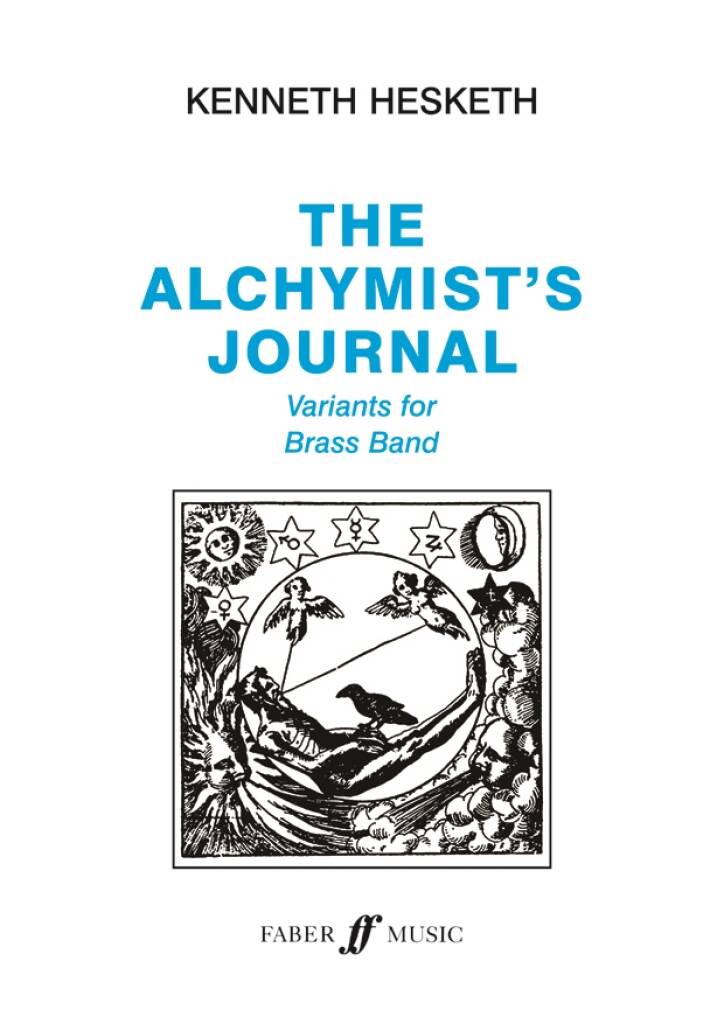
Alchymist's Journal. - Kenneth Hesketh
'The Alchymist's Journal' gets its title from the book of the same name by American author Evan S. Connell. The book fictionalises a number of famous Alchemist's writings, each one developing another's thoughts thuscontinuing one idea but changing it subtly to provide a new view point or way of thinking. This process is, in fact, alchemical as one idea transmutes into another. This idea is parallel to the processes at work within thesevariants. The whole work is constructed from 6 notes (C, A, B flat, E flat, F sharp, E) and is presented in nine different sections, each individual in mood but still based upon the original pitches. This is not a thematic setofvariations, as the themes are developed one at a time from small segments of the six notes. For example, the opening theme is the complete number of pitches, the second theme uses three notes transposed then repeated at theoriginal level, and so on. Harmonically, the six notes can be divided into two triads, A minor and E flat minor - each key beginning and ending the piece respectively. Whilst this is essentially abstract music with noprogramme there is an introduction, menacing scherzo, slow reflective section followed by a recap of the scherzo and final coda. 'The Alchymist's Journal' was commissioned by the Brass Band Heritage Trust at the suggestionof Paul Hindmarsh, to whom the work is dedicated.
Estimated dispatch 5-14 working days
-
 £80.00
Fanfares and Love Songs - Gavin Higgins
Fanfares and Love Songs was commissioned by the National Children's Brass Band of Great Britain for performance on 25th July 2009. Its three movements contrast the extrovert and lyrical qualities of thetraditional brass band. The fanfare with which the work opens involves the whole cornet section. The second movement is reflective in mood, beginning somewhat pensively on muted brass, and building to an emotional climax beforesubsiding back to a distant pianissimo chord. The finale is a fast dance, which with a final recapitulation of the opening fanfare drives on to a breathless close. Brass Band Grade 4: Advanced Youth and 3rdSectionDuration: 12 minutes
Estimated dispatch 5-14 working days
-
 £68.60
Fanfare, Dance and Choral - Giovanni Giacomo Gastoldi - Henk van Belcum
Henk van Belcums used the festive and much loved song 'In Thee is Gladness', in this arrangement. Better known as 'Geest van hierboven' (Hymn 477) from the Songs for the Church (NL). A glorious fanfare opens the piece, which is then followed by a bright dance. The hymn is heard in the chorale section, in a fancy new setting, and the piece closes with a reprise of the opening fanfare.
Estimated dispatch 5-14 working days
-
 £84.50
The Heroes Rise Again - Andrew Pearce
As the title suggests, the piece is heroic and olympic in feel. One might imagine an Olympic Games opening ceremony where the athletes assemble to compete on the world stage. The Heroes Rise Again is an exciting and memorable piece that your band will love performing and is sure to give a tingle down the spine, leaving your audience wishing for more as they whistle the tune out the door!
Estimated dispatch 5-14 working days
-
 £115.60
Jubileum - Idar Torskangerpoll
This piece was written as a commission for Vassenden Youth Band in 2009.The piece consists of parts with different moods. It opens with a fanfare which process in to a faster section that has an ever changing 2 or 3- in a bar feel. TheEuphonium is featured as soloist in this section.A calmer section follows with a chamber music style. This section has a descending bassline, as a kind of passacaglia. The piece ends with the repetition of the opening fanfare and a shortcoda.
Estimated dispatch 5-14 working days
-
 £127.30
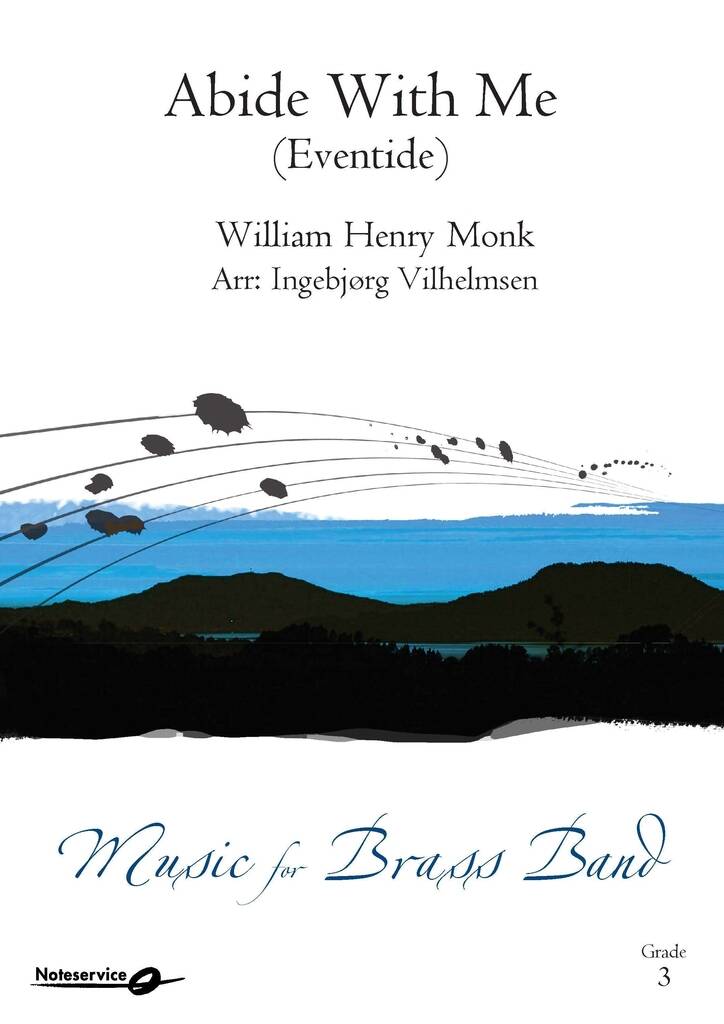
Abide With Me - William Henry Monk - Ingebjørg Vilhelmsen
This arrangement of "Abide with me" slightly differs from the traditional representation of the hymn. The piece has a majestic introduction based on elements from and around the hymn. Furthermore, the theme is presented in a more familiar way, first in low brass and then tutti. The ending then reverts to the expression from the opening. This arrangement may fit in many concert programs, but is perhaps ideally suited for church concerts.
Estimated dispatch 5-14 working days
-
 £59.99
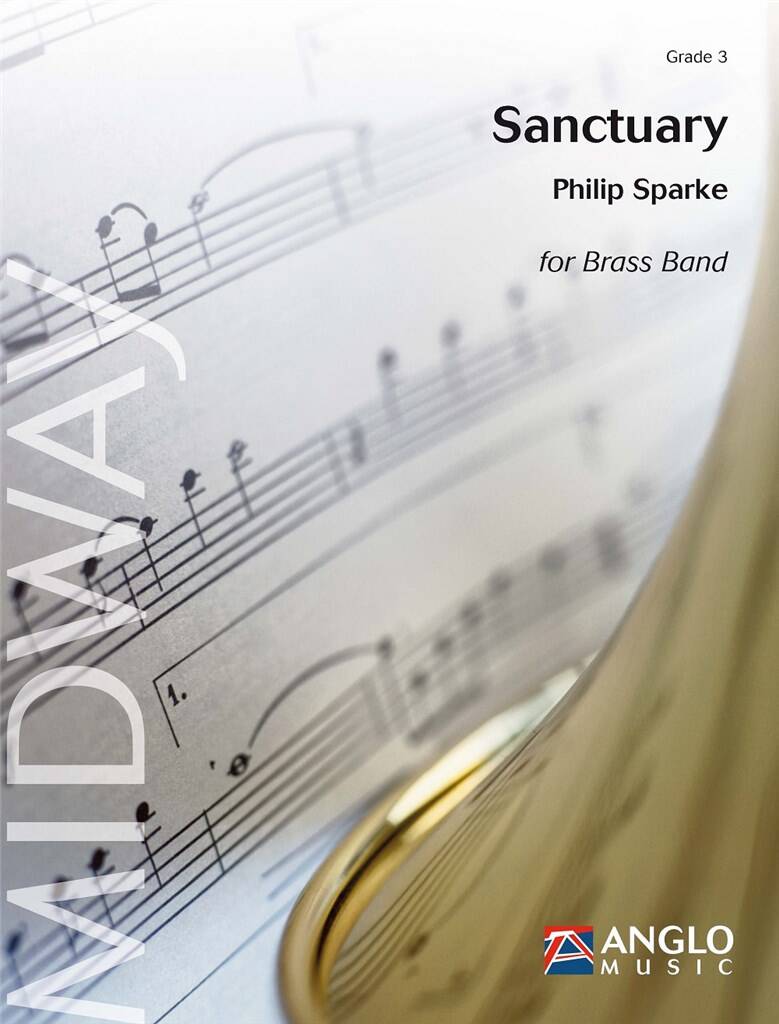
Sanctuary - Philip Sparke
Sanctuary was commissioned by Eastern Bay of Plenty Brass from New Zealand and was performed as an own choice piece at the 2018 New Zealand National Brass Band Championships. It opens with an expressive cornet solo, hymn-like in mood. A slightly faster central section builds to a change of key and an expansive return of the opening melody, this time scored for full band. After an emotional climax the mood subsides, leading to a quiet close.
Estimated dispatch 5-14 working days
 View Music