
Results
-
 £74.95
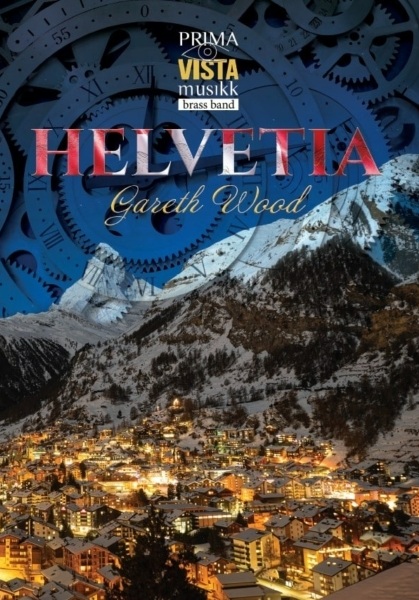
Helvetia (Brass Band - Score and Parts) - Wood, Gareth
I first went to Switzerland in the early 1970's and regularly played at the Lucerne Festival with the Royal Philharmonic Orchestra. It is a beautiful city, one of my favourite European cities.In writing Helvetia (the Roman name for Switzerland) I wanted to encapsulate the moods that remind me of this wonderful place. The work is in four distinct sections and is on the whole, self-explanatory.It opens with An Alpine Dawn and sunrise, the tubas and euphoniums substituting for the Swiss Alphorns. Next The Clock Shop at Mid-day, a loud ticking, chiming and the sad sound of a cuckoo, builds into the cacophony of the mid-day chimes. The third section is A Walk to Wagner's House. Just along the lake from the centre of town is Tribschen. This walk I have done many times, and it is here that Wagner wrote 'Tristan'. I have quoted the Dresden Amen (written by J.G. Naumann) which is much used in Parsifal. The final section is The Cesta Run, the most famous bob-sleigh run in the world. As we take each corner, the feeling of speed is demonstrated as only a brass band can do!The work is dedicated to the Cory Band and also to the memory of James Watson, a great cornet player, trumpeter and conductor. It was he who got me into writing for brass band and I hope this piece is worthy.- Gareth Wood (Feb. 2011)Duration: 11.00
Estimated dispatch 7-14 working days
-
 £21.95
Helvetia (Brass Band - Study Score) - Wood, Gareth
I first went to Switzerland in the early 1970's and regularly played at the Lucerne Festival with the Royal Philharmonic Orchestra. It is a beautiful city, one of my favourite European cities.In writing Helvetia (the Roman name for Switzerland) I wanted to encapsulate the moods that remind me of this wonderful place. The work is in four distinct sections and is on the whole, self-explanatory.It opens with An Alpine Dawn and sunrise, the tubas and euphoniums substituting for the Swiss Alphorns. Next The Clock Shop at Mid-day, a loud ticking, chiming and the sad sound of a cuckoo, builds into the cacophony of the mid-day chimes. The third section is A Walk to Wagner's House. Just along the lake from the centre of town is Tribschen. This walk I have done many times, and it is here that Wagner wrote 'Tristan'. I have quoted the Dresden Amen (written by J.G. Naumann) which is much used in Parsifal. The final section is The Cesta Run, the most famous bob-sleigh run in the world. As we take each corner, the feeling of speed is demonstrated as only a brass band can do!The work is dedicated to the Cory Band and also to the memory of James Watson, a great cornet player, trumpeter and conductor. It was he who got me into writing for brass band and I hope this piece is worthy.- Gareth Wood (Feb. 2011)Duration: 11.00
Estimated dispatch 7-14 working days
-
 £44.95
Trailblazers (Brass Band - Score and Parts) - Mackereth, Andrew
This overture draws its inspiration from the story of the first Household Troops Band. It tells the story of the 1887 band, the subsequent lull of nearly a hundred years and the re-awakening of the Troops phenomenon in 1985. It was originally written in 1995 and featured prominently by the band on its North American tour of 2002. Given the history of the Household Troops Band, it is fitting that this composition is preoccupied with marching. It begins with a marching song played by a solitary muted cornet, symbolic not only of the call to bandsmen to join the evangelical effort but also a muso-dramatic device to indicate the steady increase in members and technical ability! The music quickly develops into stirring versions of 'A robe of white' and 'Storm the forts of darkness' with two early day Salvation Army tunes crucially adding to the narrative; 'Marching on in the light of God' and 'Soldiers of our God, arise!' The second section is a reflective setting of the Herbert Booth song, 'The penitent's plea'. This song serves to represent the many people who were 'saved' during those early day campaigns. The expressive music transports the listener through a period of uncertainty and angst until finally reaching the song, 'There is a message, a simple message, and it's a message for us all'. The final section deals first with the emergence from the annals of history with the muted cornet figure again before, symbolically, the present day band bursts forth with an emphatic statement of 'Would you be free from your burden of sin? There's power in the blood'. The stirring climax represents a fitting tribute to those gallant pioneering musicians and their equally impressive and dedicated contemporaries.
Estimated dispatch 7-14 working days
-
 £34.95
CLAPP! (Brass Band) - McGhee, Paul
Clapp! was originally written in 2006 whilst studying at the Royal Welsh College of Music and Drama and was written for two players at one piano. The music uses rhythmic phasing with each rhythm assigned its own tone cluster - as each shift in rhythm occurs the harmonic structure is altered too. Melodic passages are created through the shifts in rhythm and harmony, but these only occur within the given rhythmic parameters. The music can very much be viewed as a study in momentum, with its unrelenting pulse driving us through the music.The Brass Band version of 'Clapp!!!!' was written for Manger Musikklag and Torstein Aagaard-Nilsen, receiving its premiere at the 2010 BrassWind Festival in Bergen, Norway.Duration: 3:30
Estimated dispatch 7-14 working days
-
 £84.95
Purcell Variants (Brass Band - Score and Parts) - Meechan, Peter
Purcell Variants is based on Purcell's Queen Mary's Funeral Music, which consists of four canzonas (for brass), two elegies and an anthem.The first movement begins by sounding some of Purcell's original music in the trombones, underpinned by a timpani roll with the cornets articulating the beginnings and endings of the phrases. This leads into a cadenza for cornet and horn before the movement heads in different directions, leading us to its mysterious end, where the original music is sounded this time in the 'stabs' of the muted cornets.Originally composed for the funeral of Queen Mary in 1695, Purcell's original funeral music was used later that same year for Purcell's own funeral - he died aged only 34. The second movement is an elegy, inspired by this story. After an introduction (started by cornets sounding a last post), the main melody of the movement is introduced by the solo euphonium, with other solo roles for an off-stage soprano cornet, and trombone. This is then taken over by the cornets who lead us into the middle section of the movement. This is a quasi-funeral march, inspired by the image of Purcell's coffin being taken to its final resting point. The main melody returns in the euphonium, flugel horn and soprano cornet, this time more elaborated. The movement ends with a snare drum fading away - perhaps a metaphor. The Finale is a fast and furious movement combining thematic material from the two previous movements with new rhythmical ideas. This takes us through to the final passage - the triumphant return of Purcell's original theme.Duration: 13.00
Estimated dispatch 7-14 working days
-
 £40.00
Symphonic Dance No.3 (Brass Band - Score and Parts) - Rachmaninoff, Sergei - Littlemore, Phillip
Completed in 1940, the set of?Symphonic Dances?was Sergei Rachmaninov's last composition. The work is fully representative of the composer's late style with its curious, shifting harmonies, the almost Prokofiev-like grotesquerie of the outer movements and the focus on individual instrumental tone colours throughout.?Rachmaninov composed the Symphonic Dances four years after his Third Symphony, mostly at the Honeyman Estate, 'Orchard Point', in Centerport, New York, overlooking Long Island Sound. The three-movement work's original name was Fantastic Dances, with movement titles of 'Noon', 'Twilight' and 'Midnight'. When the composer wrote to the conductor Eugene Ormandy in late August, he said that the piece was finished and needed only to be orchestrated, but the manuscript for the full score actually bears completion dates of September and October 1940. It was premiered by Ormandy and the Philadelphia Orchestra, to whom it is dedicated, on 3rd January, 1941. This arrangement is of the last dance and is a kind of struggle between the?Dies Iraetheme, representing Death, and a quotation from Rachmaninov's own?Vespers?(also known as the All-night Vigil, 1915), representing Resurrection. The Resurrection theme proves victorious in the end as the composer actually wrote the word 'Hallelujah' at the relevant place the score (one bar after Fig. 16 in this arrangement).?Duration: 3:45
Estimated dispatch 7-14 working days
-
 £75.00
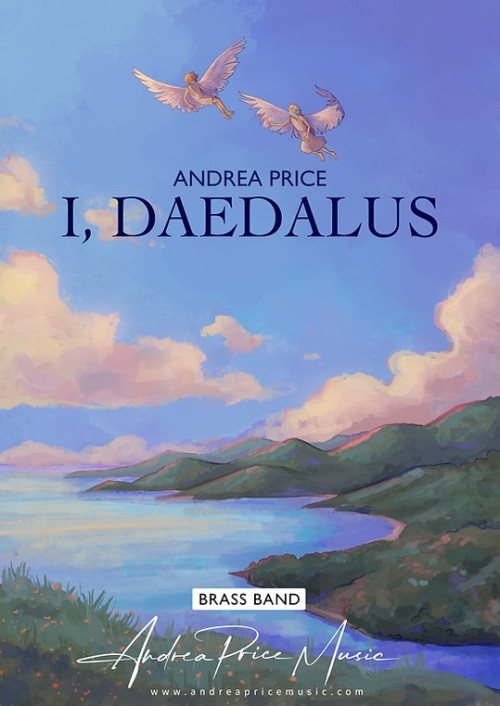
I, Daedalus (Brass Band - Score and Parts) - Price, Andrea
Unfortunately this title is now only available as a digital downloadDaedalus (pronounced day-da-luss) is a prominent figure in Greek mythology, renowned for his exceptional skills as an inventor, craftsman, and architect. The story of Daedalus symbolises human ingenuity, and epitomises the complex relationship between human creativity and its consequences. His myths explore themes of innovation, pride, and the perilous balance between human ambition and natural limits. After designing the labyrinth for King Minos, Daedalus and his son, Icarus, were imprisoned in a tower in Crete. Daedalus fashioned wings from feathers and wax, and father and son set out on their ill-fated escape. The music is through-composed, with a short introduction leading to five main sections:I - Inventor in the TowerII - Father and SonIII - Flight and FallIV - LamentV - Seeker of KnowledgeDuration: c. 10 minutes
Estimated dispatch 7-14 working days
-
 £15.00
Harrison's Dream (Brass Band - Study Score) - Graham, Peter
At 8.00pm on the 22nd of October 1707, the Association, flagship of the Royal Navy, struck rocks off the Scilly Isles with the loss of the entire crew. Throughout the rest of the evening the remaining three ships in the fleet suffered the same fate. Only 26 of the original 1,647 crew members survived. This disaster was a direct result of an inability to calculate longitude, the most pressing scientific problem of the time. It pushed the longitude question to the forefront of the national consciousness and precipitated the Longitude Act. Parliament funded a prize of �20,000 to anyone whose method or device would solve the dilemma.For carpenter and self-taught clockmaker John Harrison, this was the beginning of a 40 year obsession. To calculate longitude it is necessary to know the time aboard ship and at the home port or place of known longitude, at precisely the same moment. Harrison's dream was to build a clock so accurate that this calculation could be made, an audacious feat of engineering.This work reflects on aspects of this epic tale, brilliantly brought to life in Dava Sobel's book Longitude. Much of the music is mechanistic in tone and is constructed along precise mathematical and metrical lines. The heart of the work however is human - the attraction of the �20,000 prize is often cited as Harrison's motivation. However, the realisation that countless lives depended on a solution was one which haunted Harrison. The emotional core of the music reflects on this, and in particular the evening of 22ndOctober 1707.- Peter GrahamJuly 2000 Recorded on Polyphonic QPRL219D Master Brass (Volume Fifteen). Duration: 14'30"
Estimated dispatch 7-14 working days
-
 £133.70
Spirit of Time (Brass Band - Score and Parts) - Schwarz, Otto M.
Zeitgeist; transformations; a departure for new shores... these are buzzwords we often encounter nowadays. Above all in this digital age, it is essential that we face changes positively and that we make the very best of them. Music is emotion! Otto M. Schwarz begins many of his lectures with this phrase, and this is exactly what we feel in this new concert work. Rapid, and full of energy, is the leap into a new chapter, wonderful opportunities are waiting to be discovered in uncharted lands. But change is not only loud and momentous. The creative power of the future lies dormant in the inventive spirit of the individual, quietly, thoughtfully, silently and alone! The final sequence of this work is all about good vibes: it lights the way to a positive future and stands for the dawn of a new era!Duration: 10.00
Estimated dispatch 7-14 working days
-
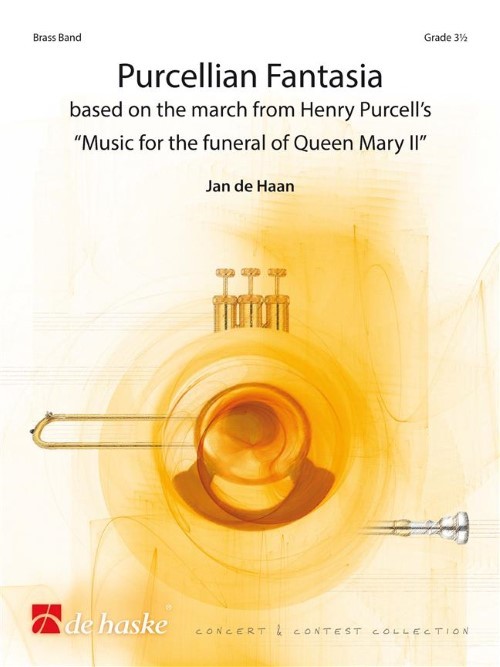 £104.99
Purcellian Fantasia (Brass Band - Score and Parts) - De Haan, Jan
This composition is based on the march from Henry Purcell's Music for the funeral of Queen Mary II, a work written in 1694. In this fantasia, various movements flow from one to the next following the main theme; these movements not only elaborate on the theme, but also contrast with it. At times, the thematic material diverges so much, that the work acquires a character of its own; however, the composer often refers back to fragments of the theme. This work was test piece in the 4th division of the Dutch National Brass Band Championships (NBK) in 2017. Duration: 10.30
Estimated dispatch 7-14 working days
 View Music