
Results
-
 £105.20
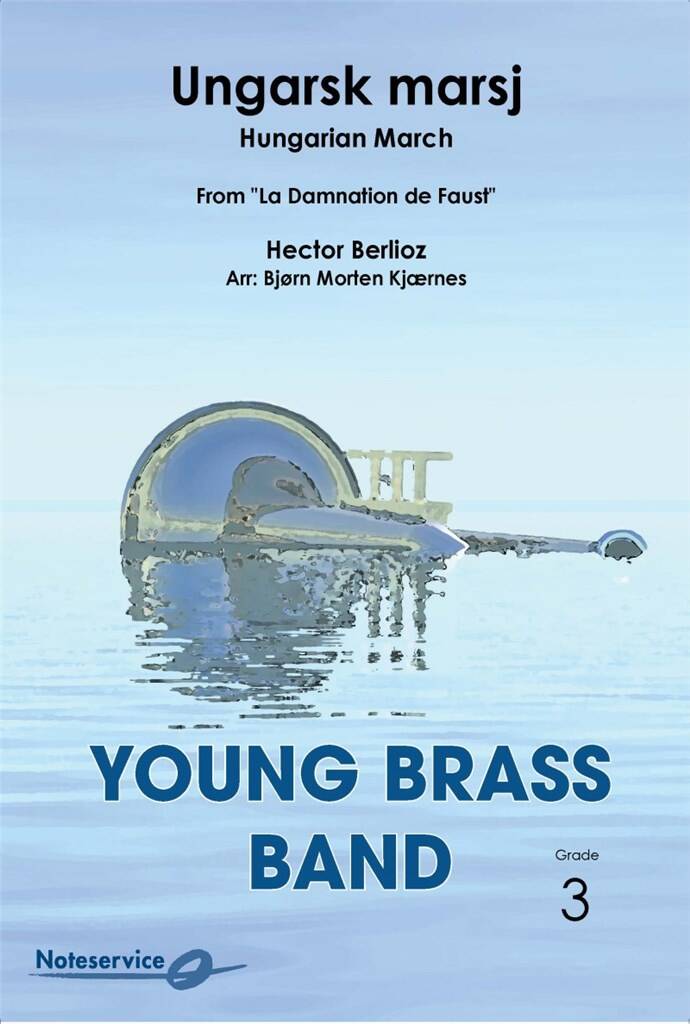
Ungarsk marsj - Hector Berlioz - Bjorn Morten Kjaernes
The "Rakoczi March" (Hungarian March) was the unofficial state anthem of Hungary before Ferenc Kolcsey wrote the Himnusz which is today the official national anthem of Hungary. The first version of this march-song was probably created around 1730 by one or more anonymous composers, although tradition says that it was the favorite march of Francis Rakoczi II. That early version called back Francis Rakoczi II to save his people. It was very popular in the 18th century but in the 19th century the more refined Rakoczi March became prevalent. Hector Berlioz included the music in his composition "La Damnation de Faust" in 1846, and Franz Liszt wrote a number of arrangements, includinghis Hungarian Rhapsody No. 15, based on the theme. The march gave its name to a 1933 Austrian-Hungarian feature film - Rakoczy-Marsch This arrangement is based on Berlioz instrumentation and phrasing from his Hungarian March, but in the form of the 19th century Rakoczi March
Estimated dispatch 5-14 working days
-
 £127.30
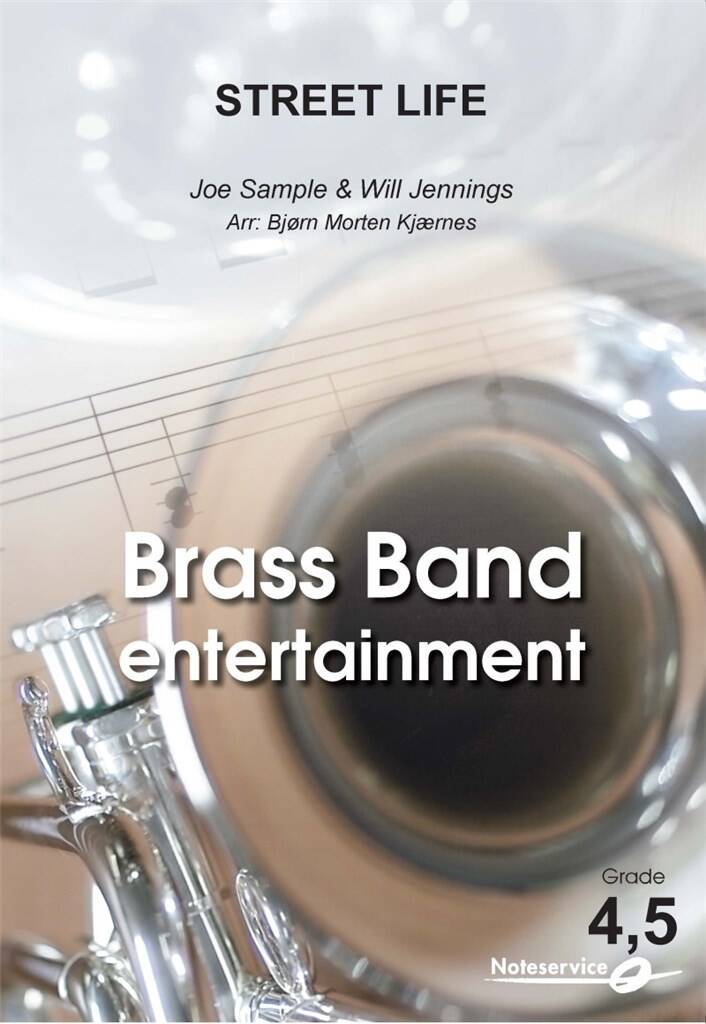
Street Life - Sample - Bjorn Morten Kjaernes
Randy Crawford led R&B veterans the Crusaders on the transatlantic hit "Street Life" (1979). A specially re-recorded version was featured in the soundtrack for the films Sharky's Machine and Jackie Brown. The composer Joseph Leslie "Joe" Sample (February 1, 1939 September 12, 2014) was an American pianist, keyboard player, and composer. He was one of the founding members of the Crusaders. but he enjoyed also a successful solo career and guested on many recordings including Miles Davis, George Benson, Jimmy Witherspoon, B. B. King, Eric Clapton, Steely Dan, Joni Mitchell, and the Supremes. Sample incorporated jazz, gospel, blues, Latin, and classical forms into his music. This arrangement can be used with a singer, but then need some attention to balance and please take away most melody lines. Electric Bass, Piano and Guitar are optional. If you would like to add an improvisation, please repeat bar 54 -62 without melody as many times you want. (Look at the piano part for chords).
Estimated dispatch 5-14 working days
-
 £127.30
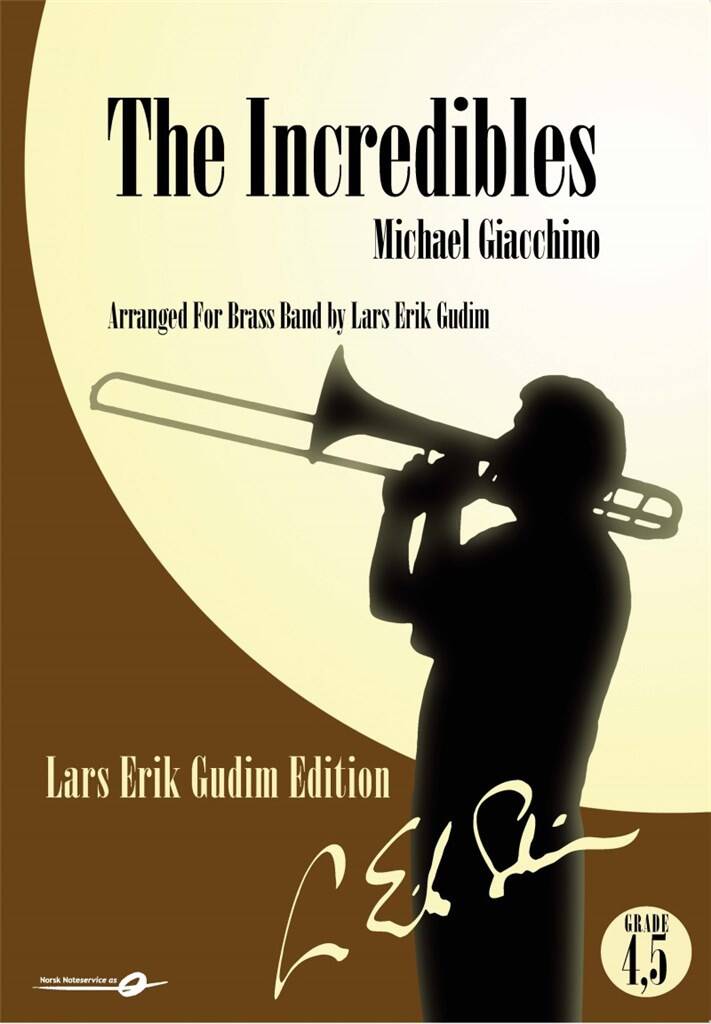
The Incredibles - Michael Giacchino - Lars Erik Gudim
Michael Giacchino (1967) has become one of the great composers scoring for Film, Television and Video Games. Music in the movies "Star Trek", "Ratatoille", "Mission Impossible III", "Sin" and "The Incredibles" has come from his hand, but even more known should be the music from the Television shows "Alias" and "Lost". In "The Incredibles", music with high energy and a lot of wind players fits well. To play this music with a wind band takes good care of this intentions. The super heroes are matched with music in all dimensions. This is well taken care of in the arrangement by Lars Erik Gudim.
Estimated dispatch 5-14 working days
-
 £105.20
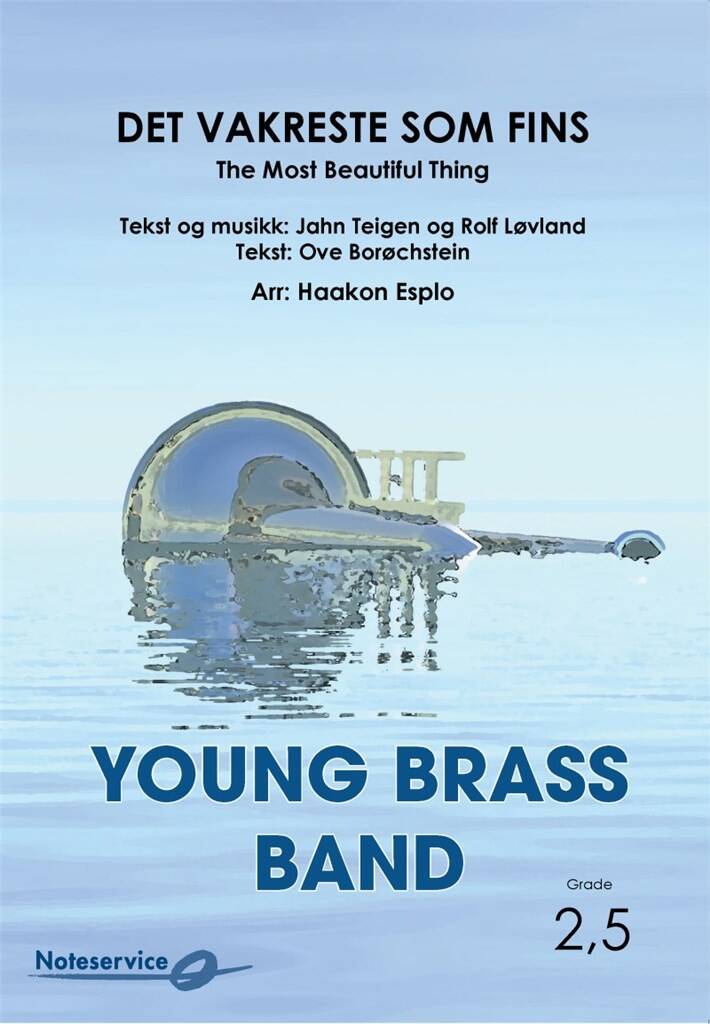
Det vakreste som fins - Teigen Teigen - Haakon Esplo
The most beautiful thing is one of Jahn Teigens most popular pop ballads. It was written in 1988 together with Rolf Lovland and Ove Borochstein and went straight to the top of the Norwegian hitlists. Even 20 years after its release, in 2008, it reached the hitlists after Teigen performed it during the Eurovision Song Contest. The song is often played on Norwegian radio and was the 70th most played in the period 1993-2013 on the radio channel P4. Now it's finally arranged for band in the popular Young Band series with adaptation of key that fit young musicians. It will definitely be a popular number in your next concert.
Estimated dispatch 5-14 working days
-
 £271.60
Aubade - Dawn Songs of the Fabulous Birds - Torstein Aagaard-Nilsen
Commissioned by The Norwegian Band Federation for The European Brass Band Championship 2003, in Bergen, Norway (Third edition) I remember as a kid the very early morning wake-up ceremonies caused by Seagulls having a "party" outside our home. Very few would describe it as beautiful, particularly not at 4:30 in the morning... But by listening carefully to birds I was fascinated by their diversity and musical language: they dont sing tunes or long phrases, they rather make sounds and signals, based on short motives. Aubade is based on musical pictures of the imaginary birds: the creatures with wings that exists only in myths and legends. The whole story starts with aBaritone-cadenza that evoke all the sleeping creatures. Very soon they all start to sing their songs in one way or another. The composition has a burlesque scherzo-character including slow espressive intersections. Traditional elements like melody and harmony is combined with extensive sounds and textural effects created by use of multiple muting, singing and playing at the same time. I am not too concerned about having a program for the piece. I just know that by thinking of the unheard dragon-songs, griffin-songs, the sound of the dodo, my creativity was stimultated. As a piece of music, Aubade follows its own rules based on well-known elements like melodies, arpeggio-figures, harmonies, rhythms, variations and recapitulation of ideas. - Torstein Aagaard-Nilsen
Estimated dispatch 5-14 working days
-
 £105.20
Hard to Say I'm Sorry - Peter Cetera - Jan Utbult
"Hard to Say I'm Sorry" is one of the greatest hits by US rock band Chicago. It was the first single record from the "Chicago 16"-album (1982). The song went to no. 1 on the Billboard charts and stayed there for two weeks. Produced by David Foster, the song was given a typical early 80's sound with synthesizers and heavy guitars dominating the sound. The album-version of the song included a part two of the song, "Get Away", a up-tempo song featuring the famous horn-section of the band.
Estimated dispatch 5-14 working days
-
 £118.20
Under blaful fana - Viktor Widqvist - Svein H. Giske
This march composed in 1916 is arguably one of the finest and most famous marches from the Scandinavian countries.It's composer, and Swedish March King Viktor Widqvist's (1881-1952) most famous composition and it's the official march of all the armed forces in Sweden.The title reflects on the colours of the Swedish flag.-Svein H. Giske-August 2022
Estimated dispatch 5-14 working days
-
 £115.60
Josefs Julevise - Halvdan Sivertsen - John Philip Hannevik
Halvdan Sivertsen (born 1950) is one of the most popular singer/ songwriters in Norway. He is well know as a first-class storyteller, and he has a strong melodic line in all his music. This Christmas song was first recorded in 1991 and it has become a Norwegian classic. The lyrics tell the story of a couple travelling through time to find a city with bright lights, where they hear people sing about the couple who are about to have their first baby. But still this couple can not find anybody willing to help them, and they are forced to go back 2000 years, to find the stable where they find some shelter. Maybe they should have travelled further ahead in time in the firstplace, to find people willing to open their door to the poor and needing?
Estimated dispatch 5-14 working days
-
 £111.70
What's Your Favorite Cake? - Hilde Høyvik Dahl
This suite is written for beginning band at grade level 1-1,5. It consist of four short movements in various style. In one of the movements, the musicians are introduced to time signature.The suite in its entirety is a great concert piece, but you may also play the movements as single pieces.The composition consists basically of three voices to make it playable also for smaller ensembles.
Estimated dispatch 5-14 working days
-
 £102.60
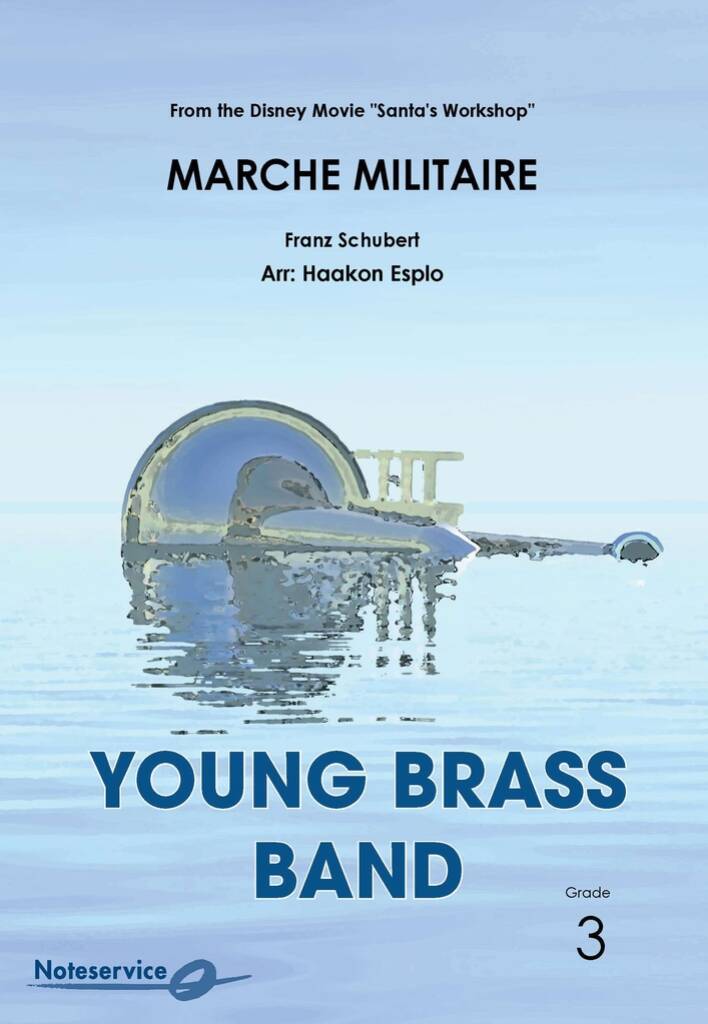
Marche Militaire - Franz Schubert - Haakon Esplo
Franz Schubert wrote three "Marches Militaires", opus 51, D. 733. This publication is the first of the three (No. 1 in D major) and one of Schubert's most famous pieces. There is some uncertainty about when the march was written, but most assume in 1818.Marche Militaire has previously been instrumented and released for full orchestra and several other ensembles. Many also know it as the music for Walt Disney's cartoon "Santa's Workshop" which is broadcasted on TV every Christmas.
Estimated dispatch 5-14 working days
 View Music