
Results
-
 £69.50
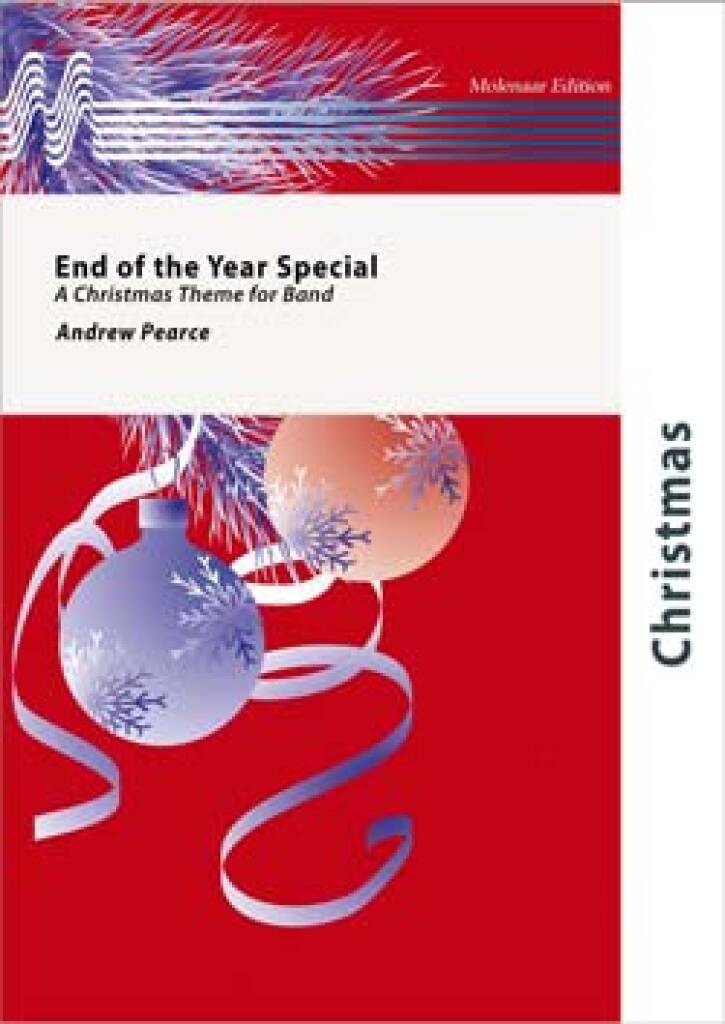
End of The Year Special - Andrew Pearce
The end of the year special is an original composition not based on any carols, written originally for orchestra for a French TV channel to celebrate their end of the year festivities. It's a short 2 1/2 minute opener with lots of tuned percussion and sleigh bells, plus some solo work for the euphonium. It's fun and festive and a great way to open any Holiday concert. There's even an optional part for women's chorus if you like. End of the Year Special could very well be the perfect opening for your Christmas concert.
Estimated dispatch 5-14 working days
-
 £115.60
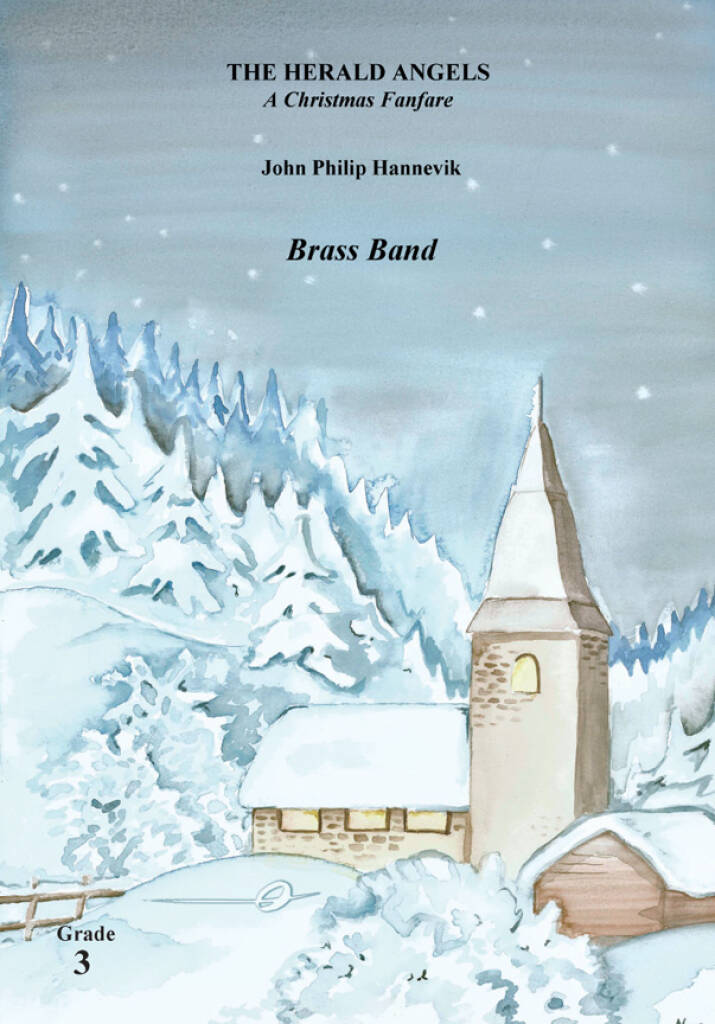
The Herald Angels - A Christmas Fanfare - John Philip Hannevik
This christmas fanfare is based on the tune by Felix Mendelssohn-Bartholdy / William H. Cummings. The lyrics Hark, the Herald Angels Sing are credited to Charles Wesley, and are written a century before the famous tune.This arrangement iswell-suited as a concert opener, and it should be performed in a singing, majestic style.The arrangement is also suitable for an adaption with choir.
Estimated dispatch 5-14 working days
-
 £69.99
That's the Way I Like 'Em - Peter Kleine Schaars
For many years Peter Kleine Schaars' jazz quartet provided sparkle and energy for various festivities and other occasions. If required the ensemble could alternate jazz repertoire with pop and latin music too. Their wide experience taught the musicians that an hour of unbeatable repertoire is the perfect end to every swinging party. Based on this practical knowledge Kleine Schaars has chosen his favourite pop pieces and arranged them in this animated medley entitled That's the Way (I like Them).
Estimated dispatch 5-14 working days
-
 £60.99
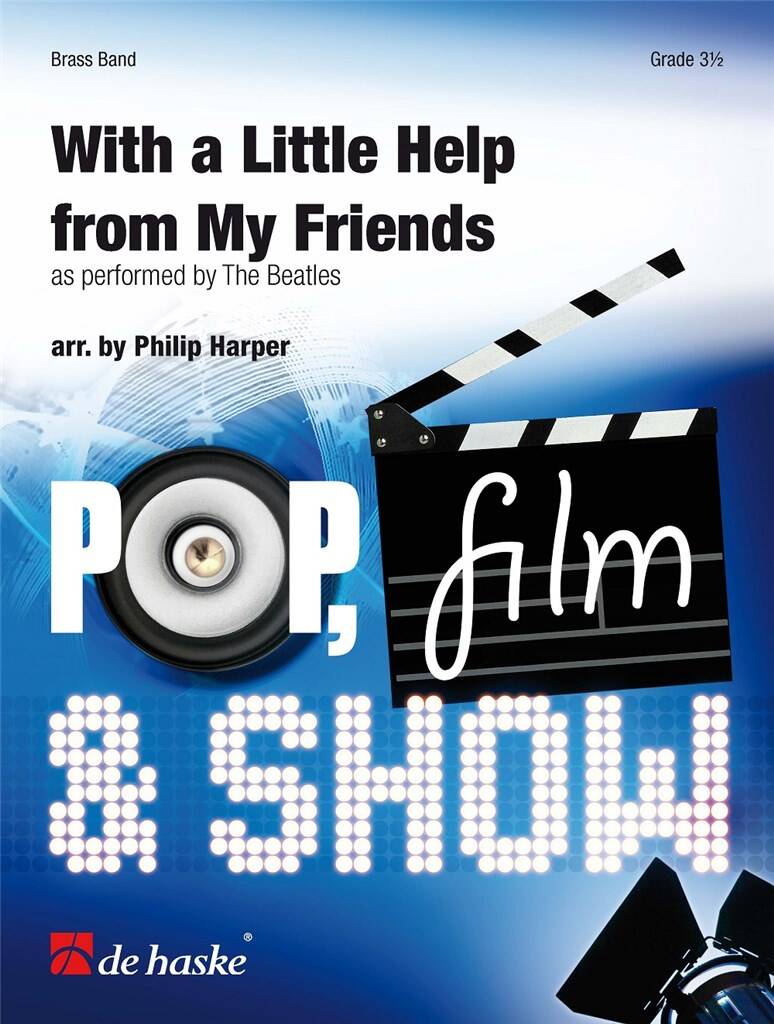
With a Little Help from My Friends - John Lennon - Philip Harper
This song was originally recorded by The Beatles on their iconic Sgt. Pepper's Lonely Hearts Club Band album. Many people also know this song because of Joe Cocker's breakthrough performance at the legendary Woodstock festival in 1969. Philip Harper's fantastic arrangement manages to evoke the atmosphere and sounds of the original Beatles version.
Estimated dispatch 5-14 working days
-
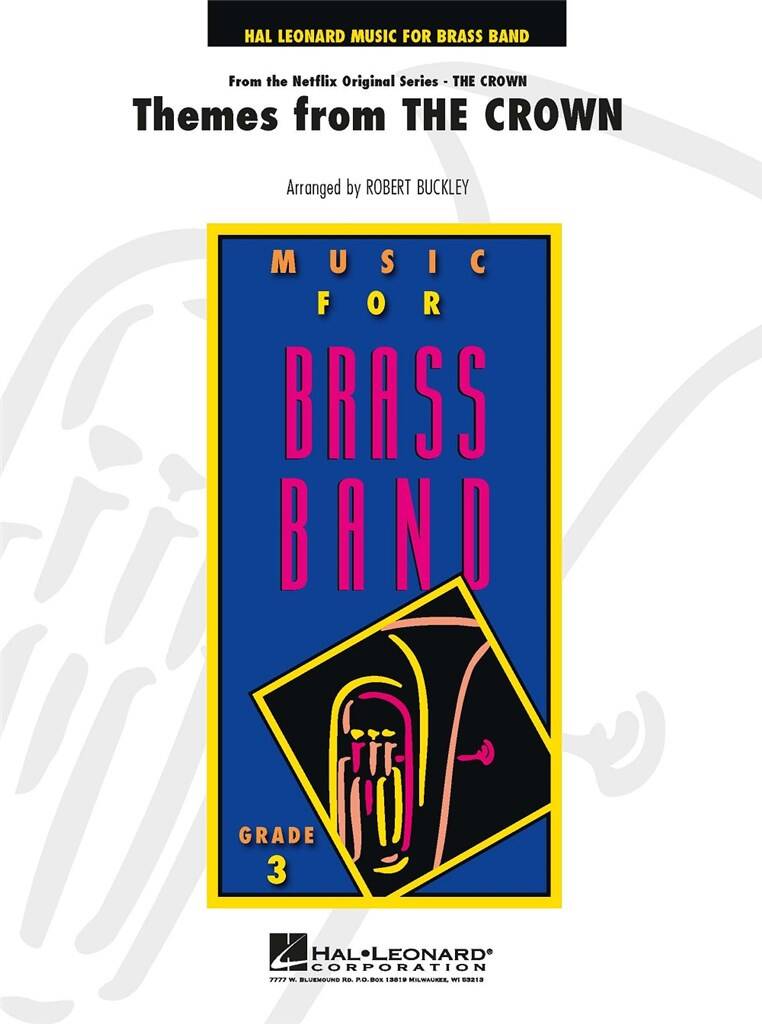 £49.99
Themes from The Crown - Robert Buckley
From the masterful Netflix series on British royalty, here are two of the iconic musical themes skillfully set for brass band by Christopher Bond with rich textures and haunting melodies.
Estimated dispatch 5-14 working days
-
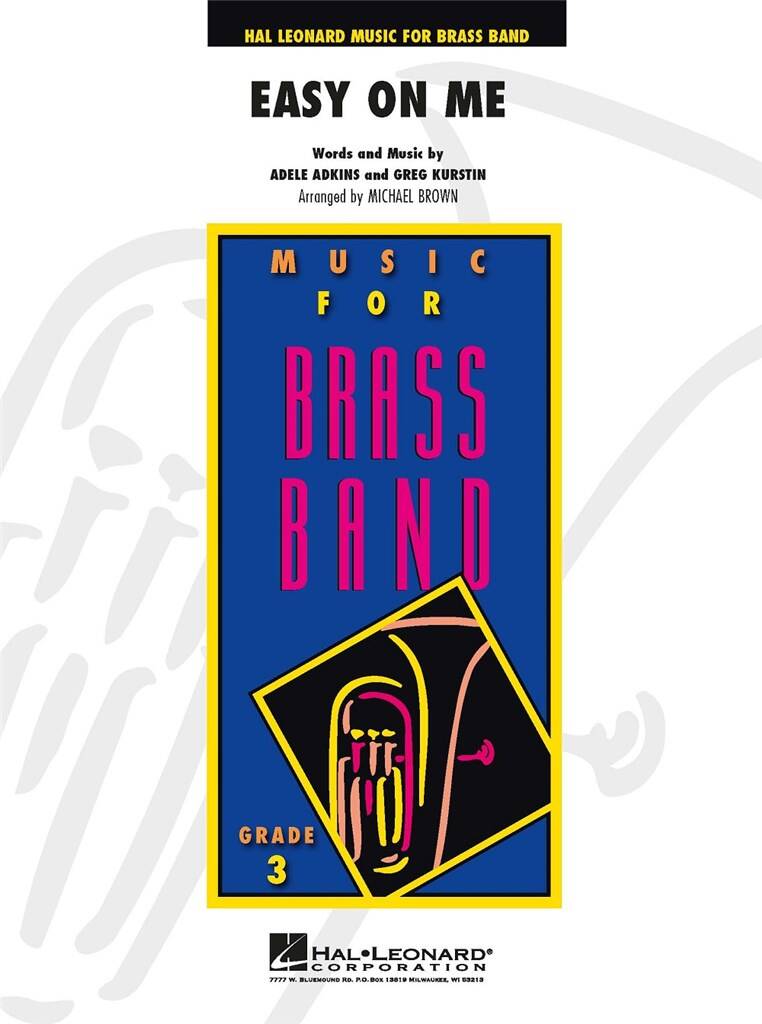 £60.99
Easy On Me - Michael Brown
Adele made a triumphant return to the pop charts with this poignant and soaring hit single. Christopher Bond's well-crafted setting uses varying textures and dramatic builds in bringing it to the concert stage.
Estimated dispatch 5-14 working days
-
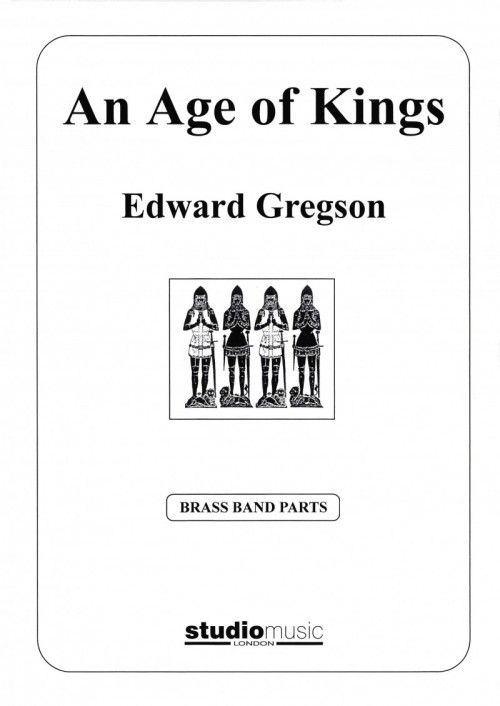 £94.95
An Age of Kings (Mezzo-Soprano Solo with Brass Band and optional choir - Score and Parts) - Gregson, Edward
The origins of this work date back to 1988, when I was commissioned by the Royal Shakespeare Company to write the music for The Plantagenets trilogy, directed by Adrian Noble in Stratford-upon-Avon. These plays take us from the death of Henry V to the death of Richard III. Later, in 1991, I wrote the music for Henry IV parts 1 and 2, again in Stratford. All of these plays are concerned with the struggle for the throne, and they portray one of the most turbulent periods in the history of the British monarchy.Much of the music used in these productions was adapted into two large symphonic suites for wind band - The Sword and the Crown (1991) and The Kings Go Forth (1996). An Age of Kings is a new version for brass band incorporating music from both the symphonic suites for wind band. It was specially composed for a recording made by the Black Dyke Band, conducted by Nicholas Childs, in 2004.An Age of Kings is music on a large-scale canvas, scored for augmented brass band, with the addition of harp, piano, mezzo-soprano solo, male chorus, as well as two off-stage trumpets. The music is also organized on a large-scale structure, in three movements, which play without a break - "Church and State", "At the Welsh Court", and "Battle Music and Hymn of Thanksgiving".The first movement, "Church and State", opens with a brief fanfare for two antiphonal trumpets (off-stage), but this only acts as a preface to a Requiem aeternam (the death of Henry V) before changing mood to the English army on the march to France; this subsides into a French victory march, but with the English army music returning in counterpoint. A brief reminder of the Requiem music leads to the triumphal music for Richard Plantagenet, Duke of York, father of Edward IV and Richard III (the opening fanfare transformed). However, the mood changes dramatically once again, with the horrors of war being portrayed in the darkly-drawn Dies Irae and Dance of Death, leading to the final section of the first movement, a funeral march for Henry VI.The second movement, "At the Welsh Court", takes music from the Welsh Court in Henry IV part 1 with a simple Welsh folk tune sung by mezzo-soprano to the inevitable accompaniment of a harp. This love song is interrupted by distant fanfares, forewarning of battles to come. However, the folk song returns with variation in the musical fabric. The movement ends as it began with off-stage horn and gentle percussion.The final movement, "Battle Music and Hymn of Thanksgiving", starts with two sets of antiphonally placed timpani, drums and tam-tam, portraying the 'war machine' and savagery of battle. Trumpet fanfares and horn calls herald an heroic battle theme which, by the end of the movement, transforms itself into a triumphant hymn for Henry IV's defeat of the rebellious forces.- Edward GregsonDuration - 22'00"Optional TTBB available separately.
Estimated dispatch 7-14 working days
-
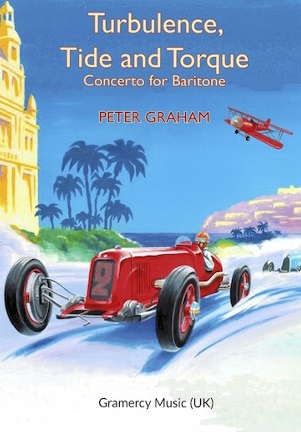 £84.95
Turbulence, Tide and Torque (Baritone Solo with Brass Band - Score and Parts) - Graham, Peter
Concerto for BaritoneTurbulence, Tide and Torque can be considered to be a companion piece to my 2008 Euphonium Concerto In League with Extraordinary Gentlemen, and indeed can be performed on Euphonium (vintage or medium bore instrument preferred). Whereas the gentlemen in question in the latter work were fictional (e.g. Sherlock Holmes and Phileas Fogg), the former pays tribute to three real life women who were very much true pioneers and heroines of their age.Turbulence: Harriet Quimby (b. 1875) was one of the world's best woman aviators, her significant and historic achievement being the first woman to fly across the English Channel. Sadly, in her lifetime very few people were aware of her 1912 accomplishment; potential press coverage was dominated by the sinking of The Titanic only two days before.Grace Darling (b. 1815) is a name much more familiar to the public today, and in her lifetime she was lauded as a national heroine. A humble lighthouse keeper's daughter from Northumberland, her participation in the rescue of survivors from the wrecked paddle-steamer Forfarshire is well documented (a museum dedicated to her achievements located in Bamburgh, the town of her birth). This movement, Tide, develops a main theme from my large scale work Harrison's Dream, reflecting on the souls lost in the disaster.The final movement Torque, opens with a sudden gear change such as might have been undertaken by Dorothy Levitt (b. 1882), the woman's world land speed record holder, in her Napier racing car. Levitt, who following her 1906 record-breaking achievement was described as the Fastest Girl on Earth, went on to write extensively about her experiences, encouraging females to take up motoring through her articles in The Graphic newpaper.Turbulence, Tide and Torque was commissioned by and is dedicated to Katrina Marzella as part of an Arts Council of England funded residency I was awarded with the Black Dyke Band in 2018.- Peter GrahamDuration: 15.00
Estimated dispatch 7-14 working days
-
 £79.95
The Plantagenets (Brass Band - Score and Parts) - Gregson, Edward
A Symphonic Study for Brass BandThe Plantagenets was Gregson's first major test piece, written specially for the 1973 National Brass Band Championships.In this ambitious symphonic study he turned his attention to music which sets out to create a mood or atmosphere, in contrast to his earlier brass band works such as Essay and Partita where the underlying concerns are technical rather than expressive. However, Gregson is at pains to emphasise that The Plantagenets is not programme music. 'Symphonic' is the optimum word here. In its textural and harmonic complexity, its rhythmic and melodic variety, this was his most ambitious brass band piece so far. His language, with its roots in Hindemith and Bartok is further enriched here with the expressive language of Holst and Rachmaninov.As he says in his notes on the work: The Plantagenets attempts to portray the mood and feelings of an age - that of the House of Plantagenet which lasted from the middle of the twelfth century to the end of the fourteenth. To many it conjures up an age of chivalry and this is represented by fanfare motifs which occur throughout the work in varied form.Characteristically, the composer then goes on to describe not the atmosphere or mood he is trying to convey, but the means by which the music has been composed: the opening fanfares, based on the interval of the third, generating the musical material for the whole work; an exposition of two themes - one fanfare-like, one lyrical (on horns); a slow episode introducing a new melody on solo horn (answered by cornet and euphonium in canon); a little scherzo, fugal in character; and a recapitulation leading to a maestoso statement of the slow movement theme with a final reference to the fanfares as a triumphant conclusion.Duration: 11.30
Estimated dispatch 7-14 working days
-
£39.95
The Plantagenets (Brass Band - Score only) - Gregson, Edward
A Symphonic Study for Brass BandThe Plantagenets was Gregson's first major test piece, written specially for the 1973 National Brass Band Championships.In this ambitious symphonic study he turned his attention to music which sets out to create a mood or atmosphere, in contrast to his earlier brass band works such as Essay and Partita where the underlying concerns are technical rather than expressive. However, Gregson is at pains to emphasise that The Plantagenets is not programme music. 'Symphonic' is the optimum word here. In its textural and harmonic complexity, its rhythmic and melodic variety, this was his most ambitious brass band piece so far. His language, with its roots in Hindemith and Bartok is further enriched here with the expressive language of Holst and Rachmaninov.As he says in his notes on the work: The Plantagenets attempts to portray the mood and feelings of an age - that of the House of Plantagenet which lasted from the middle of the twelfth century to the end of the fourteenth. To many it conjures up an age of chivalry and this is represented by fanfare motifs which occur throughout the work in varied form.Characteristically, the composer then goes on to describe not the atmosphere or mood he is trying to convey, but the means by which the music has been composed: the opening fanfares, based on the interval of the third, generating the musical material for the whole work; an exposition of two themes - one fanfare-like, one lyrical (on horns); a slow episode introducing a new melody on solo horn (answered by cornet and euphonium in canon); a little scherzo, fugal in character; and a recapitulation leading to a maestoso statement of the slow movement theme with a final reference to the fanfares as a triumphant conclusion.Duration: 11.30
Estimated dispatch 7-14 working days
 View Music