Results
-
 £105.20
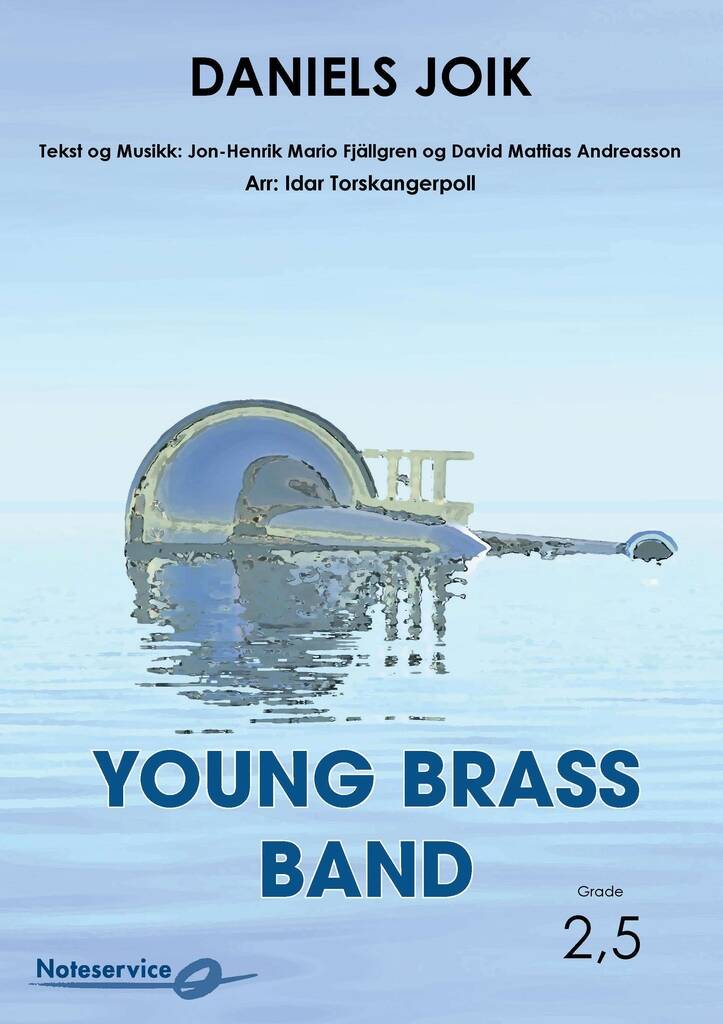
Daniels Joik - Jon-Henrik Fjâllgren - Idar Torskangerpoll
Jon Henrik Mario Fjallgren became instantly well-known after his appearance in Sweden's "Got Talent" where he performed "Daniels Joik" written for his recently passed best friend.Fjallgren was born in Cali, Columbia in 1987 but adopted by a Swedish Sami family and lives now as a reindeer herder, singer and composer. He debuted on stage in 2003, 14 years old and on record two years later.After the success with "Got Talent", he has also participated twice in the Swedish Eurovision Song Contest.This arrangement can be performed in a long or shorter version, for short version cut bars 58-78.
Estimated dispatch 5-14 working days
-
 £115.60
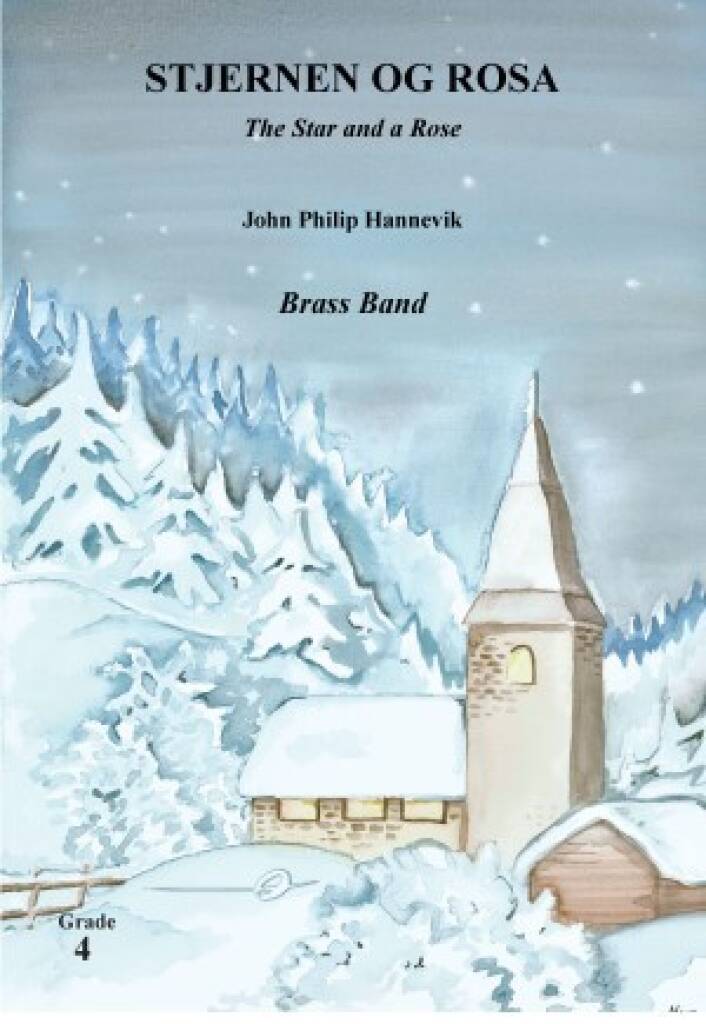
Stjernen og Rosa - John Philip Haqnnevik
The Star and a Rose is a big-scale Christmas piece for band, featuring four seasonal chorales.The first is a Gregorian-like chant Hodie Christus natus est.In this section of the piece, a soloist can be placed away from the band, maybe on a gallery. The soloist can be a tenor instrument, maybe trombone, or you can feature a vocal soloist.After this, the music leads us on to the old German Christmas chorale Lo, how a rose e'er blooming. This song is given a fairly rhythmical treatment, but make sure that the melody is presented in a cantabile style.An interlude follows, before the piece presents one of the most used and loved Scandinavian Christmas chorales, Mitt hjerte alltid vanker (My Heart will always wander), composed by the Danish bishop Hans Adolph Brorson around 1732. This song is building towards a climax, before the solo horn brings it all down to the Stable view described in the lyrics.Then comes a transition that brings us in to the final section of the piece, which presents the international Christmas Carol Adeste Fideles. As many will notice, I have borrowed a section from David Wilcocks majestic harmonization towards the end.The title of the piece has its background form the lyrics in My heart will always wander, where the text speaks about the stars in the sky. But also in the latin text for Adeste Fideles:Stella duce, Magi, Christum adorantesThe Rose is of course from the lyrics in the chorale Lo, how a Rose.
Estimated dispatch 5-14 working days
-
 £127.30
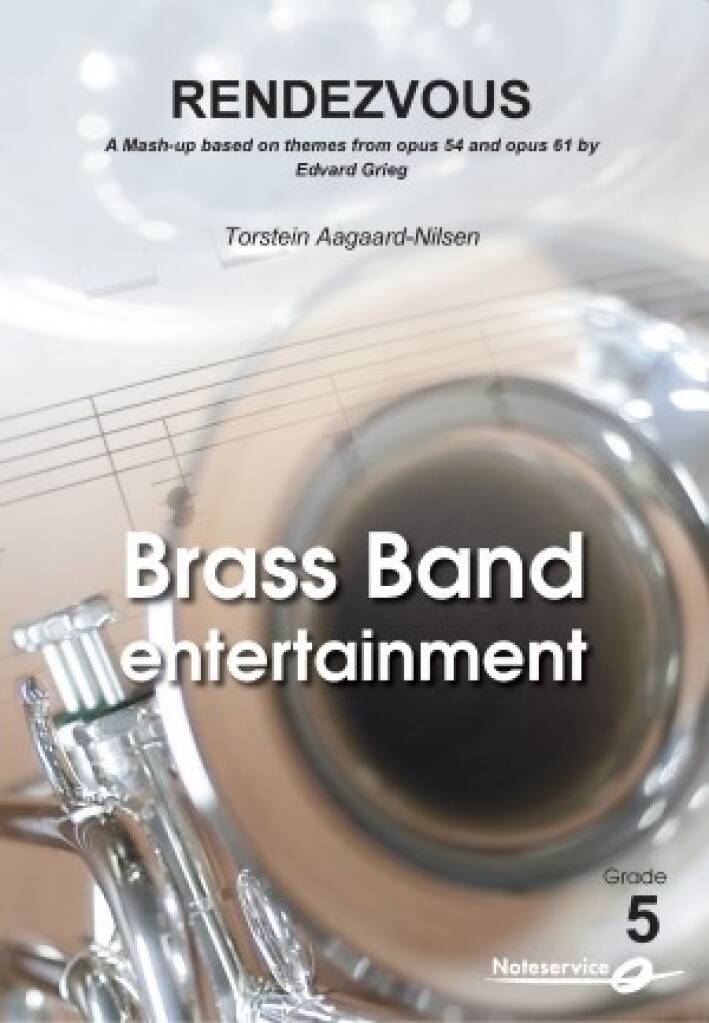
Rendezvous - Torstein Aagaard-Nilsen
Rendezvous was commissioned by Krohnengen Brass Band for their 50th Anniversary in 2019.Rendezvous is devided into three sections. Each section are referring to Edvard Grieg's own titles. but twisted, to make sure that everybody understand that this music is a mash-up of themes Edvard Grieg used in opus 54 (for piano) and opus 61 (songs for children).1. Trolltog med avsporing (March of the Trolls derailment)March of the Trolls is a famous part of Edvard Grieg lyric pieces, opus 54.2. Klokkeklang i feil sang (Bell ringing in wrong tune).Bell ringing show that Grieg was one of the first composers to write the way impressionists did. What happens if this beatiful piece is combined with several other themes from the same book? It somehow works in its own way.3. Pep talk til Blakken (Pep talk to Blakken)The riff used in the first part becomes an important part of the third part: a funky treat of the childrens song "Kveldssang for Blakken" (Evening song for Blakken).I felt that a rather tired old horse needed a pep talk more than a slow tune. So that is why you get this music(!) - and this is how my rendezvous with Grieg ends.Not sure what maestro Grieg would have thougt... But, I have read that the fiddlers that played the tunes Grieg used was not happy with the way Grieg used them.So there you go...Torstein Aagaard-Nilsen
Estimated dispatch 5-14 working days
-
 £79.99
Mamma Mia! - Björn Ulvaeus - Peter Kleine Schaars
On the 6th of April 1999, exactly 25 years after ABBA had won the Eurovision Song Contest with the song Waterloo, the musical Mamma Mia! opened in London. The funny and appealing love story, based on 22 ABBA classics, became an immediate success. Arranger Peter Kleine Schaars has selected five of the most famous titles from the musical, added the hit Waterloo and used his musical imagination. The result is a catchy ABBA medley that will appeal to young and old.
Estimated dispatch 5-14 working days
-
 £89.99
Gate 11 - John Emerson Blackstone
'Music' by John Miles was one of Blackstone's favourite numbers. With completely different notes, but holding on to the same form and atmosphere the latter has tried to write an attractive composition for both young and old.Gate 11 refers to the ever agitated and noisy scenes at an airport, especially during check-in. Yet there are also passengers who wait patiently, letting their thoughts range at will, looking forward to meeting a loved one at the end of their journey.
Estimated dispatch 5-14 working days
-
£120.00
Rhapsody in Black (Bra) - Andi Cook
The primary inspiration for this work comes from the composer's first encounter with the genre of Symphonic Metal - the opening track of the 2004 Nightwish album 'Once', entitled Dark chest of Wonders. The combination of full orchestra, operatically trained female vocals and the raw power of a Scandinavian metal band was a potent mix that instantly had me hooked.That same dark and powerful sound is one that a brass band can generate, and I've tried to capture that in this composition. Heavy Rock/Metal as a genre is arguably fifty years old now, but symphonic metal is a newer concept, and I feel possibly the one that can bridge the gap between two musical styles very dear to me.Composer Gilbert Vinter had explored through music the connotations that different colours held for him, and his movement Purple from 'Spectrum' gave me an idea for the structure of 'Rhapsody in Black'. Andi Cook explored the different connotations of one colour within his own life, black being an easy choice due to the personal dichotomy of the black leather jacket he wore to the rock club on Friday night and the black suit jacket and tie he wore to the concert hall the next day.To avoid repetition the word 'black' is omitted from the five movement titles, each of which is a different episode. '...as Thunder' is a furious argument between two people - the top and bottom of the band - set against the backdrop of a storm, with lightning flashing outside while barbs, insults, sarcasm, tears and even violence is traded inside. Following that '...Satin and Pearls' is an old black-and-white movie with a wistful character to it as if we're looking back a screen icon with fondness long after their career or even their life has ended. '...as the Raven's Wing.' is deliberately gothic and funereal, hinting at Edgar Allen Poe's similarly named poem, with undertones of death and afterlife. The shift into F/C Minor (band pitch) represents the descent - alive - into the grave that Poe had a paranoid fear of his entire life. Family and friends standing around grieving, oblivious as we're lowered into the earth despite frantic attempts to make ourselves heard. '...and Chrome' is an unashamed motorcycle reference with all its born-to-be-wild, open air, high speed and freedom overtones. In a deliberate contrast to what went before it continues several of the same motifs though this time in the major key. Lastly, we reprise the second movement with '...as the Night Sky' which is simply the feeling of walking home under the summer stars, with someone important - who that is, is left to the listener, but a walk under the stars is always that bit special.There's an old saying that very few things are black and white. I hope this work will prove that even black alone isn't quite as simple as it's often made out....'Rhapsody in Black' is dedicated to the composer's friend and mentor John Roberts, who shares his love of both brass and rock.
Estimated dispatch 7-14 working days
-
£50.00
Vectis Isle - Broadbent, D
VECTIS ISLE is the Roman name for the Isle of WrightSTATELY OSBORNEOsborne House was the summer residence of Queen Victoria. Music of fanfares and pageantry in 3/4 time, with a central delicate minuet section, before returning to the original fanfares and stately themes.PICTURESQUE CALBOURNECalbourne is a pretty, tiny country village with its feature of an old water mill. The music is pastorale in style. 6/8 rhythms with a free and easy waltz section.THE OLD CHURCH AT GODSHILLThis movement links directly from the second, but may be played on its own if desired. Godshill is a quaint but beautiful village of thatched cottages by an old church.SANDOWN HOLIDAYSThis final movement is intended to portray the happy atmosphere of this pleasant seaside resort, with just a moment or two to laze on the fine beaches under an afternoon sun before the final allegro concludes this suite.Duration 14 and a half mins
In Stock: Estimated dispatch 1-3 working days
-
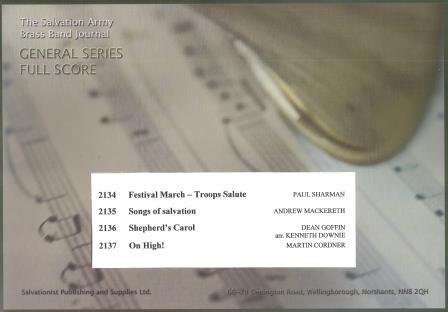 £60.00
General Series Band Journal August 2014 Numbers 2134-2137
No. 2134 Festival March - Troops Salute (Paul Sharman)Written to mark the retirement of Major John Mott as Bandmaster of the Household Troops Band in 2010, this march features the tunes 'Are you washed?' and 'There's only one flag for me'. No. 2135 Songs of Salvation (Andrew Mackereth)This piece was written for Haaglanden Band in the Netherlands and contains some old Salvation Army Songs; 'Ring the bell, watchman' (T.B. 776), 'Make no delay' (T.B.730), 'Room for Jesus' (T.B. 395), 'Tell me the old, old story' (T.B. 265) and 'Praise God, I'm saved' (T.B. 770).No. 2136 Shepherd's Carol (Dean Jones arr. Kenneth Downie)Originally published in November 1955, this lovely carol was written by father and son, Dean and Henry Goffin, both of whom were Salvation Army officers. Commissioner Sir Dean Goffin was awarded his kinghthood in the Queen's Honours list of 1983No. 2137 On High! (Martin Cordner)Taking its inspiration from the world of rock music, this piece features the song, 'Lord, I lift your name on high'.
Estimated dispatch 7-14 working days
-
 £189.95
'The New Christmas Collection' - Full Set March Card Size
The new Christmas Collection carol books contain all the traditional Christmas Carols, with some new 'pop' music arrangements included to add more variety to your carolling this year.
* Note, these are not compatible with the New Christmas Praise books.
Full list of works in The Christmas Collection:-
• A child this day is born
Estimated dispatch 7-14 working days
• A Christmas lullaby
• A great and mighty wonder
• All I want for Christmas is you
• All my heart this night rejoices
• Angels, from the realms of Glory (Come and worship)
• Angels, from the realms of Glory (Iris)
• Angels we have heard on high
• A starry night
• As with gladness men of old
• Auld lang syne
• A virgin most pure
• Away in a manger (The manger scene)
• Away in a manger (Traditional)
• A winter’s tale
• Bethlehem
• Brightest and best (Spean)
• Brightest and best (Traditional)
• Calypso Carol
• Carol for the Nativity
• Carol of the bells
• Carol of the drum
• Child of Mary
• Christians Awake!
• Christ is born (Il est né)
• Christ was born on Christmas Day
• Come and join the celebration
• Come, children, come quickly
• Coventry Carol
• Deck the hall
• Ding dong! merrily on high
• Do you hear what I hear?
• Frosty the snowman
• Gabriel’s Message
• Gaudete
• Glory in the highest
• Glory in the highest Heaven
• God of God, the uncreated
• God rest you merry, gentlemen
• Good Christian men, rejoice
• Good King Wenceslas
• Go, tell it on the mountain!
• Happy Christmas (War is over)
• Hark the glad sound!
• Hark! the herald angels sing
• Have yourself a merry little Christmas
• Here we come a-wassailing
• How far is it to Bethlehem?
• Huron Carol
• Infant Holy
• In the bleak midwinter (Cranham)
• In the bleak midwinter (Darke)
• I saw mommy kissing Santa Claus
• I saw three ships come sailing in
• It came upon a midnight clear (Traditional)
• It came upon a midnight clear (Willis)
• It’s beginning to look a lot like Christmas
• It’s the most wonderful time of the year
• I wish it could be Christmas everyday
• I wonder as I wander
• Jesus, good above all other
• Jingle Bells
• Jingle bell rock
• Joy to the world!
• Last Christmas
• Let it snow!
• Little baby Jesus
• Little children, wake and listen
• Little Donkey
• Little Jesus, sweetly sleep
• Lo! he comes with clouds descending
• Long, long ago
• Love came down at Christmas
• Mary’s boy child
• Mary’s Child
• Masters in this hall
• Merry Christmas everyone
• Mistletoe and wine
• Noel
• O Christmas tree
• O come, all ye faithful
• O come, Immanuel
• O Heaven-sent King
• O holy night!
• O little town of Bethlehem (Christmas Carol)
• O little town of Bethlehem (Forest Green)
• O little town of Bethlehem (St Louis)
• Once in royal David’s city
• Past three o’clock
• Patapan
• Personent Hodie
• Praise ye the Lord
• Ring the bells
• Rise up, shepherd!
• Rockin’ around the Christmas tree
• Rudolph, the red-nosed reindeer
• Sans day carol
• Santa Claus is comin’ to town
• Saviour’s Day
• See, amid the winter’s snow
• Silent Night!
• Sleigh Ride
• Softly the night is sleeping
• So here it is, merry Christmas
• Stars are shining
• Still, still, still
• Stop the cavalry
• Sussex Carol
• Sweet chiming bells
• Sweet chiming Christmas bells
• The candle song
• The cherry tree carol
• The Christmas song
• The first Nowell
• The holly and the ivy
• The infant King
• The light has come
• The shepherds’ farewell
• The stable door
• The star in the east
• The twelve days of Christmas
• The virgin Mary had a baby boy
• They all were looking for a king
• Thou didst leave thy throne
• Three kings’ march
• Unto us a boy is born
• Walking in the air
• We gather round the manger-bed
• We three kings of Orient are
• We wish you a merry Christmas
• What child is this?
• When a child is born
• When Santa got stuck up the chimney
• Whence is that goodly fragrance flowing?
• When wise men came seeking
• While shepherds watched (Cranbrook)
• While shepherds watched (Handel)
• While shepherds watched (Winchester Old)
• White Christmas
• Who is he?
• Winter Wonderland
• Worldwide Christmas message
• Zither Carol
• A starry night
• Christmas Joy
• Christmas Praise
• Coventry Carol
• Infant Holy
• Mid-winter
• Rudolph, the red-nosed reindeer
• The everlasting light
• To celebrate his birth
• Yuletide Rag
-
£85.00
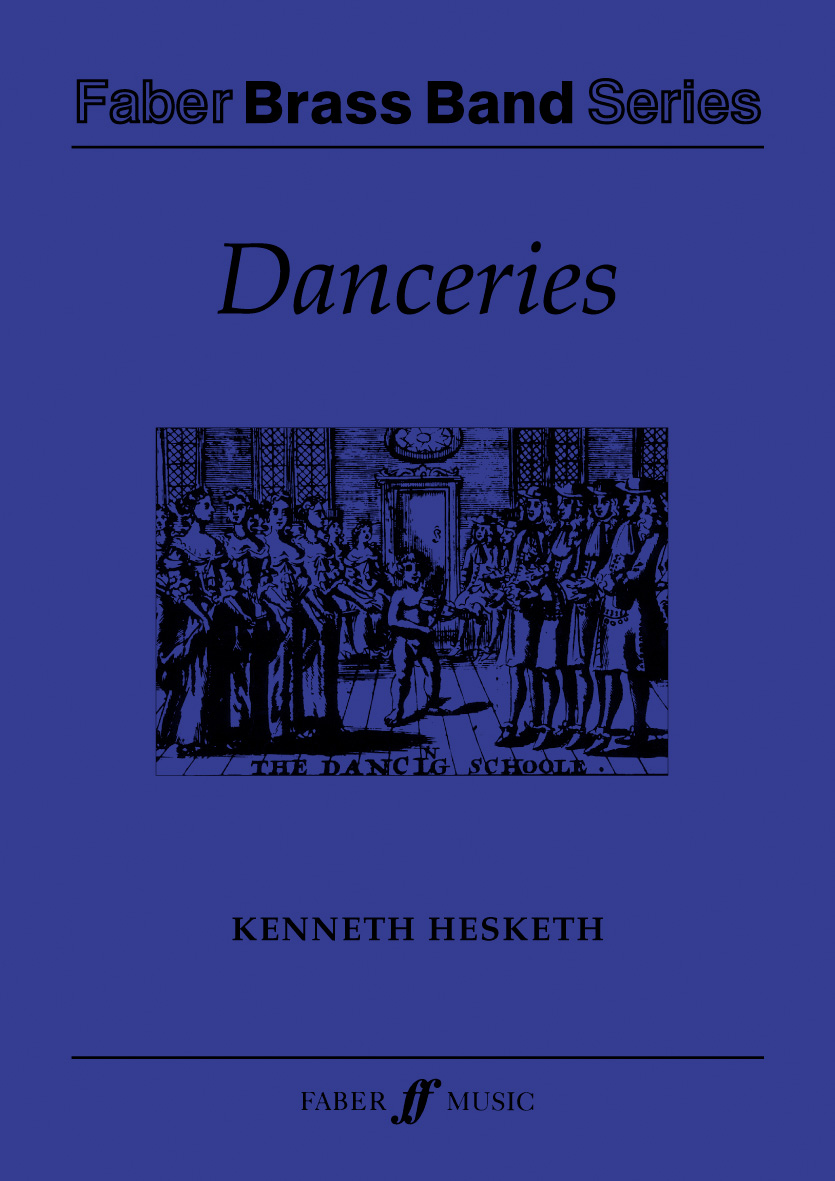
Danceries - Kenneth Hesketh
In Danceries, by Kenneth Hesketh, the melodies themselves are a mixture of old and new. Where the old occurs it has been adapted in mood and composition and is often interspersed with completely new material. The contemporary harmonies and rhythms bring a breath of new into these themes and add drama to the suite.Brass Band Grade 4: Advanced Youth and 3rd SectionDuration: 12 minutesScore & Parts
In Stock: Estimated dispatch 1-3 working days
 View Music